

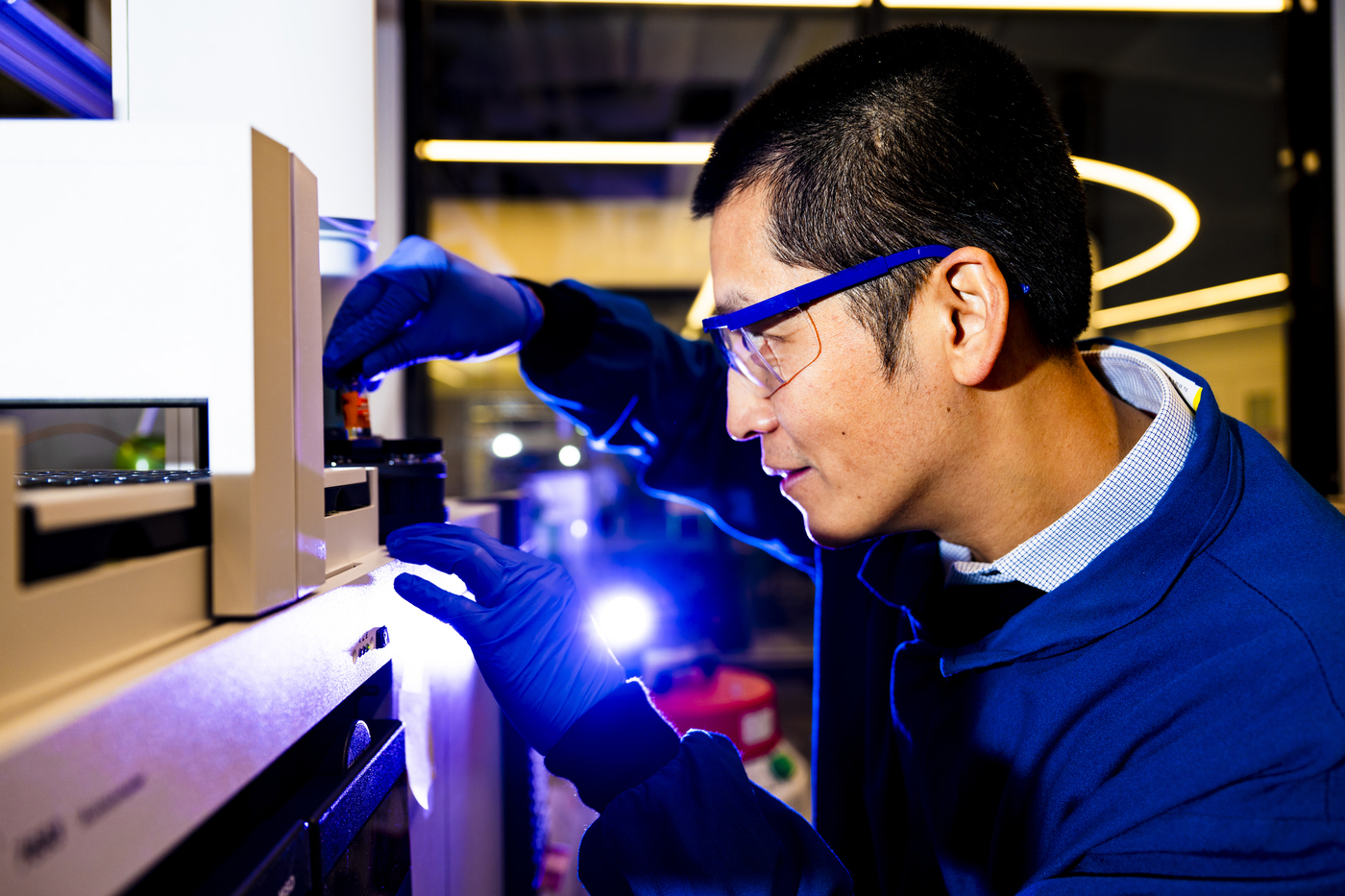
Jing-Ke Weng thinks plants can save us
The director of Northeastern University’s Institute for Plant-Human Interface has dedicated his career to understanding what makes plants tick –– and how those lessons could change humanity. The work he and the members of his institute are doing to bioengineer the processes that plants naturally do will help create new drugs and more resilient crops, they say
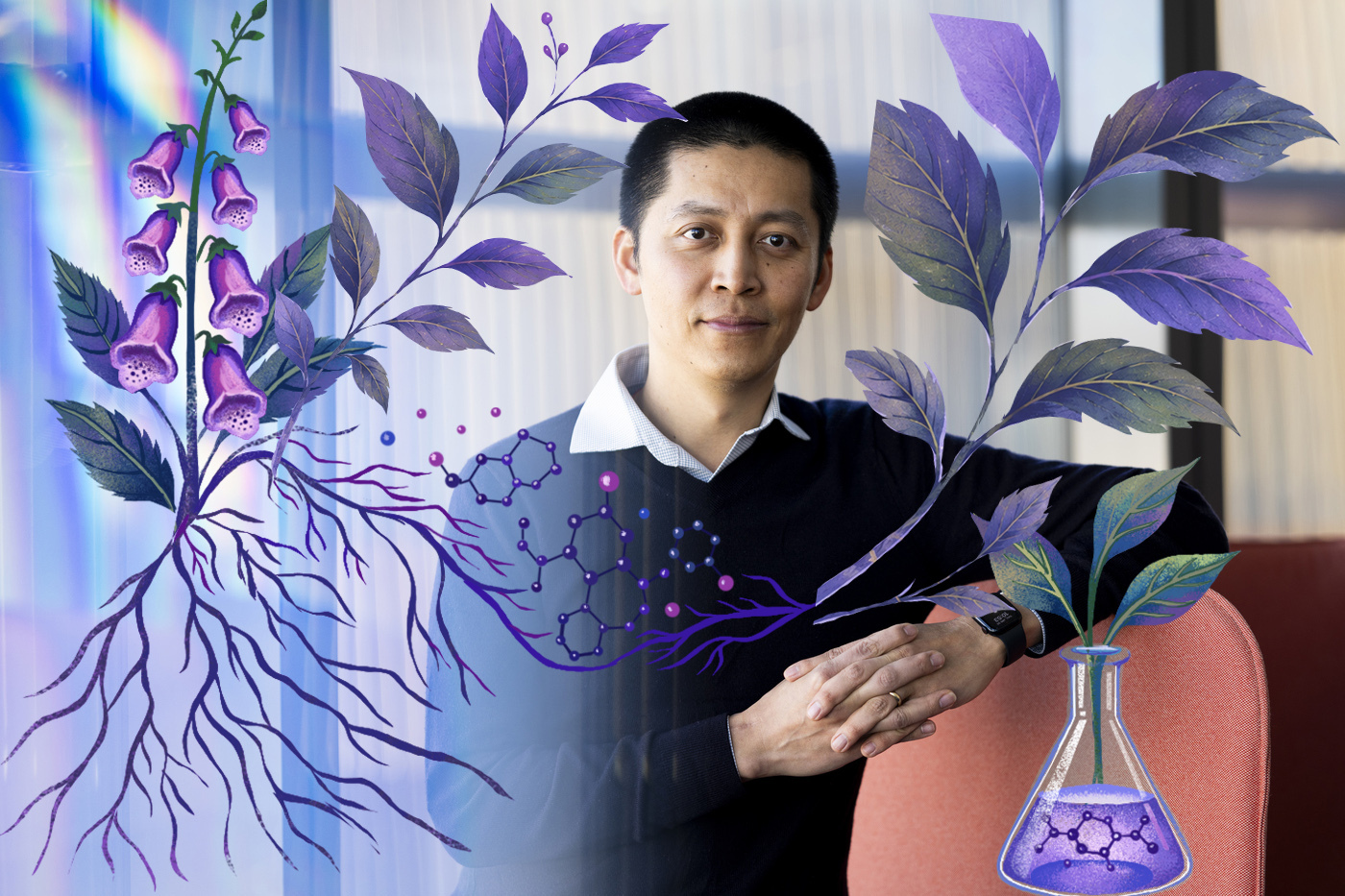
A biochemist, Weng has discovered hormonal pathways in toxic foxglove that could make cancer drugs safer. He is tracking exactly where in our bodies peanut allergies take place, research that could lead to a vaccine for the common food allergy. He even figured out how certain plants create an almond-scented compound that could be reproduced to bioengineer flavored drinks on the moon
“Plants have done a lot of things right to survive and thrive in this terrestrial environment,” Weng said. “We really need to learn from them.”
Weng spoke with Northeastern Global News about his groundbreaking work, where his interest in plants started and why humans should pay more attention to the plants around them
The interview has been edited and condensed for clarity
Should we be thinking more deeply about plants?
I haven’t met anybody who doesn’t like plants. I think a lot of people just don’t pay attention
I like to talk about the corpse flower, which is this plant that only flowers once every 50 years and smells like a corpse and is such a sight to see. Why are corpse flowers smelly? Because they’re making aromatic compounds, which are invisible but airborne and attract specific flies to pollinate them
If you think about it, humans are also being manipulated by plants. Whenever somebody gives me a tropical fruit, just by looking at it, smelling it, I have decided this is something I can put in my mouth. By doing that, the plants have manipulated me to eat them so the seed can be propagated
Plants have been around for hundreds of millions of years, and humans only arrived in the last 100,000 years. I’m very humbled by the long-term success of plants on planet Earth. We are just the latest arrival.
What inspired you to study plants in the first place?
When I grew up, my house was very close to a local arboretum. My dad has early exercise habits, and he would take me. He was doing his routine, and I was freely roaming the arboretum and playing with plants and playing with insects. Also, I grew up in China, and my mom would practice traditional herbal medicines
I eventually came to the United States to pursue graduate studies at Purdue University in the department of biochemistry. I worked on lignin biosynthesis. If you have a tree trunk, most of that biomass is lignin. Plants make so much of it that at one point in time, about 400 million years ago, they actually crashed the global temperature by sequestering too much carbon. It led to a major extinction event
That was my formal introduction to plant biochemistry, and it really kind of opened up a whole new world to me
Why is it important to better understand plants?
We tend to be humancentric, but if we think about it, there are so many elements that are coming to our lives that originated from plants: building materials, the paper we use, the cotton T-shirt we wear, dietary inputs.
There’s more of a realization that many diseases can be prevented, and diet is such a huge component in this prevention. All the nutrients we get, most of that is in plants: all the fibers, the sugars, the proteins or the minerals that contribute to your body health and also the microbiome in the gut
Then, there’s sustainability. As human beings, as we’re gaining more capacity to shape the world through technology, we’re also creating an environment that’s not very habitable for people. If we can breed more resilient crops and trees or enhance yields in crops, then these are all very necessary technologies that need to be developed
Northeastern Global News, in your inbox

What current or future work in this field excites you? What directions do you see your work going in as you move forward?
As we are consuming plant foods, we are actually taking in potentially hundreds of thousands of small molecules, maybe tens of thousands of proteins. Our body is doing a really great job to digest and absorb all these nutrients. Sometimes there are some alarming compounds, toxic compounds or proteins that trigger allergies. We want to understand how this interaction works at the molecular level. We want to really identify the molecules that can help human health or can prevent human disease
Then, there is drug discovery. A very inspiring example is artemisinin, the anti-malaria compound isolated by a Chinese herbalist back in the ’70s. Now, it’s the most effective treatment for malaria and has saved millions of people. We just want more of these cases done, using more advanced approaches and also ways to be able not only to identify the compound but also to produce them
