

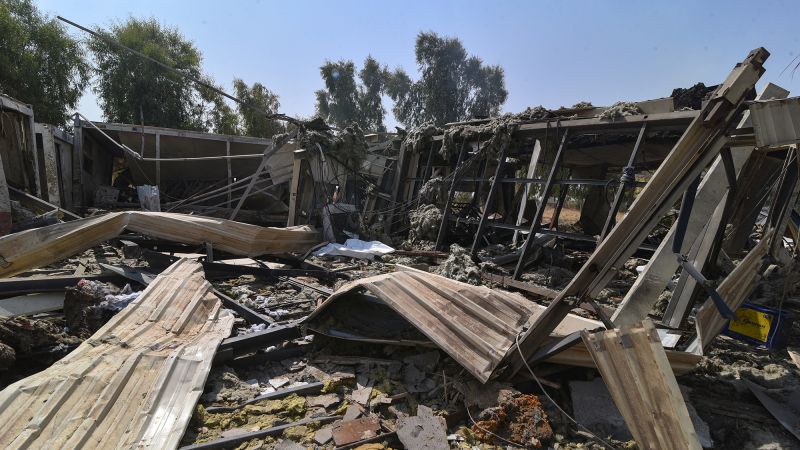
• US renews Iran strikes:The US military launched a “heavy wave of strikes” against Iran in retaliation to Iran’s attempted attack on US military positions on Tuesday.The latest strikes were the first in several days to directly target the country. Explosions were heard in southern Iran, including Bandar Abbas, Kish and Qeshm Island, Iranian state media reported
• Conflict widens:The new strikes comes after Saudi Arabia struck Iranian proxies in Iraq, after months ofresisting being pulled into the conflict. A US-owned vessel caught fire after what industryednesday. Egyptian authorities have not announced a cause of the fire
• Vow of retribution:US President Donald Trump had promised retribution after the US military intercepted a “surprise attack” by Iran, ending days of relative calm in the Middle East, telling reporters “it’s our turn to hit them.”
6 Posts
Saudi Arabia is getting pulled further into the Middle East conflict, conducting joint strikes with the US against Iraq this week – despite the kingdom having spent months trying to avoid deeper involvement
What happened:Washington and Riyadh launched strikes on “logistics and weapons site” in multiple regions of Iraq on Wednesday local time, following attacks by Iran-backed armed groups on US forces and Saudi oil facilities
At least 20 people were killed and 32 others injured, according to the Popular Mobilization Forces (PMF), the umbrella group for Iran-aligned Iraqi militias that were targeted in the strikes
Iraq and Iran’s response:Iran’s Foreign Ministry condemned the attacks Iraq’s recently elected President Nizar Amidi called the attacks “unacceptable and a flagrant violation of Iraq’s sovereignty.”
Why Saudi Arabia got involved:In the last week, the kingdom has faced enemies from three directions: missile attacks from the Iranian-backed Houthis in Yemen, drone attacks from pro-Iranian militias in Iraq and renewed threats from Tehran
On top of attacks to Saudi oil infrastructure, the Houthis also announced a blockade of Saudi shipping through a chokepoint in the Red Sea. This is a major escalation for the kingdom, which had re-routed much of its oil exports through Red Sea ports as the Strait of Hormuz remains paralyzed
Throughout the war between Iran, the US and Israel, the Saudi kingdom had kept open channels of communication with Tehran. But it may be losing patience as it fends off attacks from Iranian-backed proxies, while its economy suffers from the war
Officials meet:Saudi Defense Minister Khalid bin Salman met with Vice President JD Vance in Washington, DC, on Wednesday. They discussed the joint strikes, Saudi Arabia’s response to attacks on its infrastructure, and the kingdom’s view on the ongoing war, according to
The minister also met with President Donald Trump, a
Jordan’s military intercepted five missiles from Iran early Thursday local time, state media reported
There were no casualties following the interception, according to the report from the Petra News Agency
Footage published by Iranian state media appears to show rescuers at the site of a US strike on Qeshm Island on Thursday morning.
Explosions were heard across southern Iran early Thursday as the US renewed its strikes on the country, the first to directly target Iran for several days
The fresh strikeswere in retaliation for Iran’s attacks on US forces in the region on Tuesday
Blasts were heard in the port city of Bandar Abbas,located near the Strait of Hormuz, Iranian state broadcaster IRIB reported
Qeshm, an island that sits in the strait, was also targeted Several residents are injured and reported trapped after a missile struck a home, IRIB reported, citing local officials
Further along the coast, the Persian Gulf island Kish was also hit, according to state-run IRNA
And in Iran’s southwest corner bordering Iraq, multiple locations in Khuzestan Province reported explosions, state media reported
Explosions were heard inseveral locations in southern Iran early on Thursday local time, as the US military renewed its strikes against the country
The strikes were the first to directly target Iran in days and followed a warning from President Donald Trump, who vowed to forcefully respond to Iran’s attempted missile attack on Tuesday on US forces in the Middle East, telling reporters that “it’s our turn to hit them.”
Here’s what else you need to know:
- Renewed strikes:Explosions were reported in Bandar Abbas, Kish and Qeshm Island,according to Iranian state media. And in Iran’s southwest corner bordering Iraq, multiple locations in Khuzestan Province reported explosions, state media reported.
- Other Trump comments:During an interview with Fox News on Wednesday, the US president said, “We are going to beat the f**king sh*t out of them,” after the US military intercepted what it described as a “surprise attack.” Oil prices jumped on the news. Separately, Trump said that he would be “quite disappointed” with Chinese leader Xi Jinping if he provided weapons to Tehran.
- Iran’s attack:On Tuesday,the US militarysaid it intercepted all the Iranian missiles fired toward US forces. The attempted strike was a departure from the usual pattern in the tit-for-tat attacks, which have seen Iran responding to US strikes. It appeared to demonstrate Tehran’s willingness to restart the hostilities.
- Saudi views on the war: Saudi Defense Minister Khalid bin Salman met with Vice President JD Vance on Wednesday and conveyed a message from the Saudi Crown Prince to Trump, a source familiar with the matter told CNN. The kingdom’s assessment, according to the sources, is that Iran will seek to create leverage through escalation and will continue trying to use pro-Iranian militias in Iraq and Yemen’s Houthis to do so.
- US-Saudi strikes:The visit came after Saudi Arabian forces joined strikes against the Iran-allied Popular Mobilization Forces (PMF) in Iraq. The PMF said at least 20 people were killed and four members of Iran’s Islamic Revolutionary Guard Corp were killed in strikes on Wednesday, according to a provincial Iranian official. The Iraqi Foreign Ministry was directed to pursue legal action against the US and Saudi Arabia following the strikes.
- Shipping update:Vessel traffic through two critical shipping chokepoints remains heavily depressed amid US-Iran tensions and threats to trade in the region. Meanwhile, a fire broke out aboard two vessels at Egypt’s Mediterranean port of Damietta on Wednesday. Multiple industry sources identified the first vessel as the Energos Winter and said a suspected drone strike caused a fire that spread to the second.
CNN’s Christian Sierra, Kevin Liptak, Aqeel Najim, Nechirvan Mando, Mohammed Tawfeeq and Avery Schmitz contributed reporting
Videos obtained by CNN show people gathering for a funeral procession +in Baghdad for a group of fighters from the Iran-allied Popular Mobilization Forces (PMF) killed in the joint US-Saudi strikes on Wednesday.
Four members of Iran’s Islamic Revolutionary Guard Corp were killed in US-Saudi airstrikes in Iraq on Wednesday, according to a provincial Iranian official
Hasan Ghamari, deputy governor of Markazi province for political, security and social affairs, told Iran’s state-run Islamic Republic News Agency that the four were providing security for Arbaeen pilgrimage ceremonies when they were killed in Diyala province in eastern Iraq
Arbaeen marks the end of a 40-day mourning period commemorating the seventh-century death of Imam Hussein, grandson of Islam’s Prophet Mohammed
Ghamari released the names of the four people he identified as IRGC members
Iraq’s Popular Mobilization Forces (PMF) media office spokesman Kareem al-Kinani told CNN on Wednesday that six Iranian pilgrims were killed in the strikes
At least 20 people were killed and 32 others injured by the US-Saudi strikes early Wednesday local time, according to the PMF, an umbrella group of Iranian-aligned militias
CNN has reached out to the Iraqi government for comment
Vessel traffic through two critical shipping chokepoints remains heavily depressed amid US-Iran tensions and threats to trade in the region
MarineTraffic data on Wednesday showed at least 14 commercial ships passed through the Strait of Hormuz over 24 hours. Eight vessels moved into the Persian Gulf — five cargo ships and three tankers — while six departed into the Gulf of Oman, made up of five cargo ships and one tanker
Before the war, vessel traffic through the Strait of Hormuz averaged about 120 crossings per day
Farther west, at least 37 commercial vessels transited the Bab al-Mandeb Strait over the same 24-hour period. Nineteen ships entered the Red Sea — including 14 cargo ships and five tankers — while 18 exited into the Gulf of Aden, consisting of 13 cargo ships and five tankers
The shipping industry is exploring new routes for moving oil out of the region after Iran-backed Houthi rebels began to apply pressure in the narrow channel separating Yemen from Djibouti
Transits of the Bab al-Mandeb have fallen by 22% since then. Shipping through the Strait of Hormuz remains at historically low levels
