

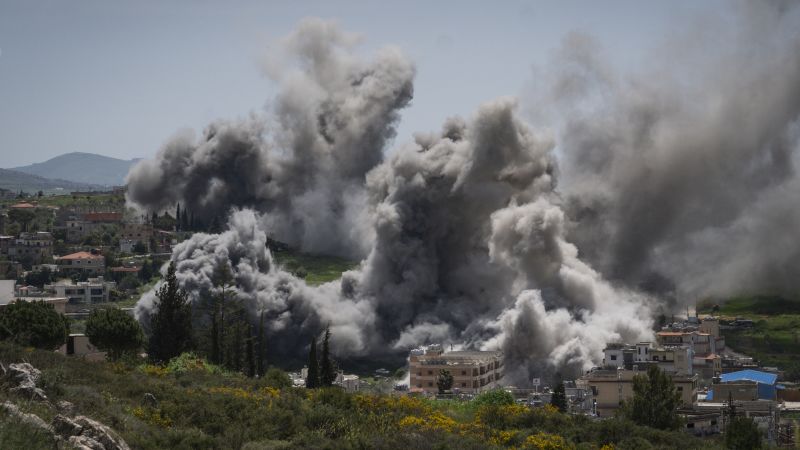
• A week of US strikes:The US military completed its latest wave of strikes against Iran on Friday, Central Command said, marking the seventh consecutive night of its renewed bombing campaign. This comes after Tehran launched another wave in its widening series of attacks on US allies in the region
• Tehran warns the US:A top Iranian military adviser warned the US could face a “full-scale offensive” in the coming days if its barrage continues through the weekend. Tehran has also threatened key ports in Gulf states, in response to the US destroying a surveillance tower near the Strait of Hormuz, according to Iran’s semi-official Fars news agency
• Emerging pattern:Iranian state media reported further strikes on bridges and highways connecting key coastal cities to the interior of the country
5 Posts
Several US allies reported raising alarms or fending off Iranian attacks early Saturday local time, according to state media and local authorities, as Iran claims to have launched strikes across the region
US allies reporting strikes or alerts:
- Kuwait issued seven warnings over 12 hours, extending into early Saturday, saying its air defenses were responding to missile and drone threats. Kuwait Airlines announced it would reschedule most of its Saturday flights due to the airspace closing, temporarily suspending all takeoffs and landings at the Kuwait International Airport.
- Bahrainannounced that its sirens had been activated, and urged members of the public to seek safety.
- Jordan’s air defenses intercepted 10 Iranian missiles early Saturday, Reuters reported, citing Jordanian state media.
- Saudi Arabiabriefly issued warnings in two locations before lifting them several minutes later, saying the danger had passed.
Iran’s claims:Iran state media claims Iran’s forces had targeted US forces and facilities across Bahrain and Kuwait. CNN could not independently verify the claims
Ibrahim Dahman contributed reporting
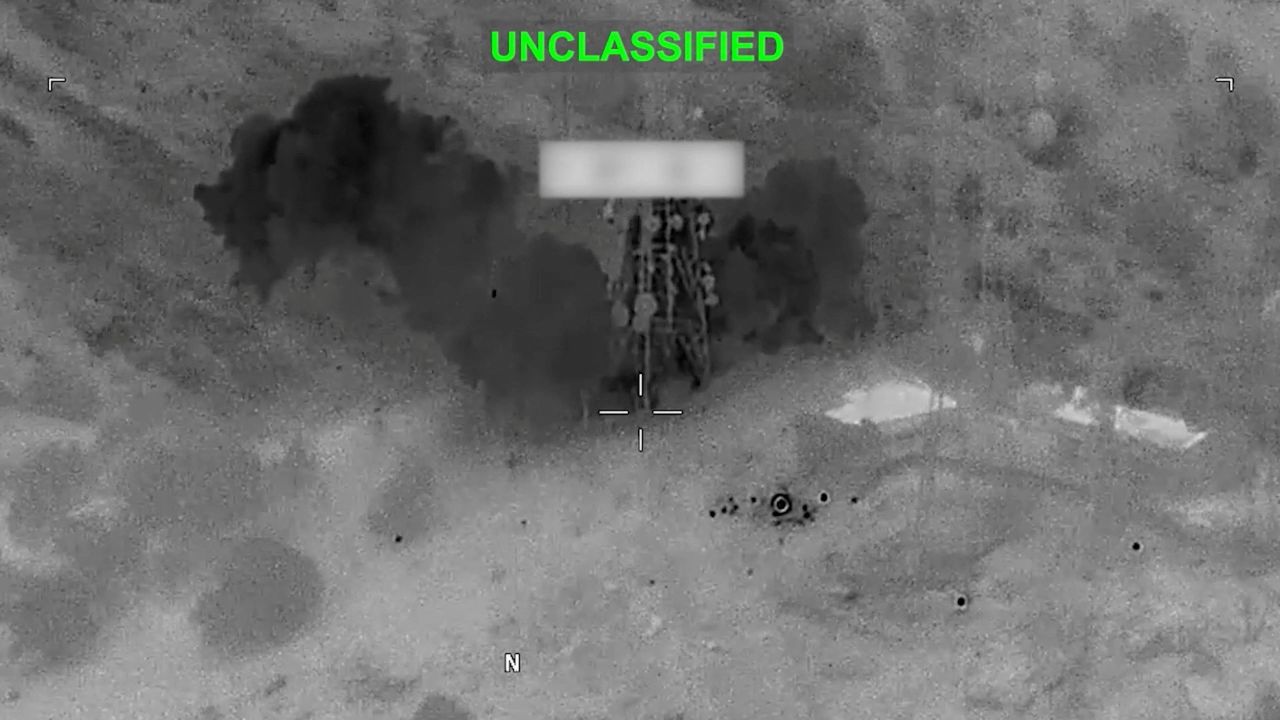
Smoke rises from an explosion at an unknown location, during what U.S. Central Command says are strikes on Iran, in this screen grab taken from a handout video released on Friday.
The US struck Iran for a seventh consecutive night, again targeting coastal areas near the Persian Gulf and Strait of Hormuz – as well as transport infrastructure further inland
Strikes late Friday into early Saturday were reported in the port city of Bandar Abbas, and the nearby islands of Qeshm and Larak which sits in the Strait of Hormuz
Bridges and a tunnel on a highway linking Bandar Abbas to Hajiabad further inland were also targeted, IRIB reported
Other areas targeted include Ahvaz, Darab, Yazd, Omidiyeh and Bushehr county – with some lying much further inland. CNN could not independently verify Iran’s claims
CENTCOM said its strikes had targeted “hit surveillance sites, military logistics infrastructure, underground weapons storage, and maritime capabilities.”
US President Donald Trump has repeatedly threatened to strike Iran’s bridges and power plants if Tehran does not return to the negotiating table
Several Arab nations have fiercely criticized Tehran’s sweeping strikes on US allies in the Middle East after the Trump administration escalated deadly attacks on Iran this week for seven consecutive days
The Iranian military hit several countries late Thursday through early Friday, including Oman, Jordan, Kuwait and Qatar, where a child was wounded by falling shrapnel from an intercepted strike
In Iraq, an Iranian missile and drone attack killed nine fighters of an Iranian-Kurdish group, according to an official from the group
Leaders in the region have issued stark condemnations and renewed demands for diplomacy – though US and Iranian officials show no signs of letting up
Here are some of the statements calling for diplomacy:
- Qatar: The Foreign Ministry in Qatar – whose officials acted as key mediators for discussions between Tehran and Washington earlier this year – urged “a serious return to dialogue and negotiations” and “understandings reached through diplomatic efforts.”
- UAE: The United Arab Emirates’ foreign minister vehemently criticized the Iranian strike in Iraq, warning the attack presents a “flagrant violation of the Republic of Iraq’s and Iraqi Kurdistan’s sovereignty.”
- Jordan:The country’s foreign minister denounced “brutal Iranian attacks” as a “blatant breach of international law” and cautioned against a “dangerous escalation” in the wider region.
- Kuwait: The Kuwaiti foreign minister expressed “strong denunciation of recent reprehensible Iranian aggressions” against Bahrain, Qatar and Jordan, describing the attacks as a “direct threat to the security of their people.”
Video released by CENTCOM shows US forces conducting the latest round of strikes against targets in Iran.
The United States military completed its latest wave of strikes against Iran on Friday, according to Central Command, marking the seventh consecutive night of its renewed bombing campaign
This comes after the US launched more airstrikes against Iran, intending to “continue degrading Iranian military capabilities,” according to the US military. Tehran also launched another wave in its widening series of attacks on US allies in the region
Here’s what to know about the US strikes and the impact:
• A pattern:US strikes on Iranian bridges, railway junctures and power lines connecting key coastal cities could suggest a wider pattern by Washington to advance options for seizing control of the Strait of Hormuz, an analyst told CNN
• Iran’s response:Mohsen Rezaei, a top IRGC official and military adviser to Supreme Leader Mojtaba Khamenei, warned of a “full-scale offensive” if the US persisted with military strikes against Iran. Tehran, so far, has been striking US allies in the region, which several Arab nations have fiercely criticized
• Impact on people:The cities currently under attack are among Iran’s poorest and most ethnically diverse, home to large populations of minority communities distinct from Persian-majority centers like Tehran. Despite being home to much of Iran’s energy industry and commercial ports, these provinces have historically suffered from underinvestment, high unemployment and weaker infrastructure
• Caught in the crosshairs:An Indian seafarer who went missing after an Iranian attack on his ship Sunday has been confirmed dead, the Forward Seamen Union of India said in a statement. This week, India ordered ship owners and operators not to deploy Indian seafarers on vessels traveling through the Strait of Hormuz, amid renewed hostilities
India is the world’s third-largest supplier of seafarers, with more than 300,000 sailors working across global shipping fleets, according to the government
CNN’s Mostafa Salem, Tim Lister, Leila Gharagozlou, Aida Karimi, Magdalena Sofia Vitores Moreno, Eyad Kourdi, Fadel Allassan, Davis Winkie, Dalia Abdelwahab and Sana Noor Haq contributed to the report
Mohsen Rezaei, a top Islamic Revolutionary Guard Corps (IRGC) official and military adviser to Supreme Leader Mojtaba Khamenei, warned the United States on Friday of a “full-scale offensive” if it persisted with military strikes against Iran
The comments come as the US completes its seventh consecutive day of strikes on Iran and Iranian retaliation at Arab US allies
“No political border will be secure against Iran’s offensive forces,” Rezaei said and added that the US should be required to pay financial reparations for what Iranian officials have characterized as attacks on civilian infrastructure, which the US denied
Rezaei’s threats largely mirror those recently made by US President Donald Trump, who had declared the already-fragile US-Iran ceasefire and memorandum of understanding “over” as the US launched new strikes on the country. Iran has retaliated by way of striking US bases within the territory of some of its Arab allies, including Qatar, Kuwait and Bahrain
