

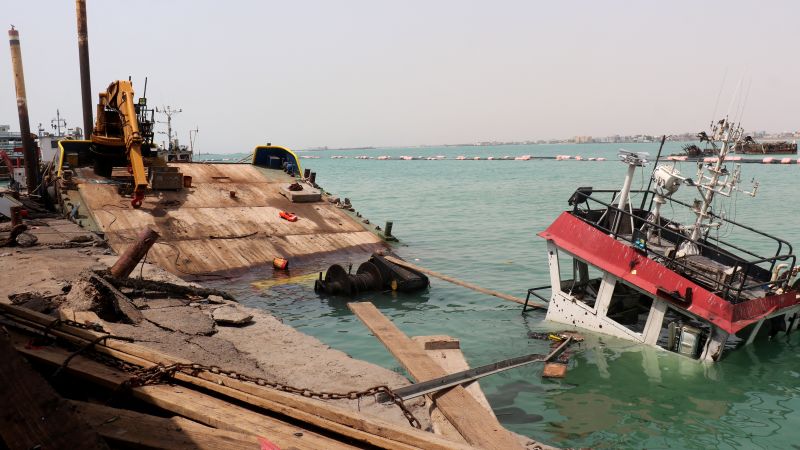
• Rough seas:Yemen has suspended operations at a strategic Red Sea port after recent attacks by Iran-backed Houthis, which killed seven people and caused about $16 million in losses. Meanwhile, another ship attack was reported on the Strait of Hormuz as US President Donald Trump and Iran trade barbs over control of the critical waterway
• Lebanon conflict: The death toll from Israeli airstrikes in south Lebanon on Saturday rose to 11, marking the deadliest day since a June ceasefire agreement. Israel said it was responding to a Hezbollah attack that wounded three Israeli soldiers
• Iranian pilots:Qatar has rejected an Iranian military commander’s claimthat the country had held three Iranian pilots for months after their planes were shot down early in the war
6 Posts
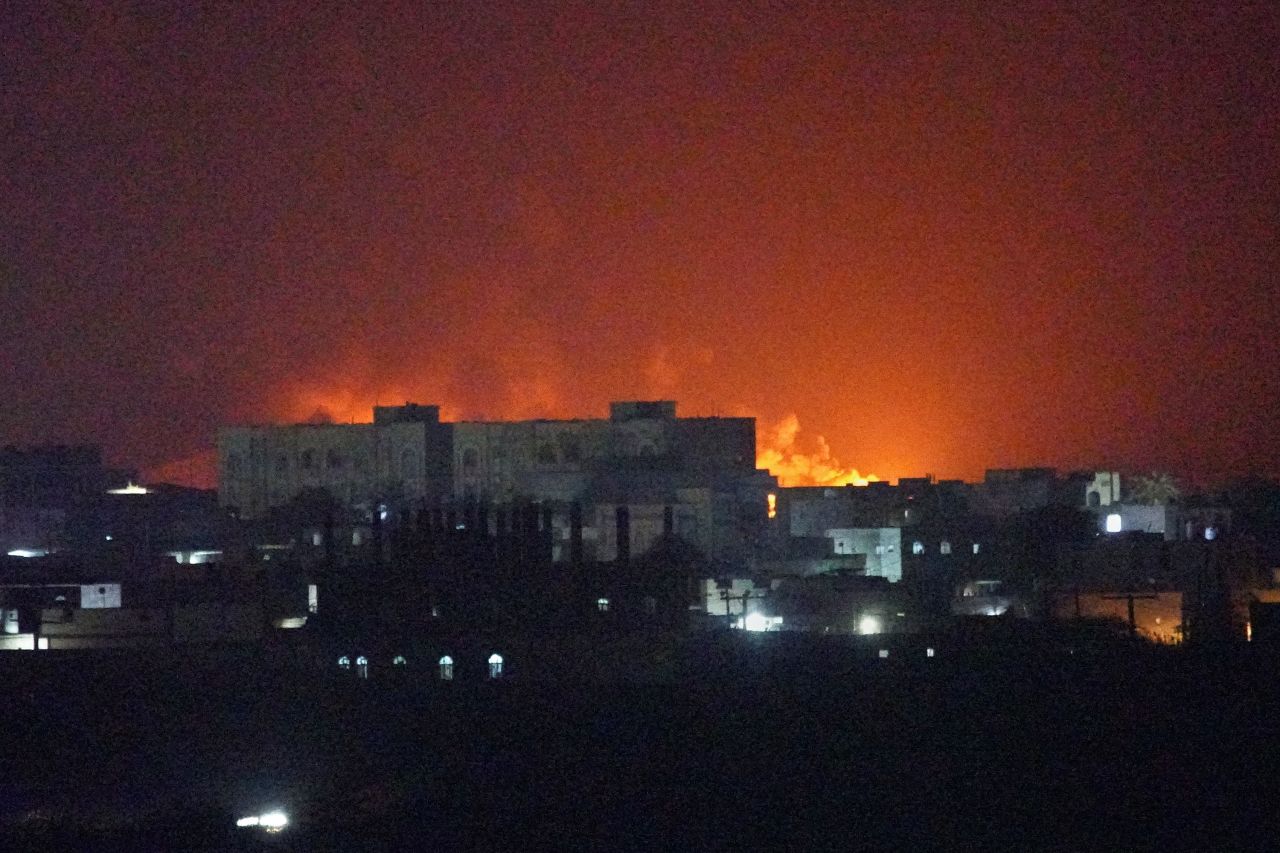
Flames and smoke rise from the port of Mokha during a strike in Yemen on August 14.
Mokha, a key Red Sea port in Yemen, has suspended operations this weekend after facing waves of missiles fired by the Iran-backed Houthi rebel group in recent days
The port is not the Houthis’ first target in the wider Middle East conflict. The Yemeni militia has launched a spate of attacks on US allies and shipping in the region during the Iran war
Who are the Houthis?One of the strongest Iran-backed militias in the Middle East, the Houthis entered the war in March, a month after Israel and the US attacked Iran, by firing missiles towards Israel
The Houthis belong to Yemen’s Zaidi Shia Muslim minority and are formally known as Ansar Allah — “Partisans of God.” After the Arab Spring in 2011, they seized a northern province and later the capital Sanaa, which they still hold, along with much of Yemen’s Red Sea coastline
The Houthis’ recent attacks raise the threat of an outbreak of another full-scale war in Yemen
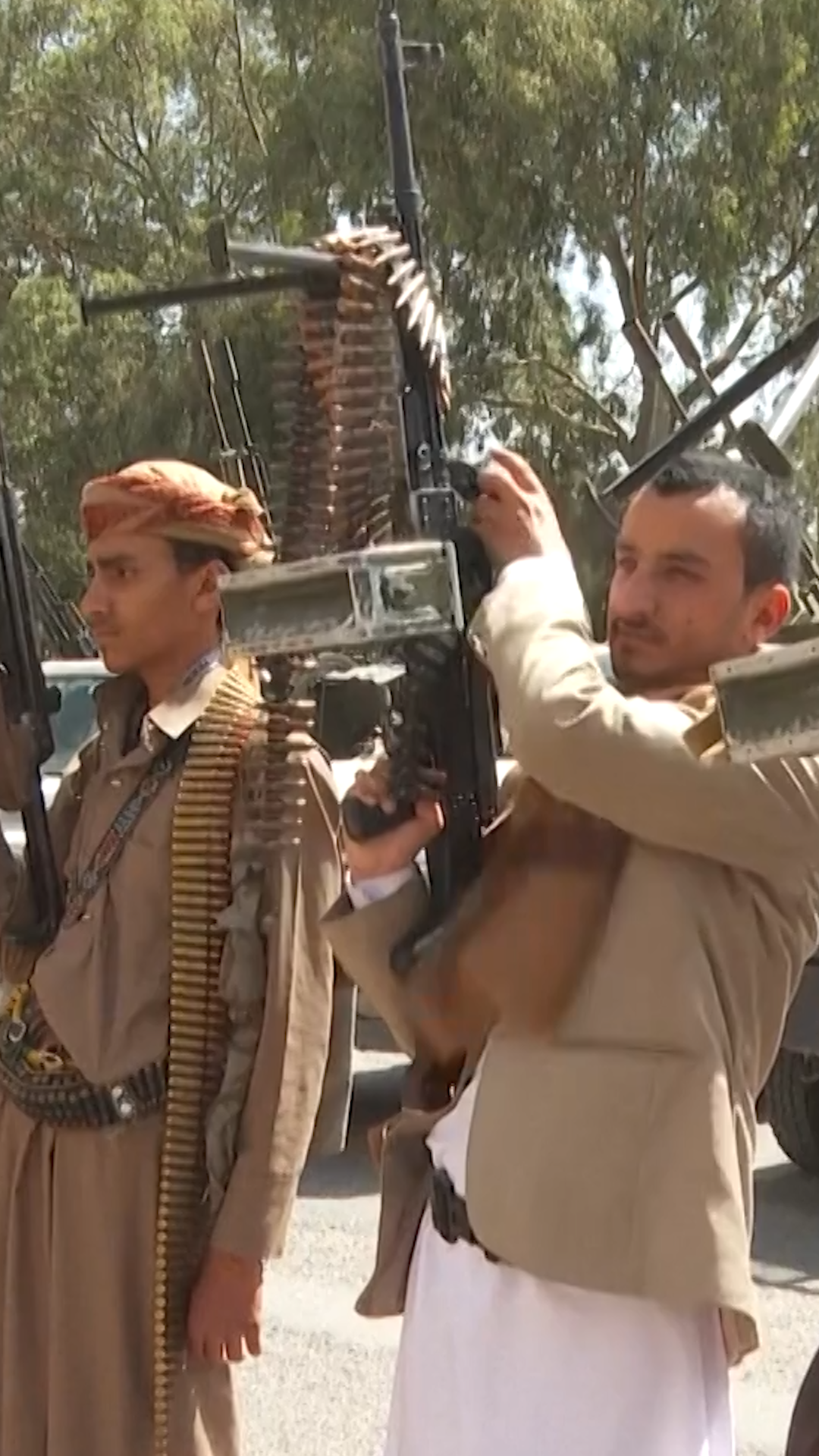
Who are the Houthis and how are they making a power play in Iran-US war?
Oil topped $100 a barrel for the first time since May after Yemen’s Houthi rebels targeted Saudi ships in the Red Sea, threatening to cut off another route for oil exports already choked by the effective closure of the Strait of Hormuz. CNN’s Nic Robertson explains who the Iran-backed rebel group is
1:56• Source:
CNN
Who are the Houthis and how are they making a power play in Iran-US war?
1:56
Why is there fighting in Yemen? The war in Yemen dates back over a decade, and is primarily a conflict between the Houthis and a Saudi-led coalition backing the internationally recognized government
US-allied Saudi Arabia spent seven years trying and failing to dislodge the Houthis from northern Yemen, launching a large-scale offensive against the militant group in 2015. The ensuing conflict provoked one of the world’s worst humanitarian crises
A truce was arranged in 2022, but it never became a peace. In the same year, Yemen’s internationally recognized government, operating under the Saudi-backed Presidential Leadership Council (PLC), was established in Saudi Arabia. Riyadh has worked to prop up the government with air and naval operations, as well as limited troop deployment
Since then, Saudi Arabia has maintained an economic and air blockade against Houthi-controlled areas, which the group has sought to break in recent weeks
CNN’s Mitchell McCluskey contributed reporting
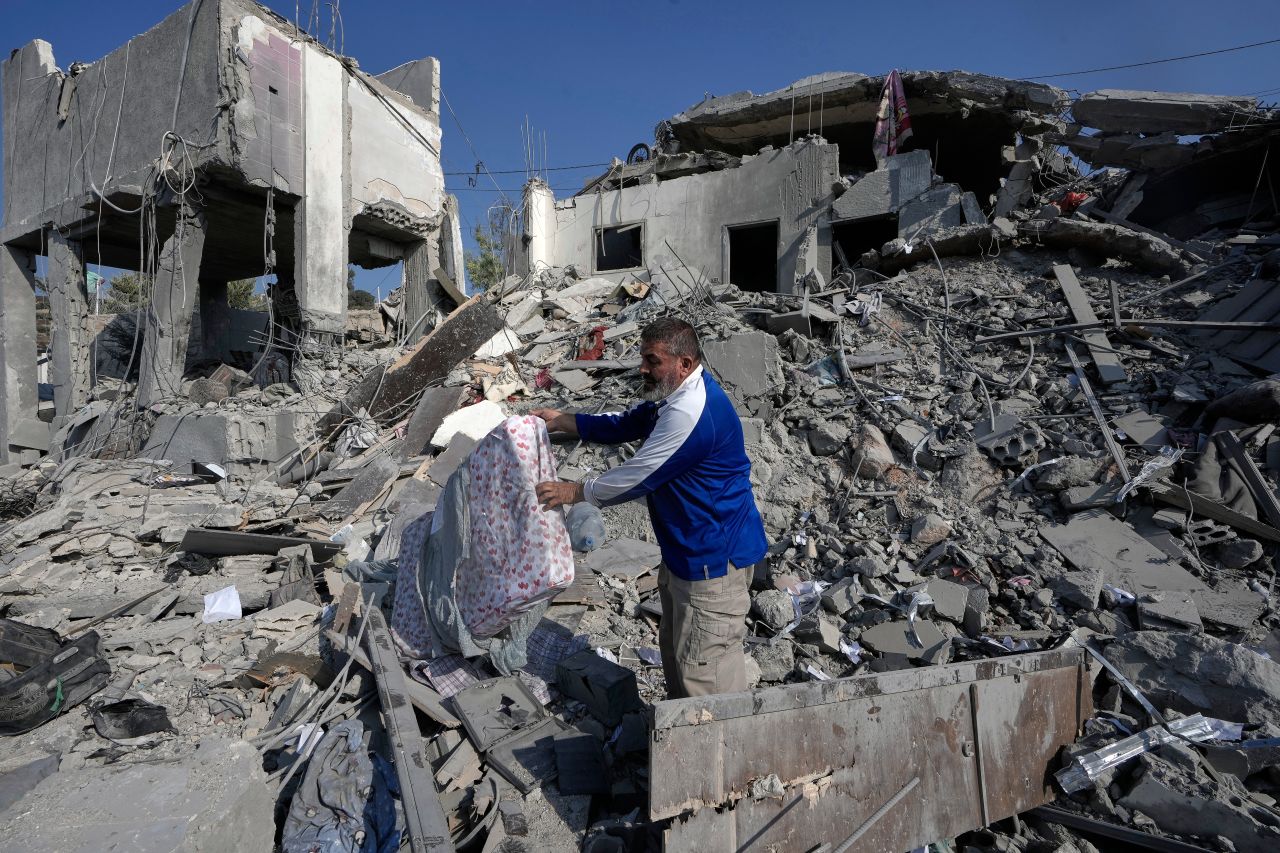
A man removes a mattress from the rubble of a destroyed home that was hit by an Israeli airstrike in Ansar village, southern Lebanon, on Saturday.
It’s Sunday morning in the Middle East and we are tracking developments there, including conflicts involving Iranian-backed militant groups in Lebanon and Yemen, which have deepened instability in the region during the US-Iran war
Here are the latest headlines:
- Houthi port attacks:Yemen’s Mokha port has suspended operations due to attacks by the Iran-backed Houthi militant group, the port’s director said Saturday, according to Reuters. The port was hit by more than 25 missiles in recent days, the director said, in attacks that killed seven people and caused an estimated $16 million in losses.
- Fighting flares in Lebanon: Deadly Israeli strikes in southern Lebanon killed at least 11 people on Saturday, according to the country’s Health Ministry, including women and children. The strikes were prompted by a Hezbollah attack that seriously injured three Israeli soldiers, according to the Israeli Prime Minister’s office, which said it targeted a Hezbollah headquarters in response. Fighting between Israel and the Iran-backed paramilitary group has served as another sticking point for regional peace efforts.
- Iranian pilots: The Qatari government has denied a claim that it is holding three captured Iranian airmen in the country. An Iranian military commander said earlier that pilots from two Iranian aircraft have been held by Qatar for months after getting shot down during an attack on the US ally early in the war.
- Ship strike: A vessel affiliated with the United Arab Emirates’ state oil company was attacked Friday night in the Strait of Hormuz, the UAE’s Foreign Ministry said, blaming Iran for the attack and describing it as a “flagrant violation” of international law.
- More on the strait: Iran and US President Donald Trump have traded barbs about control of the critical waterway in recent days. Trump claimed he would declare the strait US territory after the war ends. Tehran responded that the strait “cannot be seized with a tweet.” Control of the Strait of Hormuz is central to Iran’s leverage in negotiations with the US, as disruptions to oil shipping roil global markets. The Iranian foreign minister said the country hasn’t yet decided whether to resume talks with the US.
CNN’s Mitchell McCluskey, Dana Karni, Oren Liebermann, Mostafa Salem, Valey Arya and Catherine Nicholls contributed reporting
Burning vessels and damaged port infrastructure following Houthi strikes on Yemen’s Mokha port.
Yemen’s Mokha port has suspended operations after being hit by more than 25 missiles in recent attacks by the Houthi militant group, the port’s director said on Saturday
The attacks killed seven people and caused an estimated $16 million in losses, the director said in a news conference
On Friday, the Houthis launchedsix ballistic missiles at Mokha, a strategic port city on the Red Sea, Yemen’s internationally recognized government said
Houthi Armed Forces spokesperson Brig. Gen. Yahya Saree said the attacks targeted “Saudi military concentrations and weapons, as well as military boats belonging to its proxies and mercenaries” in Mokha
Some background:In recent weeks, the Houthi rebels have launched a spate of attacks on US allies and shipping in the region
One of the strongest Iran-backed militias in the Middle East, the Houthis entered the war in March, a month after Israel and the US attacked Iran, by firing missiles towards Israel
This month, the group has traded fire with Yemen’s internationally recognized government and struck Saudi Arabia after a four-year de facto ceasefire with the kingdom
The escalation comes at a time of shaky maritime security in both the Strait of Hormuz and the Red Sea
CNN’s Nadeen Ebrahim and Anna Cooban contributed to this report
Qatar has rejected an Iranian military commander’s claim that it had held three Iranian pilots for months after their planes were shot down early in the war
“We categorically deny the claims circulating regarding the detention of Iranian pilots and are surprised by these misleading statements at this particular time, amid the ongoing diplomatic efforts and initiatives aimed at de-escalating tensions in the region,” said Majed Al-Ansari, the spokesperson for the Ministry of Foreign Affairs
The denial came after Iranian military commander Seyed Mohammad Bagherzadeh, who leads Iran’s armed forces’ missing persons search committee, claimed in a letter to the Red Cross that Qatar had held the three crew members for months
Bagherzadeh said two Iranian Su-24 bombers were shot down after targeting the US military base in Qatar. Three Iranian pilots ejected and one was killed in action who did not provide evidence supporting the claim
Al-Ansari also said Qatari search and rescue teams searched for the remains of the pilots and spoke to Iran to coordinate the handover of the remains of one of the pilots. He said Qatar had invited Iran to be briefed on the details of the operations in April but didn’t receive a response
Bagherzadeh identified the missing crew members as Javad Salehi, Abdolmajid Dashtian, and Omran Beh Rowshia, and claimed they were captured by Qatari forces and have not been permitted visits or meetings despite “diplomatic efforts.”
This appears to be the first time Iran has accused Qatar of holding the pilots. Just two weeks ago, the Iranian military said they were still trying to determine their fate
A man watches first aid responders and residents search the site of an Israeli airstrike in Deir al-Zahrani, Lebanon on Saturday.
Saturday marked the deadliest day of Israeli strikes on southern Lebanon since a tenuous truce between Israel and Lebanon renewed in late June, with at least 11 people reported killed in the attacks
Lebanese Prime Minister Nawaf Salam called the strikes an “escalation” and a “matter of utmost gravity” in a post on X
Israel and Lebanon agreed on the latest ceasefire nearly two months ago. The ceasefire agreement was mediated by the United States, with ongoing talks between the two governments intended to begin a withdrawal of Israeli forcesfrom southern Lebanon. The agreement allowed Israel to continue operating in certain parts of southern Lebanon
Hezbollah rejected the agreement only days after it agreed to its own renewed ceasefire with Israel following one of the deadliest days in Lebanon in which the Israeli military killed at least 47 people in Lebanon, after a Hezbollah attack that left four Israeli soldiers dead
The agreement was backed by US President Donald Trump, whose efforts to neutralize tensions with Iran have long been imperiled by Israel and Hezbollah’s ongoing fighting
Days later, Israel approved continued military operations in southern Lebanon, striking buildings in Nabatieh and Mayfadoun. The IDF called these “Hezbollah command centers,” while the militant group said they were residential
But none of the multiple ceasefire agreements signed since April have successfully ended the fighting in Lebanon
Earlier this month, Israel issued its first evacuation order in southern Lebanon since June, launching fresh strikes on the area as Lebanese and Israeli officials met for talks in Rome to cement the terms of the ceasefire
The US-mediated talks ended earlier than expected after the attacks, but resumed the next day
CNN’s Elise Hammond, Alejandra Jaramillo, Eyad Kourdi, Sana Noor Haq, Eugenia Yosef, Oren Liebermann, Hanna Ziady, Kara Fox, Dani Karni, Ibrahim Dahman and Jennifer Hansler contributed reporting
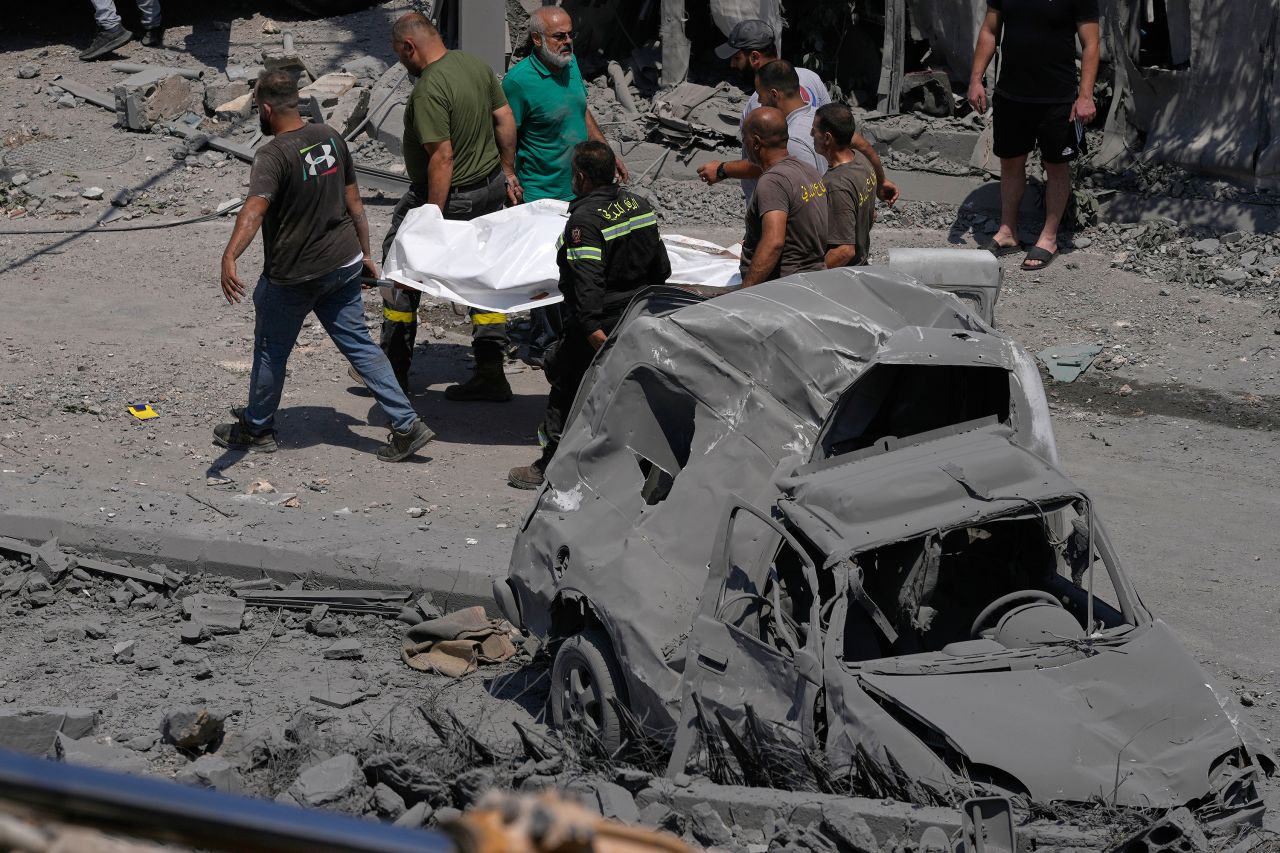
Rescue workers carry the body of a person who was killed by an Israeli airstrike in Deir al-Zahrani, Lebanon on Saturday.
The death toll from Israeli strikes on southern Lebanon on Saturday morning rose to 11, the Lebanese Health Ministry said, with another 19 people wounded
Children and women are among those killed, the ministry said in a statement
In a Saturday statement, the Israeli prime minister’s office accused Hezbollah of violating the ceasefire by attacking Israeli soldiers. Three Israeli soldiers were seriously injured in a Hezbollah attack in southern Lebanon, it said
The Israel Defense Forces said it struck a headquarters of Hezbollah’s elite Radwan force in response, killing what it described as a battalion commander and several others. The IDF said the commander’s family was with him at the time of the strike, alleging he “used his family as human shields.”
Hezbollah has condemned what it called “escalating aggression” and “a brutal massacre” carried out by the IDF against “innocent civilians.”
The escalation “reflects the desire and will of” Israeli Prime Minister Benjamin Netanyahu “to escalate the war to bolster his domestic political standing, serve his electoral goals, and appease the extreme right wing,” it added, also accusing the US of sharing responsibility for the attacks by providing Israel with “support and cover.”
Lebanese Prime Minister Nawaf Salam demanded a halt to the Israeli attacks
“The responsibility for dealing with any military infrastructure, if it exists on Lebanese territory, rests exclusively with the Lebanese state, through the Lebanese Army and its legitimate institutions, and its presence does not give Israel the right to violate Lebanese territory or endanger civilians,” Salam said in a statement on X
