

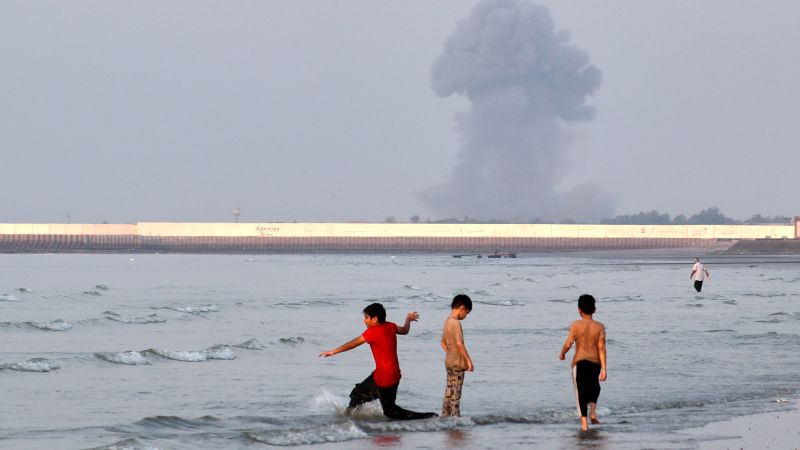
• Blockade underway:The US has reimposed its naval blockade of Iranian ports, according to a US military statement. The US previously enforced a blockade between April and June
• Ceasefire in tatters: The US militaryalso launched its fourth consecutive day of strikes on Iranian targets. State media reported explosions in the port city of Bandar Abbas and several locations near Sirik. Iranian state media also reported Tehran struck US military assets in Jordan
• US warning:President Donald Trump warned the USwould strike Iranian bridges and power plants next week unless Tehran returns to the negotiating table. This is not the first time he’s made such a threat, using blustery warnings as a negotiating tactic
• Trump rescinds toll decision:Earlier today, he announced the US will not impose a 20% reimbursement fee on cargo moving through the Strait of Hormuz, saying it will be replaced by Gulf state investments in the US
59 Posts
The US House of Representatives will vote next week on a budget resolution that will set the stage to pass President Donald Trump’s third agenda package, which is likely to include money for the war with Iran
While the details of the bill are still being ironed out, GOP leaders are aiming to use the legislation to pass funding for the Iran war, address some of Trump’s desired changes to federal election laws, and more
The administration has requested around $87.6 billion to cover funding for the war and other Pentagon priorities
House Speaker Mike Johnson defended spending for the Iran war when pressed by CNN on Tuesday
He sidestepped a question on whether Congress must also authorize the war in Iran. The speaker has largely defended the president’s ability to engage in hostilities with Iran without congressional approval
Iran’s army claims to have struck US military assets at the Al-Azraq Air Base in Jordan
Iranian attack drones allegedly struck an area where F-18 fighter jets were stationed, an accommodation building, and a large equipment hangar that IRNA said belonged to the US army
CNN cannot independently verify the claim. It has reached out to US Central Command (CENTCOM) for comment
“These operations will continue until final victory is achieved,” IRNA cited the Iranian army as saying
Iran previously targeted Al-Azraq Air Base last week, when it claimed to have destroyed F-35 hangars
Iran’s latest strikes on US military interests in the region come as the US has reimposed a naval blockade on Iranian ports
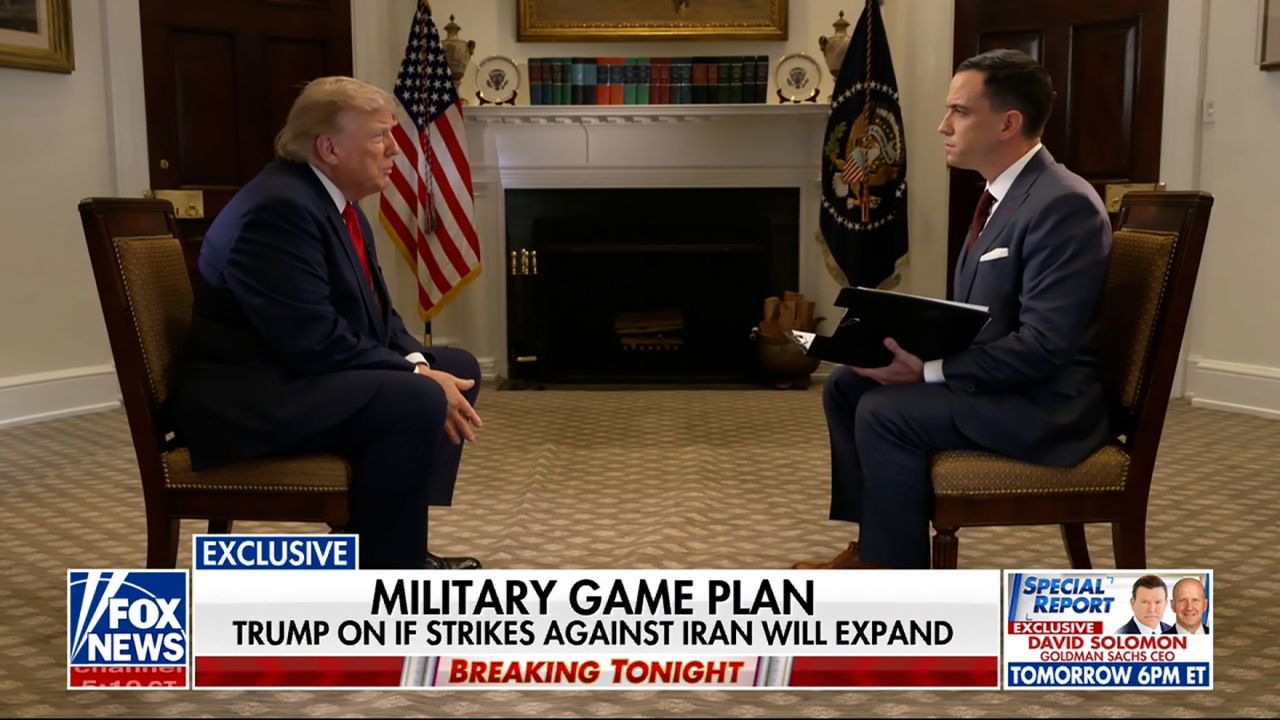
President Donald Trump takes part in an inteview on Fox News on Tuesday, July 14
President Donald Trump upped his pressure on Iran to make a deal with the US on Tuesday, saying the country won’t “have anybody left” if it doesn’t
“You better make a deal,” Trump told Fox News’ Trey Yingst in an interview, adding, “You’re not going to have anybody left.”
The president went on to say that the US is “being very careful with the civilian population,” before repeating, “But I said, you better make a deal. You’re not going to have anything left.”
Trump said that message to Iran was conveyed during the latest communication between his representatives and Tehran, which he said took place “about an hour ago.”
Asked if he thinks Iran will make such a deal, Trump told Yingst, “They should. I don’t know if they will or not.”
The Trump administration has frozen more than $130 million in cryptocurrency it says is linked to Iran, according to aeks to ratchet up pressure against Tehran
The frozen cryptocurrency comes as the memorandum of understanding between the US and Iran meant to end the war has collapsed. The administration has imposed a series of sanctions in recent days and has also escalated military action against Iran, launching another set of airstrikes on Tuesday
The Treasury Department on Tuesday imposed sanctions on several digital wallets said to be linked to the Central Bank of Iran, leading to the freeze of the assets. The department also sanctioned more than 50 targets allegedly tied to an Iranian sanctions evasion network
Thepto transactions around the world, was involved in freezing the assets
In April, the administration froze $344 million in cryptocurrency allegedly linked to Iran
Heavily sanctioned regimes like Iran, Russia and North Korea have increasingly turned to cryptocurrency, which is less regulated than the traditional banking system, to generate revenue and skirt sanctions
President Donald Trump warned that the United States would strike bridges and power plants in Iran “next week” unless Tehran returns to the negotiating table
“We’re going to hit them very hard tomorrow night. We’re going to hit them very hard the night after, and then next week it gets really bad for them, because next week comes the power plants. Next week comes the bridges. We’re going to knock out all their power plants. We’re going to knock out all their bridges unless they get to the table and negotiate,” Trump told Fox News in an interview Tuesday
It’s not the first time Trump has threatened to strike power plants and bridges in Iran, and he’s frequently used aggressive and blustery threats as a negotiating tactic without following through. Iran and US representatives are still talking, but the Trump administration has said they can’t move forward on negotiations while Iran limits traffic in the Strait of Hormuz
Trump said strikes on Iran, which have continued for the fourth consecutive day, since the implosion of a memorandum of understanding will “continue until I say it’s enough.”
The president also declined to rule out calling in ground troops to Iran, but said “I don’t want to do that.”
“Sometimes you need a ground campaign, but we have other people that will do the ground campaign for us,” he said. He didn’t specify other countries that had offered to send troops
A US strike in southern Iran killed three members of a park ranger’s family, Iranian Foreign Ministry spokesperson Esmaeil Baghaei said Tuesday
Baghaei said the strike hit an environmental protection post and ranger station in the village of Seyyed Jowzar in Hajjiabad county, Hormozgan province, on Tuesday morning
CNN cannot independently confirm Baghaei’s claims. It has reached out to US Central Command for comment
Iran’s PressTV reported that the ranger was on duty at the time of the strike but survived unharmed. It said his two sons and a daughter-in-law were killed
“The list of American crimes against Iranians grows longer every day, and with each passing day the United States reveals another layer of its hostility toward Iran,” Baghaei said
“Each new crime further strengthens the resolve of Iranians to pursue justice and to seek the trial and punishment of those responsible for ordering and carrying out these acts,” he added
US airstrikes have hit several sites in southern Iran
Iran’s state-run Islamic Republic News Agency (IRNA) said the port city of Bandar Abbas and several locations near Sirik were hit. The report came soon after the US military said it had launched another set of airstrikes against the country ahead of the reimposition of its naval blockade
CNN has reached out to US Central Command for comment
IRNA reported impacts in the eastern part of Bandar Abbas and several blasts between the city of Sirik and the village of Tahrouyi. It said a location near Sirik was hit at around 11 p.m. local time (3:30 p.m. ET) by “American projectiles.”
IRNA later said Hengam Island, another Persian Gulf island just south of Qeshm Island, was hit by US projectiles
All the sites are in Hormozgan province near the strategic Strait of Hormuz
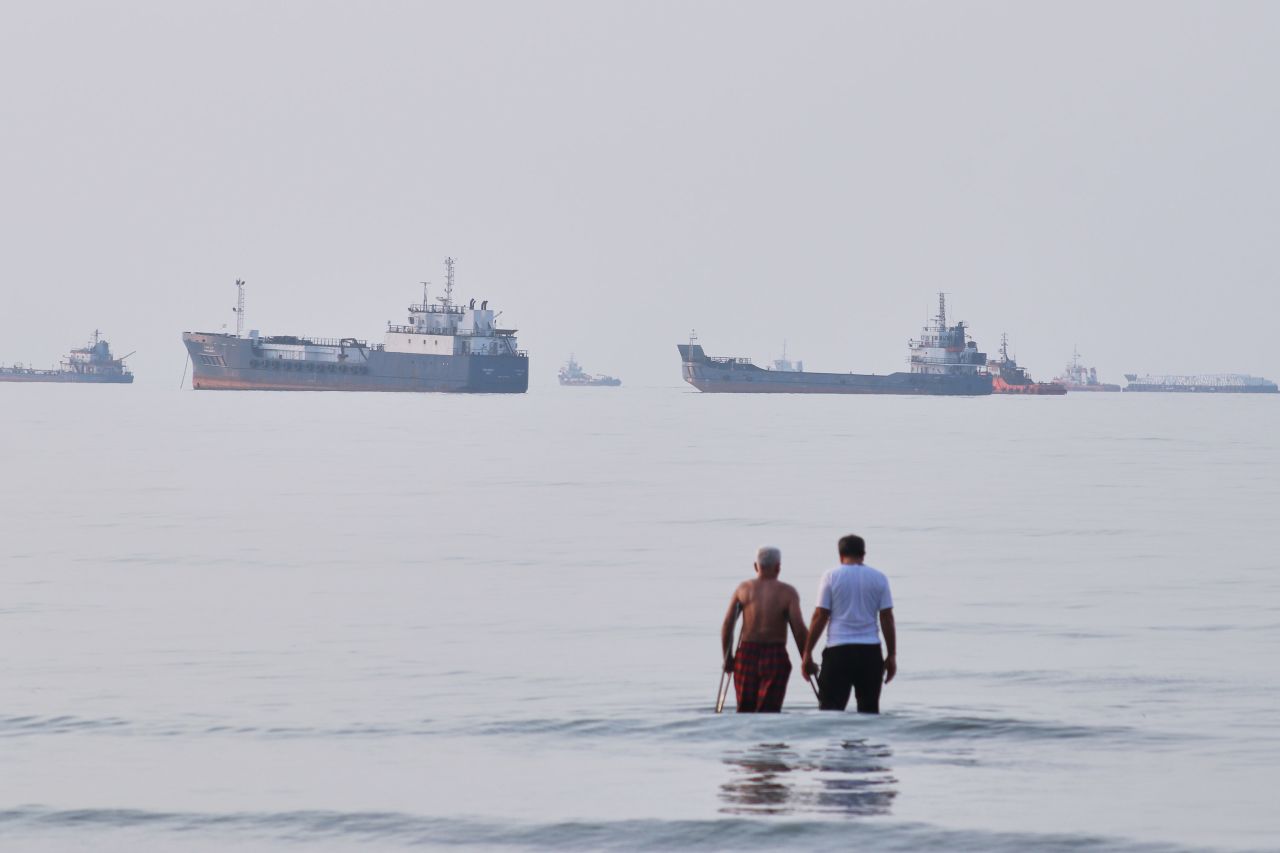
Two men wade in the waters of the Strait of Hormuz with vessels anchored in the background, off Bandar Abbas, Iran, Sunday, July 12.
The US military’s naval blockade of ships going to and from Iranian ports resumed at 4 p.m. ET, US Central Command said in a post on X
The blockade restarts a day after President Donald Trump said it would be reinstated and the US would act as the “guardian” of the Strait of Hormuz
US Central Command reaffirmed the deadline in a post on X minutes before it was set to go into effect, adding that the US was carrying out more strikes against Iran on capabilities around the strait
Trump said Monday that the US would charge commercial shippers 20% of the value of their cargo to reimburse the US for “providing safety and security” in the strait. But he reversed course on Tuesday, saying Arab states in the Persian Gulf would make “Trade and Investment Deals … into the United States.”
The US previously enforced a blockade on Iranian ports earlier in the war for roughly two months, between April and June. The enforcement operations stretched from the Middle East to the Indian Ocean thousands of miles away
Iran’s deputy foreign minister, Kazem Gharibabadi, said Tuesday that Tehran has “no obligations” to the 14-point agreementwith the US that was reached last month
“The core of the Islamabad memorandum of understanding concerned ending the war — an immediate and permanent cessation of the war and, in effect, of military operations against the Islamic Republic of Iran — as well as on all other fronts, including Lebanon,” he said. He referred to Israeli attacks against the Iranian-backed Hezbollah militant group in Lebanon, which have continued despite a truce agreed by Israel and Hezbollah as part of the Iran ceasefire framework
Gharibabadi said that it was “unreasonable and baseless” to therefore expect Iran to uphold its commitments under the agreement, such as reopening the Strait of Hormuz to shipping traffic
The deputy foreign minister said that Iran would not initiate a request for negotiations with the US, blaming Washington for causing the breakdown of the ceasefire
“If the United States believes that by intensifying pressure and military actions against Iran it can force the Islamic Republic to request negotiations, it is gravely mistaken,” he said
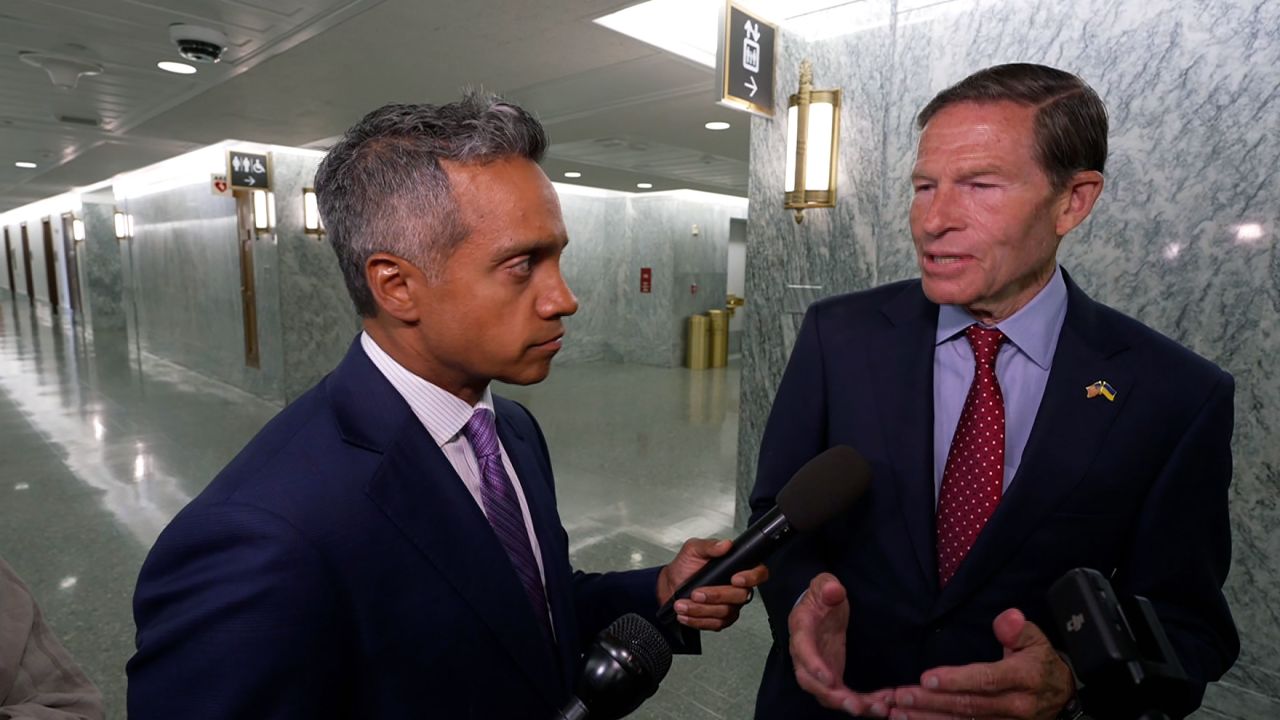
Sen. Richard Blumenthal, right, speaks with CNN’s Manu Raju on Tuesday, July 14.
Senate Democrats on Tuesday blocked the annual defense policy package, a must-pass piece of legislation that usually passes with large bipartisan support, amid their objections over the war in Iran
The vote on the National Defense Authorization Act, or NDAA, was 50-46
There are still several months until the deadline to pass the package, but the Senate’s inability to advance the measure shows how deep divisions over the war could affect policy and funding for the Pentagon
Democratic Sen. Richard Blumenthal, a senior member of the Armed Services Committee, told reporters earlier Tuesday that he sees the package as analogous to backing the war with Iran
“I think it reflects a decision to continue funding the war, and there’s been no accountability on the part of this administration,” he said. “Before I vote on the NDAA, I want to see the administration come forth with the facts about what its strategy is, as well as its end game in Iran — but basically, approval from Congress as it must do under the War Powers Act.”
Sen. Tammy Duckworth, another Democrat on the panel, had warned she would not vote to advance the bill unless it included her amendment to halt additional funding for offensive actions in Iran
“Simply throwing more money at an out-of-control military operation is not strategy. It’s a recipe for a forever war,” she said in a statement Tuesday morning. “The stakes couldn’t be higher, and I cannot support a defense authorization bill that doesn’t include my amendment to end this illegal war.”
The US launched another set of airstrikes against Iran on Tuesday ahead of the reimposition of its naval blockade, according to a US military statement
“At 3 p.m. ET today, US Central Command forces began launching an additional round of strikes against Iran to continue degrading Iranian capabilities used to attack commercial shipping in the Strait of Hormuz,” CENTCOM said in a statement posted to X. It added that the strikes were occurring as troops “prepare to resume the naval blockade against Iranian ports and coastal areas.”
The scope and scale of the strikes were not immediately clear. The US blockade, barring ships from passing through the Strait of Hormuz to access Iranian ports, is due to commence at 4 p.m. ET
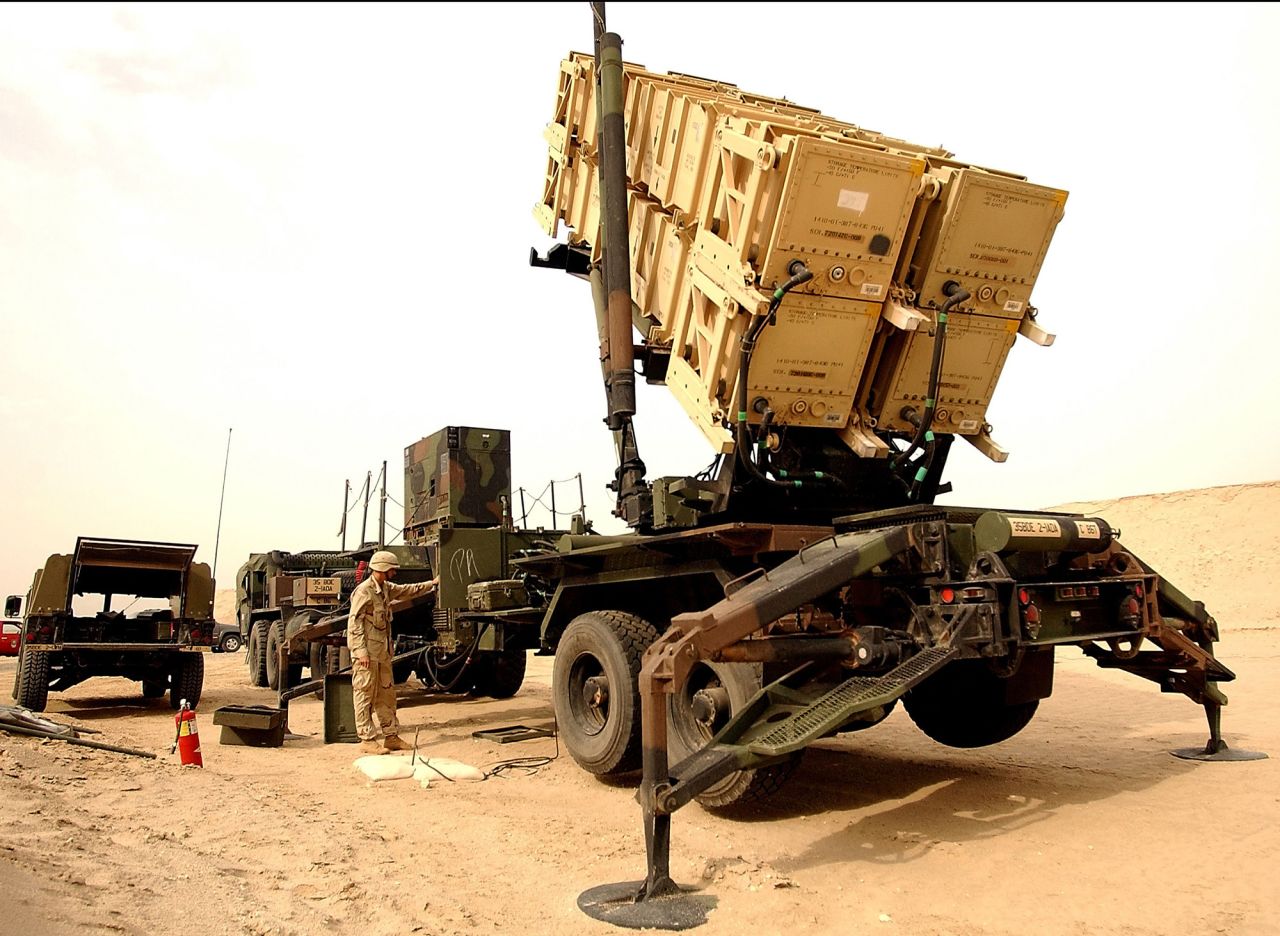
In this Defense Department photo, a US soldier checks a Patriot missile launch station on February 4, 2003, at Camp Arifjan, Kuwait.
US forces have been helping defend Kuwait from a steady stream of Iranian retaliatory attacks throughout the day on Tuesday, including by using Patriot missile systems that are part of a strained US stockpile, according to two US officials
US forces also conducted additional strikes on military targets in Iran earlier Tuesday to eliminate emerging threats, one of the officials said
The region remains a “dynamic environment,” the same official added, as US forces continue to launch strikes against Iran and help defend Persian Gulf partners from incoming attacks
As part of that effort, US forces have used the Patriot missiles to intercept what Kuwait’s military called “hostile aerial targets.”
During the early phase of the Iran conflict, dubbed Operation Epic Fury, the US military expended thousands of key missiles used for long-range precision strikes and to defend against enemy air and missile attacks, according to analysts and previous CNN reporting
CNN has reported that the US inventory of Patriot air defense interceptors has been significantly depleted during the conflict with Iran
Earlier Tuesday, Kuwait’s military warned that “any explosion sounds that may be heard are the result of the Air Defense systems intercepting hostile attacks.”
Over the weekend, Kuwaiti authorities reported drone attacks on border posts and an oil rig
Four members of Kuwait’s armed forces were wounded by an Iranian attack on a Kuwaiti naval vessel, the country’s Defense Ministry said Tuesday
A military spokesperson, Col. Saud al-Attwan, said in a statement that the wounded service members received medical treatment and were in stable conditions
He said Kuwait’s armed forces intercepted one ballistic missile, five cruise missiles and 33 hostile drones since Tuesday evening local time
The attacks targeted a number of civilian facilities and caused material damage after debris fell in several locations, he said
Kuwait’s armed forces “affirm their continued commitment to performing their tasks and duties efficiently,” he added
The Iranian regime has repeatedly warned the Persian Gulf’s Arab states against hosting and aiding US forces amid escalating clashes with the United States over control of the Strait of Hormuz
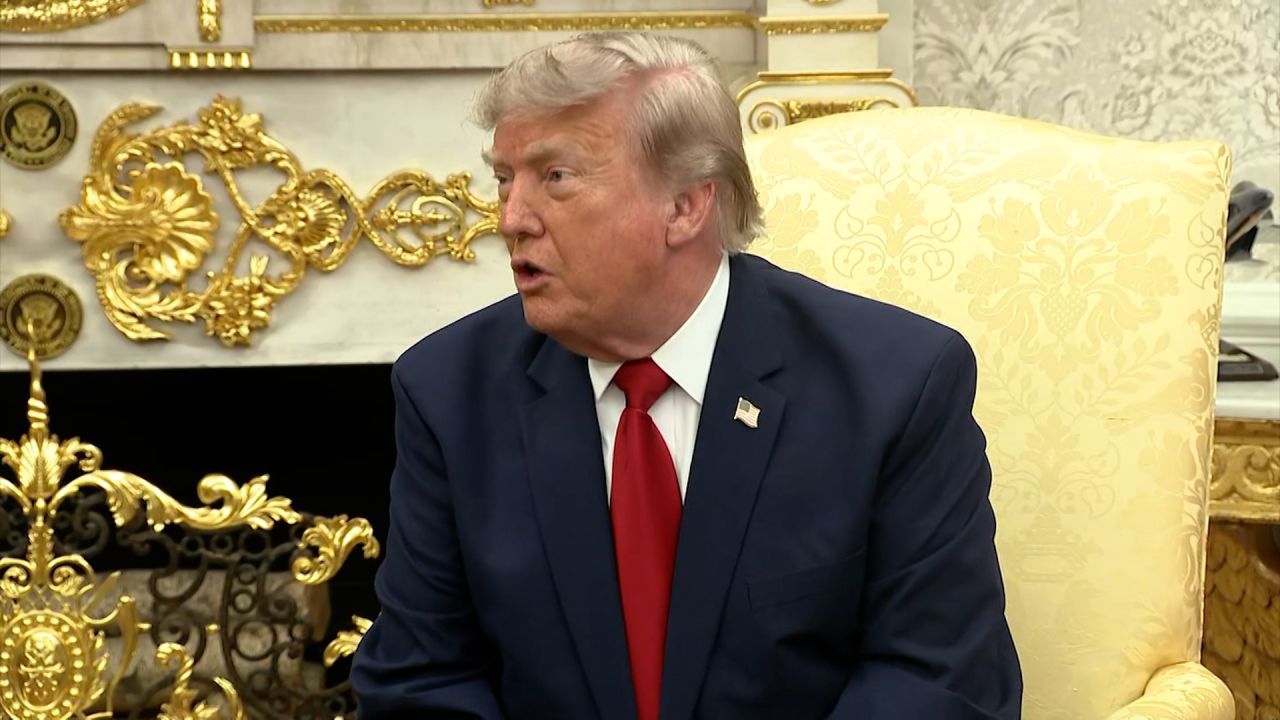
Trump rescinds toll plan for ships in Strait of Hormuz
1:10• Source:
CNN
Trump rescinds toll plan for ships in Strait of Hormuz
1:10
The US military is set to reimpose its blockade on Iran ports today. It comes after President Donald Trump reversed course, saying the US would no longer impose a cargo charge on other vessels transiting the Strait of Hormuz
With the ceasefire between the two countries broken down, both sides are launching attacks
Here’s the latest:
- Trump said he would no longer impose a 20% reimbursement fee on cargo moving through the Strait of Hormuz, saying that the revenue will be replaced by investments in the US from Arab countries in the Persian Gulf. He previously said the fee would cover US-provided security.
- In recent days, several vessels in the Strait of Hormuz have been attacked, killing at least two people. Tehran declared the strait “closed” over the weekend and Trump has said the US would become the “guardian” of the critical waterway. Meantime, global oil prices were up sharply on Tuesday.
- The US will officially resume its naval blockade of ships going to and from Iranian ports at 4 p.m. ET today (11:30 p.m. local time in Iran), US Central Command said yesterday. The new Iranian body tasked with overseeing passage through the Strait of Hormuz said hundreds of non-Iranian vessels have sought its authorization to use the waterway in recent weeks.
- Iran’s Pickaxe Mountain is “on the list” of the assets Washington is considering targeting, Trump said. A senior security source in Tehran told CNN that Iran would deliver a “devastating response.” Meantime, a power plant on Iran’s Kish Island in the Persian Gulf was damaged in what the power company says was a US attack, Iran’s semi-official Fars News Agency reported.
- Trump said he does not regret temporarily easing sanctions on Iran before his administration reinstated them and resumed military action last week because he “wanted to give them a chance at making a deal.” A sanctions package targeting Russia could expand to include Iran and Hezbollah, he said.
- Kuwait’s military is currently “engaging hostile aerial targets,” according to a statement from the Kuwaiti armed forces. Over the weekend, Kuwaiti authorities reported drone attacks on border posts and an oil rig.
- The European Union Aviation Safety Agency directed airlines to avoid flying over Bahrain, Kuwait, Qatar, the United Arab Emirates and a section of airspace over the waters of the Gulf of Oman.
CNN’s Anna Cooban, Hanna Ziady, Billy Stockwell, Catherine Nicholls, Aida Karimi, Dana Karni, Oren Liebermann, Betsy Klein, Max Saltman, Alejandra Jaramillo and Adam Cancryn contributed reporting
Qatar has condemned Iran’s repeated attacks on Arab countries in the Persian Gulf region and broader Middle East, including Bahrain, Kuwait and Jordan
Arab nations of the Persian Gulf, as well as Jordan, have recently come under Iranian attack
Jordan said its air defense systems intercepted and shot down four missiles fired from Iran on Tuesday morning local time. At the same time, Bahrain said it intercepted and destroyed several drones and missiles from Iran. And Kuwait said it was fighting off air attacks on Tuesday, after the country’s authorities reported drone attacks on border posts and an oil rig over the weekend
The European Union Ar Bahrain, Kuwait, Qatar, the United Arab Emirates and a section of airspace above the waters of the Gulf of Oman
Later Tuesday, the Iran’s Islamic Revolutionary Guard Corps (IRGC) said it struck several weapons storage facilities and parts depots for “enemy” naval vessels at Sheikh Isa air base in Bahrain, according to state-run Islamic Republic of Iran Broadcasting (IRIB). The IRGC also hit the Ali al-Salem airbase, damaging a number of drones, IRIB said
Ali al-Salem hosts US troops which has responsibility for US forces in the region
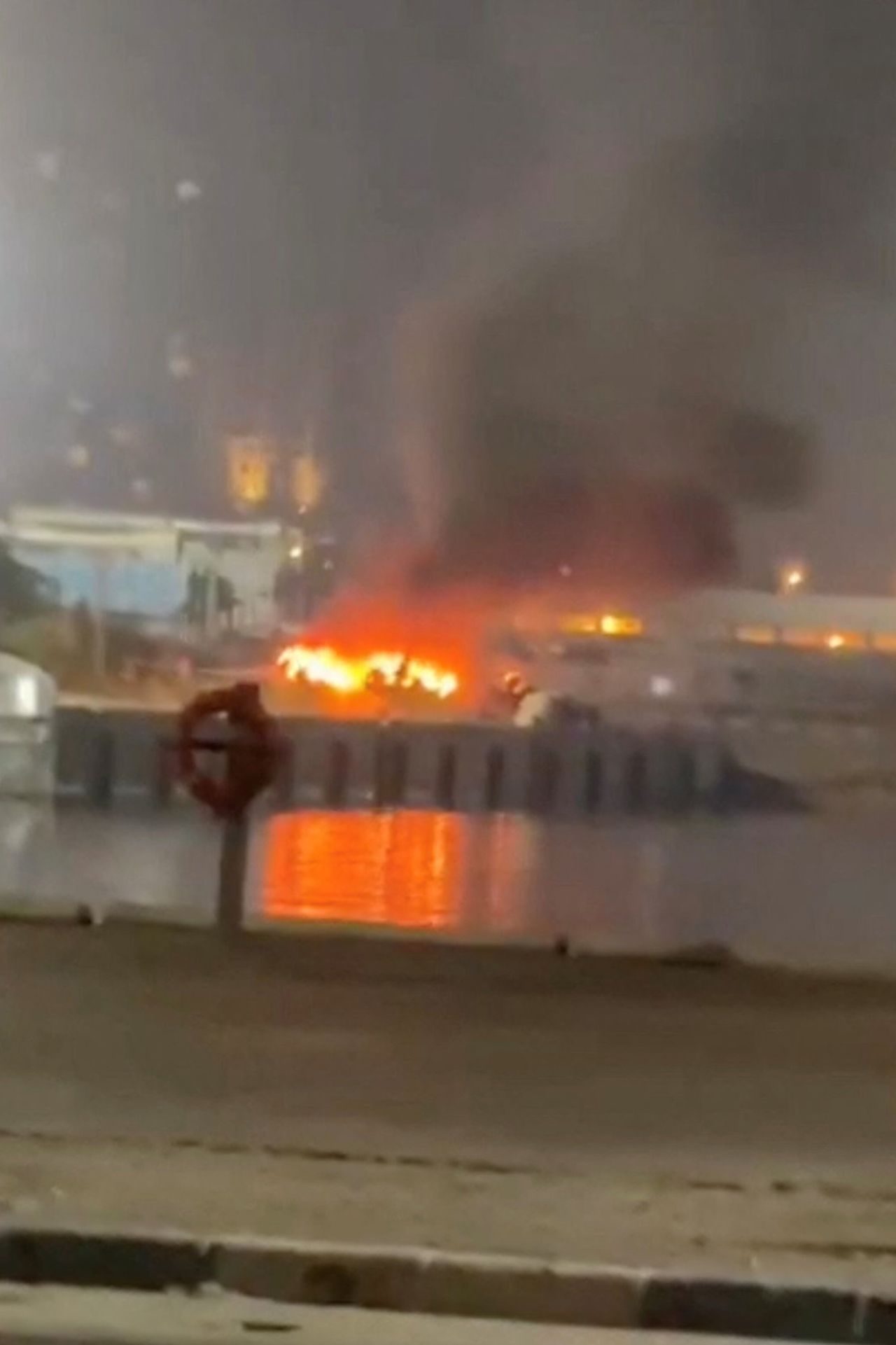
A fire burns at the port of Kish Island in Iran, in this screen grab taken from a social media video released on July 14.
A power plant on Iran’s Kish Island in the Persian Gulf has been damaged in what the power company says was a US attack early Tuesday local time (Monday night ET), Iran’s semi-official Fars News Agency reported
A projectile exploded near the facility during what the Kish Water and Power Engineering Company said was a US strike US Central Command (CENTCOM) began conducting strikes on Monday night ET
CNN has reached out to CENTCOM for comment
Fars said some power generation units may be taken offline to be repaired
While Kish Island is primarily known as a resort destination for Iranian tourists, it also hosts military infrastructure that includes naval and radar installations, as well as ams
At least 22 commercial vessels transited the Strait of Hormuz in the past 24 hours ahead of President Donald Trump’s 4 p.m. ET deadline when he says a US blockade will take effect
A total of 14 ships entered the Persian Gulf — 11 cargo vessels and three tankers. An additional eight ships left the gulf, consisting of four cargo vessels and four tankers
These figures remain largely in line with the subdued crossing rates seen in recent weeks. Before the war, roughly 110 vessels passed through the strait each day on average
The region continues to experience GPS spoofing — a form of navigational interference that causes ships’ broadcast positions to appear in incorrect locations. The interference has persisted for months across the strait, at times displacing vessels’ reported coordinates by dozens of miles and complicating efforts to monitor traffic through the waterway
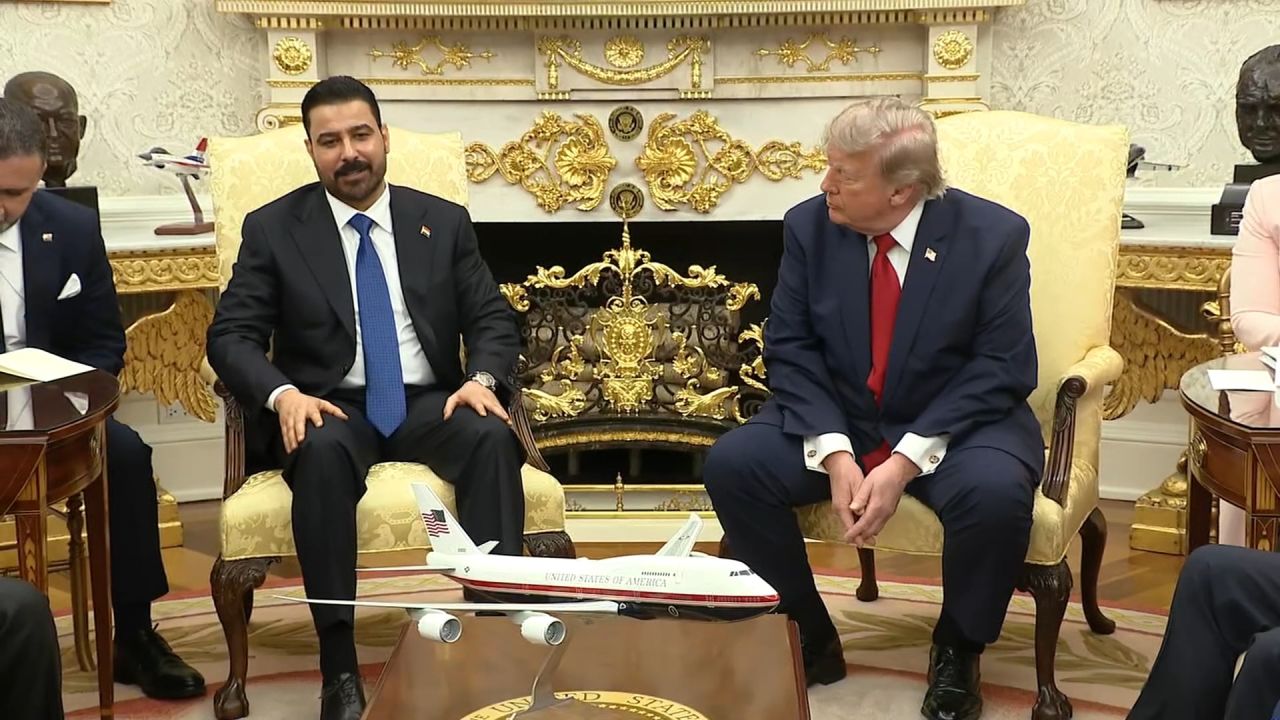
US-Iraq partnership will move from military to economy
1:10• Source:
CNN
US-Iraq partnership will move from military to economy
1:10
Iraqi Prime Minister Ali Faleh al-Zaidi said US military forces will leave Iraq by September 30 and that Iranian-backed militiaswould have “no justification” to continue operating after the withdrawal
Al-Zaidi made the remarks during a joint appearance with US President Donald Trump at the White House, where the two leaders met during the Iraqi prime minister’s first official visit to the United States since taking office in May
He added that Iraq’s security forces are capable of protecting the country’s borders and maintaining security
Al-Zaidi also described his visit to Washington as the start of a new phase in bilateral relations centered on economic cooperation rather than military ties
“This visit was not just like any visit. Rather, it is an announcement of an economic partnership,” al-Zaidi said. “On the 30th of September, the US forces will be out of Iraq, while US companies will be inside Iraq.”
CNN has reached out to the Pentagon for comment regarding the September 30 deadline for the departure of US troops across Iraq
Earlier this year, Iraq’s government said US forces had completed a “full withdrawal” from military facilities within the country’sfederal territory, which excludes the semiautonomous Kurdistan region where US troops remain
The ceasefire between the US and Iran is in tatters, with strikes between the countries escalating rapidly over recent days
Tehran and Washington agreed to a memorandum of understanding (MoU) last month
On June 25, Iran struck a commercial vessel in the Strait of Hormuz. The next day, in response, the US military hit Iranian military targets around the waterway On June 27, Iran’s Islamic Revolutionary Guard Corps (IRGC) said it targeted US military positions, and the US military again launched strikes against Iran
On June 28, a Trump administration official told CNN that both sides “will stand down for now.”
Here’s what has happened since the beginning of this month:
- July 1:US and Iranian negotiators travel to Doha, Qatar, for indirect negotiations. The delegations make “positive progress,” Qatari Foreign Ministry spokesperson Majed al-Ansari says.
- July 7: Iran fires on three commercial vessels in Oman’s territorial waters near the Strait of Hormuz, according to a US official. US Central Command says it has launched strikes against Iran as “punishment.”
- July 8: Iran warns it will deliver a “crushing response” to the US strikes, and the IRGC says it has launched attacks at 85 US military targets across Bahrain and Kuwait. Trump castigates Iran as “evil, sick people” at the NATO summit in Turkey, saying the memorandum of understanding “is over.” Hours later, the US launches more strikes against Iran.
- July 9: Tehran says the US military has struck a railway bridge in northern Iran. CENTCOM says the US has hit around 90 military targets in another round of strikes. A US official tells CNN that both countries are continuing to engage in technical negotiations on nuclear issues.
- July 10:Trump says the US has agreed to continue talks with Iran, but also that Washington has informed Tehran the ceasefire is no longer in effect. Iran’s chief negotiator Mohammad Bagher Ghalibaf says Tehran is prepared for “all-out defense” if the US breaks the agreement. The Trump administration imposes fresh sanctions on Tehran.
- July 11:Iran’s foreign minister accuses the US of violating a clause on Tehran’s nuclear program in their MoU.
- July 12: The IRGC announces it has closed the Strait of Hormuz after firing a warning shot at a vessel attempting to use an unauthorized route to cross the waterway. The US military launches more strikeson Iran, and insists that the strait is still open.
- July 13: US attacks across Iran continue into the afternoon, killing at least two people, Iranian media reports. Trump says he will reinstate a blockade of Iranian ships in the Strait of Hormuz. The US carries out more strikes on Iran overnight.
- July 14: The IRGC says it “struck and disabled” what it called two “rogue supertankers.” Two tankers report being hit by missiles while transiting the southern route of the Strait of Hormuz, the UK Maritime Trade Operations (UKMTO) center says.
CNN’s Mohammed Tawfeeq, Zachary Cohen, Jessie Yeung, Kevin Liptak, Sophie Tanno, Casey Gannon, Julia Benbrook, Hira Humayun, Pamela Brown, Lex Harvey, Davis Winkie, Isaac Yee, Clay Voytek, Betsy Klein, Alejandra Jaramillo, Aida Karimi, Lauren Kent, Jennifer Hansler, Rhea Mogul, Dalia Abdelwahab, Aleena Fayaz, Aileen Graef, Kathleen Magramo and Billy Stockwell contributed to this reporting
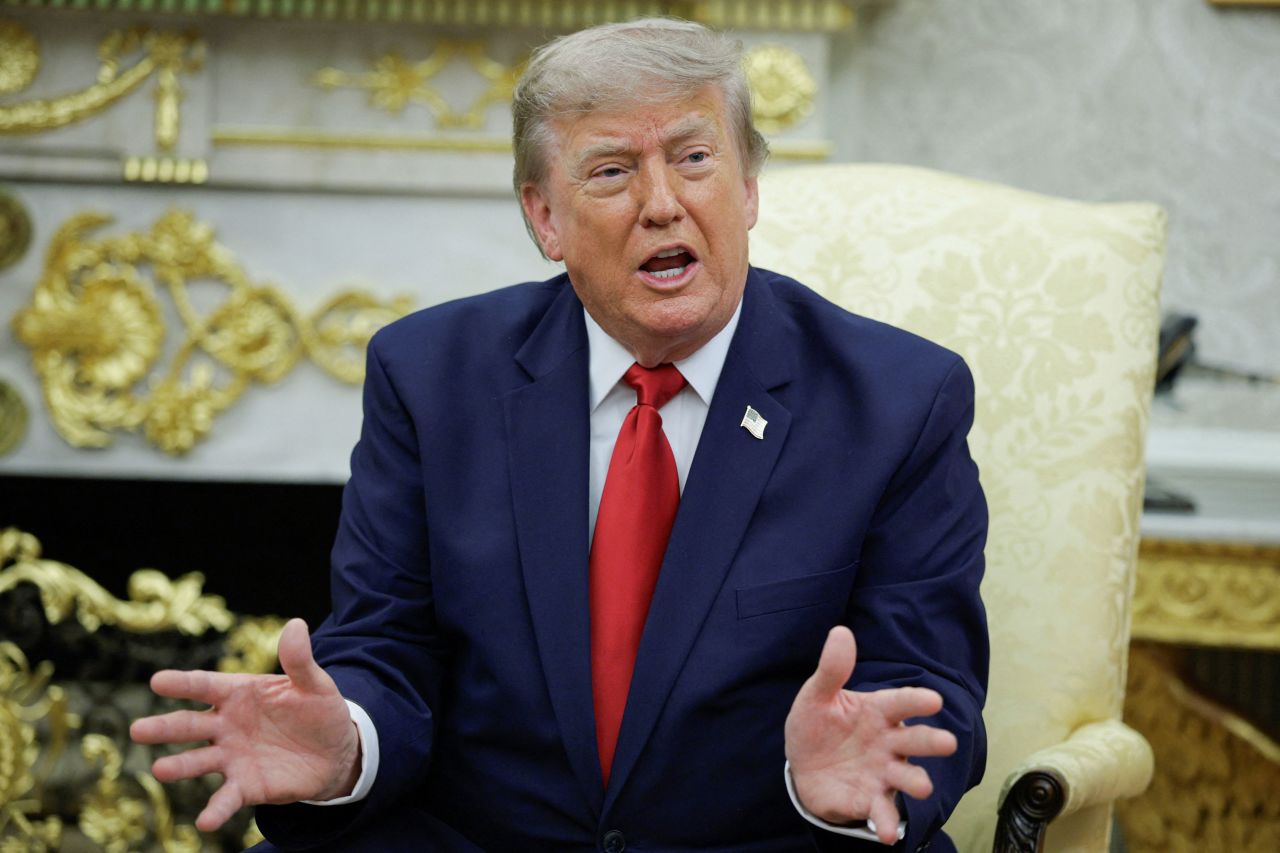
US President Donald Trump gestures as he participates in a bilateral meeting with Iraqi Prime Minister Ali al-Zaidi (not pictured) in the Oval Office at the White House in Washington, DC, on July 14.
President Donald Trump said Tuesday that a sanctions package targeting Russia could soon be expanded to include Iran and Hezbollah as well
“They’re going to add Iran, which is a very big thing,” he said from the Oval Office. “They may add Hezbollah, too.”
A bipartisan group of lawmakers is pushing for the bill’s speedy passage following the death of GOP Sen. Lindsey Graham, who had worked for years to advance the new set of sanctions
The measure now has a “good chance” of getting done, Trump said, once its specifics are finalized
“Lindsey wanted it very badly,” he said. “This is in honor of Lindsey.”
