

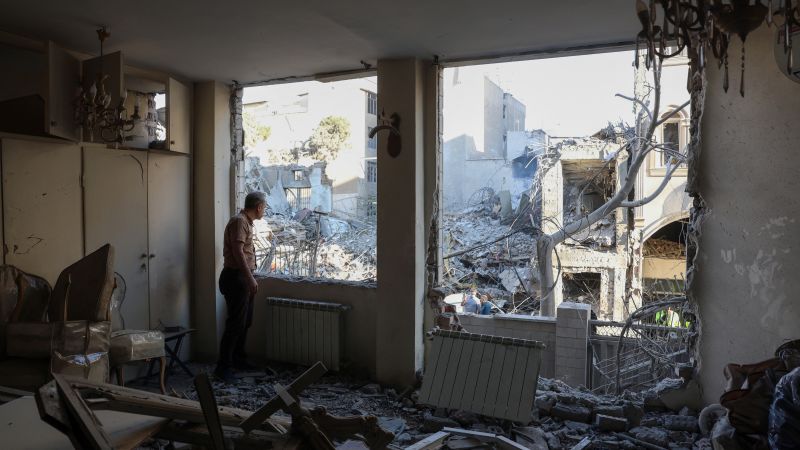
• Oil prices drop:Oil prices fell sharply after a pause in fighting between the US and Iran, the biggest decline since early April. Brent futures, the global benchmark, closed down 11.3%; US crude dropped about 7%
• Pause in hostilities:The US halted renewed strikes on Iran at the regime’s request, President Donald Trump said Monday, warning they would resume if a new ceasefire deal is not reached
• War talks:Iran’s Foreign Ministry said there are no current negotiations with the US. Meanwhile, Israeli and Lebanese officials will meet in Rome next week to continue work on implementing a US-brokered agreement aimed at a peace deal between the two countries
• White House meetings:Trump is to meet with Ukrainian President Volodymyr Zelensky and Israeli Prime Minister Benjamin Netanyahu today for separate meetings expected to focus on the conflicts in Ukraine and the Middle East, a White House official told CNN
5 Posts
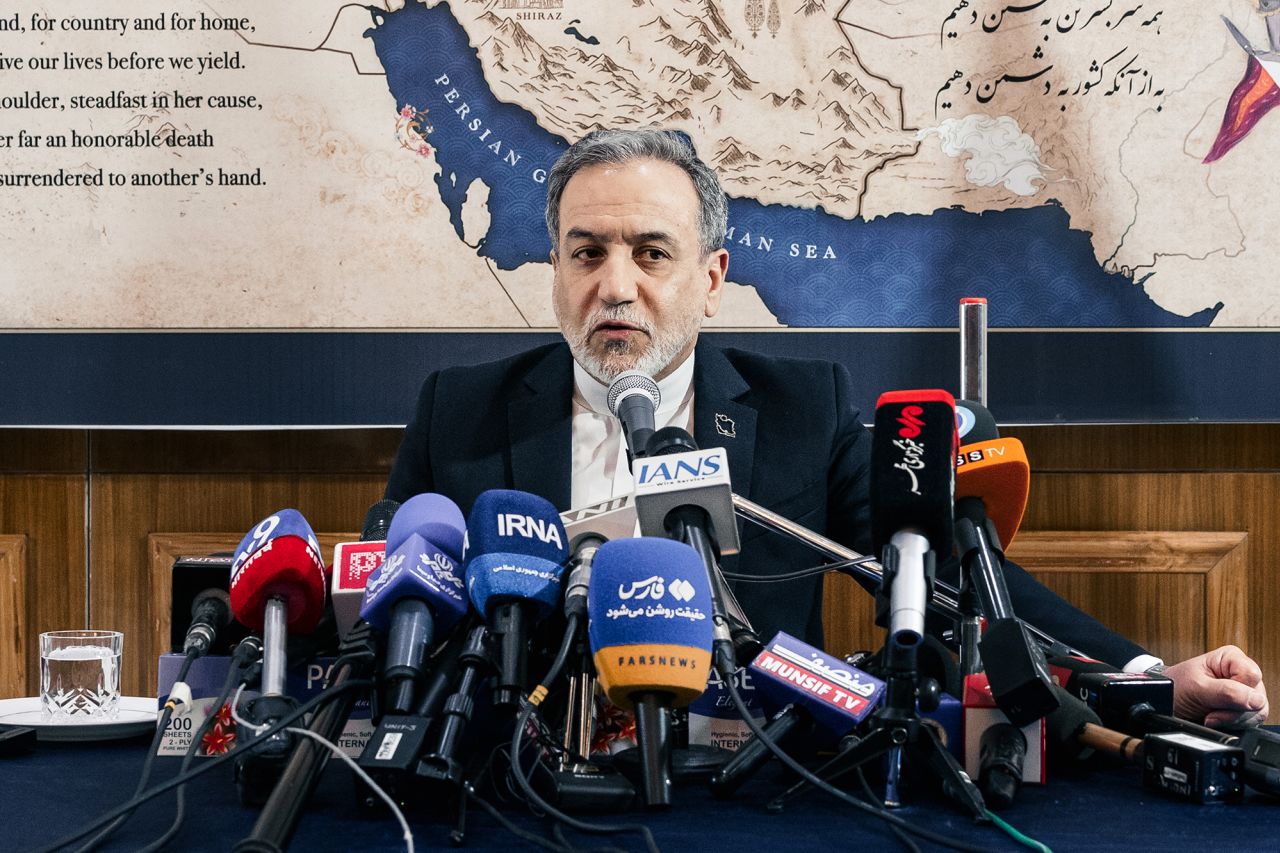
Iran’s Foreign Minister Abbas Araghchi attends a press conference at the Iranian embassy in New Delhi, India, on May 15.
Iran’s Foreign Minister Abbas Araghchi’s has held separate phone calls with his counterparts in Oman and Saudi Arabia on regional peace and the Strait of Hormuz, according to a statement on his Telegram channel
The leaders “emphasized the necessity of strengthening cooperation,” it said, adding the call took place on Monday evening, local time
They also disccused “advancing joint diplomatic efforts to establish stability in the region and to remove the imposed insecurity in the Strait of Hormuz resulting from the aggressive actions of the United States,” the statement added
There was no immediate readout from the Saudi or Omani side
The timing of the calls is however significant
The come came days after an Omani delegation visited Tehran for a discussion on Strait of Hormuz and as Saudi Arabia faces increasing attacks from Iran-backed proxies in both Yemen and Iraq
The Jordanian Armed Forces shot down a drone on Tuesday local time, a statement from the military said
The drone breached the country’s airspace at dawn and was shot down in the eastern desert, the statement said
At the center of the latest key developments in the war with Iran are attacks on US ally Saudi Arabia by Tehran-supported groups
As a reminder, the Saudi Defense Ministry said Monday that it intercepted several drones launched from Iraq that targeted petroleum facilities in the kingdom’s oil-rich Eastern Province and the Riyadh region
Here are the latest developments on that front and other critical issues we’re monitoring:
• While the drones launched at Saudi Arabia were not the first to come from Iraq, multiple countries have condemned the attacks, including Kuwait, Qatar, Oman and Lebanon
• Oman launched a regional diplomatic push Monday aimed at finding a political solution to the military conflict between the US and Iran. Omani Foreign Minister Badr Albusaidi held calls with counterparts from Iran, Saudi Arabia, Qatar, Kuwait and Egypt to discuss de-escalation efforts, according to Oman’s Foreign Ministry
• Iran is not currently engaging in peace talks with the US. Tehran “will never allow the United States to determine the timing of war and peace,” Esmaeil Baghaei, the Iranian Foreign Ministry spokesperson, said in a televised press conference. While the US has said it is pausing strikes on Iran to allow talks to develop, Baghaei said there are “no negotiations with the United States at present.”
• The US would like to have more sophisticated munitions as the war in Iran draws down stockpiles, President Donald Trump said, but he insisted that the military has what it needs to wage the conflict. The president acknowledged that Russia may be helping Iran by passing along intelligence on US bases, but he brushed it off, saying it “hasn’t had much impact because we’re knocking the hell out of them.”
• Meanwhile, Israeli Prime Minister Benjamin Netanyahu is en route to the US, where he said Iran would be a key issue “on the agenda” during his meeting with Trump on Tuesday. The US president separately shut down questions about Netanyahu’s objection to F-35 fighter jet sales to Turkey, saying that “nobody” dictates the sales but him
• And next week, Israeli and Lebanese officials will again meet in Rome to continue to work on implementing a US-brokered agreement ultimately aimed at a comprehensive peace between the two countries. The US-led talks will take place on August 4-6, a US State Department official said
• Almost all of the 78 vessels that crossed the Strait of Hormuz since Saturday used the route designated by Iran, and none recorded using the southern route near Oman’s coast promoted by the US, according to shipping intelligence group Marisks
CNN’s Aida Karimi, Sana Noor Haq, Abbas Al Lawati, Dana Karni, Tim Lister, Eleni Giokos, Kevin Liptak, Jennifer Hansler, Aileen Graef, Eyad Kourdi, Aqeel Najim and Mohammed Tawfeeq contributed to this report
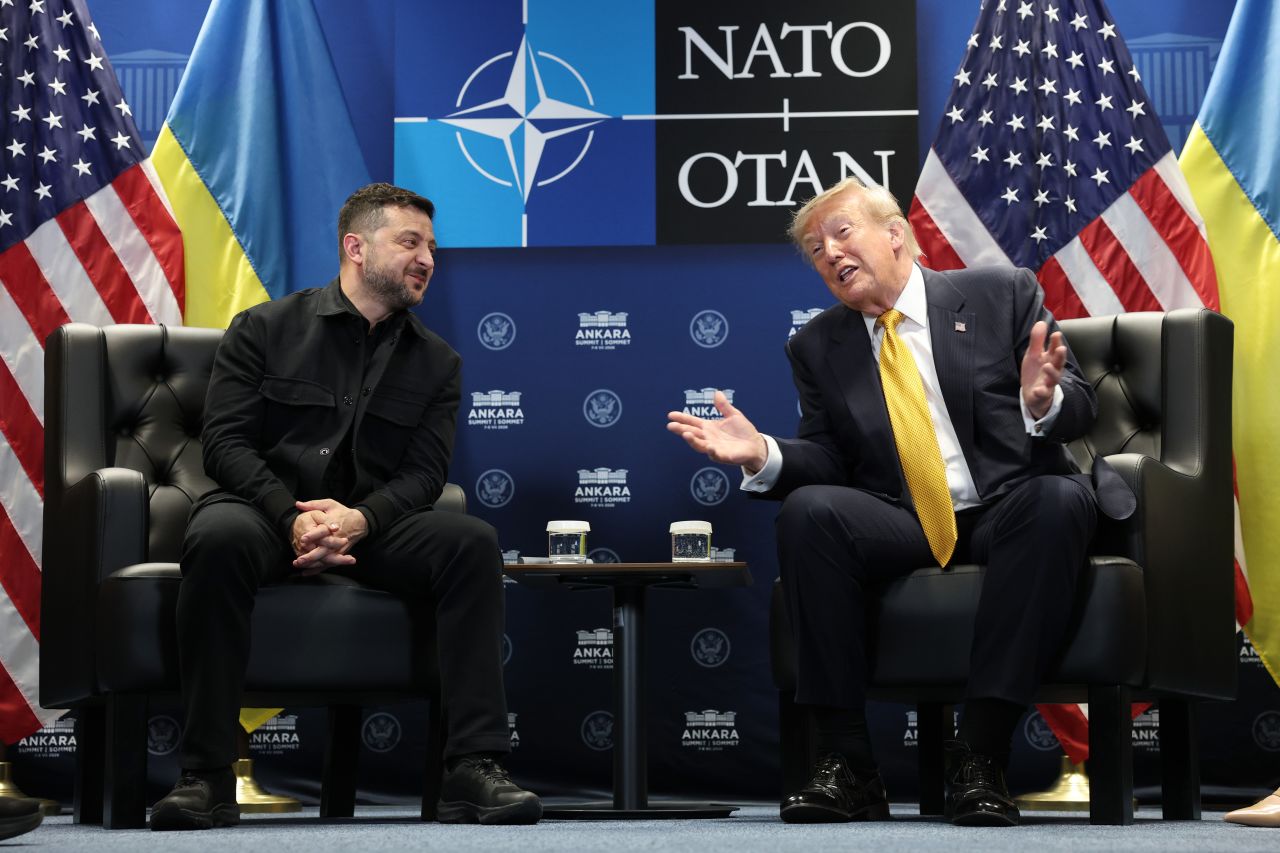
President Donald Trump meets with Volodymyr Zelenskyy, President of Ukraine for bilateral talks at Beştepe Presidential Compound during the NATO Summit in Ankara, Turkey, on July 8.
President Donald Trump is set to welcome both Ukrainian President Volodymyr Zelensky and Israeli Prime Minister Benjamin Netanyahu to the White House on Tuesday for separate meetings expected to focus on the conflicts in Ukraine and the Middle East, a White House official told CNN
Trump will meet with Netanyahu to discuss the war in Iran, progress on negotiations with Lebanon and efforts to expand the Abraham Accords, the White House official said
During Trump’s meeting with Zelensky, the leaders will discuss the ongoing peace process between Russia and Ukraine, according to the official. “Now is the time to end the war,” the official added
Earlier on Monday, Trump downplayed Zelensky’s allegation that Russia is providing Iran with intelligence on US military bases, saying: “I don’t think they’ve been doing it, certainly not at a high level.”
Both Netanyahu and Zelensky plan to attend the late Sen. Lindsey Graham’s funeral in Washington on Tuesday
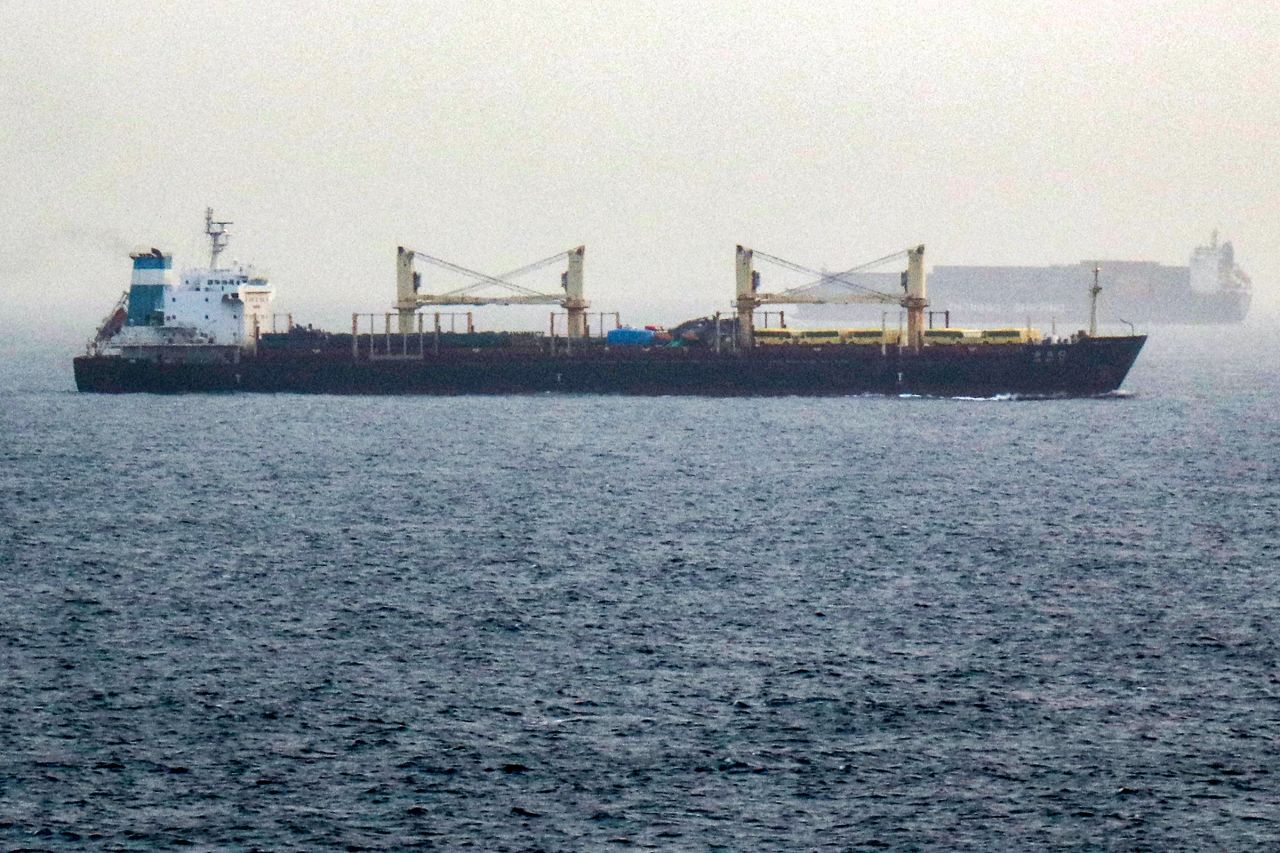
Vessels transit the Bab el-Mandeb Strait off the coast of southern Yemen on July 25.
Global oil prices fell sharply Monday after a pause in fighting between the United States and Iran, posting their biggest decline since April 8
Brent futures, the global benchmark, closed at $85.87 per barrel, down 11.3%. US crude dropped about 7% to $82.61 a barrel
President Donald Trump said the US halted strikes on Iran at the request of the Iranian regime and warned the US would resume attacks if a new ceasefire deal weren’t reached
Ship traffic through the Strait of Hormuz also remains well below prewar levels. Fewer than 10 commodity ships passed through the waterway as of Monday morning, according to shipping data tracked by CNN. Around 100 commercial vessels traversed the strait on a typical day before the war
Oil traders are doubly wary given the threat of attacks on Saudi tankers by Iran-backed Houthi rebels in the Bab al-Mandeb Strait at the base of the Red Sea
In a note on Monday, Deutsche Bank analysts said Houthi attacks raise “the prospect of simultaneous disruption to both Gulf and Red Sea export routes.”
“So (there’s a) welcome pause from the main actors but a fragile one, especially with side battles going on,” the analysts wrote
Meanwhile, the Dow Jones on Monday gained 0.51%, the S&P 500 rose 0.02% and the tech-heavy Nasdaq fell 0.18%
