

• Kushner meetings: President Donald Trump’s son-in-law Jared Kushner is meeting Israeli Prime Minister Benjamin Netanyahu today, as mediators seek to revive the president’s stalled Gaza peace plan, which has been rejected by Israel. Kushner yesterday met Hamas leader Khalil al-Hayya in Egypt
• Iran agreement expires:The US and Iransigned an initialframework in June with a 60-day deadline for peace talks but this window closed on Monday without any concrete plans announced so far to end the war
• Military drills:US President Donald Trump said he plans to cut back joint military exercises with South Korea, citing the country’s lack of help with the Iran war and his warm relationship with North Korean leader Kim Jong Un. The joint exercises in South Korea began as scheduled on Monday, according to the country’s Joint Chiefs of Staff
16 Posts
US President Donald Trump’s son-in-law Jared Kushner is meeting with Israeli Prime Minister Benjamin Netanyahu today, as mediators push to revive the US-backed Gaza peace plan, which Israel rejected earlier this month
On Sunday, Kushner and Hamas leader Khalil al-Hayya also held talks in Egypt to discuss the plan, according to a
Let’s re-cap the latest developments here:
In late July, US President Donald Trump announced what he described as an historic agreement to secure the disarmament of Hamas and all other armed groups in Gaza — months after he first announced a US-brokered ceasefire agreement between Hamas and Israel
As armed groups in Gaza are disarmed, Trump said, Israeli forces will withdraw and an International Stabilization Force, working alongside a new Palestinian police force, will assume responsibility for security in territory
Trump said he would be “very disappointed” if Israel rejected the plan, but just over a week later, Prime Minister Benjamin Netanyahu did just that
Israel rejects Gaza plan
On August 9, Netanyahu said Israel rejected the plan and demanded the full disarmament of Hamas before any Israeli forces withdraw
“I want to be precise here: Israel rejects the 15-point document,” Netanyahu said in his first remarks directly addressing the proposal
Ahead of October’s election, Netanyahu’s right-wing coalition is trailing in opinion polls, and the prime minister is seeking to balance pressure from Washington with demands from hardline Israeli ministers not to make concessions to Hamas
How did Hamas respond?
Hamas said it would only go through with the deal if Israel halted strikes in Gaza and pulled troops back to the “yellow line,” as defined by the October ceasefire agreement
CNN’s Alejandra Jaramillo, Abeer Salman, Oren Liebermann, Jeremy Diamond, Tal Shalev, Tim Lister, Eugenia Yosef and Ibrahim Dahman contributed reporting
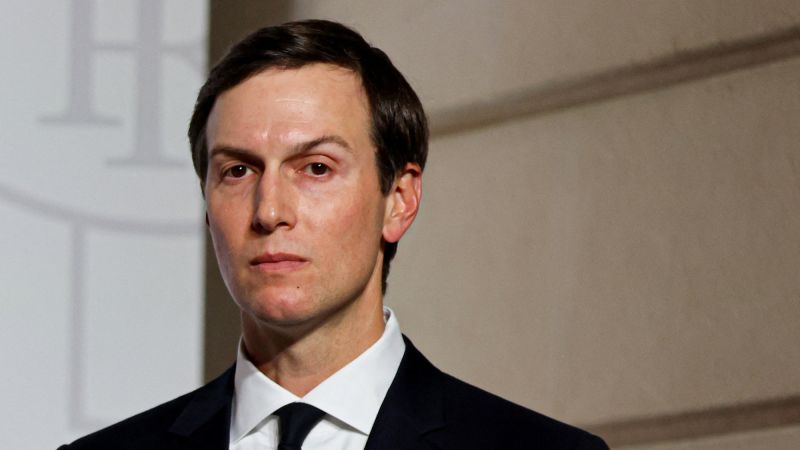
US businessman Jared Kushner looks on during a press conference at at the Elysee Palace in Paris, France, on January 6.
US envoy Jared Kushner is meeting Israeli Prime Minister Benjamin Netanyahu in an effort to advance the Trump administration’s stalled Gaza peace plan, one day after meeting Hamas
Netanyahu publicly rejected the latest 15-point plan that US President Donald Trump hailed as a major breakthrough at the end of last month, putting the future of the deal in doubt
On Sunday, Kushner held a rare meeting with Hamas’ new leader, Khalil al-Hayya, in El Alamein in Egypt. The director of the US-backed Board of Peace, Nickolay Mladenov, also took part. An official familiar with the matter said the goal of the meeting was to turn the ceasefire plan into “concrete, verifiable steps,” including the disarmament of Hamas, the withdrawal of Israeli forces, and the beginning of reconstruction
Hamas agreed to a disarmament plan but warned it could only happen if Israel upheld its obligations, including ending the near-daily attacks on Gaza and beginning to withdraw forces from the enclave
In a joint statement on Sunday, a group of Arab and Muslim countries – including mediators Egypt and Qatar – condemned Israel for rejecting the plan
“Such rejection confirms that Israel now bears responsibility for obstructing the efforts to bring peace in Gaza and the rest of the Occupied Palestinian Territory,” the governments said
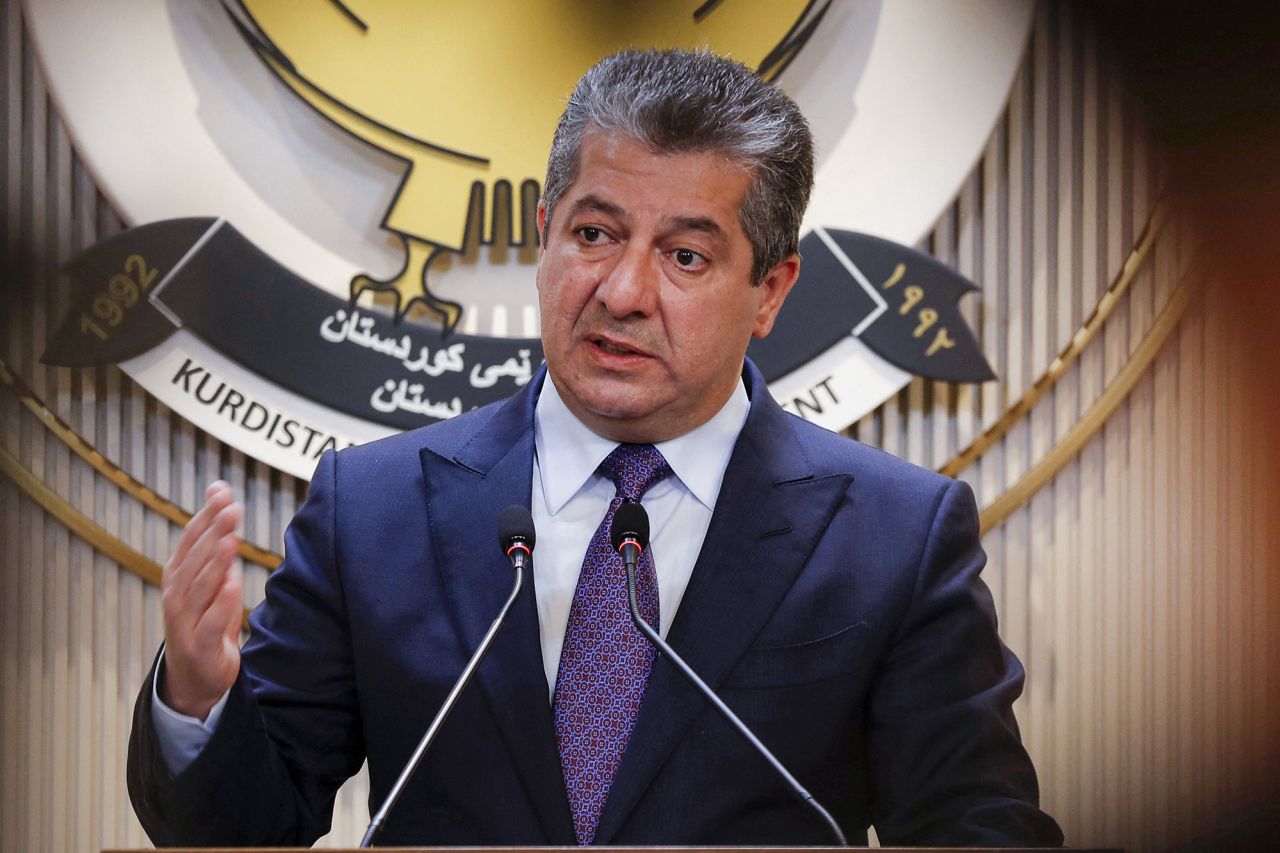
Masrour Barzani, Prime Minister of the Iraqi Kurdistan Regional Government, gives a press conference in the autonomous region’s capital Arbil on June 25, 2025.
Two drones fired from Iran targeted the office of the Kurdistan Regional Government’s prime minister in Iraq, a US ally in the region, its counter-terrorism agency said
The drones also targeted the residence of the head of the protection agency, the statement added. No casualties were reported in the attack, the security agency said. There has been no claim of responsibility for the attack
“My personal office and the home of the head of the Security and Intelligence Agency were targeted by Iranian drone attacks earlier today,” the KRG Prime Minister Masrour Barzani wrote on X calling the attack a “dangerous escalation and a direct threat to the security and stability of the Kurdistan Region.”
The KRG houses Kurdish parties with cross-border ties to Iranian Kurds. US President Donald Trump claimed several times that his administration attempted to arm Kurds inside Iran during the war, but instead of clashing with the Iranian government, the Kurds “kept (the weapons) for themselves.”
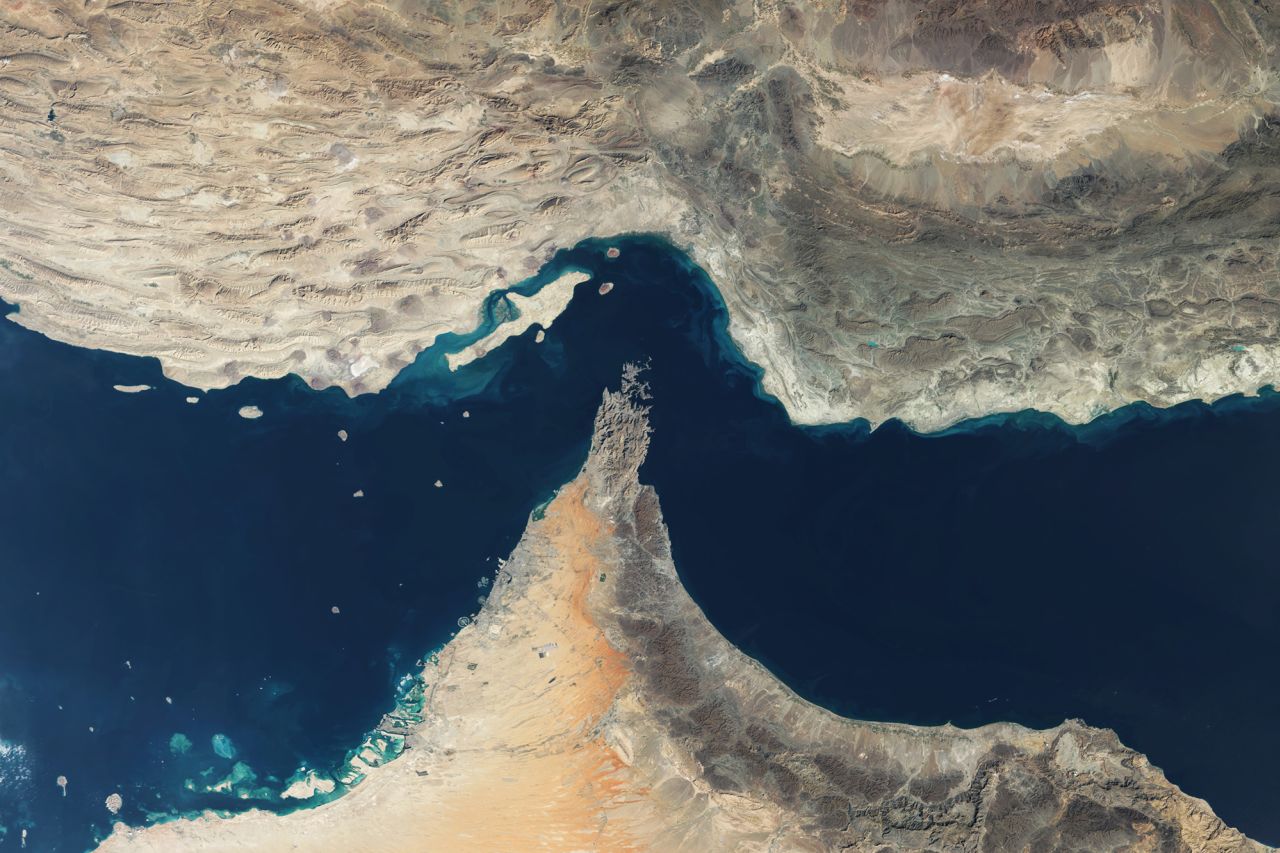
A satellite view of the Strait of Hormuz, a strategic waterway between Iran and Oman that links the Persian Gulf to the Arabian Sea.
Talks between Iran and Oman regarding the Strait of Hormuz are complex but continuing “in all seriousness,” Iran’s Foreign Ministry spokesman Esmaeil Baghaei said Monday
Baghaei pointed to several “actors trying to exert influence on this process” as a reason for the delay in a deal being announced, despite optimism in recent days that an agreement to secure passage through the critical waterway could be within reach
Traffic through the waterway remains subdued compared to pre-war levels
Baghaei said a “transit route map” has been agreed upon, but a final agreement including a joint statement has not been finalized, Tasnim reported. Referring to one of the reasons for the delay, Baghaei said some “malevolent parties” want the region to “always be in a state of conflict and chaos.”
With the memorandum of understanding now expired and no deal to end the war reached, the United States and Iran are both under pressure, an analyst told CNN on Monday
“This is why it’s a game of chicken but the stakes are very different,” said Ali Vaez, deputy program director for Middle East and North Africa at the International Crisis Group
The US is “choosing to try to bring Iran to its knees” and accepts the resulting economic fallout, while Iran sees surrender as an existential issue, Vaez said
“At any cost, they are very unlikely to capitulate and to give in because they believe that that would be the end of the regime.”
Vaez said US-Iran diplomacy “is not dead but it is in dire straits,” noting that the memorandum “was just a page and a half” and “didn’t address any of the substantive disagreements” between both sides
“If that (MOU) doesn’t stand for more than two weeks and the parties can’t find a way back into it then basically, yes, diplomacy is not going to deliver results and this is a formula for a ‘Forever War.’”
Vaez said Washington’s strategy of economic pressure on Iran will simply produce the same outcome as before –– “the hardening of the Iranian position.”
“Pressure is not a new strategy for the United States… continuation on the same trajectory is not going to produce a different result,” he noted
The MOU unraveled soon after its June 17 signing, as disputes over control of the Strait of Hormuz reignited tensions and prompted renewed military strikes
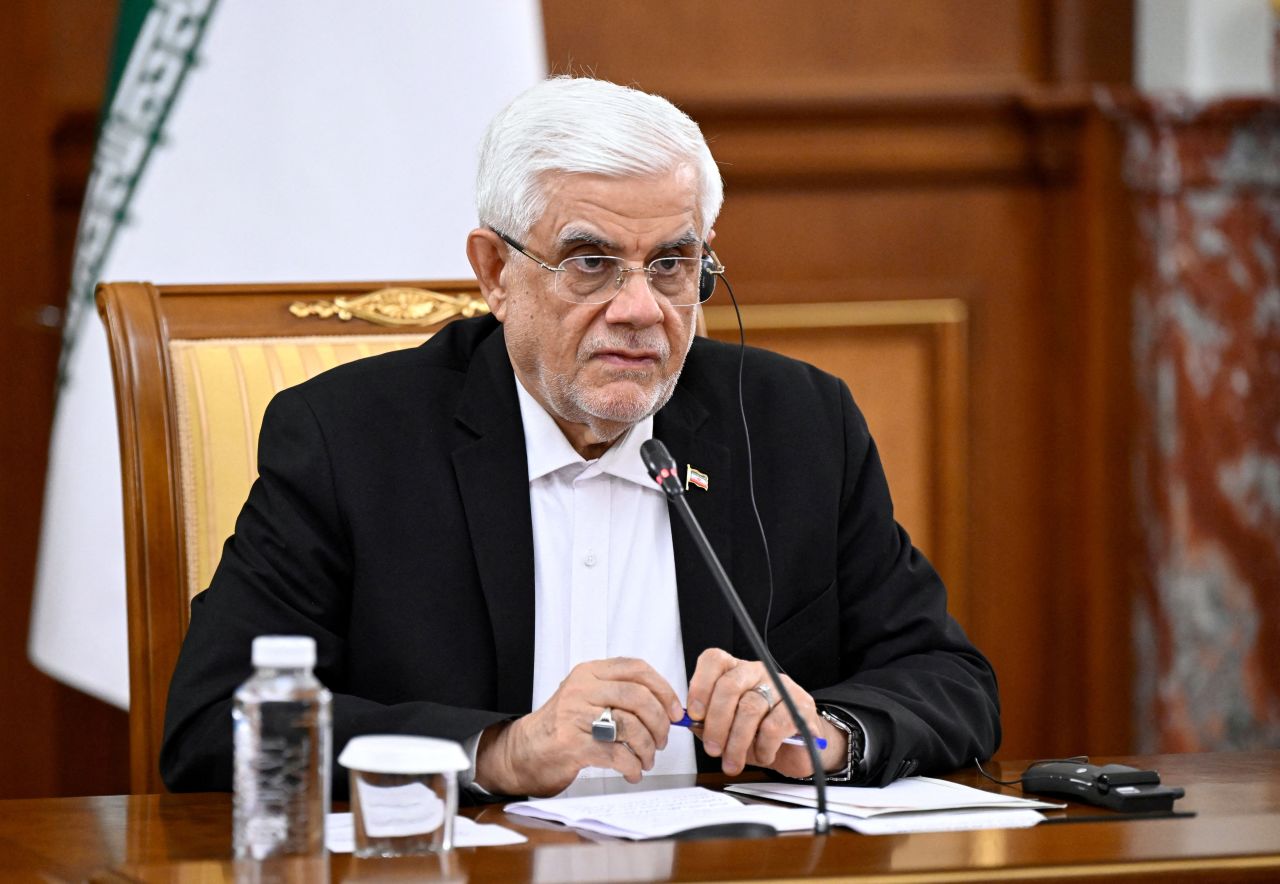
Iranian First Vice President Mohammad Reza Aref attends a meeting in Moscow, Russia on November 17, 2025.
Iran plans to take action after US President Donald Trump made clear that inflicting economic pressure is part of Washington’s latest strategy, Iran’s semi-official Mehr news agency reported Monday
First Vice President Mohammad Reza Aref ordered “intensified market supervision” and said “inspection bodies should deal seriously with overpricing, underweight selling and hoarding,” reported Mehr
He also announced that a central market oversight headquarters would start with offering guidance, which would move to legal action if violations continued, the outlet added
Last week, Treasury Secretary Scott Bessent said in a Newsmax interview the US is going to apply measures that have “never been seen” on Iran, indicating Washington will continue to economically isolate the country and blockade its ports
His comments came after Trump signaled plans to choke Iran economically. “We are only semi-negotiating with (Iran). We are just watching Iran with its huge inflation and the fact they have no money,” Trump said
Iran’s army is offering a 5 billion tomans ($30,000) cash bounty for anyone who kills or captures a US soldier and hands them over to authorities, according to the country’s semi-official Mehr news agency
“Courageous Iranian women who accomplish this feat will receive double the reward,” the outlet reported Sunday, citing Commander-in-Chief Maj Gen Amir Hatami
The army will purchase any potential weapon used at twice its market value and permanently display it in a museum, it added
The new initiative is supported by public crowdfunding campaigns, with Iranian citizens contributing funds to bolster the armed forces’ defense operations, Mehr said
In April, Iran promised an even bigger bounty of 10 billion tomans for finding the US service member whose fighter jet crashed in Iranian territory
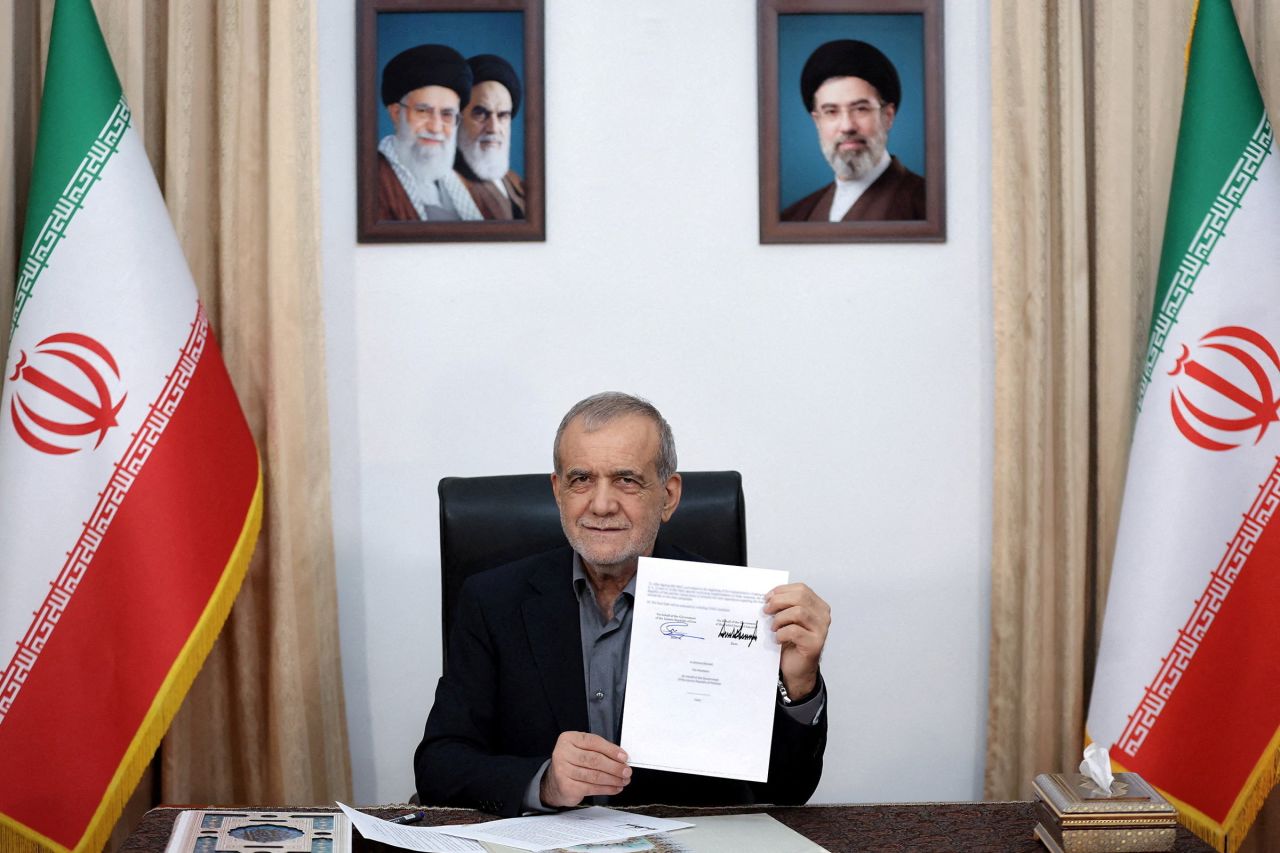
Iranian President Masoud Pezeshkian shows the document of U.S. Memorandum of Understanding in Tehran, Iran, on June 18.
A temporary framework that came with a 60-day deadline to end the US-Iran war expired on Monday. There is no indication so far the two sides will extend the agreement, while in recent weeks both sides have exchanged fire and accused each other of violating the agreement
The memorandum of understanding, signed in June, is a 14-point document spelling out provisions for reopening the Strait of Hormuz and easing certain financial restrictions on Iran. It also sets out expectations for addressing Iran’s nuclear program during future technical talks
The agreement also opened a 60-day-window to negotiate the final terms of a wider peace deal
A look at some excerpts from the memorandum:
- Articles 4-5: The US lifts its naval blockade and Iran removes obstacles (such as mines) to ensure that traffic through the Strait of Hormuz returns to pre-war levels within 30 days after signing the agreement.
- Articles 8-9: Iran “reiterates that it will never produce nuclear weapons.” The two sides “agree that, pending a final agreement, they will maintain the status quo: Iran will maintain the status quo on its nuclear program, and the United States will not impose new sanctions on Iran or strengthen its forces in the region.”
- Article 10:The US “immediately after the signing… will issue waivers for exports of Iranian crude oil, petrochemical products and their derivatives, and all related services, including banking, insurance, transportation, and the like.”
- Article 11:The US “undertakes that… in light of the progress of negotiations towards a final agreement, frozen or restricted funds and assets of the Islamic Republic of Iran will be released and made fully available.”
Read the official text in full here.
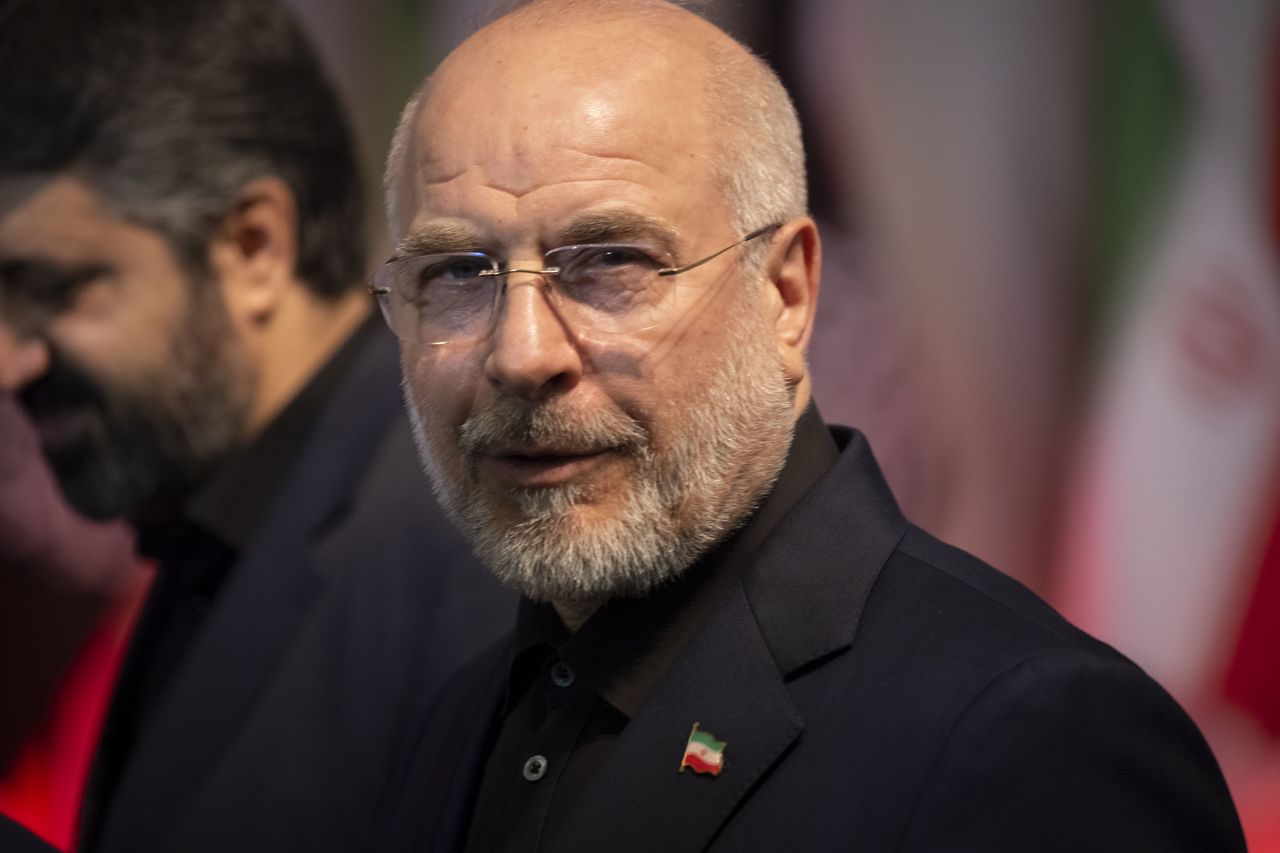
Iranian Parliament Speaker Mohammad Bagher Ghalibaf attends a ceremony in Tehran, Iran, on July 3, 2026.
Tehran’s chief negotiator and parliament speaker said the United States and Israel have “failed to achieve” any of the objectives they set at the start of their war with Iran
Ghalibaf claimed Iran has emerged victorious by blocking these goals. “I say with all my heart that we have truly won this war,” he said
He did not specify what objectives he believed the US and Israel had failed to meet
The goals which the Trump administration previously laid out included complete Iranian surrender, regime change, Iran never developing a nuclear weapon and ending Tehran’s support for its Middle East proxy groups like Hezbollah

Donald Trump steps off Air Force One upon arrival at Joint Base Andrews in Maryland on August 16.
A 60-day window for US and Iran to reach a deal to end the war came to a close on Monday. In June, the two sides had signed a temporary agreement that kicked off the window for negotiations. No concrete plans on ending hostilities have been announced so far
In other news, President Donald Trump announced Sunday the United States would reduce military exercises with South Korea, citing his positive relationship with North Korean leader Kim Jong Un and Seoul’s lack of assistance with his Iran conflict
Joint exercises with South Korea began on Monday as scheduled, South Korea’s Joint Chiefs of Staff told CNN.What is less clear currently is whether the exercises have been suddenly pared down or not in light of Trump’s announcement
More headlines:
Defense pact: Trump praised a mutual defense agreement signed by Saudi Arabia, Turkey and Pakistan, calling it an “important first step.” The three US allies signed the NATO-style mutual defense pact last week, consolidating their long-standing security ties into a collective-defense alliance that stipulates an attack against any of them “shall be regarded as attack on them all.”
USS Abraham Lincoln:Maryland Gov. Wes Moore, a Democrat who served in the US Army, slammed Trump’s response to reports of poor conditions and low morale on the USS Abraham Lincoln, saying it “pisses me off.” Trump had dismissed claims that families of service members aboard theaircraft carrierhave concerns about conditions
Oil prices:Oil futures were flat on Sunday amid stalled US-Iran talks over fully reopening shipping traffic through the Strait of Hormuz. US gas prices have remained above $4 while stock futures were also flat
Shipping traffic: In the Strait of Hormuz, there were no notable ship movements in the past 24 hours And on the Bab el-Mandeb strait, at least 40 vessels transited the waterway. This is down from the 2023 peak of 72 ships a day
CNN’s Aileen Graef, Julia Benbrook, Auzinea Bacon and Lisa Wong contributed reporting
The US and Iran signed a memorandum of understanding in June, aiming to stop hostilities and pave the way for a “final deal” within 60 days to end the war on all fronts and settle complicated issues such as Tehran’s nuclear program
The 60-day window ended at midnight, with nothing concrete agreed so far. Both sides have accusedeach other of violating the temporary agreement and multiple flare-ups have escalated the conflict in the Middle East
The 14-point framework, brokered mainly by Pakistan with the support of other neighboring nations, was signed by US President Donald Trump and Iranian President Masoud Pezeshkian on June 17
The interim agreement cameafter more than three months of deadly conflict that severely disrupted Gulf trade, especially oil and gas exports
The agreement included provisions for reopening the Strait of Hormuz, easing some financial restrictions on Iran and outlining expectations for future talks on Iran’s nuclear program
However, it soon fractured with disputes over the strait, leading to renewed military strikes atthe end of June
On July 8, Trump said the MOU was “over.”
With US weapon stockpiles dwindling and no permanent resolution in sight, he now risks drawing the US into yet another “Forever War.”
Trump has made it clear that inflicting economic pain on Iran is part of Washington’s current strategy
“We are just watching Iran with its huge inflation and the fact they have no money,” he said earlier this month
Tehran, however, remains steadfast. On Saturday, Foreign Minister Abbas Araghchi said no decision has been made on whether to resume negotiations with the US
Responding to Trump’s recent threat to declare the strait a US territory after “we finish defeating Iran,” Araghchi said that it “cannot be seized with a tweet.”
Strikes between US forces and Iran have paused, but violence by Iran-backed groups in the region persists
Yemen’s military has intensified its campaign against the Houthiswho have targeted shipping hubs and US allies, while Lebanon recently saw its deadliest day of Israeli airstrikes since their June ceasefire
CNN’s Alayna Treene, Ibrahim Dahman, Kevin Liptak and Nick Paton Walsh contributed reporting
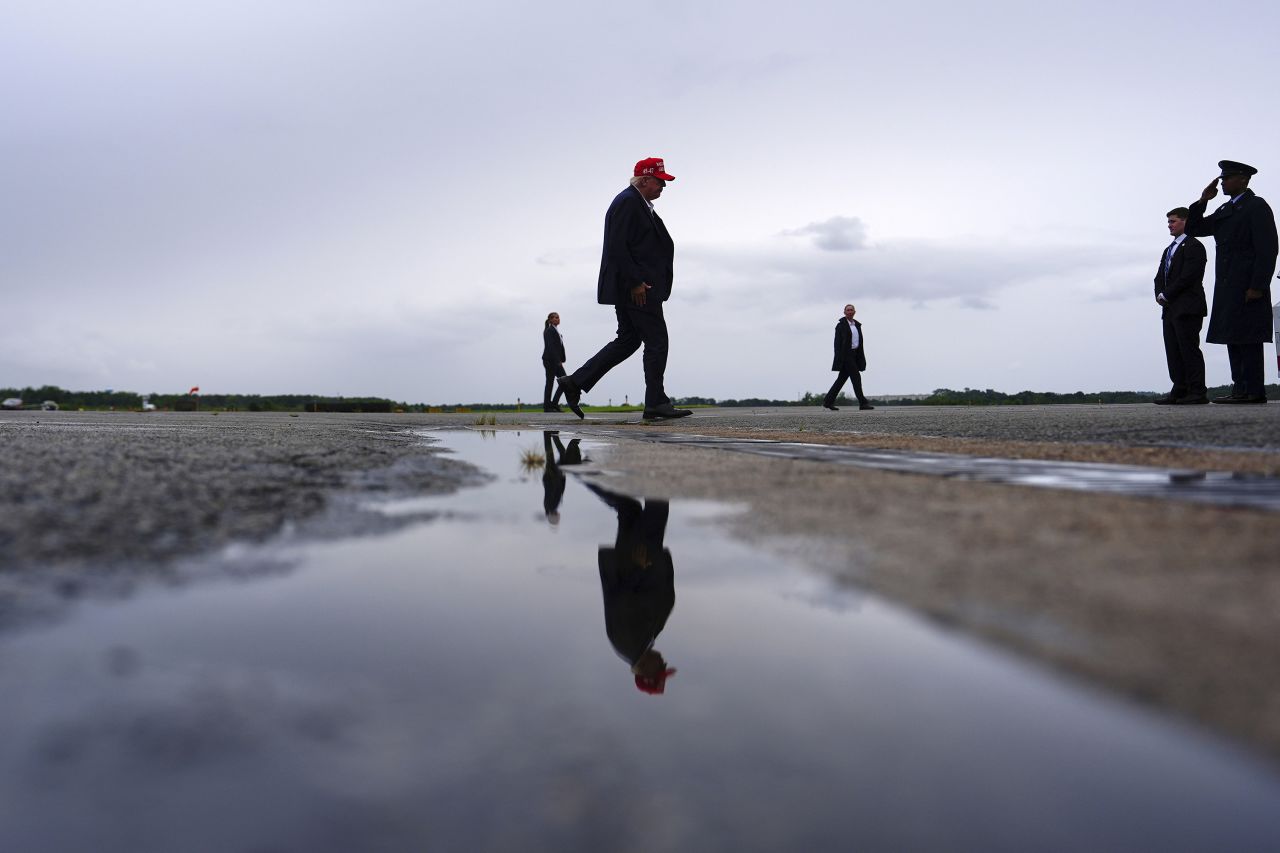
President Donald Trump walks to board boards Air Force One at Morristown Airport, on Sunday.
US President Donald Trump announced Sunday that the United States would reduce military exercises it conducts with key regional ally South Korea, citing his positive relationship with North Korean leader Kim Jong Un and South Korea’s lack of assistance with Iran
Trump went on to raise the Iran war and his request for South Korea to help
Trump has had a warm relationship with the North Korean leader despite it being a longtime adversary of the United States. Earlier this weekend, he posted a picture of himself and Kim, with the caption: “Despite the unfriendly look on this particular picture, there are many where we’re smiling, Kim Jong Un and I get along GREAT!”
The joint exercises with South Korea, called Ulchi Freedom Shield military drills, were set to begin August 17 and go for 10 days
North Korea has long criticized such exercises, with its Central Military Commission calling trilateral exercises last year with Japan and South Korea “the most comprehensive and offensive war drill for aggression in terms of scale, content and nature” that has been conducted on the southern Korean Peninsula

Jared Kushner reacts ahead of a quadrilateral meeting between the United States, Iran, Pakistan and Qatar at the Burgenstock luxury hotel complex near Lake Lucerne, Switzerland, on June 21.
Jared Kushner, the son-in-law of US President Donald Trump, held a rare meeting with the leader of Hamas in Egypt over the weekend
The US envoy is set to meet with Prime Minister Benjamin Netanyahu in Israel on Monday, and has already sat down this week with Egypt’s president
It all comes at a critical time for US diplomacy in a region that’s been roiled by conflicts on multiple fronts this year
Here’s some background on Kushner:
He served as a chief Middle East negotiator in Trump’s first presidential term and built deep relationships with leaders in the region, having informally advised administration officials on negotiations with Arab leaders, Trump administration officials and people close to Kushner told CNN last year
Kushner helped lead Trump administration policies on the Middle East, including the Abraham Accords, which normalized ties between Israel and several Arab states
After leaving the White House in 2021, Kushner launched a private equity firm, Affinity Partners, which received $2 billion from Saudi Arabia’s sovereign wealth fund. The United Arab Emirates and Qatar have also invested large amounts into his firm
Kushner has previously denied these investments are a conflict of interest. In an interview with CBS News’ “60 Minutes” last year, Kushner said: “What people call conflicts of interests, Steve (Witkoff) and I call experience and trusted relationships that we have throughout the world.”
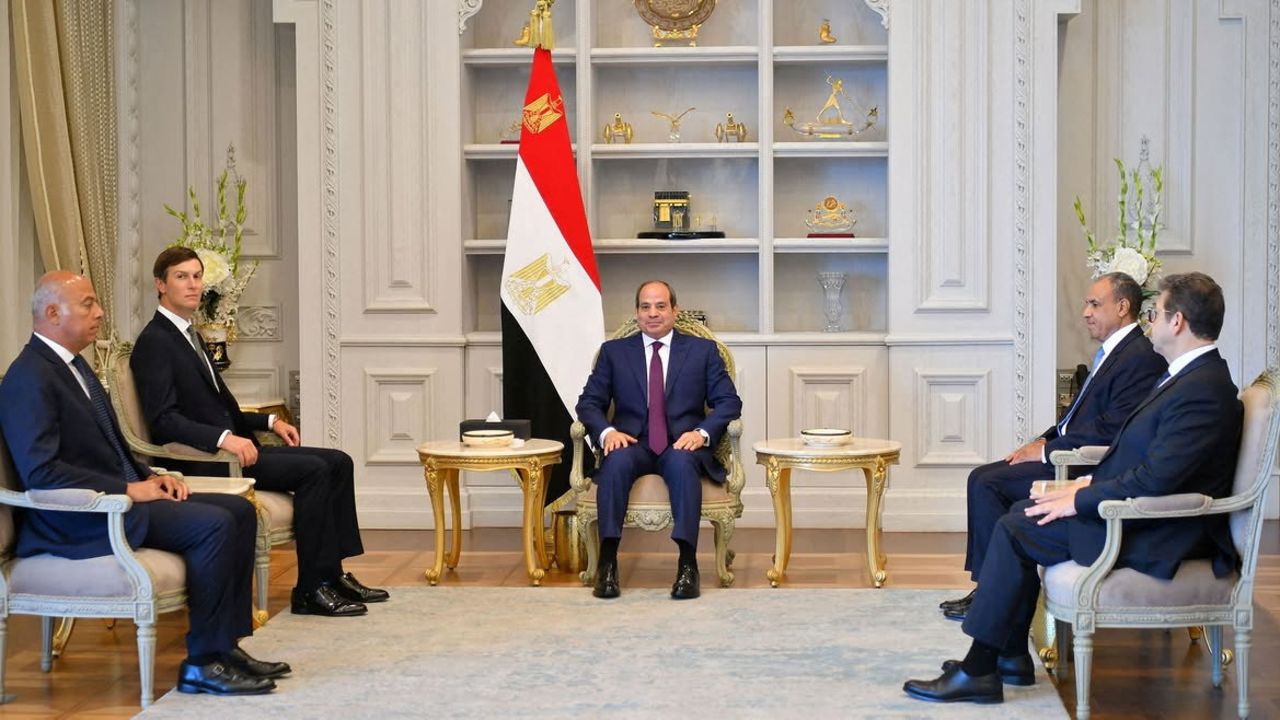
Jared Kushner meets with Egyptian President Abdel Fattah al-Sisi at a location given as El-Alamein, Egypt, in this handout photo released on August 16.
US envoy Jared Kushner and Hamas leader Khalil al-Hayya held talks in Egypt on Sunday, according to aGaza ceasefire plan rejected by Israel
The talks in El Alamein included Board of Peace director Nickolay Mladenov. Kushner is reported to have only met Hamas officials directly once before
In October last year, Kushner,President Donald Trump’s son-in-law, met with al-Hayya to finalize an earlier ceasefire agreement that led to the release of the remaining hostages in Gaza
Meetings with other key leaders:While in Egypt, Kushner also met with Egyptian President Abdel Fattah el-Sisi, where the two discussed “the need for all parties to fulfill their obligations under the agreement to stop the war in the Gaza Strip,” according to Sisi’s office
A USd the administration’s goals in the Middle East
Kushner and Mladenov are also expected to meet Prime Minister Benjamin Netanyahu in Israel on Monday, according to a diplomatic source
On Friday, an official with the Board of Peace — the US-backed body tasked with securing long-term peace in Gaza — said the goal of the meetings was to “concretize” the next steps of a new ceasefire plan
The big picture:Trump announced a new 15-point Gaza peace planat the end of last month, which called for a series of sequenced steps to halt regular Israeli attacks in Gaza, disarm Hamas, and lead to the withdrawal of the Israeli military
But after more than a week of silence, Netanyahu publicly rejected the deal and insisted the Israeli military would not withdraw until Hamas was completely disarmed. Hamas agreed to a disarmament plan but warned it could only happen if Israel upheld its obligations under the previous ceasefire agreement
Major progress on the ceasefire plan has proven difficult, especially against a backdrop of an upcoming election in Israel in which Netanyahu is unlikely to make serious concessions on Gaza
Ibrahim Dahman contributed reporting to this post
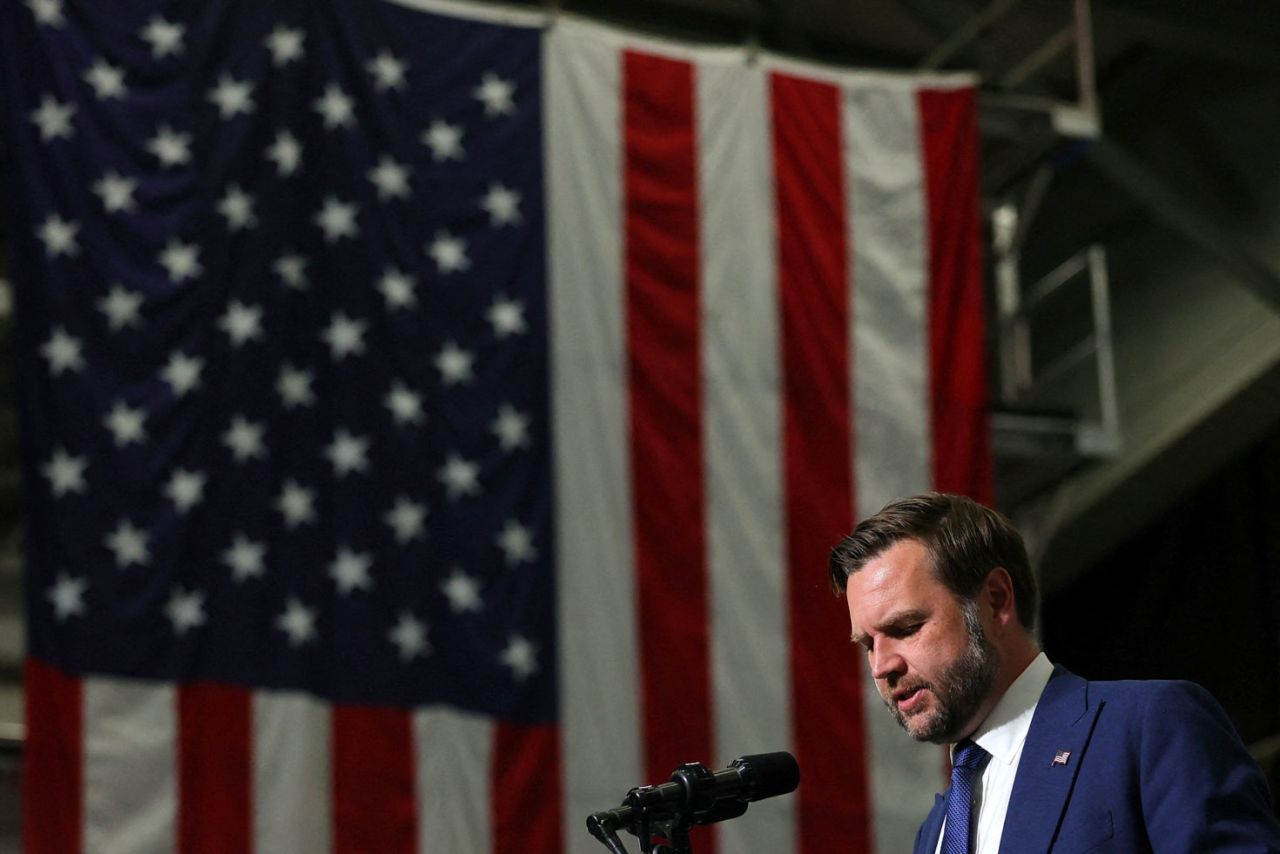
Vice President JD Vance discusses anti-fraud initiatives during a visit to Wisconsin Air National Guard’s 128th Air Refueling Wing at Milwaukee Mitchell Airport in Milwaukee on July 8.
One of the Trump administration’s biggest problems in extracting itself from the Iran war is the list of very absolutist goals that President Donald Trump and his team laid out
The goals have included complete Iranian surrender, regime change, Iran never getting a nuclear weapon and ending Tehran’s support for its Middle East proxy groups like Hezbollah
As the war — now in its sixth month — has dragged on, this list of goals has conspicuously shifted and been pared back. And Vice President JD Vance appears to have pared it back recently in a remarkable way, offering the latest indication that the administration might be preparing to settle for less — maybe even a lot less
Appearing on Fox News on Thursday, Vance was asked how the war might end. He laid out two goals
“It’s ensuring that the Gulf countries continue to send oil and gas to the world economy so that we have energy price stability,” he said, adding: “That’s goal number one: Keep oil and gas cheap for Americans all over our country
“And then, obviously, goal number two is ensure that Iran never gets a nuclear weapon.”
This is not the administration’s old list of goals — and the order Vance placed them in is striking
When asked about Vance’s comments on Friday, White House press secretary Karoline Leavitt maintained that “both goals are equally as important to the president.”
The administration has almost always characterized Iran never getting a nuclear weapon as the overriding concern
And even if the goals are truly equal in the administration’s mind, including oil and gas prices at all — and not other items — is a notable shift
Read thefull analysis of US objectives in Iranhere
It is getting harder to estimate the volume of shipping using the key Strait of Hormuz, as more vessels pass through with trackers off and ship-to-ship transfers disguise the amount of oil reaching global markets, analysts say
Traffic through the waterway remains low and although Iran and Oman are negotiating over the waterway, there are no immediate signs of a deal
The number of ships known to be transiting the Strait of Hormuz varies from a couple to about a dozen on a daily basis. Not all are tankers; many operators are still deterred from using the strait because of sporadic Iranian drone attacks
Thirteen vessels transited on Thursday, according to maritime intelligence group Windward, with four of those inbound and nine outbound. Of the outbound traffic, four vessels — including a tanker laden with 2 million barrels of Saudi crude – sailed with their satellite trackers off
There were no notable ship movements in the strait in the past 24 hours, MarineTraffic data showed on Sunday
Last week, US Energy Secretary Chris Wright said that between 8 and 9 million barrels a day were getting through Hormuz on a running average. Wright said the US had access to information that tracking agencies lacked
More context:Many tankers and freighters with Saudi connections are avoiding both Hormuz and the Bab al Mandeb waterway at the southern end to the Red Sea, where the Iranian-backed Houthi militants have warned they will attack Saudi vessels
Iran’s oil exports have been severely limited by the US naval blockade
For the first time in almost a month, a large tanker last week began loading crude at the western terminal of Iran’s main export hub Kharg Island, Windward said. More than a dozen other tankers remain anchored in the area
Iranian President Masoud Pezeshkian said Saturday that the lack of oil exports was hitting the state’s revenues
