

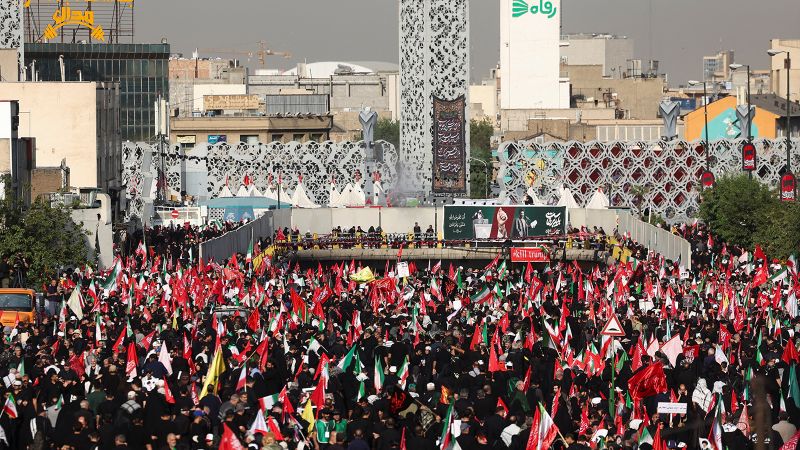
• Funeral procession:Hundreds of thousands of people gathered in Tehran in the hopes of seeing the coffin of the late supreme leader, Ayatollah Ali Khamenei, during his multi-day funeral. CNN’s team on the ground has witnessed mourners vow revenge against the US and Israel. Some took part in a symbolic “stoning the devil” ceremony, throwing pebbles at an image of US President Donald Trump, according to state-affiliated media
• Successor absent: Khamenei’s son and successor, Mojtaba Khamenei, has yet to appear publicly since his father’s killing. Iran’s hard-line and controversial former President Mahmoud Ahmadinejad attended the funeral, marking a rare appearance after years of estrangement from the slain leader
• US-Iran talks: Iran’s top negotiator says implementing the agreement with the US is “difficult, but achievable.” Parliament Speaker Mohammad Bagher Ghalibaf, speaking with the head of the Hamas political bureau at the funeral, also reaffirmed support for the regional armed groups backed by Iran
21 Posts
Tehran’s streets were flooded by huge crowds today, as hundreds of thousands of mourners came out to watch the funeral procession of Iran’s slain Supreme Leader Ali Hosseini Khamenei, who was killed by US-Israeli strikes in late February
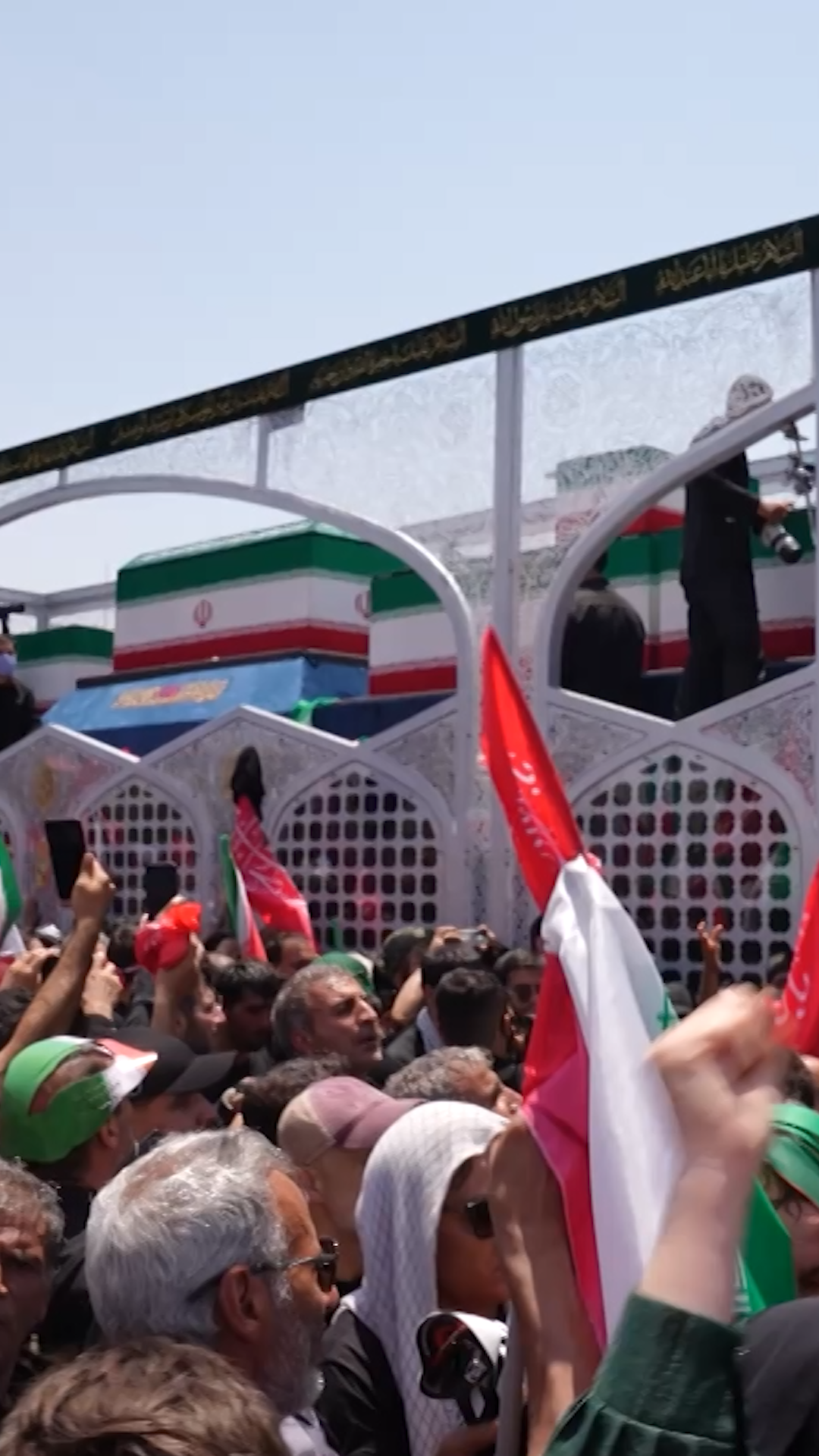
Iranians pack streets of Tehran for supreme leader’s funeral
CNN’s Frederik Pleitgen attends the funeral procession for Iran’s late supreme leader, Ayatollah Ali Khamenei, witnessing mourners who vow revenge against the United States and Israel. CNN operates in Iran only with the permission of the government but maintains full editorial control of its reports
0:52• Source:
CNN
Iranians pack streets of Tehran for supreme leader’s funeral
0:52
Today marks the third of six days of funeral events. Here’s a look at what’s been happening so far today:
- Starting at dawn, crowds of mourners wearing black clothing poured onto the streets of central Tehran ahead of Khamenei’s funeral procession.
- A few hours later, a vehicle holding coffins painted with the Iranian flag began to drive down the streets of the city. Frequent loud cries of “death to America, death to Israel” were heard from the crowd.
- Mourners took part in a symbolic “stoning the devil” ceremony, throwing pebbles at an image of US President Donald Trump, according to footage released by the state-affiliated Mizan news agency.
- Iran’s hardline and controversial former President Mahmoud Ahmadinejad attended the funeral, marking a rare appearance after years of estrangement from the slain leader.
- Meanwhile, Iran’s top negotiator Mohammad Bagher Ghalibaf, who is also parliament speaker, said implementing the ceasefire agreement his country has signed with the United States is “difficult, but achievable.”
- Israeli Defense Minister Israel Katz said any Iranian leader who “attempts to advance plans to destroy Israel will be thwarted.”
- Almost a third of boats that traversed the Strait of Hormuz in recent days did so along the coast of Oman, tracking data suggests, as the waterway remains a key component of a fragile truce between the US and Iran.
- Elsewhere in the region, French President Emmanuel Macron is in Syria ahead of the NATO summit in Turkey. Macron is the first leader of a major Western nation to visit the war-torn country since the ouster of Bashar al-Assad in 2024.
CNN’s Joseph Ataman, Frederik Pleitgen, Claudia Otto, Aida Karimi, Charlotte Reck, Mostafa Salem, Xiaoqian Lin, Tal Shalev, Sana Noor Haq and Rupert Neate contributed to this reporting
CNN operates in Iran only with the permission of the government but maintains full editorial control of its reports
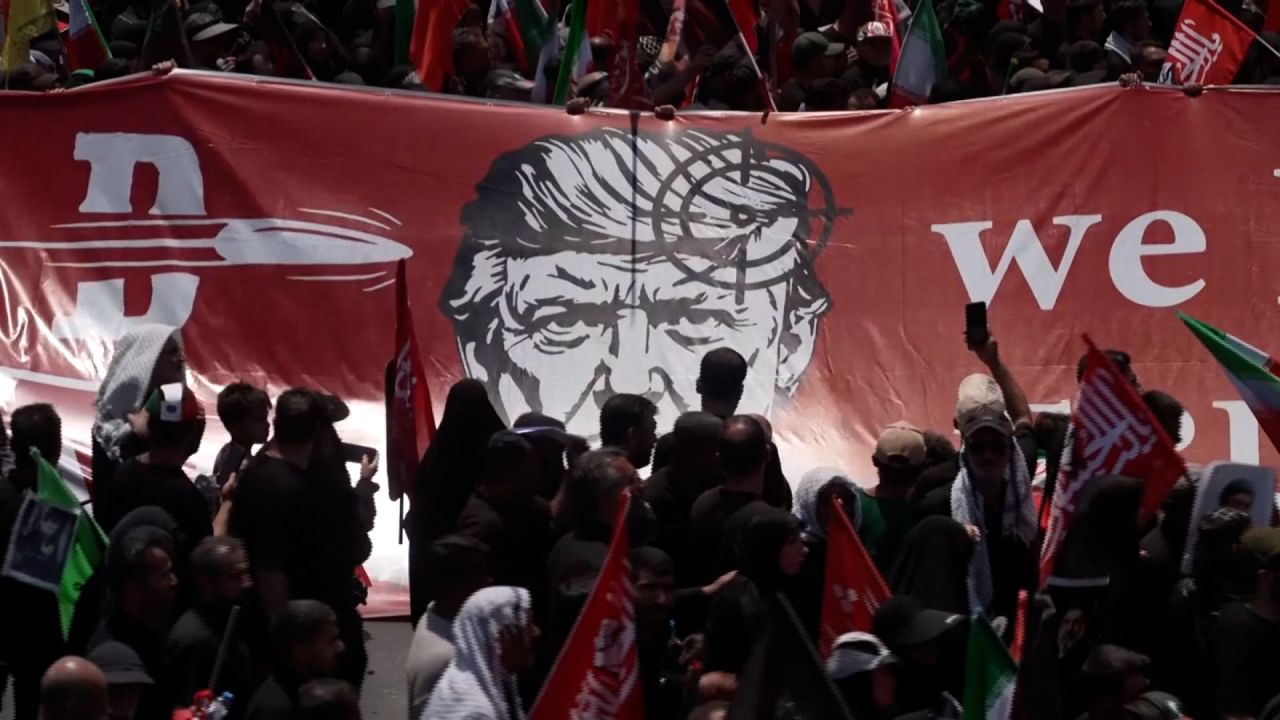
“We will take revenge”: Huge crowds attend Khamenei’s funeral in Tehran
1:11• Source:
CNN
“We will take revenge”: Huge crowds attend Khamenei’s funeral in Tehran
1:11
Hundreds of thousands of mourners have taken to the streets of Tehran for the funeral of the late Supreme Leader Ayatollah Ali Khamenei today, with many calling for revenge over his death
Thirty-year-old Zahra Valaei told Reuters: “We will take revenge for the blood of our leader. We will not let the blood of our leader be trampled underfoot.”
Take a look at some scenes from the ground in the video above
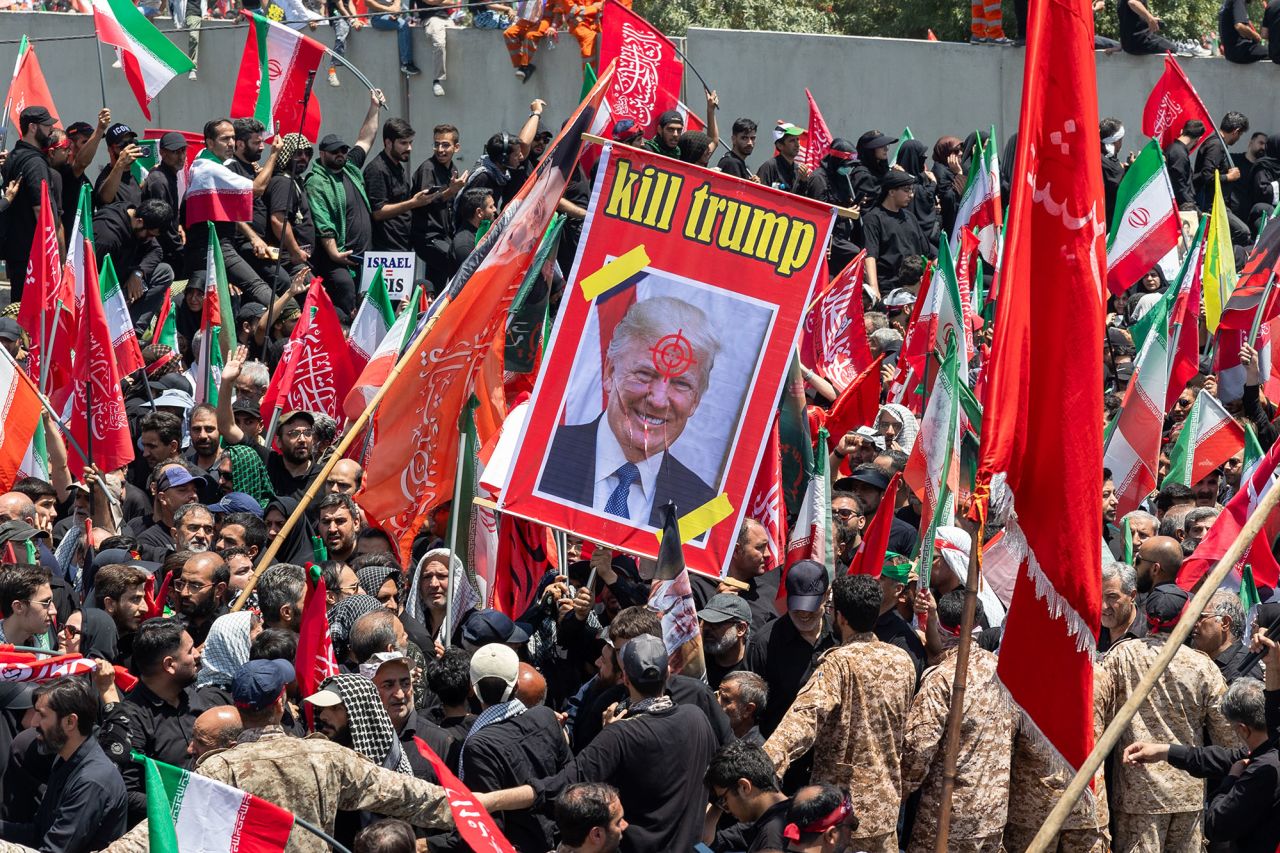
A poster with the slogan ‘Kill Trump’ is displayed as mourners gather to pay final respects to Iran’s slain Supreme Leader Ayatollah Ali Khamenei on Monday.
Mourners at a massive regime-organized funeral for Iran’s slain Supreme Leader Ali Khamenei took part in a symbolic “stoning the devil” ceremony, throwing pebbles at an image of US President Donald Trump, according to footage released by the state-affiliated Mizan news agency
The stoning of the devil is a Hajj ritual where Muslim pilgrims throw small stones at pillars representing the devil, symbolizing the rejection of evil
Grieving men and women, many with their children beside them, flooded the capital’s streets bearing the flag of the Islamic Republic and clutching photographs of the nation’s former leader
Elsewhere, one woman was stood defiantly on the roadside with her nation’s flag in one arm and a placard imitating a “wanted” poster with Trump’s face, and the words “Kill Trump” in the other. Emblazoned across it, a bounty was promised for whoever avenges the death of Iran’s late leader: “Assassination bounty. Dead or alive. 20,000,000 Dollars,” it said
Anti-American displays, including chants of “Death to America,” flag burnings and similar imagery, have been a staple of state-organized rallies in Iran since the 1979 Islamic Revolution
During the funeral procession, attendees circulated a list identifying Trump’s “warmongering advisers” – those deemed responsible for Ayatollah Khamenei’s death – as targets
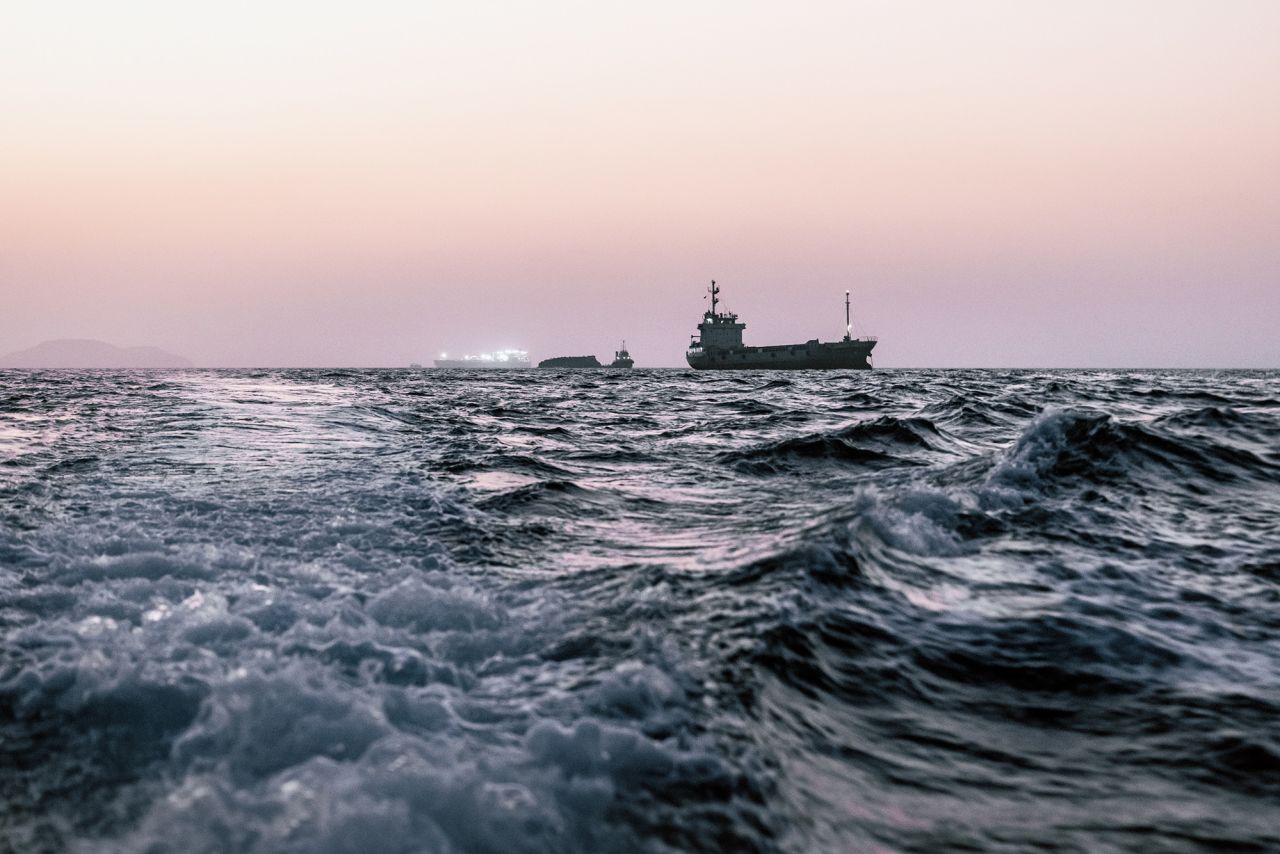
Oil tankers and cargo vessels remain anchored off Port Sultan Qaboos on June 21, 2026 in Muscat, Oman.
As we cover the former supreme leader’s funeral procession, here’s an update about the Strait of Hormuz
Almost a third of boats that traversed the key strait over the past couple days did so along the coast of Oman, tracking data suggests, as the waterway remains a key component of a fragile truce between the US and Iran
One hundred and eight boats crossed the strait from Friday through Sunday, the latest update from maritime tracking agency MarineTraffic said Monday. Of those, 30 vessels — including crude and LPG tankers — followed the Omani route
The flow of vessels through the channel, where boats transport about one-fifth of global oil and liquefied gas supplies, remained highest on Friday, with 43 crossings. On Saturday and Sunday, 34 and 31 crossings took place, respectively
Analysts described “operational but fragmented” activity, MarineTraffic said, adding that the pattern “should be read alongside the still-fragile security and diplomatic backdrop.”
Remember:Authorities in Iran have repeatedly used the vital oil chokepoint as a bargaining chip after US-Israeli strikes on Tehran triggered retaliatory Iranian strikes and wider regional violence
Tehran and Washington have launched strikes even after signing a 14-point agreement in June. At the same time, Iran has tried to strengthen its leverage by saying crew members must gain permission to traverse the strait along routes approved by its officials
Just on Sunday, the country’s Islamic Revolutionary Guard Corps (IRGC), warned that its navy deployed patrol boats to block the “Omani route,” Iranian media and a Telegram channel affiliated with the IRGC said
CNN’s Billy Stockwell and Tim Lister contributed reporting
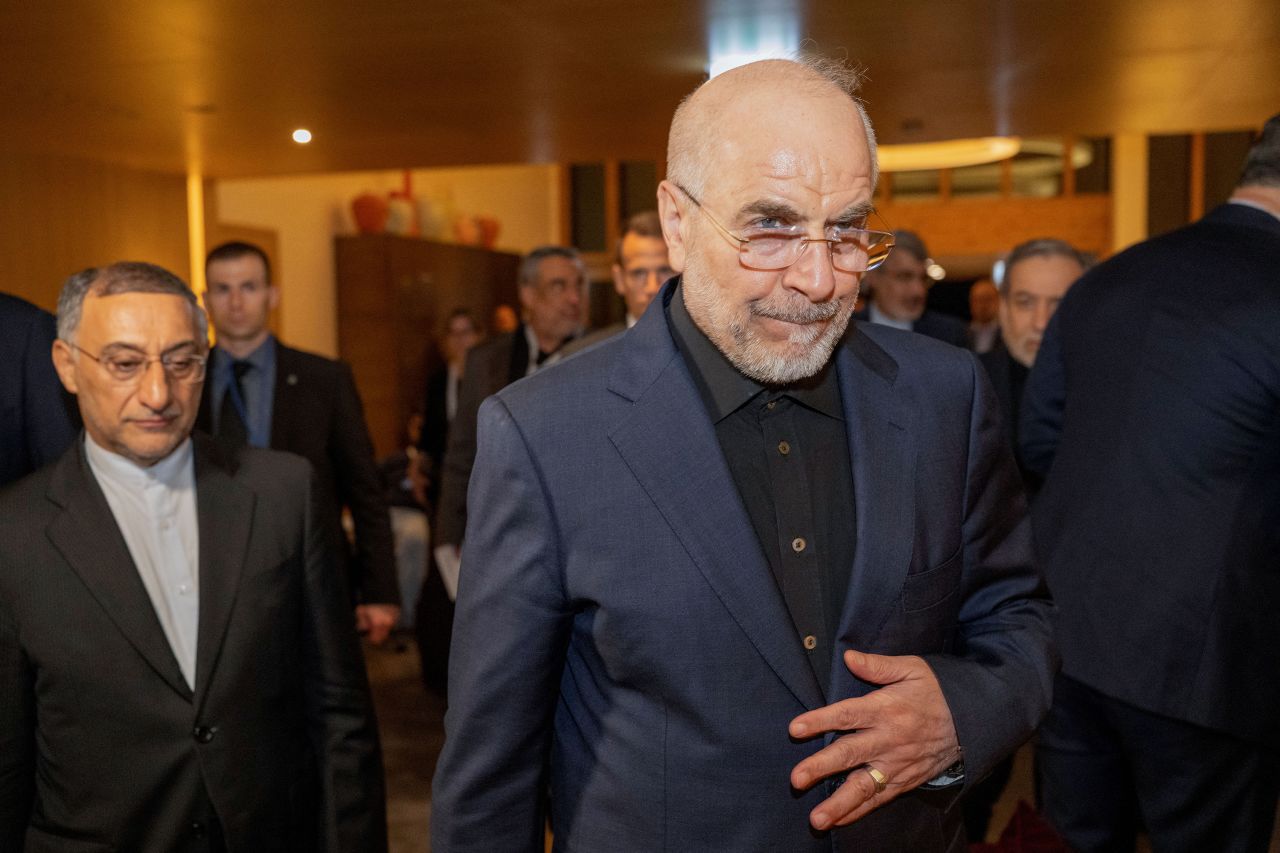
Speaker of the Parliament of Iran, Mohammad Bagher Ghalibaf (R) arrives at the Burgenstock resort in Obbuergen, near Lucerne on June 21, 2026.
Mohammad Bagher Ghalibaf, Iran’s parliament speaker and top negotiator in talks with the US, said earlier that implementing the ceasefire agreement his country signed with the United States is “difficult, but achievable.”
Ghalibaf said that Iran does not “have peace with America and will not recognize Israel,” reaffirming support for “the resistance front,” a term Tehran uses to describe the regional armed groups it backs, according to the Iranian state broadcaster IRIB
Last week, officials from Tehran and Washington traveled to Doha, Qatar, for indirect talks on the war. These discussions were paused by Iran ahead of the funeral of the late Iranian Supreme Leader Ayatollah Ali Khamenei, which is taking place at the moment
Here’s the latest on the talks:
- The separate indirect meetings between US and Iranian negotiators in Doha made “positive progress,” Qatari Foreign Ministry spokesperson Majed al-Ansari said Wednesday.
- Al-Ansari also said that that the next meeting between negotiators would be scheduled “at the earliest possible time” after funeral processions for Iran’s former supreme leader.
- US Vice President JD Vance said on Wednesday that the talks were “going well,” though he added that it was “still pretty early.”
- Meanwhile, officials from Lebanon and Israel signed a US-brokered agreement late last monthoutlining an Israeli withdrawal from two areas in southern Lebanon.Despite this agreement, fighting has continued, and two days after signing it, Israel approved continued military operations in southern Lebanon. Iran-backed militant group Hezbollah denounced the agreement, demanding a complete Israeli withdrawal from the country.
- Earlier in the week, Syria’s foreign minister visited Beirut for talks with Lebanese officials, marking his first official trip since Trump raised the possibility of Syrian intervention in Lebanon.
CNN’s Mostafa Salem, Mohammed Tawfeeq, Hira Humayun, Haley Britzky, Xiaoqian Lin, Tal Shalev, Charbel Mallo, Eugenia Yosef and Oren Liebermann contributed to this reporting
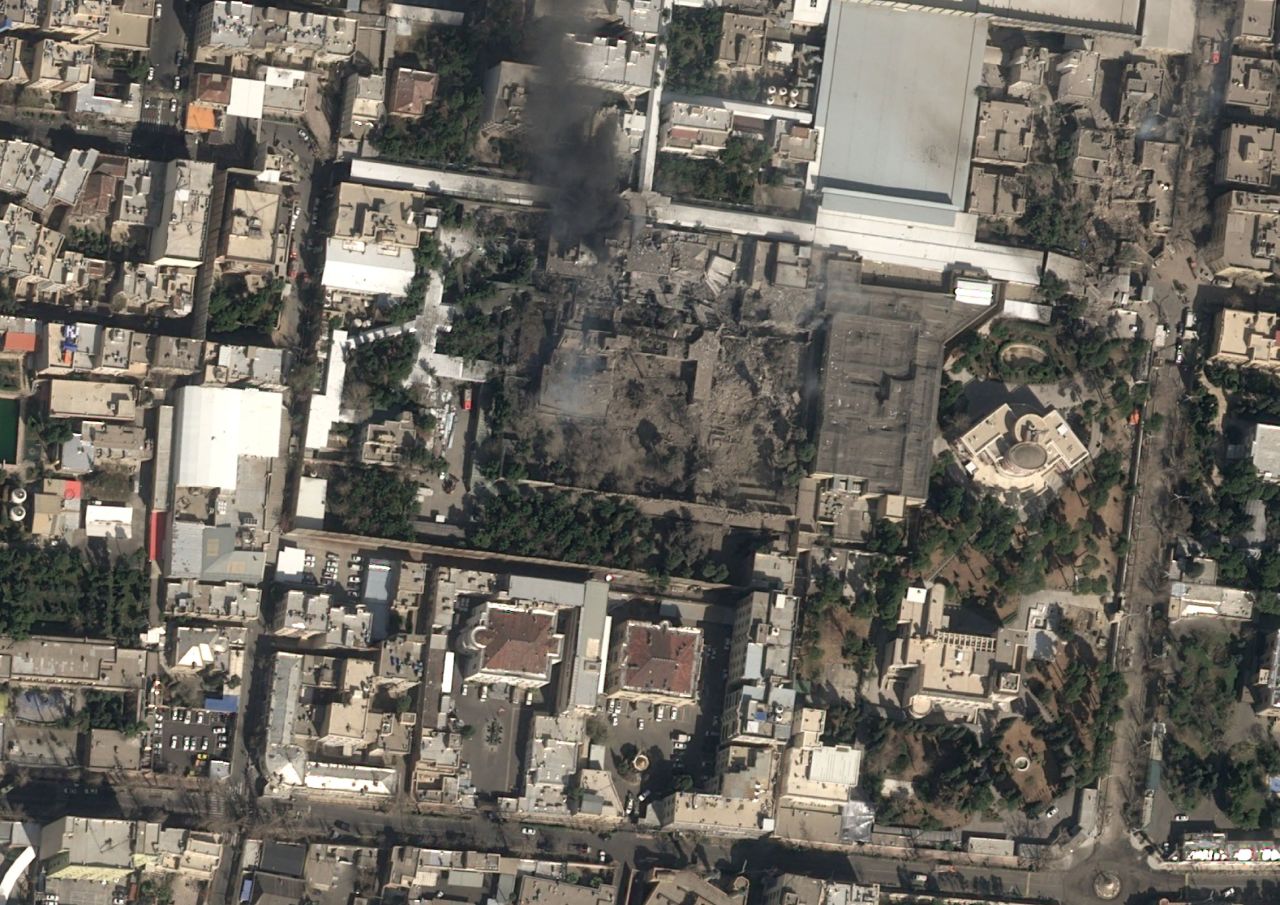 shows smoke billowing from the compound of Iran’s Supreme Leader Ayatollah Ali Khamenei, in Tehran, on February 28.”>
A satellite image shows smoke billowing from the compound of Iran’s Supreme Leader Ayatollah Ali Khamenei, in Tehran, on February 28.
The six-day funeral of Iran’s slain Supreme Leader Ali Hosseini Khamenei is currently underway, more than four months since he was killed by US-Israeli strikes on Tehran in late February
Typically, Muslim burials take place very soon after death, meaning that the months-long delay in holding Khamenei’s funeral is “unusual,” Rowena Abdul Razak, an expert on Middle Eastern history, has told CNN
There are many factors behind this delay, Abdul Razak, a lecturer in the history of the Middle East and Africa at London’s School of Oriental and African Studies, explained
Firstly, the war between the US, Israel and Iran caused “a lot of displacement, destruction and bombings,” which “made it hard to have the funeral,” Abdul Razak said
Safety concerns also meant that Iranian leaders might not have been able to attend the commemorations if they were taking place while fighting was happening, she added. Those planning the funeral may have waited for a ceasefire before holding the funeral due to these safety concerns, and to ensure that foreign dignitaries could attend, the lecturer explained
The spectacle is unfolding during the Islamic month of Muharram, “a deeply meaningful and very important month” in the Shiite calendar, the lecturer said. “Having the funeral during this month holds significant symbolism of sacrifice and martyrdom.”
Khamenei’s funeral procession is “quite different” to that of his predecessor Ayatollah Ruhollah Khomeini, Abdul Razak said. The 1989 events only lasted two days compared to six, and the procession stayed in Iran, rather than traveling to Iraq, like Khamenei’s is expected to
Khamenei will also be buried in his hometown of Mashhad rather than in his own mausoleum, the lecturer noted
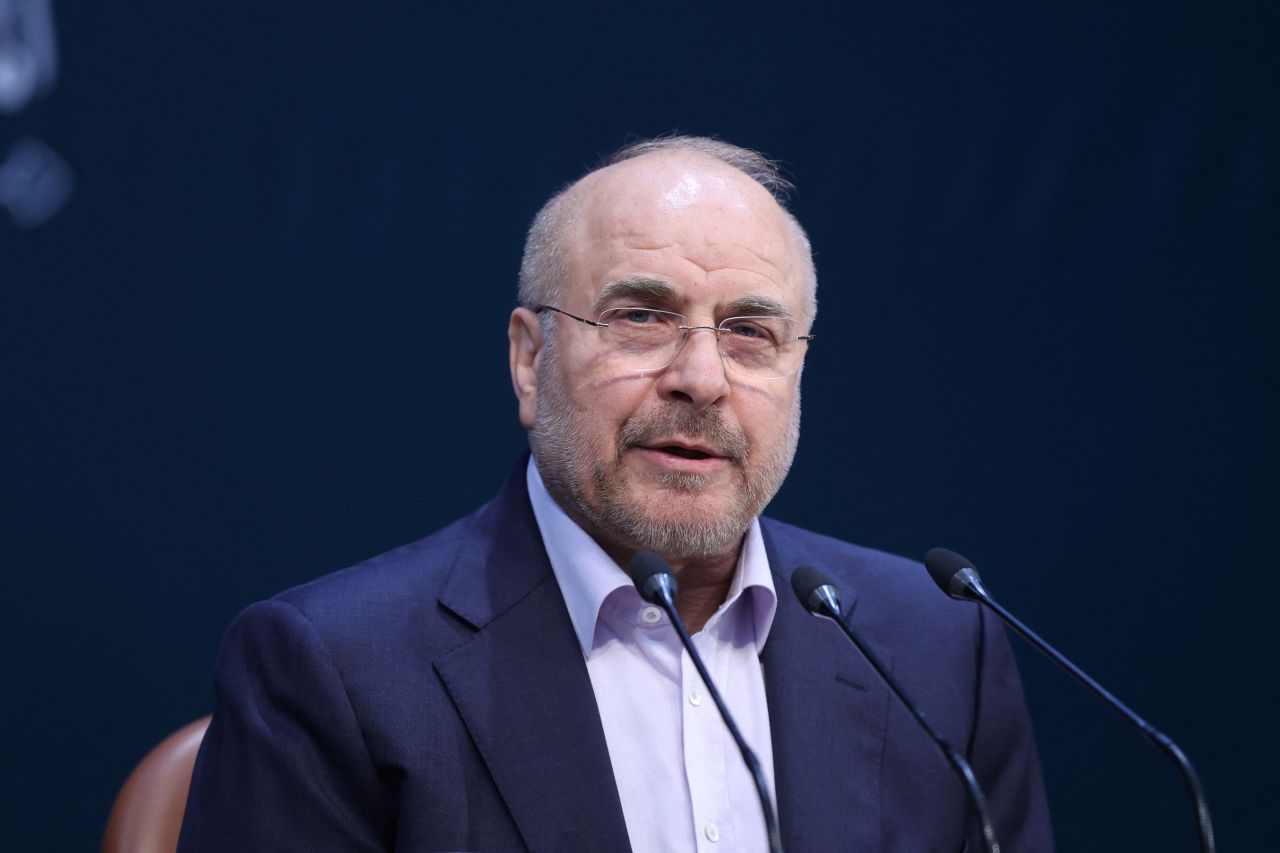
Iranian Parliament Speaker Mohammad Bagher Ghalibaf speaks during a press conference in Tehran, Iran, on November 27, 2024.
Iran’s top negotiator Mohammad Bagher Ghalibaf, who also serves as the speaker of parliament, said implementing the ceasefire agreement signed with the United States is “difficult, but achievable.”
Speaking with the head of the Hamas political bureau Muhammad Ismail Darwish, who was in Tehran for the funeral of Supreme Leader Ali Khamenei, Ghalibaf said that Iran does not “have peace with America and will not recognize Israel” and reaffirmed support for “the resistance front,” a term Tehran uses to describe the regional armed groups it backs
“When necessary, that support comes in the form of missiles; when political pressure is needed, that pressure is applied through negotiations,” Ghalibaf said, according to the Iranian state broadcaster IRIB
Ghalibaf added that “avenging” Khamenei will come through the “liberation of Jerusalem,”
The 14-point agreement signed last month between Iran and the US sets a 60-day period for negotiations on sanctions relief, Iran’s nuclear program and the reopening of the Strait of Hormuz, but makes no reference to Tehran’s support for regional armed groups or its drone and missile programs
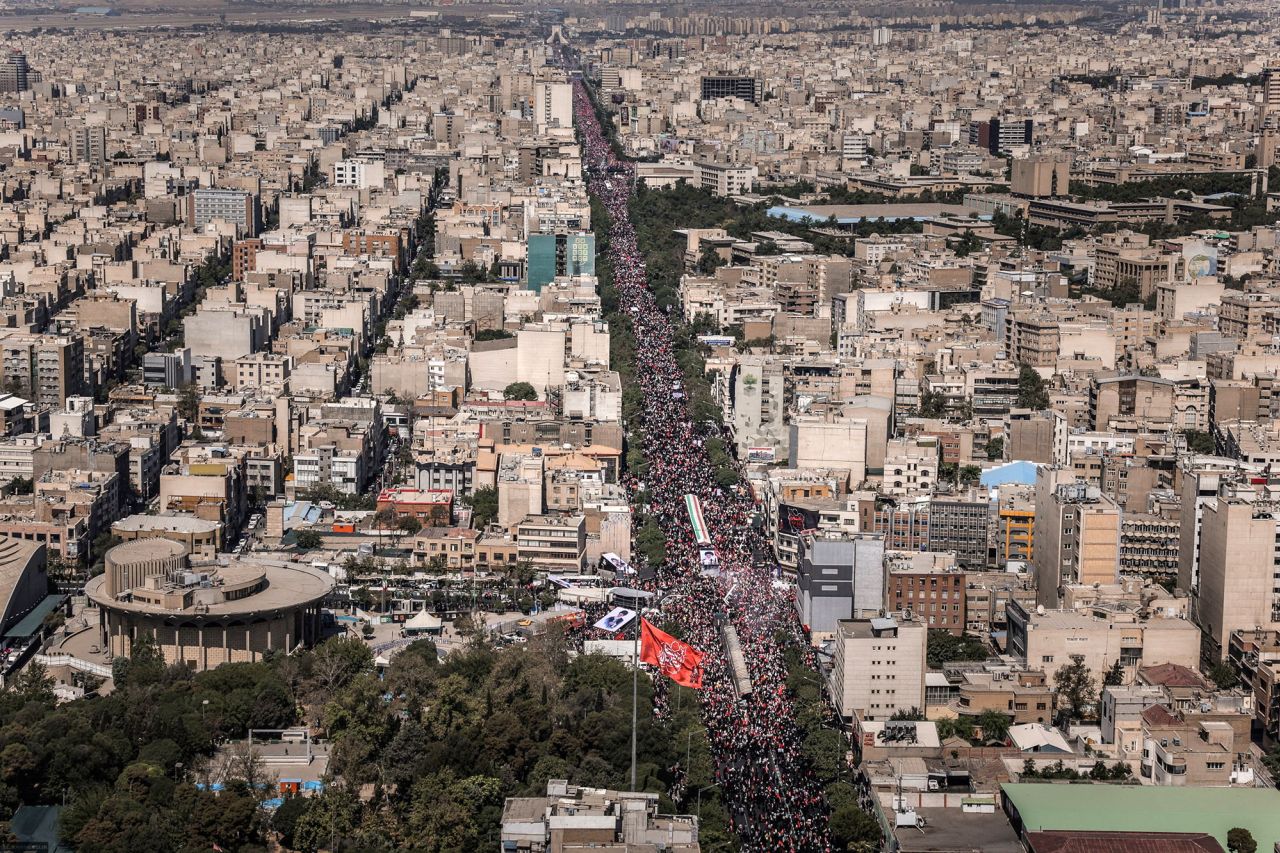
People attend a funeral procession for Iran’s late Supreme Leader Ayatollah Ali Khamenei in Tehran on Monday.
Monday, the climax of the funeral events in Tehran, saw the largest crowds yet on the streets of Iran’s capital city
The nearly 20-kilometer-long (12 miles) procession route, stretching through the center of Tehran, was packed full of mourners hoping to see the late Ayatollah’s coffin up close
No official figures have been released on the turnout Monday but the crowds easily numbered in the hundreds of thousands
Many had traveled into Tehran from other cities in Iran
The atmosphere is extremely charged up. Many of the people here – and it’s a big big crowd – are screaming, “Death to America” and vowing revenge both against the United States as well as President Donald Trump and against Israel as well
The government has brought out people in force. They say they expect several million people to come out on the street to witness this as the casket is now making its way through Tehran to then, at some point, be brought to other cities in Iran and Iraq before being taken to its final resting place in the east of Iran in Mashhad
CNN operates in Iran only with the permission of the government but maintains full editorial control of its reports
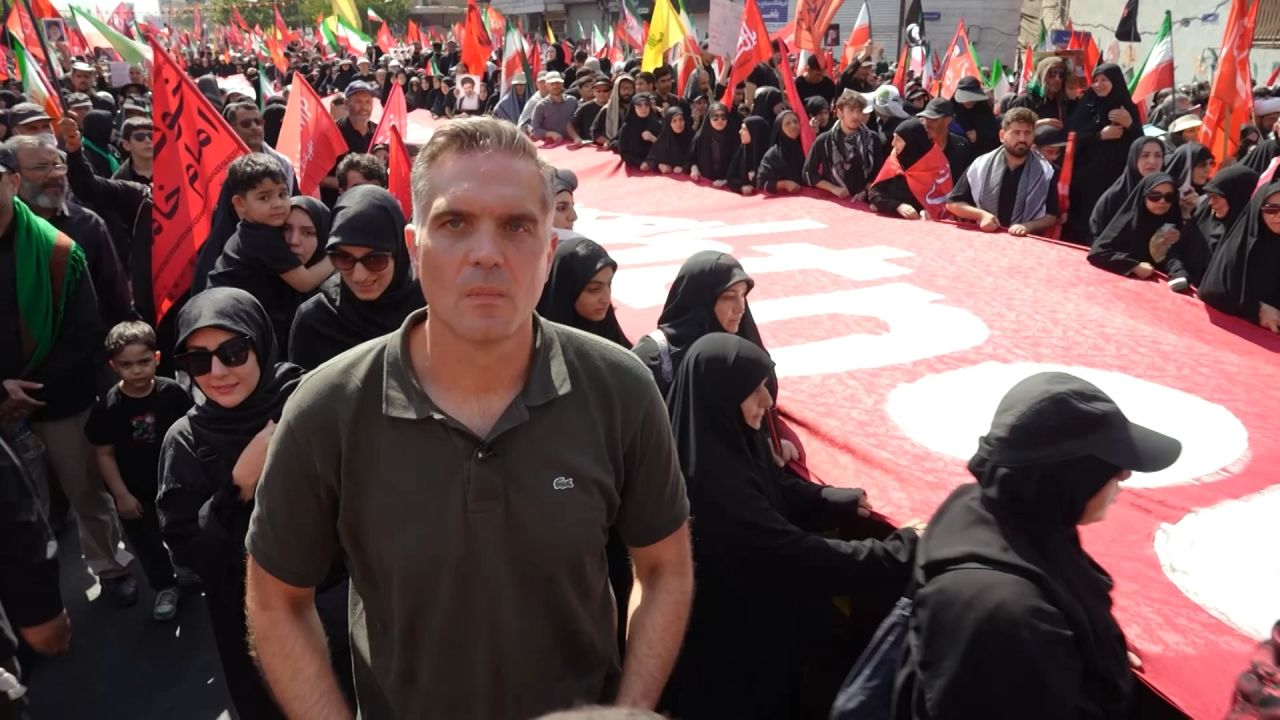
CNN’s Frederik Pleitgen reports from the funeral of Iran’s former Supreme Leader Ayatollah Ali Khamenei
1:29• Source:
CNN
CNN’s Frederik Pleitgen reports from the funeral of Iran’s former Supreme Leader Ayatollah Ali Khamenei
1:29
The public funeral procession for Iran’s slain Supreme Leader Ayatollah Ali Khamenei is underway in Tehran today, and a CNN team is on the ground
Mourners waving flags and holding pictures of Khamenei crowded the street, chanting phrases such as “death to America” and “death to Israel.”
One woman told CNN that she had come out to “seek the revenge for the blood of our leader,” adding that she will “not abandon this goal for a second.”
Watch more from the funeral procession in the video above
CNN operates in Iran only with the permission of the government but maintains full editorial control of its reports
Huge crowds have gathered in central Tehran today as a vehicle holding several coffins painted with the Iranian flag made its way down the streets during the public funeral for Iran’s former Supreme Leader Ayatollah Ali Khamenei
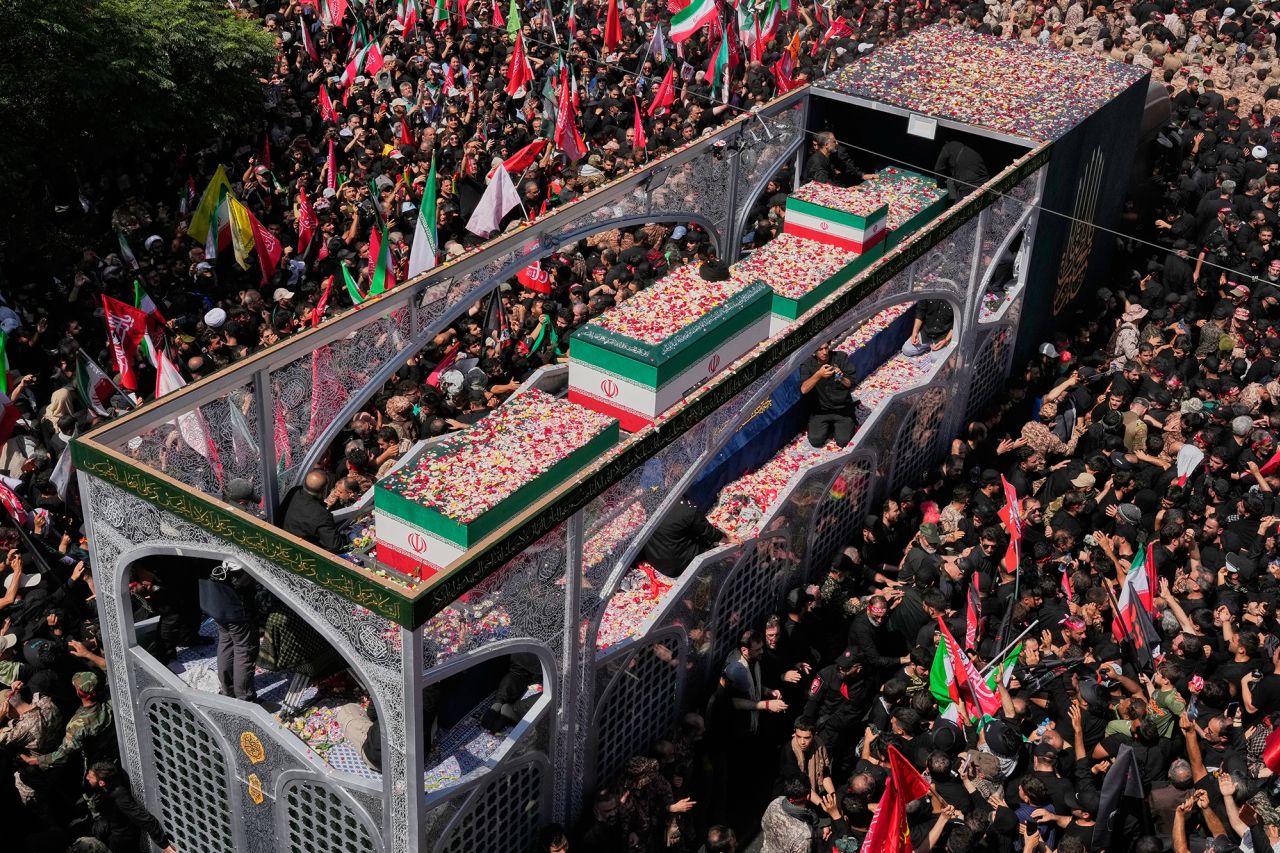
Mourners surround a truck carrying the coffins of the slain Iranian Supreme Leader Ayatollah Ali Khamenei and members of his family during a funeral procession in Tehran, Iran, on July 6.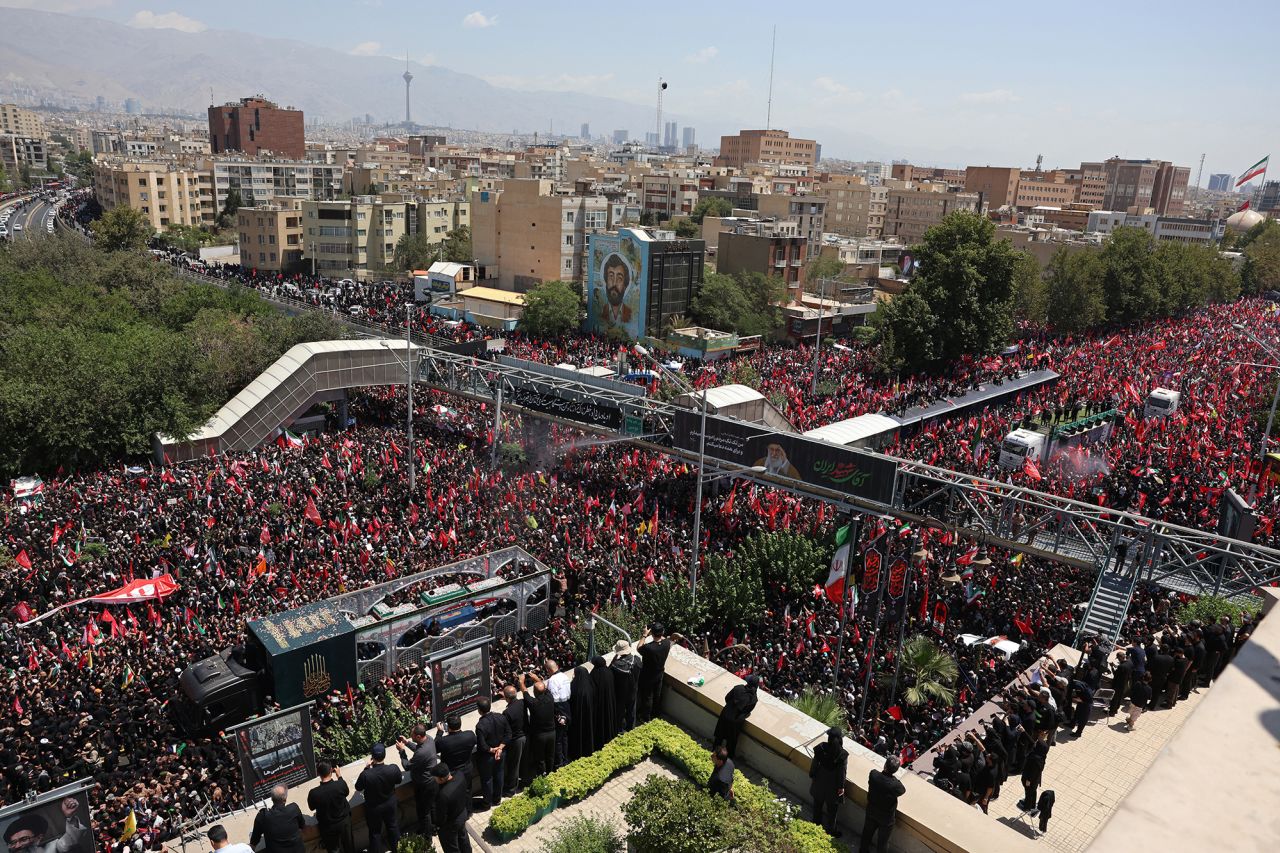
People gather along a street in Tehran during the funeral procession.
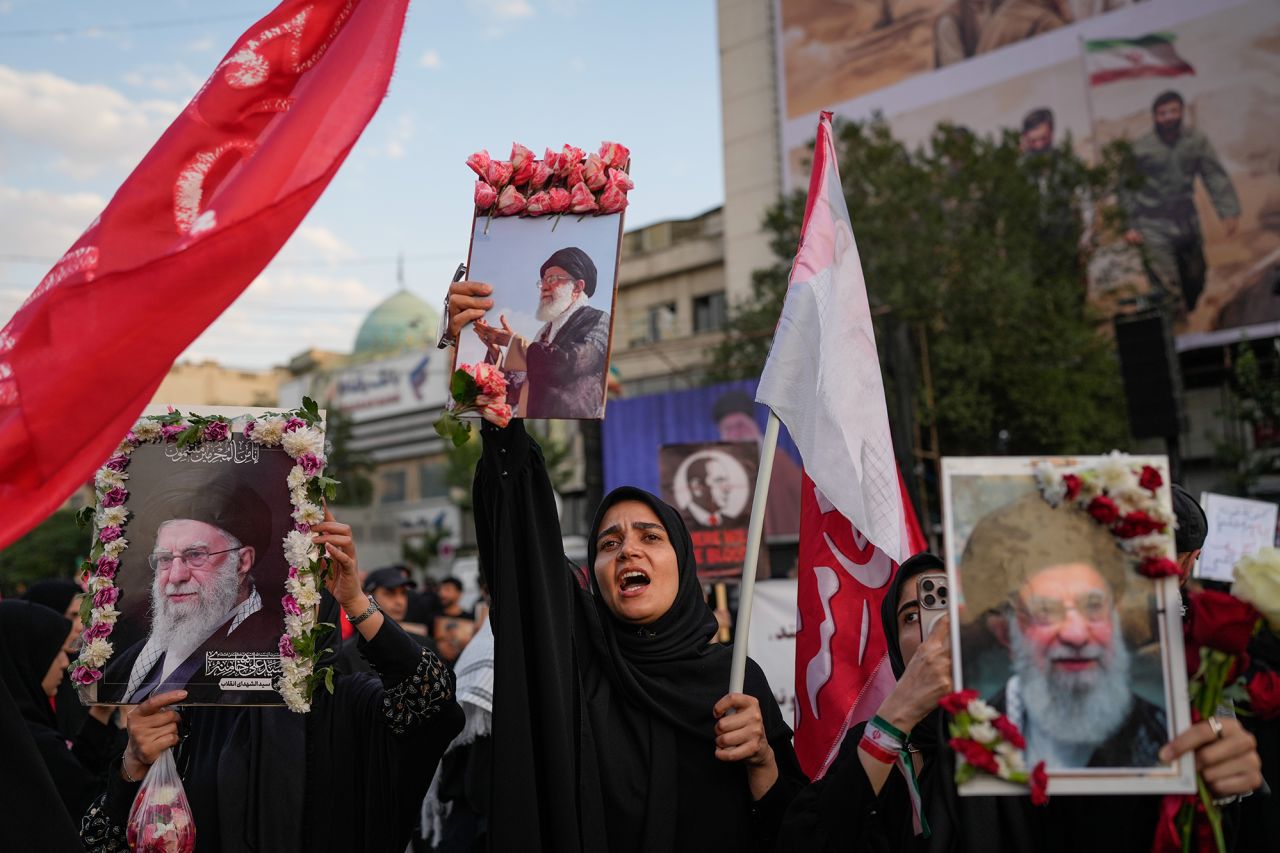
Mourners chant while holding flower-framed portraits of the slain Iranian Supreme Leader Ayatollah Ali Khamenei.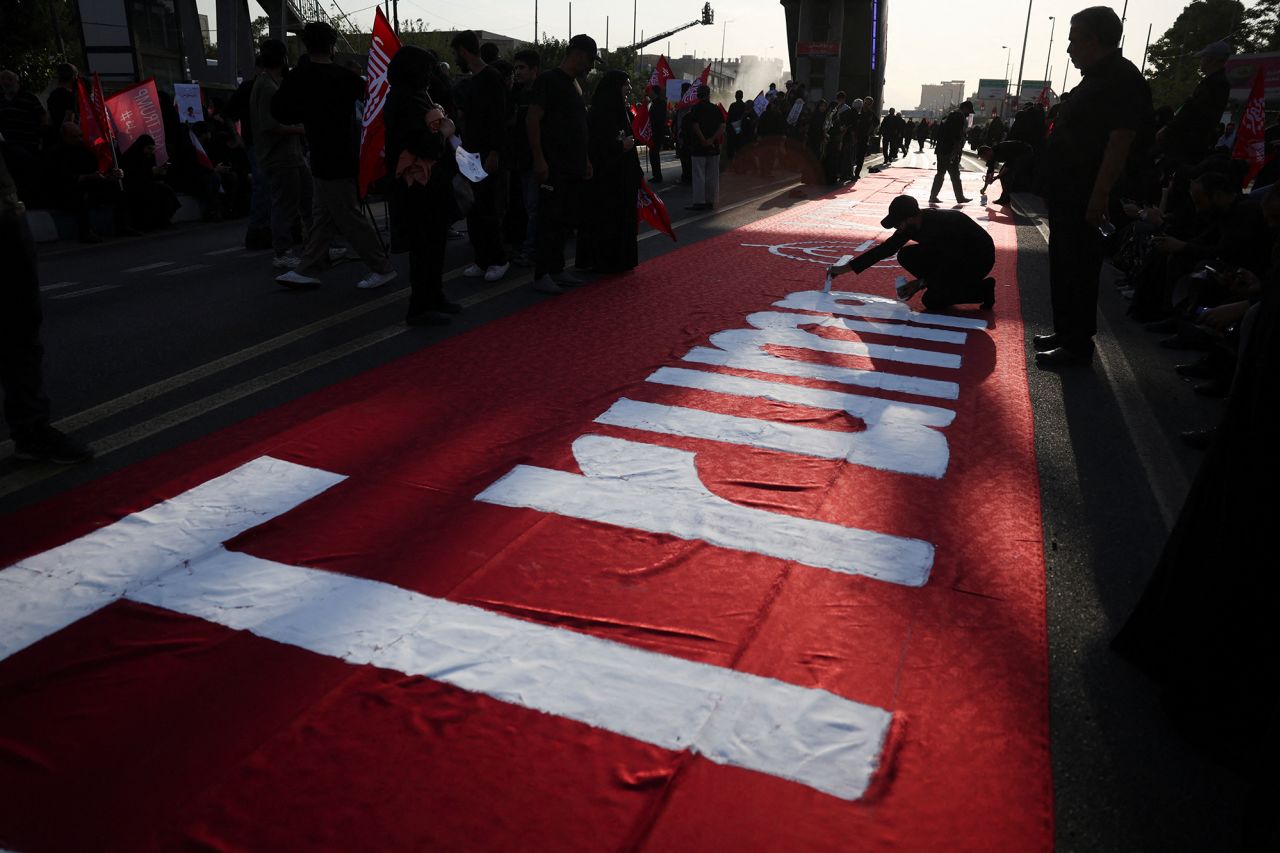
A person paints the name of US President Donald Trump on a banner.
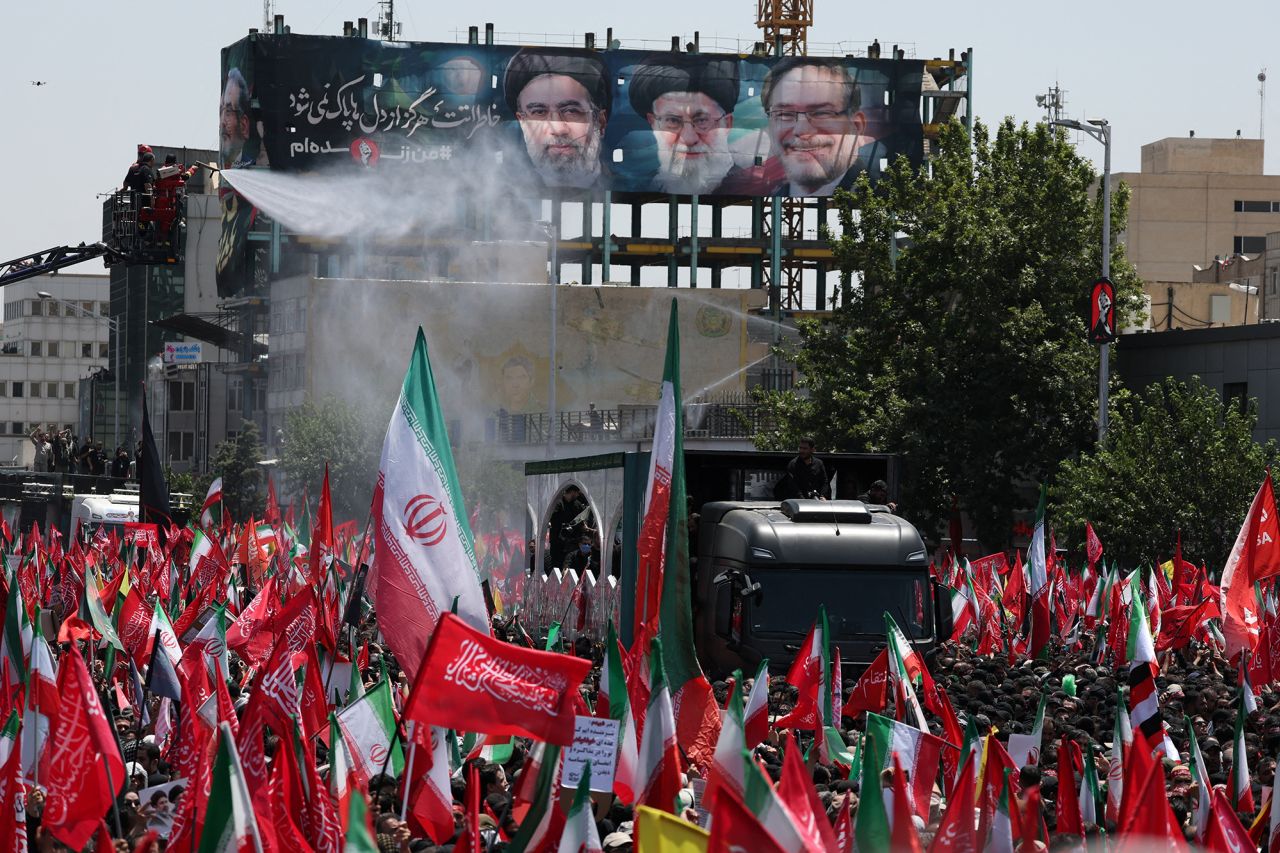
Water is sprayed to keep attendees cool as a vehicle carrying the coffins of Iran’s late Supreme Leader Ayatollah Ali Khamenei and his family members drives through the crowded streets of Tehran.
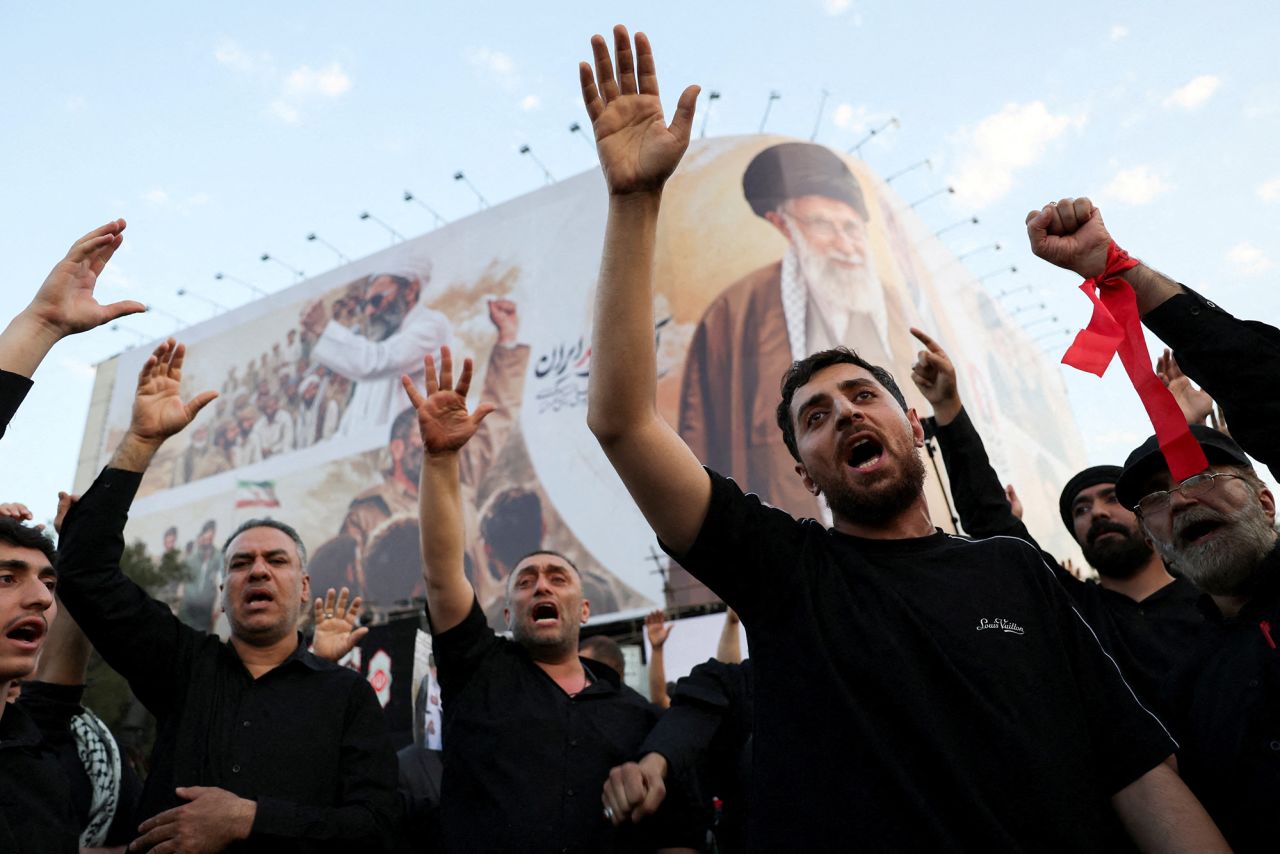
Mourners shout slogans on the day of the funeral procession.

A vehicle carrying the coffins of Iran’s late Supreme Leader Ayatollah Ali Khamenei and his family members makes its way through the crowds.

A banner depicting Iran’s late Supreme Leader Ayatollah Ali Khamenei hangs on a wall on the day of his funeral procession.

Iranian President joins funeral procession for Supreme Leader Khamenei in Tehran
0:45• Source:
CNN
Iranian President joins funeral procession for Supreme Leader Khamenei in Tehran
0:45
The third day of the public funeral for Iran’s slain Supreme Leader Ayatollah Ali Khamenei is underway in Tehran, where the main procession is taking place
Later this week, processions are expected to take place in the Iranian city of Qom and in Iraq before Khamenei’s burial in the town he was born
Khamenei’s son and successor Mojtaba has still not appeared publicly since his father was killed in an airstrike as the US and Israel launched their war with Iran on February 28
Here’s a look at what’s happened today:
- From dawn, crowds of mourners wearing black clothing poured onto the streets of central Tehran ahead of Khamenei’s funeral procession.
- Some hours later, a vehicle holding coffins painted with the Iranian flag began to drive down the streets of central Tehran. Frequent loud cries of “death to America, death to Israel” were heard from the crowd.
- Many mourners were seen waving a red and white flag, which symbolizes martyrdom and revenge in the Shia Muslim tradition. The flags of Iran and Hezbollah were also seen in the crowd.
CNN’s Joseph Ataman, Frederik Pleitgen, Claudia Otto, Aida Karimi and Lex Harvey contributed to this reporting.CNN operates in Iran only with the permission of the government but maintains full editorial control of its reports
Iran’s hardline and controversial former President Mahmoud Ahmadinejad attended the funeral of Supreme Leader Ali Khamenei, marking a rare appearance after years of estrangement from the slain leader
Ahmadinejad’s tenure polarized the Islamic Republic and his presidency gained notoriety for controversial world views. In 2009, his re-election sparked the Green Movement – at the time the largest anti-government protests in the history of the Islamic Republic – over claims of vote rigging
Despite the protests, Khamenei came out strongly in favor of the election results and backed Ahmadinejad, although their relationship soured in the years that followed and in recent years the former president was sidelined
Iranian media reports said at the early days of the war said a strike on his home injured Ahmadinejad. His attendance at Khamenei’s funeral marks the first time he appears publicly since the war
A picture on Iranian media showed him walking among the large crowds attending the funeral procession in Tehran

Supreme Leader Ayatollah Ali Khamenei waves to his supporters during his visit to Mashhad, Iran, on March 21, 2018.
To his supporters, Iran’s late Supreme Leader Ayatollah Ali Khamenei was the steadfast, fearless leader who transcended mere politics and inspired devotion. To his critics, Iranian and foreign, he was a feared tyrant bent on crushing those opposed to him while keeping his country isolated from the West
He was only the second leader of the Islamic Republic and by far the longest-serving
Khamenei, who was born in 1939 in Mashhad, Iran’s holiest city, became a Shiite Muslim cleric at a young age. He was an activist before the 1979 Islamic Revolution, helping to organize protests against the shah of Iran, Mohammad Reza Pahlavi, and serving time in prison for it
He was also a target for the new Islamic regime’s opponents and escaped an assassination attempt in 1981 that left his right arm useless
Not long afterward, he was elected president on a platform deeply hostile to the West and its liberal ideology, and especially to the United States — threatening a hard fight in the event of war
“We in no way are willing to start an all-out war with the US, but if it so happens, we will inevitably put up a very strong defense,” he said
He was a protégé of Iran’s previous supreme leader, Ayatollah Ruhollah Khomeini, who led the struggle to overthrow the shah and founded the Islamic Republic. When Khomeini died in 1989, Khamenei became his successor within a matter of weeks
Read more about the late supreme leader inour obituary here
At the funeral procession for Iran’s slain Supreme Leader Ayatollah Ali Khamenei, many mourners are waving a red and white flag which symbolizes martyrdom and revenge in the Shia Muslim tradition
The flag, which has the Farsi words “Ya Hussein” on it, refers to the 7th century martyrdom of Imam Hussein, the grandson of Prophet Mohammed and a revered Shia figure. Hussein was killed during the Battle of Karbala, which cemented the permanent divide between Sunni and Shia Muslims
While the flag is widely used as a religious invocation across the Shia Muslim world, the Iranian regime has also used “Ya Hussein” imagery to frame modern conflicts through the symbolism of Karbala, portraying them as a continuation of Hussein’s stand against injustice
The flag has been prominently displayed after other major events such as the killing of top Iranian commander Qasem Soleimani in 2020, serving as a symbol of martyrdom, resistance and, in the regime’s messaging, retaliation. The flag was also draped over Khamenei’s casketin images published last week by his official X account

Casket holding the body of Iran’s former Supreme Leader Ayatollah Ali Khamenei
The Iranian flag and Hezbollah’s green and yellow flag are also common fixtures in the crowd mourning Khamenei
Khamenei’s assassination has made him “far more powerful symbolically in death than he was in life,” Sina Toossi, a senior nonresident fellow at the Center of International Policy, previously told CNN
“Khamenei is now being framed as a martyred religious authority, akin to revered Shia saints who were martyred, whose worldview was vindicated by the manner of his death.”
Khamenei’s funeral falls during the Islamic month of Muharram, when Shia Muslims honor Hussein and his martyrdom
As part of this week’s commemorations, Khamenei’s body will be transported to the Shrine of Imam Hussein in Karbala, Iraq, the same site as the famous battle, before he is buried at the Imam Reza shrine, in Mashhad, Khamenei’s hometown
Mostafa Salem contributed reporting

Israeli Defense Minister Israel Katz makes statements in Athens, Greece, January 20.
As Iran holds a multi-day funeral for its slain leader Ayatollah Ali Khamenei, Israeli Defense Minister Israel Katz said any Iranian leader who “attempts to advance plans to destroy Israel will be thwarted.”
“Ayatollah Khamenei, whose funeral is taking place now, was eliminated by Israel because he initiated and led the plan to destroy Israel in Iran and across the region,” said Katz, according to a spokesperson on Monday
He added that US-Israel strikes on Iran “removed the immediate existential threats facing Israel and severely damaged Iran’s strategic capabilities.”
He also slammed mourners who were chanting “Death to Trump” during the funeral, calling them “disgraceful” and that they “reveal the true nature of the ayatollah regime.”
The structure of Iran’s regime was built following the Islamic Revolution of 1979
This swept away Iran’s monarchy and birthed a state that is part theocracy, part republic, with a handful of semi-democratic institutions swaddled by a system that is ultimately clerical
Here’s a look at how power operates in the country:
- Supreme leader:Atop Iran’s power structure is the supreme leader — a position currently filled by Mojtaba Khamenei. The leader is the head of state, commander-in-chief of the armed forces, and has authority over the national police and morality police. He also appoints half of the 12 members of the Guardian Council; Iran’s parliament selects the other half.
- Guardian Council:This 12-jurist body oversees the activities of Iran’s parliament, determining if laws passed are compatible with sharia and can demand that legislation be revised. The council also approves candidates for parliament, the presidency, and the Assembly of Experts – meaning it can block certain candidates from running for public office.
- Assembly of Experts: This body of 88 jurists, directly elected by the public from a list of candidates vetted by the Guardian Council, is tasked with checking the authority of the supreme leader. But it is not clear how the assembly exercises its power: it only meets for one week a year; its meetings are secret; and it is not known to have ever challenged a supreme leader’s decisions.
- President: The head of the elected government is directly answerable to the supreme leader. Eligible for a maximum of two four-year terms, the president implements policies within the framework set out by the supreme leader and spearheads Iran’s diplomacy.
- Parliament: With 290 members, also elected to four-year terms, the parliament drafts legislation, ratifies treaties and approves the budget. Its sessions are open to the public and its deliberations are broadcast.
- Security services: The Islamic Revolutionary Guard Corps (IRGC) is an elite military unit tasked with defending the regime, comprising between 150,000 and 190,000 troops, and has an army, navy, air force and intelligence wing. The Basij – a volunteer branch of the IRGC – is responsible for enforcing Islamic morality among the public.
A vehicle holding several coffins painted with the Iranian flag is making its way down the streets of central Tehran as part of the main funeral procession for slain Iranian Supreme Leader Ayatollah Ali Khamenei
The ornate vehicle holding the coffins is white and green, according to footage from Reuters. The sides are partly open to the crowds so they can see the coffins inside
Video from Iranian state media shows a hearse carrying the coffin of former Supreme Leader Khamenei and others surrounded by huge crowds in Tehran.
The procession route is packed to capacity and the mourners have spilled onto side streets, with many hoping to gain a glimpse of the passing cortège
The sounds of competing chants are filling the air, with frequent loud cries of “Death to America, death to Israel.”
Video from Reuters news agency also shows people burning the Union Jack and the American flag, while others held up banners with images of US leaders in crosshairs
Water jets are spraying mist to cool down the mourners, who are mostly wearing black, with temperatures set to reach 37 degrees Celsius (98 degrees Fahrenheit) in Tehran today, according to the UK Met Office
Khamenei was killed along with several members of his family in an airstrike as the US and Israel launched their war with Iran on February 28
This post has been updated with additional information
CNN operates in Iran only with the permission of the government but maintains full editorial control of its reports

Mourners carry Ayatollah Ruhollah Khomeini’s portrait as people gather to catch a glimpse of the Iranian leader in a glass coffin in northeastern Tehran on June 5, 1989.
Ayatollah Ali Khamenei, who was killed in joint US-Israeli strikes in late February, was Iran’s second and longest serving supreme leader
He became head of state in 1989, after the death of his mentor and predecessor Ayatollah Ruhollah Khomeini
Khomeini, who led the 1979 Islamic Revolution, died just under ten years after founding the Islamic Republic
His funeral was recognized by Guinness World Records as having the “largest percentage of population to attend a funeral,” with an estimated 10.2 million people — equivalent to one sixth of the country’s population — in attendance, according to official Iranian estimates
The events surrounding the funeral were chaotic, with eight people killed and hundreds injured, according to a report written by the Associated Press news agency at the time
Iran’s semi-official Iranian Students’ News Agency (ISNA) wrote about the 1989 funeral earlier this week, describing how the enormous crowds exceeded the numbers expected by authorities

Crowds attending Ayatollah Ruhollah Khomeini’s funeral ceremony on June 6, 1989.
When Khomeini’s coffin began moving in a convoy, mourners surged towards it, causing a crowd crush and forcing the funeral procession to be abandoned The coffin was airlifted away from the scene by helicopter to allow the crowds to disperse, it said
Some mourners scratched their faces until they bled in their grief, the AP reported at the time. Iran’s Islamic Revolutionary Guard Corps (IRGC) had to hit some mourners’ hands to get them to let go of Khomeini’s coffin as it passed through the crowds, it described

A mourner holds a photo of Supreme Leader Mojtaba Khamenei during the funeral procession for the late Ayatollah Ali Khamenei in Tehran, Iran, on Monday.
Black-clad crowds of mourners poured onto the streets of central Tehran from dawn on Monday morning, ahead of the funeral procession for the late Supreme Leader Ali Khamenei
“It is a must for us to be here. He was our imam,” Ali, 59, told CNN. Being here showed the solidarity of the people of Iran, he said
The procession route was a river of flags — Iranian, religious and others for causes more political: the flags of Palestine and Hezbollah
People gather on the day of a funeral procession for Iran’s late Supreme Leader Ayatollah Ali Khamenei in Tehran, Iran, on Monday.
Mourners chanted non-stop, with no sign of the ayatollah’s coffin more than an hour after the procession’s official start time. Parents pushed strollers with infants, as men, women and children of all ages crammed onto the street
“He was our leader. He was a great man,” 25-year-old Fatemeh told CNN. “I am going to continue his path.”
From an overpass spanning the procession route, people were seen streaming towards the main axis of the procession
CNN operates in Iran only with the permission of the government but maintains full editorial control of its reports

Funeral crowds fill Tehran streets in show of defiance
2:11• Source:
CNN
Funeral crowds fill Tehran streets in show of defiance
2:11
Mourners began lining the streets of Tehran early Monday morning for themain funeral procession for slain Iranian Supreme Leader Ayatollah Ali Khamenei. Over the past two days crowds have thronged the central mosque where coffins containing the bodies of Khamenei and several of his family members were placed on display
In other news, NATO leaders are meeting this week and officials are expected to discuss security in the Strait of Hormuz. Overall traffic through the strait has remained steady in recent days but is still far below pre-war levels. Tehran has warned against using non-designated routes, which threaten its control over the waterway
Iraq joins Khamenei funeral:On Wednesday, Khamenei’s body will be transported to the holy cities of Najaf and Karbala in neighboring Iraq for religious ceremonies there. Several Iraqi provinces announced official holidays to allow mourners to travel. Read more about Iran’s plans for the funeral here
Strait of Hormuz:The Trump administration expects security in the critical waterway to be among the topics discussed by NATO leaders when they gather in Ankara, Turkey, a senior US official said. President Donald Trump is expected to depart Monday night for the NATO summit
Oil futures down:Oil futures dipped on Sunday after OPEC+ announced an increase in oil production of 188,000 barrels a day. Oil prices have declined since the US-Iran ceasefire agreement in mid-June opened up some traffic in the Strait of Hormuz
On Hezbollah: Iranian Parliament Speaker Mohammad Bagher Ghalibaf met a group of senior Hezbollah officials. Iran had maintained “definite and fundamental lines” in its negotiations with the United States and “one of these red lines is the issue of the Resistance Front and Lebanon,” Ghalibaf said
CNN’s Auzinea Bacon, Alejandra Jaramillo and Mohammed Tawfeeq contributed reporting
