

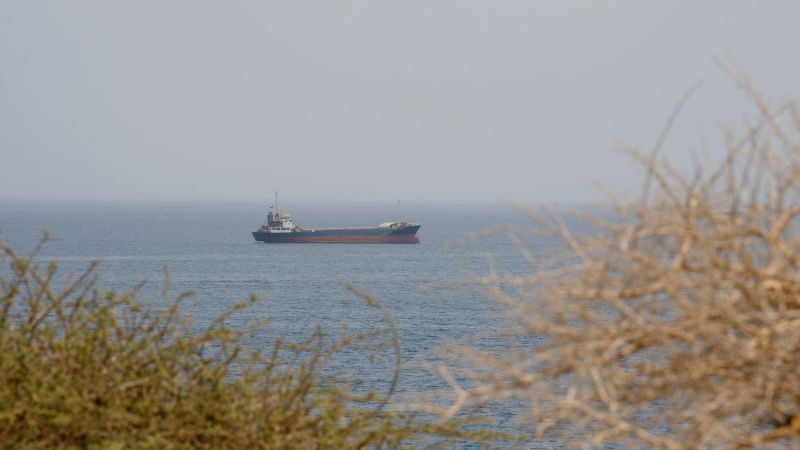
• Iran military shakeup:Supreme Leader Mojtaba Khameneion Monday reshuffled the country’s military leadership, announcing six senior appointments. The move comes after the appointment of Iran’s new national security chief, a veteran Revolutionary Guards commander who has previously voiced skepticism about talks with the US
• Strait of Hormuz:Oil prices remain elevated after Iran said an imminent agreement with Oman to manage the Strait of Hormuz would not be enough to reopen the vital waterway, unless the US meets a list of conditions
• State of talks: US President Donald Trump also applied a new condition Monday saying he would seek compensation for past misdeeds
• NATO summit departure:Trump secretly flew out of Turkey last month on a smaller aircraft after feigning his departure on Air Force One, part of an elaborate ruse prompted by an Iranian threat, according to news reports
4 Posts
<img src="https://todaytrendnews7.com/wp-content/uploads/2026/08/gettyimages-2289902112.jpg” alt=”US President Donald Trump speaks during an event in the Oval Office of the White House on Monday .”>
US President Donald Trump speaks during an event in the Oval Office of the White House on Monday .
President Donald Trump applied a new condition to talks with Iran on Monday, saying he would require compensation from the country for past misdeeds after Tehran said US compensation was required to reopen the Strait of Hormuz
Iran said an agreement with Oman to manage the waterway would not be enough to reopen it unless the US meets the list of conditions. The back-and-forth suggested the two sides were no closer to reaching an agreement that would reopen the Strait of Hormuz
Instead, the fresh requirements appeared to diminish prospects for a quick deal, despite optimism last week an agreement was near
At this juncture, catch up on recent headlines on what’s happening in the region:
- In announcing six senior appointments, Iran’s Supreme Leader Mojtaba Khamenei reshaped the country’s military leadership, which included naming Ali Abdollahi as armed forces chief of staff, Ahmad Vahidi as commander-in-chief of the Islamic Revolutionary Guard Corps (IRGC) and Ali Azmaei as IRGC Navy commander. Remember, Khamenei has not been seen in public since becoming leader following the killing of his father, Ayatollah Ali Khamenei, in a late February 2026 strike.
- The US imposed the eighth round of sanctions on Iran this year. Foreign Ministry spokesperson Esmaeil Baqaei said it will not buckle under the sanctions that only undermine the chances of a diplomatic resolution to the war.
- Trump told reporters the US has swept the Strait of Hormuz for mines and the US Navy has full control of the waterway. However, shipping traffic through the strategic waterway has remained “subdued” over the past week and “weakened further into the weekend,” maritime intelligence firm Kpler said Monday.
CNN’s Christina Macfarlane spoke with Dina Esfandiary, Middle East Lead at Bloomberg Economics, about the latest US-Iran developments:
Trump: Washington in “low-key” negotiations with Iran
3:52• Source:
CNN
Trump: Washington in “low-key” negotiations with Iran
3:52
• Another Trump team peace initiative in the Middle East appears to have hit the rocks as well. After several rounds of talks between Israel and Lebanon, which began in April, an Israeli official tells CNN there are no dates in the diary for further meetings
• An Iranian photojournalist has been sentenced to 15 years in prison for allegedly acting in the interests of Israel and the US after authorities searched her home and seized electronic devices, according to a US-based human rights group
CNN’s Mohammed Tawfeeq, Eyad Kourdi, Alejandra Jaramillo, Aida Karimi, Andrew Carey, Dana Karni, Kevin Liptak and Billy Stockwell contributed to this post
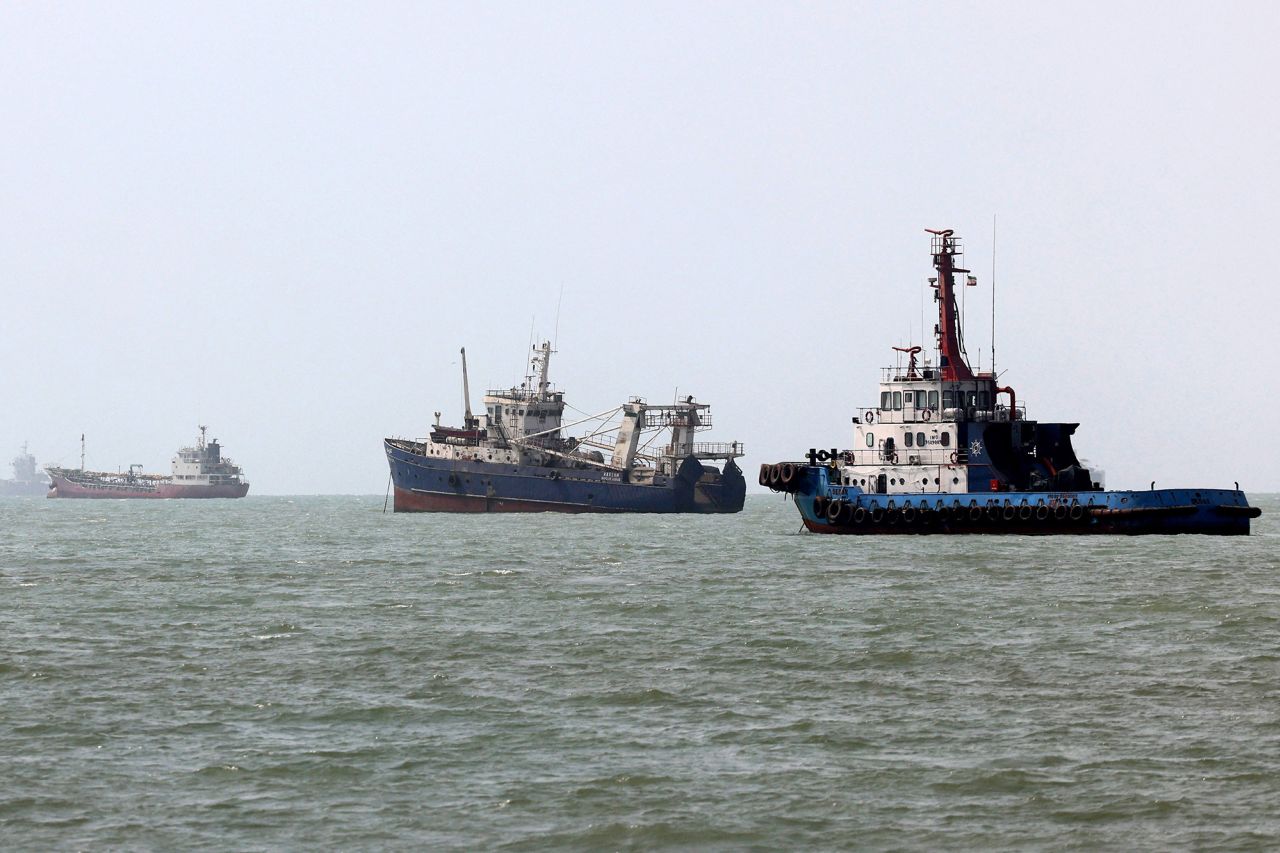
Vessels transit the Strait of Hormuz off Bandar Abbas in southern Iran on Monday.
Tehran has demanded the US lifts its naval blockade of Iranian ports before it reopens the Strait of Hormuz, among several conditions
Currently, the US blockade order applies to all Iranian ports, both inside and outside the strait — but what does a blockade entail?
A blockade is a tool of economic warfare as much as it is kinetic warfare
The Newport Manual on the Law of Naval Warfare defines a blockade as “the capture of contraband, and the capture or destruction of enemy property found at sea.”
To be legal, the imposition of a blockade must follow certain rules, including:
- It must be declared and notified, meaning warnings must go out to ships that it might affect.
- It must be effective, meaning the US must have the ships and aircraft to enforce it.
- It must be impartial, affecting the vessels of any nation.
- It cannot be targeted solely at civilian populations, but harm to civilians is acceptable.
- It must not block access to neutral ports and may not block a strait, like Hormuz, which Trump has said is open to international shipping unrelated to Iran.
President Trump secretly slipped off Air Force One and onto an airport catering truck, which shuttled him to a smaller military plane following a NATO summit in Turkey last month, according to the Washington Post, amid an Iranian assassination threat
Watch CNN’s Kaitlan Collins interview with Washington Post reporter Dan Lamothe
WAPO: Trump secretly switched planes using catering truck
8:12• Source:
CNN
WAPO: Trump secretly switched planes using catering truck
8:12
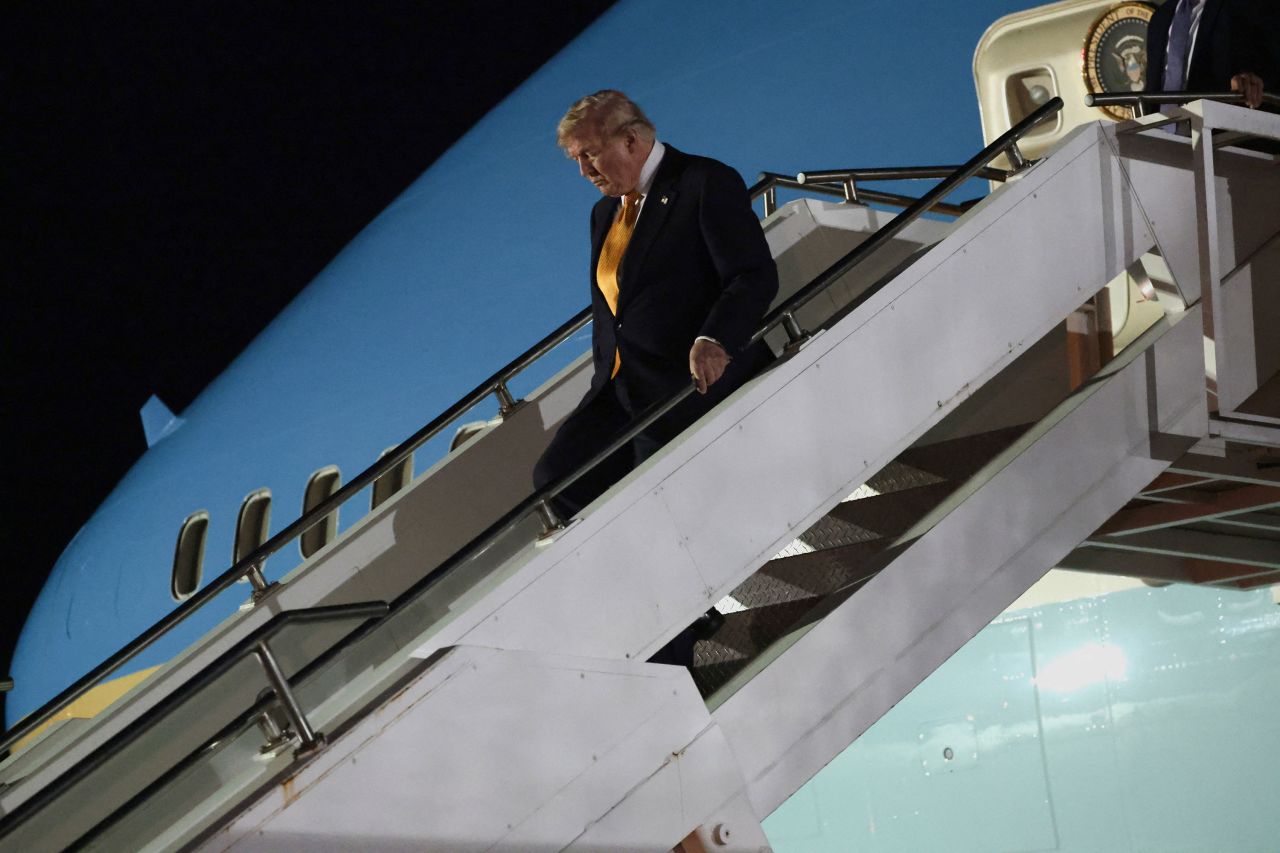
US President Donald Trump walks down the stairs during a stop to switch to the Qatari-gifted Air Force One after arriving on one of the older planes operating as Air Force One, to return to Washington, DC, on July 8, 2026.
President Donald Trump applied a new condition on talks with Iran, saying he would now require compensation from the country for past misdeeds after Tehran over the weekend said US compensation would be required to reopen the Strait of Hormuz
The back-and-forth suggested the two sides were no closer to reaching an agreement that would reopen the Strait of Hormuz. Instead, the fresh requirements appeared to diminish prospects for a quick deal, despite optimism last week an agreement was near
“But it is an interesting idea,” he went on, “because now I am likewise demanding compensation from Iran, for all of the people that they have killed and gravely wounded with their roadside bombs and many conflicts, for which they are famous.”
The president said payouts should also go to “the families of the hundreds of thousands of innocent protestors that Iran has killed over the last 50 years, not to mention the 52,000 that have been killed in the last five months.”
Over the weekend, Mohammad Bagher Zolghadr, a highly influential figure in the Revolutionary Guards, reeled off a maximalist set of demands for reopening the strait. It included US compensation for damage caused during both this year’s war and the June 2025 conflict, which was fought principally by Israel
