

Getting your Trinity Audio player ready…
My family had a terrible time with yellow jackets while eating in the backyard last week. Is there something I can do to prevent this from happening again? My garden is large, with many different plants
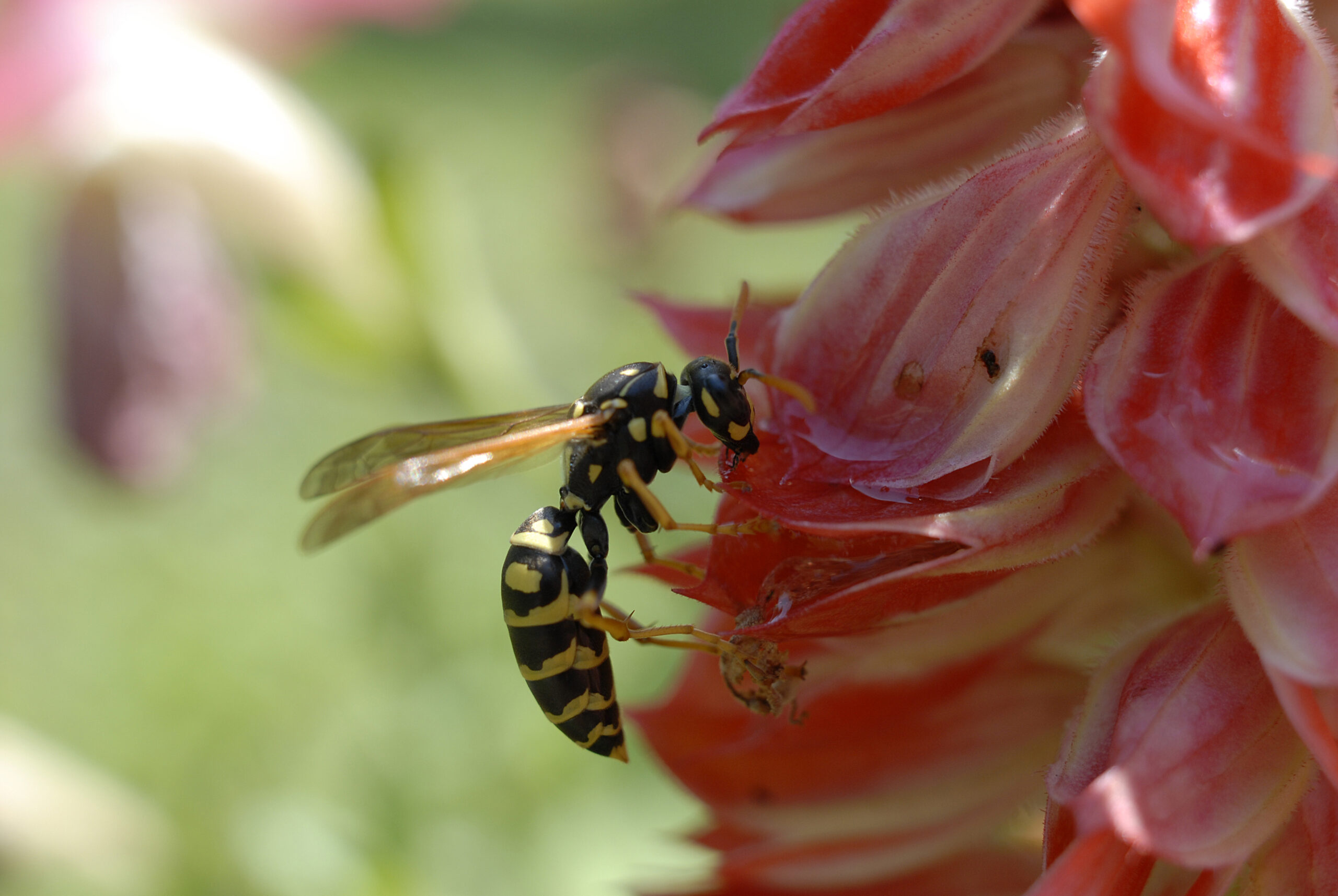
Yellow jackets can be very annoying when you are trying to eat outside in late summer. Populations of yellow jackets (yellow-bodied social wasps) build up in summer. They are considered beneficial insects that pollinate flowers and prey on grubs and beetles. They prefer sugary foods and nectar from flowers but will eat meat, garbage and picnic food that’s left outside. The yellow jackets’ wide diet attracts them to urban areas because a lot of what we eat and throw away is food for them. They are particularly attracted to sweet things like soda and dessert and can crawl into your soda can between sips if you do not pay attention.
Yellow jackets will continue to return to a site once they find a goodugh good sanitation to attract fewer to your dining area. Be sure to thoroughly clean up food and drink residue when you are finished eating. The traps that you can buy for yellow jackets use a pheromone to attract them, but you may end up attracting even more yellow jackets to your eating area, rather than controlling them
I have not seen many yellow jacket nests in home gardens yet this year, but now is the time to watch more carefully for nests as you work in the garden. The first hard frost will kill most yellow jackets. Queens do not use the same nest in the following year but may use a site close by if they find it favorable. Yellow jackets are especially active on warm sunny days in late summer and fall. The best way to spot them is as they fly in and out of the nest. Yellow jackets tend to nest in secluded places, such as brush piles, ground cover beds, rotted logs, cracks or holes in the ground or pavement, under steps or porches on a house, in house walls and foundations and at the base of trees and shrubs. A Chicago Botanic Garden staff member ran across a nest while weeding an overgrown bed that had not been cleaned up in spring and was stung.
Just because yellow jackets appear during your meals does not necessarily mean there is a nest in your garden. They will aggressively sting you if you happen to disturb their nest with typical gardening tasks such as planting, pruning, raking and weeding. Vibrations of a mower near a nest, or the impact of a wayward basketball, can also disturb them enough to make them swarm and attack a nearby person. Their stingers are smooth, which means they can sting more than once, and the stings are painful. There is no need to treat a nest, though, unless it’s in an area that poses a hazard to pets or people. Simply avoid the nests as you work in the garden. I currently have a nest located under an evergreen next to the front steps to my house but I plan to leave it alone; walking by this nest to the front door does not pose a problem.
Bald-faced hornets construct large paper nests in trees at head height and above, so simply watch out for them as you are working in the garden. They are black-and-white wasps and are aggressive if disturbed. Bald-faced hornet nests that are high up in trees or in an out-of-the-way place pose no danger. If you notice nests in other locations, just stay away. A couple of years ago, bald-faced hornets created a nest on our house about 5 feet above our grill, but the entrance to the nest was to the side and we were able to grill and use the deck with no issues from the hornets.
Paper wasps build nests under eaves, benches and fence railings and will sting if disturbed. These are beneficial insects, so control them only if they pose a safety hazard. Unfortunately, the response of most people is to destroy any nest that is discovered
If you find a nest that poses a danger to your family, use an aerosol insecticide formulated for wasps and bees to thoroughly soak the nest. Spray the nest from a distance to reduce the chances of being stung. It is best to treat the nest at dusk or early in the morning when there are more wasps in the nest, and they are less active. Stay away from the area for a day or so, then check the nest and treat it again if necessary
Whenever possible, I avoid killing a nest
For more plant advice, contact the Plant Information Service at the Chicago Botanic Garden at plantinfo@chicagobotanic.org. Tim Johnson is senior director of horticulture at the Chicago Botanic Garden.
