

Italy Stands with Spain, Greece, Malta and Others as Europe Witnesses a Major Shift in Travel Spending as Travellers Turn to Smart Budgeting and Value Driven Experiences Fuelling Luxury Downturn – Travel And Tour World
Italy Stands with Spain, Greece, Malta and Others as Europe Witnesses a Major Shift in Travel Spending as Travellers Turn to Smart Budgeting and Value Driven Experiences Fuelling Luxury Downturn
By: Debomita Dutta
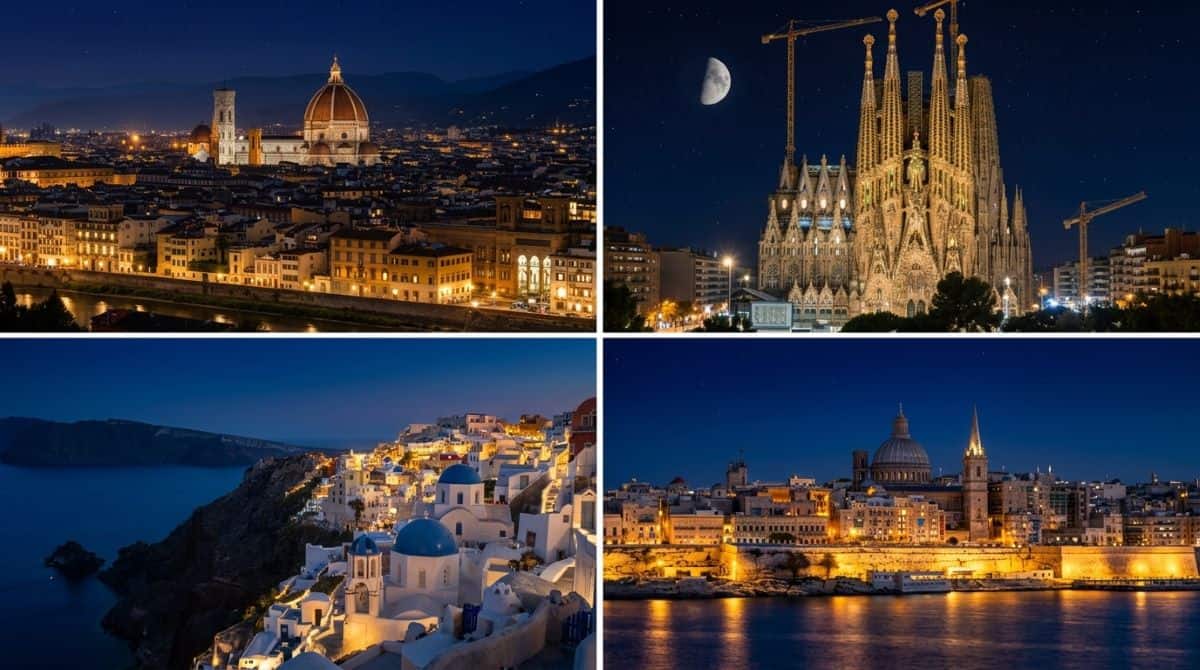
Image generated with Ai
Official data from the European Travel Commission (ETC) reveals that persistent inflation has forced82% of travellers in Italy, Spain, Greece, and Malta to reallocate spending. Luxury budgets exceeding €1,500 dropped by 9% while moderate budgets under €1,000 grew by 6%, forcing travellers to cut premium upgrades to protect baseline lodging and local food experiences. Driven by agile Gen Z (+21%) and Millennial (+16%)cohorts who utilise budget rail and regional networks for shorter 4-to-6-night stays, holidaymakers are aggressively cutting out luxury upgrades and retail shopping (down 3% across the board) to protect funds for baseline lodging, local culinary experiences, and regional landmarks. This value-driven framework is most visible across Southern Europe—which captures nearly 60% of intra-European demand—creating a distinct volume-versus-value gap where destinations like Italy have seen raw visitor entries spike by 21.1%while absolute travel expenditures grew by a flat, modest 4.3%.
The New Tourism Math: Unveiling the Under-€1,000 Travel Budget Boom
A structural analysis of consumer sentiment reports demonstrates that the traditional premium vacation bracket is facing systemic downward pressures. In past economic cycles, a robust intention to travel directly correlated with expanded capital deployment across high-end services. Today, data establishes an inverse reality. The population sector dedicating substantial financial capital—specifically allocations exceeding €1,500 per single holiday framework—has experienced a contraction of 9%.
Simultaneously, the moderate financial bracket has expanded significantly. Holiday frameworks strictly bound below the €1,000 threshold have grown by 6%, creating a highly dominant tier of cost-conscious consumer behaviour. This shift has completely altered the duration metrics of modern European tourism. Long-form vacations spanning 7 to 12 nights have fallen by 5%, making way for highly condensed stays lasting between 4 and 6 nights, which now command 38% of the regional market share. By condensing the duration of their trips, international and domestic tourists are maintaining the frequency of their departures without exposing their household finances to extended, compounding hospitality premiums.
| Travel Budget Allocation Category | Year-over-Year Shift (%) | Impact on Itinerary Architecture |
| Luxury Spending Track (Exceeding €1,500) | -9% Decline | Sharp contraction in high-end bookings and elite tiers. |
| Moderate Spending Track (Under €1,000) | +6% Growth | Massive expansion of lean, foundational travel budgets. |
| Short-Form Vacation Duration (4-6 Nights) | +3% Growth | Rises to 38% market share; preferred configuration. |
| Traditional Extended Stays (7-12 Nights) | -5% Decline | Systemic drop as consumers cut compounding premiums. |
Value Driven Experiences Over Premium Luxury Add-Ons
When evaluating where money moves once a traveler arrives at a destination, the shift away from luxury becomes undeniably clear. Across all tracking indices, high-end experiential spending, voluntary room upgrades, and premium concierge services have faced a universal decline of 3%. The core motivation of the contemporary traveler has transitioned from conspicuous consumption to strict value preservation
Advertisement
Advertisement
- Primary Accommodation Protection: The allocation of funds toward standard, reliable overnight lodging remains the most heavily guarded component of the consumer travel wallet. Travellers view clean, functional, and safe shelter as an absolute prerequisite, meaning hospitality operators focusing on core efficiencies rather than grand amenities are capturing the highest volume of reservations.
- The Gastronomic Anchor: Dining and localised culinary experiences represent the second most critical funding tier. While visitors are cutting back on white-tablecloth fine dining, they are intentionally reallocating those saved resources into regional markets, traditional tavernas, and authentic hyper-local food systems. Food is increasingly categorised as an educational and cultural necessity rather than a luxury line item.
- Activity Prioritisation Over Souvenirs: The acquisition of physical goods, fashion items, and tourist merchandise has hit historic lows. Budgetary room is instead diverted into purchasing entry tickets for historical landmarks, regional sites, and local natural excursions. The modern consumer prioritises the preservation of a memory over the acquisition of a physical product.
Generation Wanderlust: Gen Z and Millennials Fuel the Global Travel Boom
The primary operational force keeping the European travel ecosystem afloat during this economic realignment is the youth demographic. While older demographics display a more defensive financial posture, individuals between the ages of 18 and 34 are showing historic levels of wanderlust. Travel intentions among the Generation Z demographic (ages 18 to 24) have grown by an extraordinary 21% year-on-year. This momentum is closely mirrored by the Millennial cohort (ages 25 to 34), who registered a 16% elevation in travel planning over the same timeframe.
These younger cohorts are highly creative in how they construct value. They have systematically decoupled the concept of a successful vacation from the traditional requirements of high-cost global long-haul journeys. Instead, they navigate the continent via highly integrated, affordable regional transit networks. By relying on budget rail systems, low-cost coach networks, and shared hospitality models like hostels and eco-certified student hubs, these younger groups maximize their geographic and cultural footprint. They actively prefer multiple deep, highly localized explorations within a single target nation over multi-country cross-continental check-box tourism.
Advertisement
Advertisement
| Age Demographic | Intent to Travel Growth (YoY) | Primary Strategic Infrastructure Utilized |
| Generation Z (Ages 18–24) | +21% Surge | Budget rail corridors, shared hospitality, regional networks. |
| Millennials (Ages 25–34) | +16% Rise | Multi-city single-country routes, value-led local platforms. |
Mediterranean Map: The Epicentre of Europe’s New Budget Realities
The operational reality of these numbers is most visible across Southern Europe and the wider Mediterranean basin, which together attract nearly 60% of all intra-European holiday demand. While the sheer number of arrivals presents an image of an absolute golden age for tourism, the underlying economic realities are much more complex
Italy: The Paradox of Crowded Piazzas and Flat Profits
- The Volume Surge: During the operational seasonal cycles, the Italian Republic registered an exceptional 21.1% spike in raw international visitor arrivals. This structural influx was heavily supported by expanded flight paths, seasonal rail extensions, and specific regional marketing initiatives.
- The Expenditure Disconnect: Despite welcoming a tidal wave of arrivals, the nation’s absolute domestic travel expenditure grew by a modest 4.3% over the exact same period. This stark variance points to a significant drop in the average cash left behind by individual travellers.
- On-the-Ground Dynamics: Visitors are filling the streets of Rome, Florence, and Milan but are consciously avoiding high-end tour guides, skipping premium boutique upgrades, and dining via affordable neighbourhood markets rather than upscale restaurants.
Spain: The Ultimate Template for High-Speed Value and Internal Transit
- Market Leadership: Spain firmly holds its position as the top destination on the entire continent, capturing a solid 14% market share of all intended intra-European holiday configurations.
- The Internal Mobility Trend: The country has successfully absorbed the value-focused wave due to its highly efficient domestic transport framework. Rather than flying between separate nations, 42% of travellers choose to focus heavily on an internal, multi-city dynamic, using affordable high-speed rail to explore deeply.
- Agility and Youth Influx: By leveraging localised transit links, younger demographics are travelling from major transit hubs like Madrid and Barcelona straight to secondary municipal regions, bypassing high-cost rental vehicles and domestic flights.
Greece: The Push to Unlock Off-the-Beaten-Path Treasures
- Arrival Record Highs: Capitalising on the continental craving for classic sun-and-beach breaks, Greece posted a massive 38% increase in overall tourist arrivals during its early tracking phases.
- Shorter Trips, Tight Margins: While raw physical entry figures boomed, the corresponding increase in overnight stays was much lower. This confirms that visitors are keeping their Greek island stays strictly short and efficient to counter compounding costs.
- Decentralisation Strategies: To make their under-€1,000 budgets work, over half of modern travellers visiting Greece are bypassing hyper-inflated destination hotpots. They favour lesser-known mainland regions and secondary coastal villages to cut down on baseline dining and accommodation costs.
Malta: The Island Engine Capitalizing on Micro-Budget Exploration
- Double-Digit Growth: Positioned securely within the Mediterranean corridor, Malta experienced a strong 16% year-to-date acceleration in incoming international traveller volume.
- Socio-Cultural Shifts: The island nation has successfully drawn younger cohorts by promoting its robust network of localised diving, history, and active nature excursions.
- Value Absorption: Visitors to Malta are explicitly prioritising entry tickets for heritage sites and baseline island transport over premium boutique shopping or upscale seaside hotel upgrades, channelling their limited funds straight into local food spaces.
Tomorrow’s Tourism: Navigating the Industry Shift Toward Evergreen Value
This change in behaviour is far from a temporary reaction to short-term market fluctuations; it represents a fundamental evolution in consumer habits. As the global travel marketplace adapts to long-term economic shifts, the hospitality sector must rethink how it packages and delivers value. The historical reliance on easy upsells, automatic premium room conversions, and high-margin retail components is no longerategies
- Modular Product Structuring: Travel providers must unbundle core services, allowing guests to build their itineraries à la carte rather than forcing all-inclusive premium bundles.
- Hyper-Local Gastronomic Infrastructure: Investment should redirect away from fine dining partnerships toward showcasing neighbourhood food spaces, local micro-distilleries, and historical market corridors.
- Secondary Transit Integration: Regional rail partnerships and local micro-mobility networks must be prioritised to capture the expanding multi-city market share.
To stay competitive, tourism boards and private operators are forced to introduce flexible pricing, room-only baselines, and customised, modular experience options. This allows travellers to strip away non-essential luxury add-ons while retaining access to the core journey. Destinations that lean heavily into authentic cultural immersion, support transparent regional transit links, and champion affordable, high-quality culinary heritage are well-positioned to thrive in this new market landscape. Meanwhile, ultra-luxury environments face a clear need to adjust expectations and adapt to a far more selective and value-focused global traveller.
In conclusion, Italy stands with Spain, Greece, Malta and others as Europe witnesses a major shift in travel spending as travellers turn to smart budgeting and value driven experiences fuelling luxury downturn. Driven by inflation and a younger demographic wave, holidaymakers are shortening trip lengths and actively sacrificing premium upgrades to protect baseline lodging and local culinary activities. This collective reprioritisation of funds proves that while the passion for European exploration remains at an all-time high, economic realities have fundamentally transformed on-the-ground consumption patterns across the Mediterranean basin.
Advertisement
Tags: Euro summer, Smart Budgeting, travel hacks, value travel
Advertisement
Advertisement
This content is protected under the Copyright Act. Unauthorized scraping, AI extraction, reproduction, or republication is strictly prohibited. Read ourCopyright Policy.
Follow Travel And Tour World in Google News

PARTNERS









REGIONAL NEWS
Europe
Hungary’s Danube River Cruise Industry Faces Major Disruption as Low Water Lev
Saturday, July 18, 2026
Oulu Shines as Europe’s Capital of Culture 2026 with Midnight Sun Festivals an
Saturday, July 18, 2026
America

Argentina Is Surging The Tourism Industry With New Visa Free Travel Entry Policy
Saturday, July 18, 2026

Saint Lucia Stands With Turks And Caicos, Jamaica, Mexico And More Caribbean Cou
Saturday, July 18, 2026
Middle East
UAE Introduces Major Family and Friends Visit Visa Update with New Sponsorship R
Saturday, July 18, 2026
UAE Sounds a Blazing Weekend Travel Alarm as Extreme Heat, Dense Fog, Surging Hu
Saturday, July 18, 2026
Asia

Malaysia Issues Thunderstorm and Heavy Rain Warning Across Kuala Lumpur, Putraja
Saturday, July 18, 2026

Vietnam Leads Radisson Hotel Group Southeast Asia Expansion as New Hotels Transf
Saturday, July 18, 2026
© 2026 Travel And Tour World. All Rights Reserved.
Copyright Policy
We use cookies on our website to give you the most relevant experience by remembering your preferences and repeat visits. By clicking “Accept”, you consent to the use of ALL the cookies.Do not sell my personal information.
Settings
Manage consent
X
