

close
Video
Families of fallen US troops say Iran’s war on Americans began decades ago
The sister of Maj. Stuart Wolfer and widow of Capt. Shawn English say Iranian-backed attacks in Iraq left wounds that remain raw nearly 20 years later
NEWYou can now listen to Fox News articles!
Nearly two decades before the latest war with Iran, an explosively formed penetrator tore through a U.S. Army vehicle on a Baghdad road, killing Staff Sgt. William Brooks and leaving Sgt. (Ret.) Robert Bartlett with injuries so severe that he says he “died three times.”
The weapon was part of a broader Iranian campaign that armed and trained proxy forces to target American troops in Iraq, according to federal court findings. In cases involving hundreds of U.S. victims, judges found that Iran manufactured or supplied the weapons used in the attacks and that the assailants were trained or directed by the Islamic Revolutionary Guard Corps
“It cut me in half from my temple down through my jaw, and then took my gunner’s legs off, and then took the top of my truck commander’s head off,” Bartlett told Fox News Digital. “I would end up dying three times and spent four years at the old Walter Reed receiving surgeries, reconstruction and rebuilding.”
ARMY IDS 2 VICTIMS KILLED IN JORDAN AIR BASE ATTACK; TRUMP: IRAN WILL PAY ‘MANY TIMES OVER’
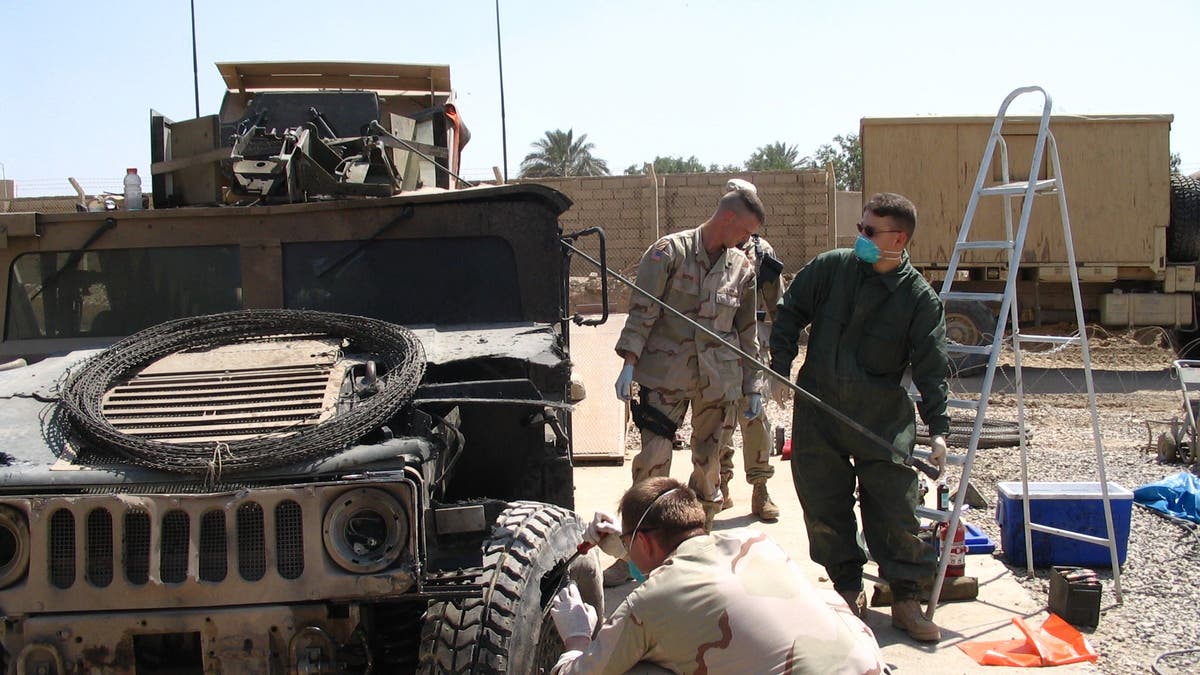
The vehicle driven by Sgt. (Ret.) Robert Bartlett after it was struck by an explosive device on Route Pluto in Baghdad on May 3, 2005. Staff Sgt. William Brooks was killed, while Bartlett and two other soldiers were wounded.(Fox News)
Bartlett was driving an armored Humvee on Route Pluto in Baghdad, May 3, 2005, when an explosively formed penetrator tore through the vehicle. Staff Sgt. William Brooks was killed, while Bartlett and two other soldiers were wounded. Bartlett suffered massive facial trauma
The Army casualty report described Bartlett as “very seriously injured,” with massive facial and dental trauma. He was the vehicle’s driver during the route-security mission when an explosive detonated from its right side
Bartlett said the weapon was an Iranian-supplied explosively formed penetrator linked to the Islamic Revolutionary Guard Corps’ campaign to arm militias attacking American forces in Iraq
“When you’re blown up, you don’t know what’s hit you,” he said. “You get the information after, when the intelligence reports come down and command lets you know what you got hit by.”
Bartlett’s survival places him alongside two Gold Star families who say Iran’s long-running campaign against Americans did not begin with the latest fighting — and cannot be understood solely through the current headlines
Capt. Shawn English was killed by an explosively formed penetrator in Baghdad Dec. 3, 2006. Maj. Stuart Wolfer was killed when a rocket struck a gym inside a U.S. base in Baghdad’s International Zone on April 6, 2008
In the federal cases involving Sgt. (Ret.) Robert Bartlett, Capt. Shawn English and Maj. Stuart Wolfer, the courts found both that Iran manufactured or supplied the weapons used in the attacks and that the assailants were trained or directed by the Islamic Revolutionary Guard Corps
I’VE STUDIED MILITARY STRATEGY. TRUMP NOW FACES IRAN’S OLDEST BATTLEFIELD TRICK
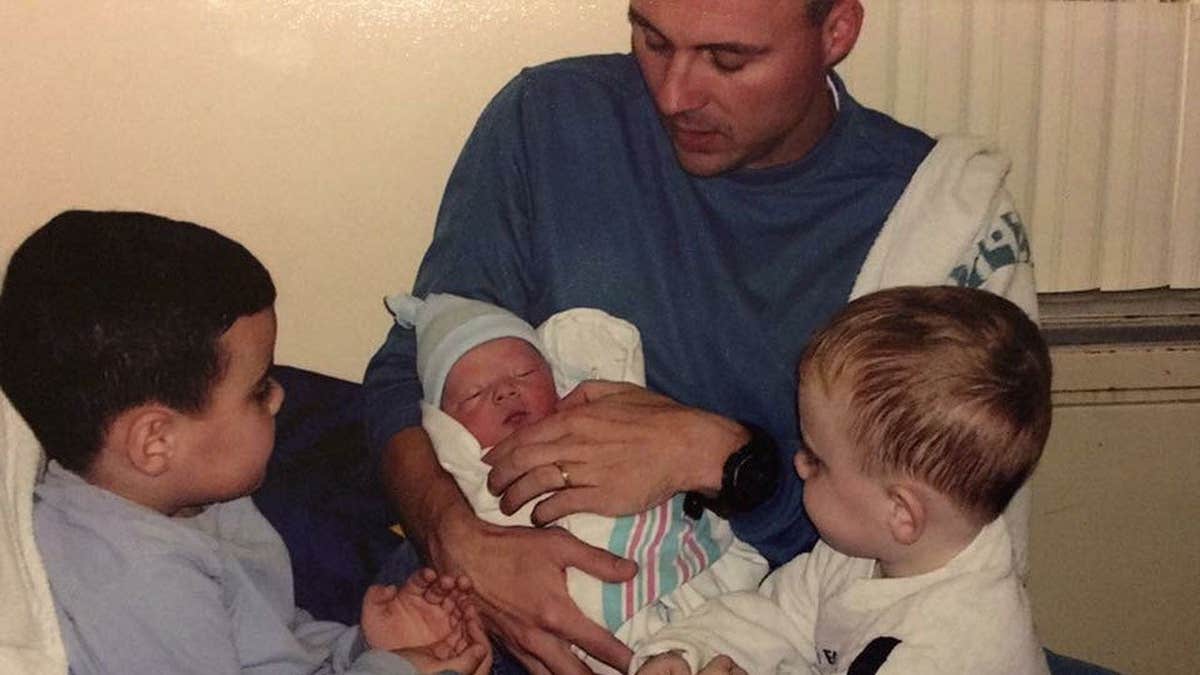
Capt. Shawn English with his three sons. English was killed in Baghdad on Dec. 3, 2006, when an Iranian explosive device struck his vehicle.(Courtesy of the English family)
Federal courts later held Iran liable for providing weapons, training, financing and other material support to the proxy forces responsible for attacks on U.S. personnel in Iraq
For their loved ones, those findings offered formal acknowledgment of Iran’s role. They did not end the grief
‘It’s really hard to only have memories’
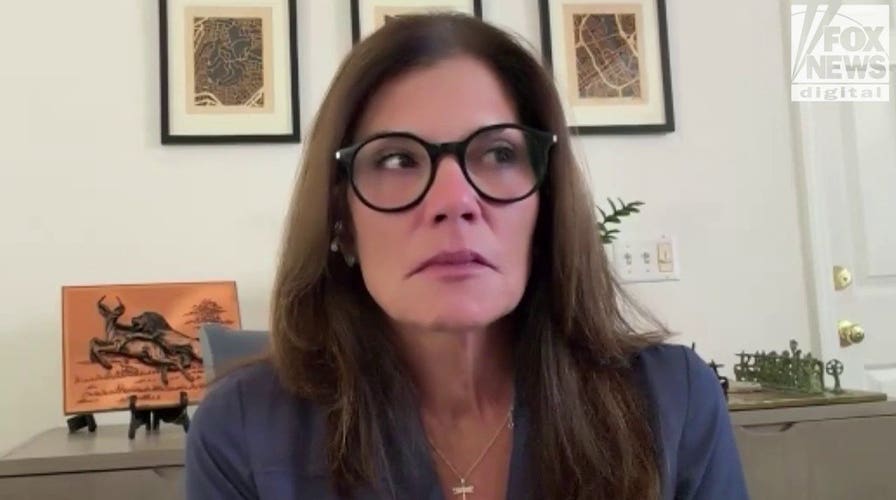
“He really was my best friend,” Wolfer’s sister, Beverly Wolfer Nerenberg, said in tears before her voice broke. “Sorry, even 18 years later, it doesn’t get easier to talk about.”
At her wedding, she chose not to have bridesmaids. Instead, her brother stood beside her as her “man of honor.”
“I couldn’t think of anybody else who I was closer to, who really understood me and knew me,” she said
Wolfer was 36 and the father of three young daughters when he was killed
His sister said he had gone to exercise with a friend when an incoming-fire warning sounded. Those inside the gym had only seconds to react and dropped to the floor because there was no time to reach a protected space
A military investigation found that a rocket struck the gym’s roof at approximately 3:28 p.m., sending shrapnel into the building. Wolfer and Col. Stephen Scott were almost directly beneath the point of impact and suffered severe injuries. Wolfer was transported to a combat support hospital, where he was pronounced dead
Wolfer’s daughters were approximately ages 5, 3 and 18 months old when their father died, according to his sister
“I’m beyond grateful and proud of my nieces and how they’ve grown up,” Wolfer Nerenberg said. “But it’s really hard to only have memories.”
MILITARY FAMILIES WANT DOJ TO DISTRIBUTE NEARLY $800M FROM FRENCH CEMENT COMPANY FOUND GUILTY OF BRIBING ISIS
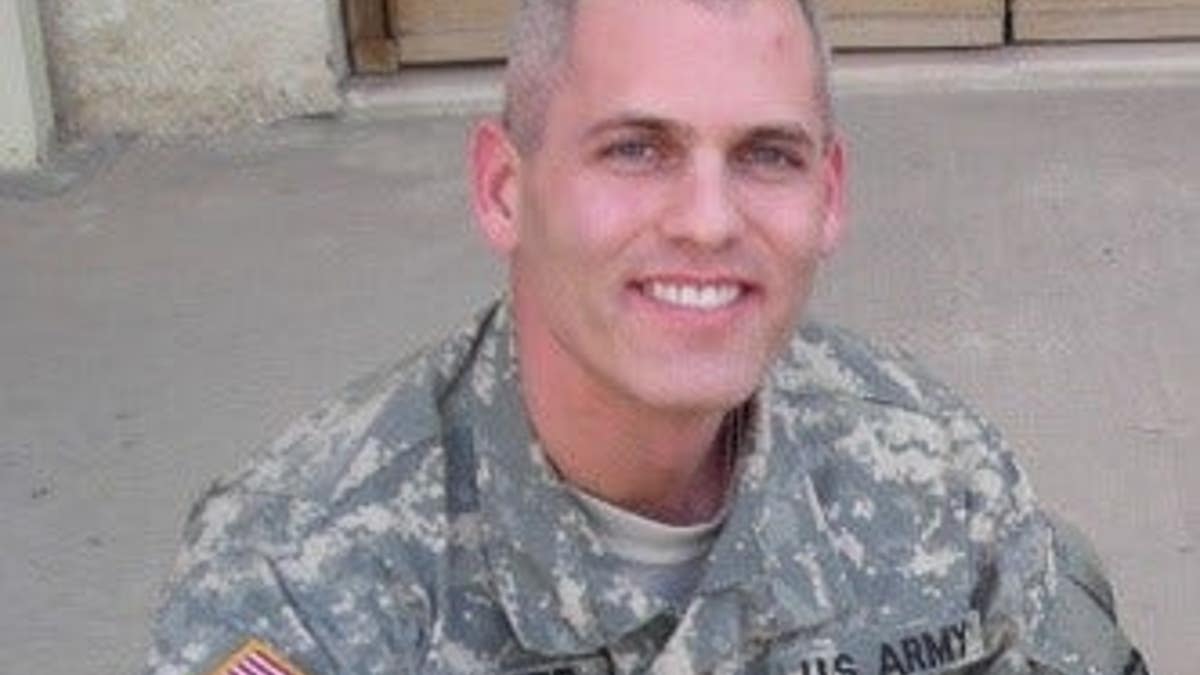
Maj. Stuart Wolfer, who was killed in Baghdad on April 6, 2008, when an Iranian rocket struck a gym on a U.S. base.(Courtesy of the Wolfer family)
She described the family as the keepers of Wolfer’s memory, preserving it for children who had little time to know him
Her family was told soon after the attack that the rocket had come from the direction of Sadr City, Iraq, and was Iranian, she said
“This war began a long time ago,” Wolfer Nerenberg said. “For many of us, the past 18 years has been one long continuous war.”
The weapon he feared killed him
Tricia English said her husband understood the threat posed by explosively formed penetrators, or EFPs —sophisticated roadside bombs designed to punch through armored military vehicles — before one killed him
During a period of leave shortly before his death, Capt. English appeared distracted and remained awake late into the night working on his computer, she recalled
“He told me that there were these weapons —specifically called them EFPs — that they had discovered,” she said. “They knew where they were coming from, and it was really bad.”
“He knew it was Iranian,” she added
English was serving on a military transition team working with Iraqi forces when the EFP struck his vehicle during a convoy operation
An Army investigation said his mixed American-Iraqi patrol was traveling north when an explosively formed projectile struck the right side of his vehicle. English was evacuated to a combat support hospital and died from his wounds
His widow said he remained conscious during part of the evacuation and that she was told his last conscious message was: “Tell Trish and the boys that I love them.”
“You think after 20 years it wouldn’t be this hard,” she said, struggling to continue
English said the military initially described the weapon simply as a roadside bomb or improvised explosive device. The legal proceedings later exposed her to evidence about the weapon, the people who supplied it and the broader network behind the attack
“Sitting in the courtroom, I then got so much more information about what really happened and what this really looked like,” she said. “That was traumatizing. But he deserved it. I needed to stand up for him.”
‘Doing right by them’
Bartlett said he joined the litigation not only for himself, but for those who never returned
“My buddy died, and plenty of my guys — plenty of people — died over there at the hands of the IRGC,” he said
“If I was sent back, if I died and saw the other side and came back, and I’m not doing right by them and their families who didn’t get to have their child come home, then I’m not doing justice,” he said. “I’m not living my faith, and I’m not living what I fought to protect, which is the truth.”
The legal cases were brought under the terrorism exception to the Foreign Sovereign Immunities Act, which allows certain American victims to sue designated state sponsors of terrorism
Iran generally did not appear to defend the cases, resulting in default proceedings. However, the judges still required the plaintiffs to produce evidence demonstrating that Iran’s material support was a substantial factor in the attacks
The resulting judgments found that Iran, acting through the Islamic Revolutionary Guard Corps and its Quds Force, supplied Shiite militia groups with funding, training, weapons and technical assistance used to target Americans. Iran has not voluntarily paid the judgments, and the plaintiffs continue to face significant obstacles collecting the money they were awarded
‘We weren’t at war with Iran’
Iran saw the fall of Saddam Hussein as both an opportunity and a threat
With its longtime enemy removed and U.S. troops stationed next door, Tehran sought to shape Iraq’s political and security system, expand its regional influence and pressure Washington without confronting the U.S. military directly. The Quds Force cultivated Iraqi militias as proxies, providing weapons, funding and training that allowed Iran to attack American forces while maintaining a degree of deniability
The Treasury Department has described the Quds Force as Iran’s main instrument for supporting militant groups to advance the regime’s national interests
Tricia English said the distinction matters because American troops in Iraq were being targeted by a country against which the United States had not formally gone to war
“We weren’t at war with Iran,” she said
The EFP attacks required Iran’s expertise, money, intelligence, manufacturing and organized networks to transport and deploy the weapons, she said
“To have such a sophisticated, targeted, supported, funded (operation) — it was so sophisticated,” she said. “I think it’s important for Americans to see that.”
For Bartlett and the English and Wolfer families, the latest war is not the beginning of America’s confrontation with Iran. It is another chapter in a conflict they have carried in their bodies and families for nearly two decades
“This war began a long time ago,” Wolfer Nerenberg said. “For many of us, the past 18 years has been one long continuous war.”
For those who buried their loved ones or carried the effects of Iranian-supplied weapons home in their bodies, Iran’s war against Americans did not begin with the latest fighting — and it has never truly ended
The court cases presented evidence that the IRGC’s Quds Force built, funded, armed and directed Shiite militia networks, supplying them with sophisticated anti-armor weapons designed to penetrate American military vehicles. The litigation also examined Iranian support for Sunni terrorist organizations operating in Iraq
The cases challenge the perception that the attacks were solely the work of an organic Iraqi insurgency. Instead, the court findings described a broader Iranian system of proxy warfare that allowed Tehran to target American personnel through militia groups operating on the ground
She English said successive administrations have invoked Iran’s record of killing Americans when convenient, while the families have continued waiting for meaningful accountability
“Shawn did his job every single time his country asked him to do it, regardless of who was in power,” she said. “It’s been a little disheartening to watch our country — various administrations, people in power—not do theirs when it comes to this.”
Bartlett said Americans exhausted by decades of war must still confront the history behind the current conflict
CLICK HERE TO DOWNLOAD THE FOX NEWS APP
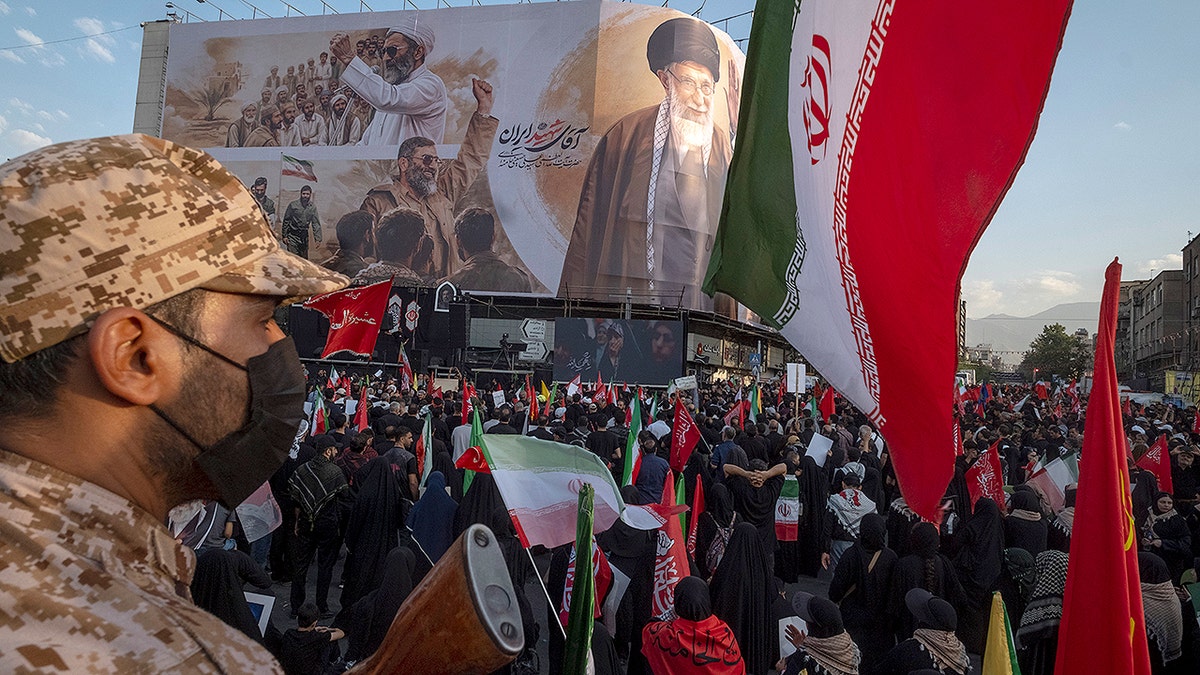
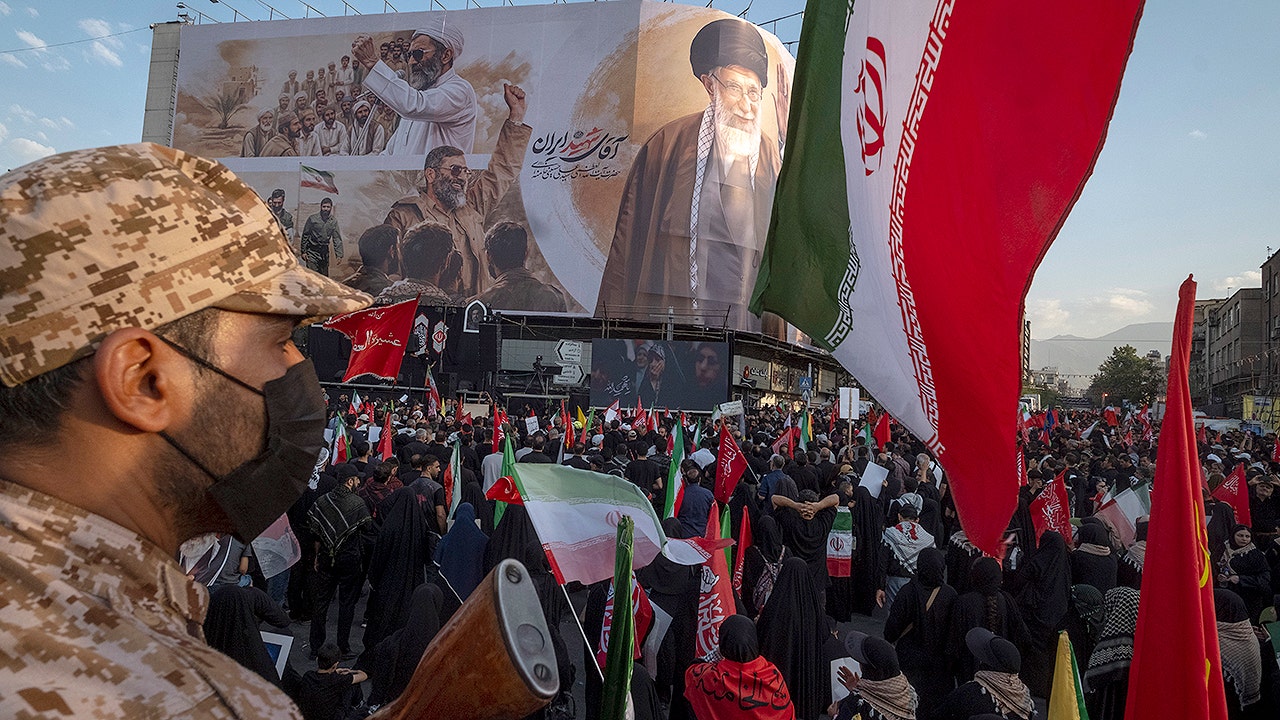
An armed member of the Islamic Revolutionary Guard Corps (IRGC) monitors the area while mourners participate in the funeral for the late Supreme Leader Ayatollah Ali Khamenei and his family in Tehran, Iran, on July 6, 2026.(Morteza Nikoubazl/NurPhoto
“You can’t add to truth and you can’t take away from it,” he said. “It just is what it is.”
For the families, that truth is measured not only in court judgments or military reports, but in missing fathers, brothers and friends—and in wounds that still hurt as sharply as they did when the telephone first rang
