

July 18, 2026, 12:02 PM EDT
By Jo Yurcaba
Idaho — After May Pollard died on a late-January morning, a detective asked her parents a question: Had anyone wanted to hurt her?
“A lot of America,” her mother answered
Less than an hour earlier, Elyse Thorpe had found her daughter’s body inside their home, called 911 and sobbed as she tried to revive her. May, an avid poet and gamer, had been struggling and increasingly withdrawn
Now, at 16, she was gone. And the detective, from the Boise Police Department, wanted to know what Elyse meant
May’s father answered instead
“There is a huge amount of animosity, every single day, thrown at trans kids,” Joseph Pollard replied, voice rising. “The whole f—–g country. The whole f—–g administration, every single f—–g day.”
His raw fury came from the years of pain he and Elyse watched May endure since she came out as a transgender girl. She avoided eating or drinking at school for fear that she would need to go to the bathroom — and she panicked when she had to use the one for boys. She talked of hurting herself if she couldn’t start taking estrogen. She hated how state laws highlighted the only way she was different when she longed to fit in
It was more than what any kid should have to go through
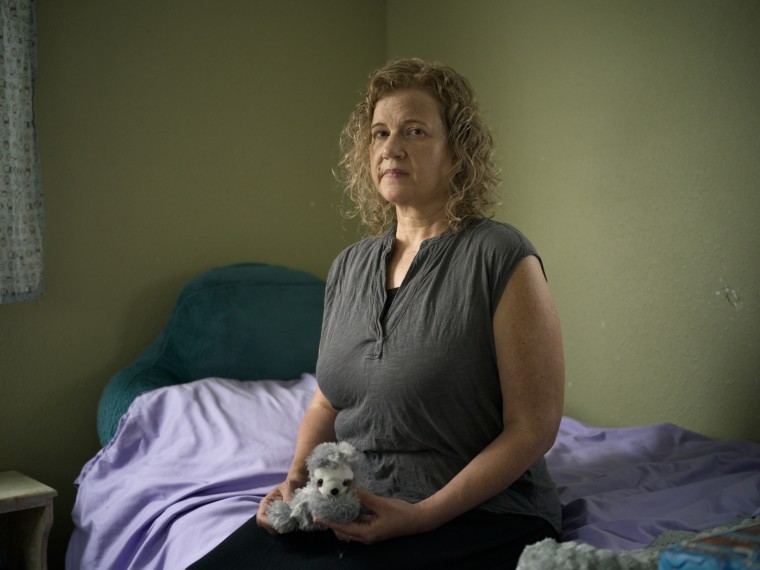
“You worry about that hatred being internalized, and that’s what happened to my kid,” Elyse told NBC News. “It got inside.”
Suicide is complex. It stems from a combination of causes, such as mental health conditions, and cannot be attributed to any one factor. But May’s life and death provide a glimpse into the tremendous and tragic effect that anti-trans laws and political rhetoric have had on trans people across America — especially kids. As May navigated the already overwhelming emotions most teenagers feel, dozens of conservative states and the Trump administration enacted measures defining sex as something that’s unchangeable and determined at birth, limiting transition-related care for minors as well as some adults, and barring trans girls and women from playing on female sports teams.
In Idaho alone, within the last few years of May’s life, state legislators proposed more than four dozen bills aimed at LGBTQ rights, and Gov. Brad Little signed 15 into law, according to the American Civil Liberties Union. Many targeted youth, banning trans minors from getting treatments like puberty blockers and hormone therapy and prohibiting classroom instruction on sexual orientation or gender identity in public K-12 schools
State lawmakers who supported the bills have said their intent is to protect children. Healthcare for trans kids hasn’t been studied enough, they said, and during school, students shouldn’t be exposed to information about sexual orientation and gender in ways their parents find inappropriate
“We need to stop sterilizing and mutilating children under the age of 18,” state Rep. Bruce Skaug, a Republican who sponsored the state’s transition care ban for minors, said when the measure passed the House in 2022
May had been aware of what was happening. She wrote poetry that she shared with friends about not fitting in and self-harm. One of her favorite songs, by the noise pop band Stomach Book, was about trans identity and oppression. She wanted to be a teenage girl, not an activist, playing video games with her friends and exchanging silly messages about cats and music
But she also felt that what she — and other trans kids — experienced was unfair
Last summer, she joined a lawsuit under the pseudonym Jane Doe to challenge a state law that banned trans students in K-12 schools from using bathrooms or locker rooms aligning with their gender identities. The law had forced her to use gender-neutral bathrooms at school, effectively outing her
“I don’t want people to know I am transgender without my consent — even students who might be friendly,” May said in a case filing last fall. “I find being forced to use a separate restroom ostracizing, and I feel like I’m being treated like this other kind of thing.”
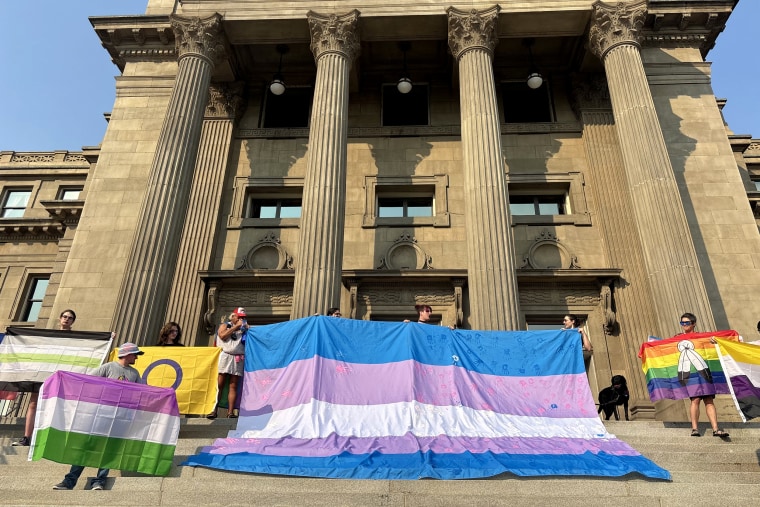
Throughout the last few years, advocates and doctors have camped outside of state representatives’ offices and stayed late at capitol buildings, including in Idaho, to oppose anti-trans bills, sharing stories of trans friends and loved ones who attempted or died by suicide. Research has shown, they told lawmakers, that trans youth are at increased risk of self-harm, especially when they don’t have access to treatment like hormone therapy. Being transgender, they stressed, does not make a person inherently more prone to suicide, but the climate they face can pose a threat to mental health.
“The parents go and testify, and we say, ‘Children are going to die,’” Elyse said. “We tell the legislators that, and they dismiss it. I guess they think it’s hyperbole, or they think it’s hysteria, or they think it’s an acceptable outcome, probably some mix of those things. So I don’t understand why there is an unwillingness to connect these laws to these outcomes. It was right there from the start.”
She had watched the toll they took on her daughter

As a young child, May had boundless energy and intense curiosity
She loved to plan summer days with her big brother, Axel, like trips to the zoo in Salt Lake City, where the sloths mesmerized her. She was so enamored with the gentle, misunderstood creatures, her mom said, that for years, “sloth” became her shorthand for “I’m really happy.”
When she was a toddler, her parents, both state employees, divorced and she split her time between their homes growing up
May excelled in her studies, taking high-school-level math in junior high. But starting in seventh grade, she became less engaged, easily upset and irritable, her teachers told Elyse. Not long after, she was diagnosed with autism. A doctor also prescribed her anti-depressants
She started to change in other ways, too: She grew her hair long and chose glasses from a women’s display at an Eyemart Express near their home. She asked her mom for bows to wear in her hair
“Come out, come out!” Elyse remembers thinking. “I’m ready to help you, but you have to tell me.”

May came out to her dad during her eighth grade year. She texted him one day, out of the blue, explaining that she identified as a girl and hoped he would support her
He texted back immediately
“I support you, 100%,” he remembers telling her. “I want you to be who you are, and it’s not a problem with me.”
Over the course of several months, May slowly came out to her mom over a series of evening conversations in her bedroom
One night, she reclined against a pillow on her twin bed, Pokemon stuffies decorating the surrounding shelves, and told her mom that she had a decision to make
Elyse, sitting cross-legged on the floor, listened
May talked about her gender but also what sounded like contemplations of self-harm
“What she knew was that her body was unlivable,” Elyse said, “and she wasn’t sure what we could do about that.”
Her parents supported her switching schools, starting therapy, changing her name and developing what her mom described as her signature “goth cottagecore” style. One of her favorite looks included a long-sleeved pink button-up shirt with a lace collar and pockets paired with a skirt and black high-top Converse

As she got older, May spent more time in her room. Elyse enjoyed hearing her play video games behind her closed door, laughing and “good-naturedly swearing.”
She made a tradition of attending PAX West, an annual gaming conference in Seattle, with her dad. May would shed her quiet and reserved manner, teaming up with strangers for tournaments. Last year, she went in cosplay as a character from one of her favorite games, posing for selfies when, at home, she wouldn’t allow her family to take photos of her
“She would always come home from that conference with so much confidence,” Joseph said

May tried to settle into herself but found living in Idaho made it harder. In ninth grade, May confided in her dad that she was struggling with suicidal thoughts and made a plan to harm herself. She said she needed to medically transition, but she knew she couldn’t under state law until she turned 18. She asked her dad if he could use her Christmas money to buy hormones online
Her parents recognized her increasing need for treatment. Elyse took May to her pediatrician, who wrote her a referral to receive care in Oregon. After spending several months on a waitlist, May and Elyse flew to Portland in the fall of May’s sophomore year, when she was 15, so she could start estrogen
She had to visit the doctor every six months. Once Trump took office and began a federal crackdown on gender-affirming treatment for young people, Elyse drove more than 13 hours round trip for the visits because she worried about creating a federal record of flying for transition care
The treatment brightened May. Her mom said it seemed like, for the first time in a long time, May wanted to live. But anytime there was even a small delay in filling her prescription, she would become more anxious and withdrawn
Elyse looked to find her additional outlets, and early last year, they joined a monthly support group for trans kids and parents through the Boise Unitarian Universalist Fellowship. After hearing during the meetings that May was struggling, Emi Erwin, another trans girl, reached out, and they quickly became best friends
Their first hangout lasted almost all day, Emi said, starting with hours of gabbing at a coffee shop and ending at her house to watch “Castle in the Sky,” a classic Studio Ghibli film
From then on, they messaged nearly every day. They liked taking trips to the arcade, where Emi, 18, said she would drag May to play Japanese rhythm games — only for May to beat her every time

They bonded over a shared desire to be authentic
“Neither of us,” Emi said, “had to explain ourselves to each other.”
When the bathroom law took effect in July 2023, it faced an immediate challenge. Lambda Legal, an LGBTQ legal advocacy organization, sued on behalf of a handful of students, claiming the measure was unconstitutional and asking a judge to block it
The federal district court declined to do so, but the students appealed, and a 9th Circuit U.S. Court of Appeals panel blocked the law that fall while judges considered the case
Liliana Rauer, one of the plaintiffs, experienced overwhelming relief
“It just took away a lot of the concerns that I shouldn’t have to worry about when I’m at school — like how much I’m drinking, if I need to miss class so I can be able to go to the gender-neutral bathroom, which would be like a 15-minute trip,” said Liliana, who’s now 19 and a rising sophomore at Yale University
But the reprieve didn’t last. A second panel of 9th Circuit judges reversed the decision in spring 2025, siding with the state’s argument that it was justified in treating trans students differently in the interest of protecting student privacy in bathrooms and locker rooms
The judges determined that locker rooms, where showers may not have curtains or stalls, posed the biggest privacy concern. The state had an interest, they wrote, in protecting students from being exposed to the naked bodies of other students of the opposite sex or from having to expose their own bodies
Liliana returned to feeling demeaned and rationing her water intake
May knew those feelings well
Last July, before her junior year, she joined the case after learning about it through her support group. She saw an opportunity to help while remaining anonymous
At the time, besides the boys room, May was allowed to use two bathrooms at Boise High School: one in the nurse’s office and another across campus in a separate building
May found the options stigmatizing
She was tired of feeling starved and parched by the time her afternoon classes rolled around. If she had the slightest stomach upset, she would miss school altogether. Elyse said she warned May’s teachers about what was happening during parent-teacher conferences, but the instructors didn’t know what to do. (The Boise School District declined to discuss May’s case with NBC News, citing student privacy laws, but said in a statement that it prioritizes “creating safe, welcoming learning environments where every student has the opportunity to learn, grow, and succeed.”)
May told the court that one of the gender-neutral restrooms at the school became known as the “trans bathroom.”
She felt like she was under a microscope
“While I am transgender, I don’t view it as the defining feature of who I am as a person,” May wrote in an affidavit for the case. “I just want to fit in. It is upsetting to think that I may have to go through the rest of high school without access to something as basic as the ability to use the same restroom as everyone else.”
As May’s troubles deepened last fall and winter, Elyse prepared for the day her daughter would turn 18
May wanted gender-affirming surgery, but the closest surgeons her doctors referred her to were in Portland or Denver. During her recovery, she and her mom would need to live in one of the cities for three months
To save for the expense, Elysepicked up a second job working evenings as a grocery store cashier
May dreamed of moving to Oregon and leaving Idaho for good. She’d run away once before but only made it a few miles from home before her dad found her
She turned to poetry, emptying pain through her keyboard. Across several poems, she wrote of fatigue, feeling out of place and death
I soak into the carpet
Little, brittle chill
Remind me that I don’t fit
She shared some of her work online in a chatroom. Emi tried to connect deeper, checking on May every day. Elyse said she went back and forth on the possibility of inpatient care
May’s messages grew more concerning
“everyone always leaves me before summer arrives, usually before spring even,” May wrote to Emi in early January
“I’m gonna stay by your side as long as you want me to may,” Emi responded. “i promise.”

A week later, May shared another poem in the chatroom
Asbestos, radiation
There was no violation
Typical trauma missing
Pained lives still got me wishing
Maybe its problematic
Think I’ve more ghosts in my attic
Guess this is actually bliss
‘Cause theres few cuts on my wrists
Hollowing, rotting within
Until my spirits cave in
My heartbeat slows to a stop
And in the static I drop!
May and Emilast spoke the evening of Jan. 26
“how are you,” Emi messaged
“ok,” May replied
“are you sure??” Emi asked
“yeah,” May said. “srry kinda distracted.”
May asked about Emi, who said she was good but sleepy
“ill leave you to it tho,” Emi told her
That night, Elyse arrived home late after working both of her jobs and briefly saw May when she came out of her room to take a shower. She said May smiled and told her she had a good day
They both went to bed
The next morning, on Jan. 27, Elyse woke up early and made May breakfast, fried eggs and veggie bacon, like she always did. She took it upstairs to May’s room, only to find it empty
She screamed, saw that May had left a note on her desk and hoped that she had just run away again. She called 911 to report May missing, while her partner dialed May’s dad
Joseph called and called May, begging her to respond
“I love you so much,” he remembers texting her. “Please, please just let us know you’re safe.”
Elyse tore through the house, looking for May, before she found her, lifeless, in a downstairs bedroom. She called 911 again and dispatch instructed her to begin CPR
But it was too late
Joseph, who lives a few blocks away, heard the police sirens just as Elyse’s partner called him again and told him he needed to come to the house
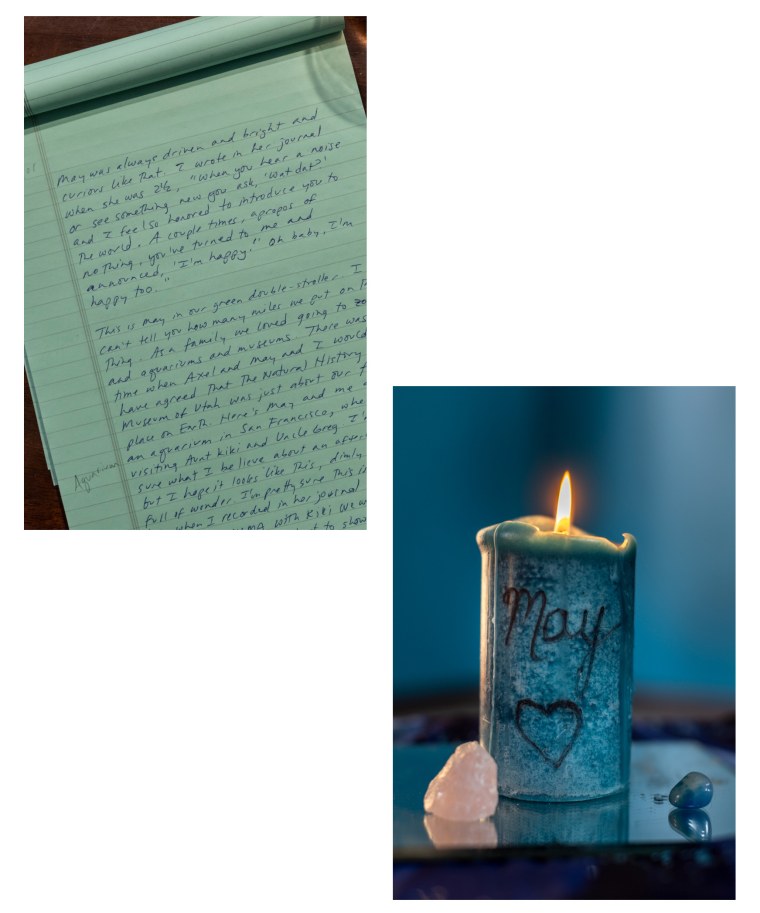
In the weeks after May’s death, her parents faced overwhelming tasks. Handling cremation services. Planning a funeral. Figuring out how to continue life without their youngest child
And Elyse had another matter to resolve: her daughter’s pending lawsuit
She filed a declaration in federal court in February, explaining what had happened and referring to May, who’d been anonymous in the suit, as Jane
“The pain, heartbreak, and agony of losing Jane has been devastating beyond words for me and my family,” Elyse wrote. “While I may never have certainty about all the things that ultimately led to Jane’s death, I know that one stressor in her life was her struggle to fit in socially as a transgender girl.”
The bathroom law, she wrote, was part of that struggle
May had been one of only two remaining plaintiffs in the lawsuit, because students can no longer participate once they graduate. The other anonymous plaintiff in the suit graduated in the spring
As a result, May’s lawyers moved to dismiss the case in May
Idaho Attorney General Raúl Labrador declared victory in a press release
“From the district court to the Ninth Circuit, we defended Idaho’s right to protect students’ privacy in bathrooms and locker rooms,” Labrador said. “Idaho families can be confident that this law is fully in effect and will remain so.”
The press release didn’t acknowledge May’s death
Labrador’s office did not respond to requests for comment. When the Idaho Capital Sun asked Labrador about May’s death, referring to her as Jane Doe, he said: “This is a personal tragedy and our hearts go out to the family. We don’t comment on the private circumstances of individuals involved in litigation.”
May’s friends and family have felt her absence in a million little moments
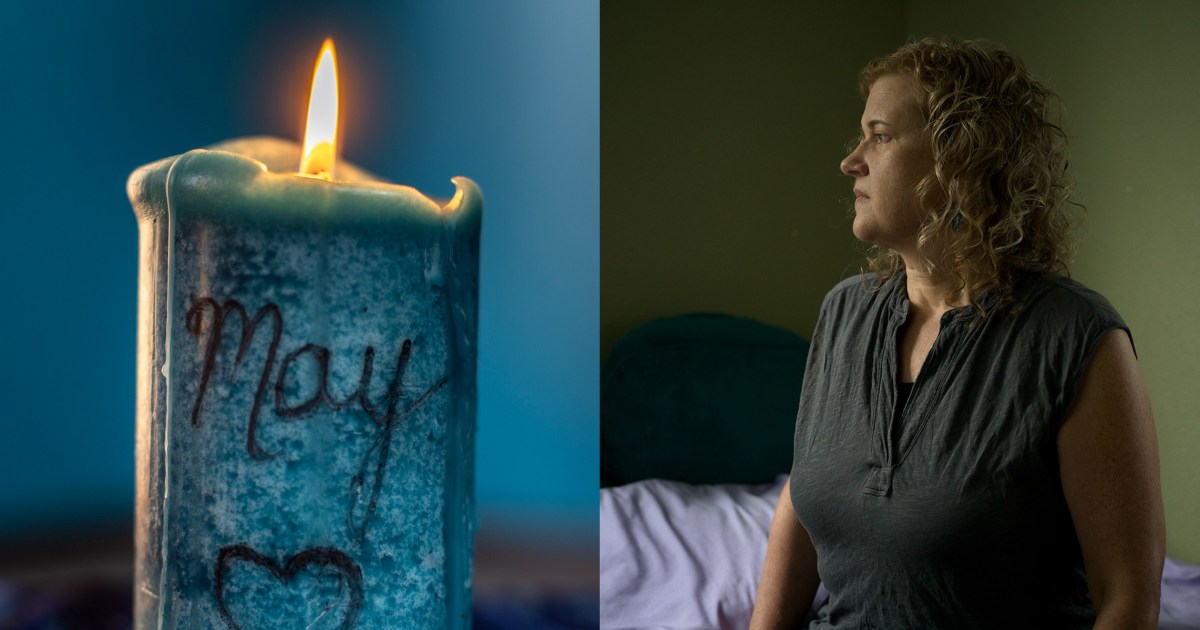
Her empty, untouched room. Her spot at the support group, which now lights a blue candle with her name etched onto it before every meeting. The rear seat in Elyse’s car, where May would sit whenever they drove to her brother’s college in Oregon
Daily traditions have ended
Every morning, May rode to school with her dad, who kept a tin of mints in his car. As soon as she got in, he’d take a mint and May would take one. The tin has sat untouched in Joseph’s car with two mints left since January — one for him and one for May

Whenever Emi and May became bored and needed to fill the silence, they’d meow Christmas songs to each other, no matter the season. Over the last few months, Emi has found herself meowing “Jingle Bells” when she’s alone
Emi said her emotions since her friend’s death change every day
“Sadness, confusion, despair, anger — anger is very prevalent, both at the Legislature and kind of the culture here in Idaho, but also at myself,” she said. “A lot of regret.”
An aching guilt. She wishes she had said or done more, telling May how much she cared
May planned to potentially go to community college for psychology, and her dad said she could have helped so many with her empathy
“She had a lot to give to this world,” Joseph said. “Whether she was trans or not, this world — not just my world — this world would have been a better place with her in it.”
In her grief, Elyse has continued her advocacy, pushing back against the laws that weighed on her daughter and will continue to weigh on others
On March 31, which is Transgender Day of Visibility, the governor signed a law making it a crime for trans people to use restrooms in line with their gender identities in government-owned buildings and private businesses across Idaho
The next day, advocates held a sit-in inside the governor’s office to protest
“I wanted to support the protesters and remind everyone, including the governor,” Elyse said, “that the stakes are real.”
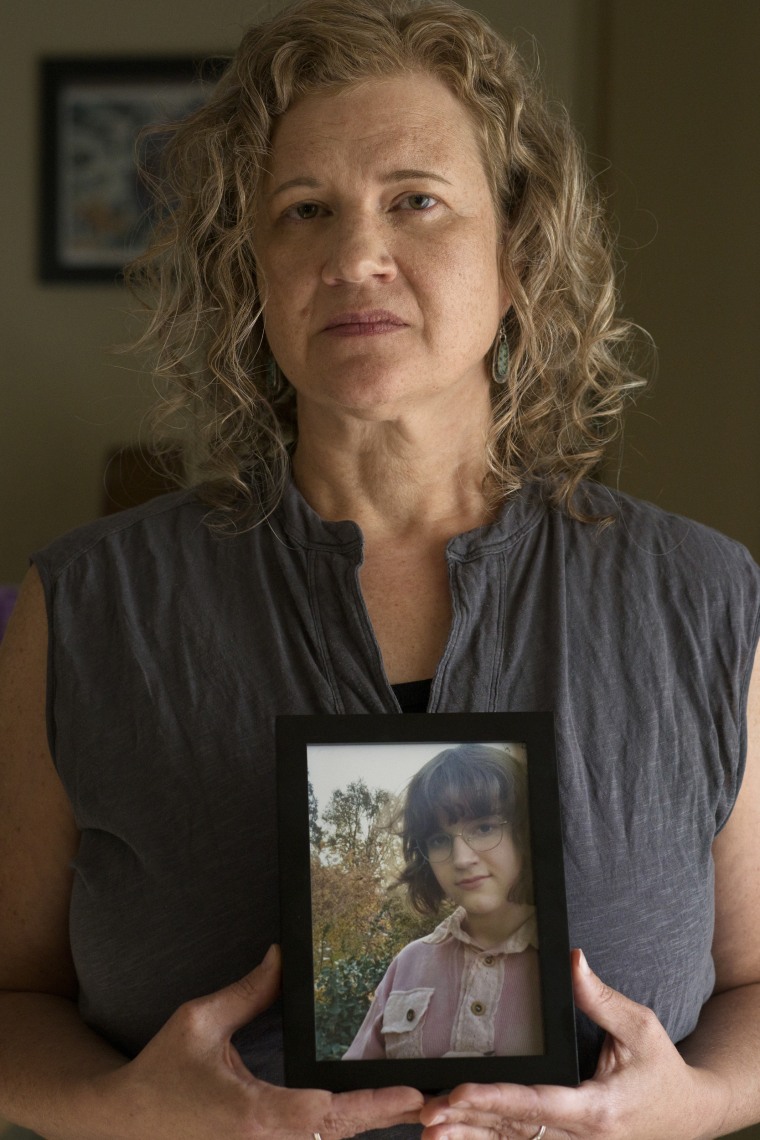
She stood outside of his office, holding a small stuffed sloth and a photo of May
If you or someone you know is in crisis, call or text 988 to reach the Suicide and Crisis Lifeline or chat live at988lifeline.org. You can also visitSpeakingOfSuicide.com/re
If you are an LGBTQ young person in crisis, feeling suicidal or in need of a safe and judgment-free place to talk, call the Trevor Project now at 1-866-488-7386
