

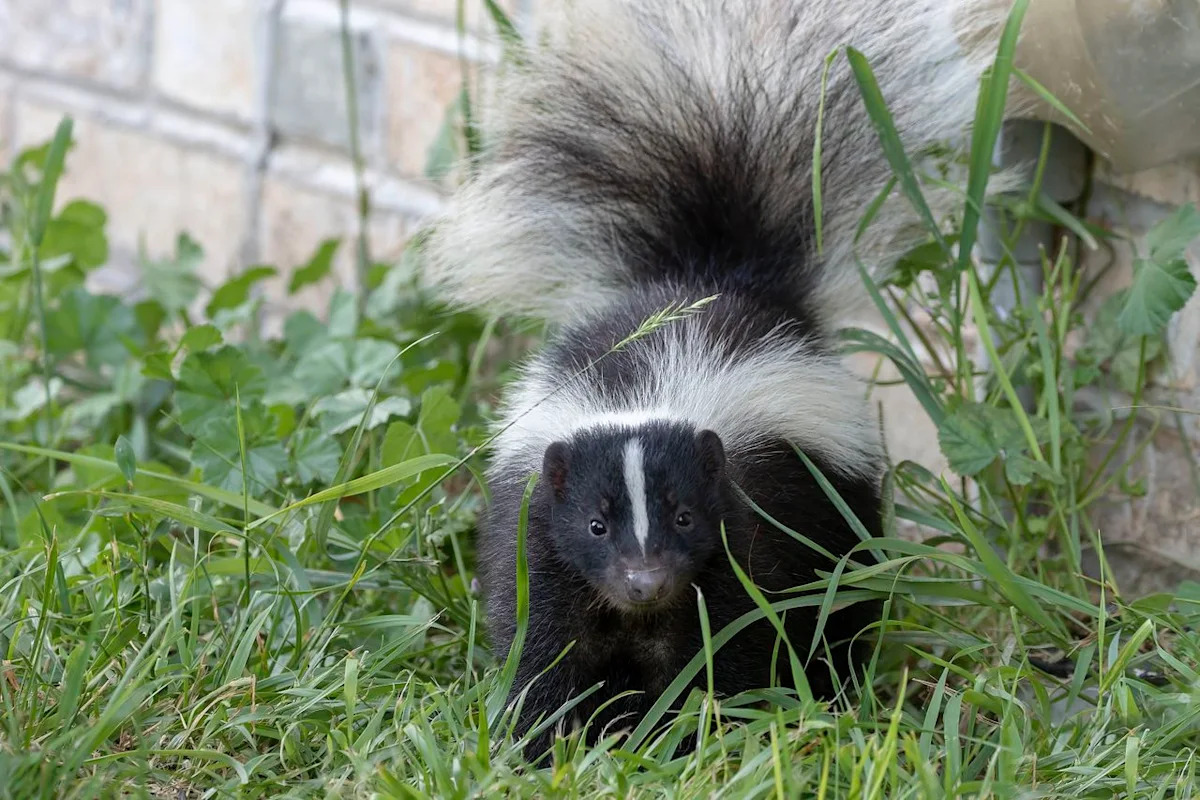
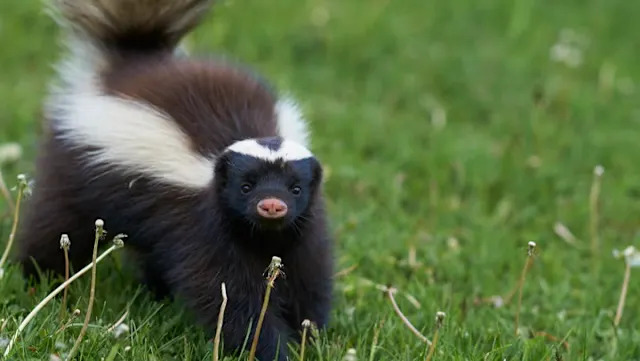
Skunks are easy to identify by appearance—and smell! But these handsome mammals typically mind their own business and are more interested in excavating their dinner than in what you’re doing. “They’re primarily insectivores so they provide a useful ecological service, in the soil,” says Sheldon Owen, PhD, wildlife extension specialist at West Virginia University. “The issue is if they decide to den under your porch or crawlspace.”
Although skunks prefer insects such as grubs, worms, wasps, crickets, and beetles, they’ll also eat mice, voles, moles, and other small mammals and raid bee hives. Skunks occasionally eat garbage and carrion. If given the opportunity, they’ll sneak into a chicken coop and eat eggs, too, says Owen
Since homes and yards can be an appealing environment for some skunks, you may find they’ve been visiting yours. Here’s what to do if skunks become a problem in your yard and how to get rid of them
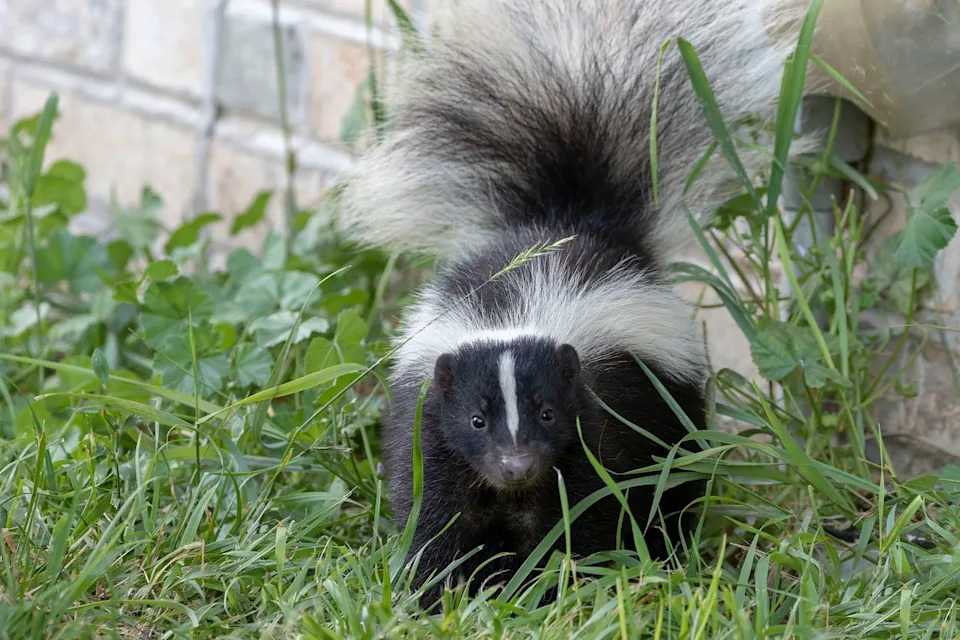
What Are Skunks?
Fortunately, skunks are not a huge problem for most homeowners. “They’re not aggressive, and they’ll squirt your dog sooner than you,” says Michael Mengak, PhD, Certified Wildlife Biologist and professor, Warnell School of Forestry & Natural Reso you should not handle them.”
Advertisement
Skunks are mammals that are more like weasels than rodents. There are two species of skunks in the Southeast: The striped skunk (Mephitis mephitis), which weighs about 8 to 10 pounds and is the size of a cat; and the less common spotted skunk (Spilogale putorius), which weighs about 5 or 6 pounds. Spotted skunks are a species of concern because scientists are unsure why its population has been declining in recent years, says Mengak
How To Tell If You Have Skunks
You may see the animal leaving its den, or the mother may be parading around your yard with her babies. Or you may smell the urine, feces, and musky odor from underneath your house or shed, says Mengak. Skunks are nocturnal but will occasionally forage in daylight, especially if it’s a nursing mother
Another common sign of skunks is the presence of 1- to 3-inch cone-shaped holes all over your lawn. “The skunks are foraging for grubs and worms,” says Clint Waltz, PhD, turfgrass specialist with the University of Georgia Extension Service. “This is an indication that you may have underlying insect problems in your turf that may not have reached a high enough threshold to cause damage to the grass yet.” But the skunks know the insects are there
Why Skunks Can Be A Problem
While skunks are good for eating insects and other pests in the yard, you don’t want to attract them or let them take up residence. Besides rabies, they can carry diseases like distemper and leptospirosis, which pets are vaccinated against. And they can be a nuisance by digging up plants and gardens looking for bugs. Once they make a home in your yard, they may also become territorial
How To Keep Skunks Away
Removing potential foodans of keeping them away from your home. But you also can try to to them, with these tips:
Advertisement
With lawn damage, make sure it’s a skunk.Other likely culprits include armadillos or birds, says Waltz. Set up a game camera if you’re unsure
Treat your lawn for insects. If you determine they’re chowing down on grubs, for example, you may need to apply grub control, though that won’t solve the issue if they’re also excavating worms, says Waltz
Don’t leave pet food bowls outside. That’s a sure way to invite not only skunks but other unwanted guests such as opossums, says Mengak
Make sure garbage is in a sealed can
If you keep bees, elevate beehives off the ground
Remove brush, firewood piles, or stacks of rocks,which can provide homes for nesting or a place to hibernate in winter, says Owen
Exclude skunks from spacessuch as under sheds, decks, or crawl spaces with hardware cloth. Bury it several inches below ground, says Mengak
For pesky skunks living under your house or insistent skunks that won’t stop digging up your yard, you may need to hire a nuisance wildlife specialist for removal, says Owen
Remember that skunks can transmit rabies, so they should never be handled, says Mengak. If you find a skunk that is disoriented, lethargic, or doesn’t seem fearful of humans or other animals, contact yourstate’s wildlife department
What To Do If You Get Sprayed By A Skunk
Skunks will squirt animals and people with an oily, musky substance if they feel threatened. They accurately target up to 10 feet, but the spray can reach up to 20 feet. Warning signs a skunk is ready to spray include jumping, stamping their front feet, arching their back, clicking teeth, and hissing. Spotted skunks may do a handstand before spraying and are even smellier than striped skunks, though they’re less likely to spray and will climb when threatened
If you—or your curious dog— get sprayed, flush the eyes immediately with cold water. While there are commercial products for odor-abatement, you may not have time for a trip to the store. Instead, use this recipe, created by chemist Paul Krebaum, in the early ’90s:
1 quart 3 percent hydrogen peroxide
1 to 2 teaspoons of liquid dish soap, such as Dawn
Advertisement
Mix well in a large, open container, and use immediately while still bubbling to rinse off the spray, then follow with a clear water rinse. Note: This mixture cannot be stored or put into a closed container because the chemicals will react and explode. “It’s probably going to take repeated applications,” says Mengak. It’s not recommended on fabrics because it may discolor them. Also, keep it out of eyes, noses, and mouths. You can follow up with regular shampoo on your dog. It can require repeated attempts. The University of Arkansas also recommends not using a dryer to blow dry your pet because it can cause the remaining skunk oil to set on hair, fur, or skin.
Does Tomato Juice Get Rid Of Skunk Odor?
Nope! This old remedy does not chemically neutralize the odor, says Mengak. What’s actually happening is that the nose blocks out the skunk odor, called “olfactory fatigue,” and tricks the nose into smelling the tomato juice instead of the skunk odor. If not treated, skunk smell can linger for months
Read the original article on Southern Living
