

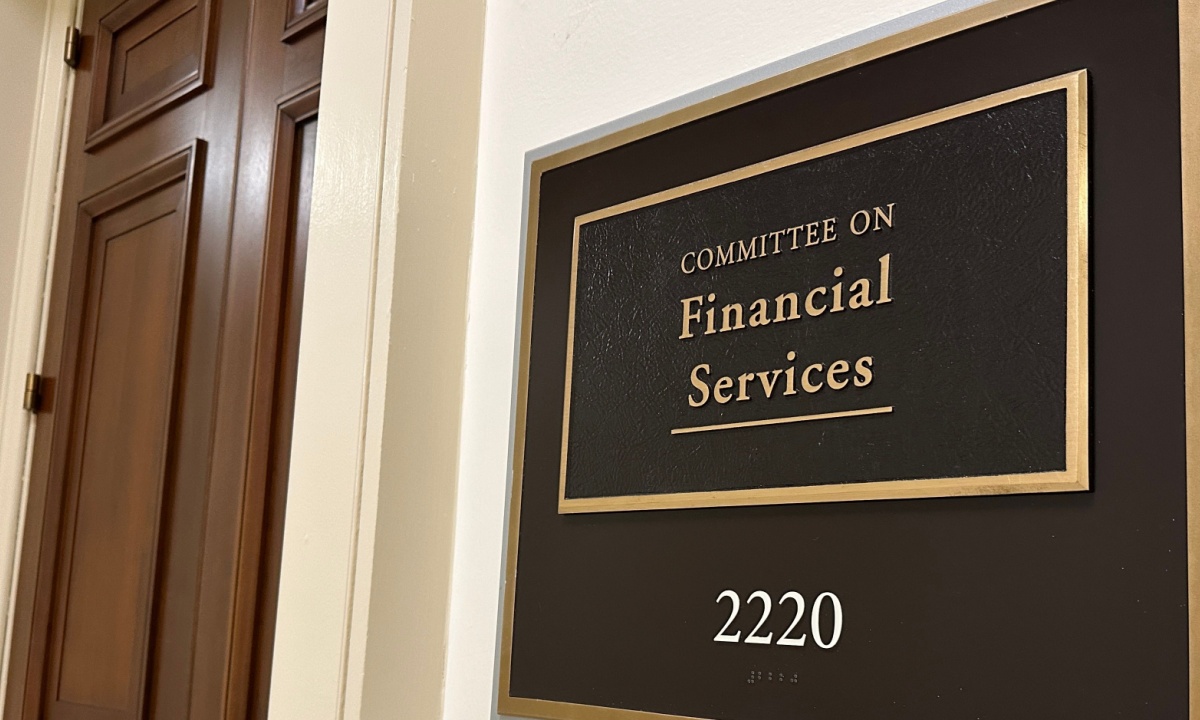
House Republicans Urge Expanded Use of AI to Combat Financial Fraud
Artificial intelligence is rapidly transforming financial fraud, giving criminal organizations the ability to generate convincing scams at unprecedented scale. But according to a report issued last week by Republicans on the House Financial Services Committee, AI can also provide financial institutions and government agencies with sophisticated tools to detect and prevent those schemes
The report, released following a year-long committee investigation that included multiple hearings on financial fraud, concludes that policymakers should encourage broader adoption of AI-powered fraud detection technologies. It also urges Congress to advance several pending bipartisan bills designed to strengthen anti-fraud capabilities across the financial system
According to NextGov/FCW, however, the final document “appears to have been released without any input from the committee’s Democrats.”
The report comes as federal officials continue to intensify efforts to combat financial fraud and scams. According to Federal Trade Commission data cited in the report, U.S. consumers reported more than $15.9 billion in fraud losses during 2025, underscoring the growing economic impact of increasingly sophisticated criminal activity
Committee Chairman French Hill (R-Ark.) said fraud prevention efforts must evolve alongside criminal tactics
“As fraudsters become more sophisticated, we must ensure law enforcement, regulators, and financial institutions have the tools they need to stay ahead of these evolving threats,” Hill said in a statement accompanying the report
The report identifies artificial intelligence as one of the principal factors changing the fraud landscape. According to the committee, AI enables criminal organizations to produce personalized, grammatically polished communications tailored to individual victims, clone the voices of family members convincingly enough to facilitate impersonation scams, and generate realistic deepfake videos capable of authorizing fraudulent wire transfers from corporate finance departments
Rather than viewing artificial intelligence solely as a newld become a central component of fraud prevention strategies
“Criminals are increasingly adopting AI and other cutting-edge technologies to perpetuate fraud and crimes,” the report states. “The counter to this is ensuring that those empowered to prevent and respond to fraud and scams — namely public and private sector entities — deploy the same tools.”
The committee points to existing government deployments as evidence that AI can improve fraud detection. It highlights the Centers for Medicare and Medicaid Services’ use of AI to identify waste, fraud and abuse, noting that agency officials have previously said the technology helped prevent more than $2 billion in improper payments
The report cautions, however, that wider adoption should be accompanied by greater oversight and evaluation. It recommends that Congress and federal regulators develop a better understanding of how AI-based fraud detection systems perform in practice, including identifying successful implementations and determining whether regulatory or operational barriers are limiting broader deployment
Among the report’s most significant recommendations is congressional action on pending bipartisan legislation intended to expand AI’s role in fraud prevention
The committee specifically endorses the Bank Fraud Technology Advancement Act, introduced by Rep. Mike Flood (R-Neb.). The measure would require federal banking agencies to study the use of advanced technologies in fraud detection and prevention, with particular attention to the needs of community financial institutions. It would also establish a community bank fraud technology pilot program to improve access to advanced fraud detection tools for eligible banks
The report also recommends passage of the Artificial Intelligence Practices, Logistics, Actions and Necessities (AI PLAN) Act, sponsored by Rep. Zach Nunn (R-Iowa). That proposal would direct the Departments of Homeland Security, Commerce and Treasury to develop a coordinated government strategy for addressing malicious uses of AI, including methods for combating AI-enabled financial fraud
Taken together, the committee’s recommendations reflect a policy approach that emphasizes expanding legitimate uses of artificial intelligence within financial services while improving federal coordination around AI-enabled threats. Rather than focusing exclusively on regulating emerging technologies, the report argues that lawmakers should ensure financial institutions, regulators and law enforcement agencies have access to AI tools capable of matching the increasingly sophisticated techniques employed by fraudsters.
