

This is a paid press release. Contact the press release distributor directly with any enquiries.
Generative AI in Architecture Market Report 2026 Now Available — 250-Page Study Covers Design Automation, Urban Planning, and Cloud Collaboration
Research and Markets
Thu, 9 July 2026 at 1:35 pm GMT+5:30
17 min read
Key market opportunities in generative AI for architecture include the rise in digital design workflows, urbanization, and faster design demands. Growth areas are smart city development, sustainability, cloud collaboration, and AI-powered design tools, driven by global infrastructure projects and subscription-based platforms
Generative AI in Architecture Market
Dublin, July 09, 2026 (GLOBE NEWSWIRE) — The “Generative AI in Architecture Market Report 2026” has been added to ResearchAndMarkets.com’s offering
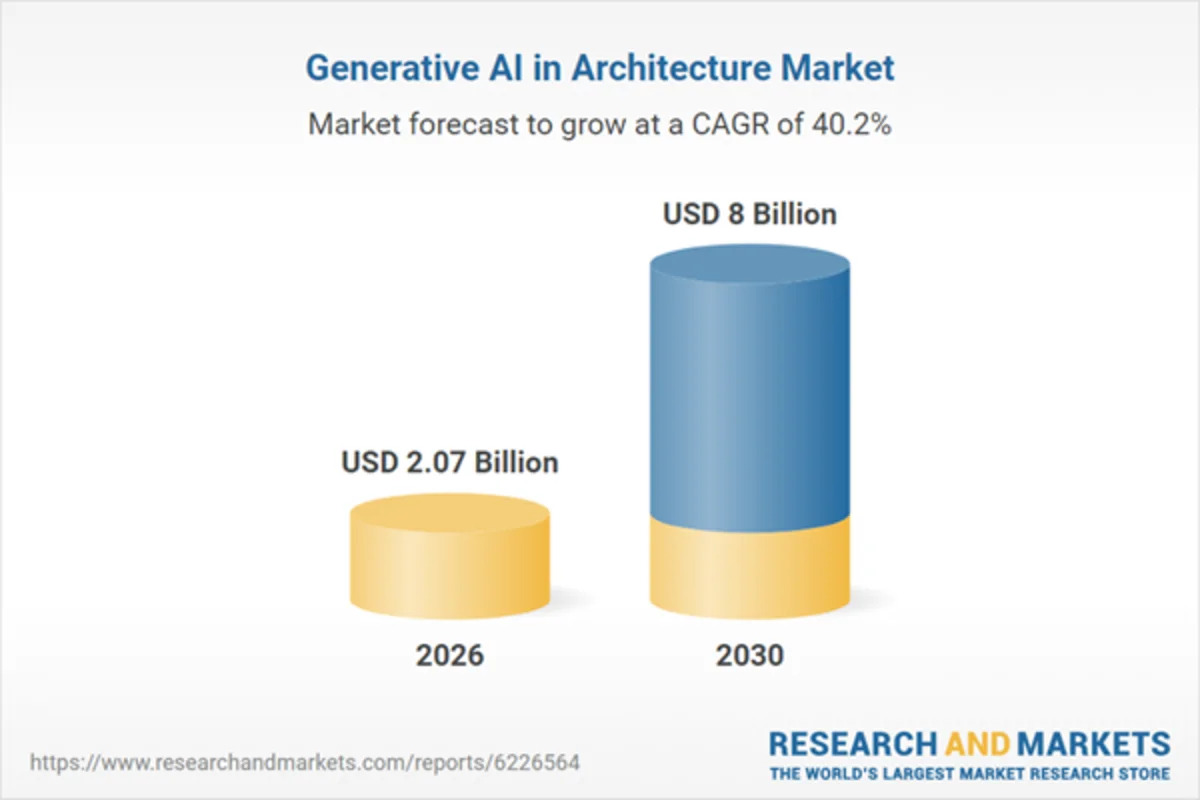
The generative artificial intelligence (AI) in architecture market is poised for remarkable growth, projected to surge from $1.47 billion in 2025 to $2.07 billion in 2026, at an impressive compound annual growth rate (CAGR) of 40.9%. Advances such as CAD software adoption, enhanced digital design workflows, and computational design methods primarily drive this surge. Furthermore, trends in urbanization and the demand for more efficient design cycles contribute significantly to this burgeoning market.
Forecasts indicate that the market will grow to $8 billion by 2030 (CAGR of 40.2%), fueled by smart city projects, sustainable building mandates, and breakthroughs in AI-powered design tools. Key trends set to dominate this period include algorithmic design automation and AI-assisted concept generation, along with advancements in cloud-based design collaboration and sustainable design simulation
The escalating demand for infrastructural development projects is also playing a pivotal role in the expansion of AI in architecture. Economic growth boosts infrastructure projects by upping the ante on essential integrations like transportation and utilities, driving further economic activity and investment. Generative AI is transforming these large-scale projects by streamlining design processes, enhancing efficiency, and cutting costs. It empowers architects and urban planners to innovate swiftly, optimizing project planning and efficiency. This dynamic is exemplified by the UK’s rising infrastructure expenditures, reported by the Office for National Statistics, which saw substantial investments increasing by 2.2% to £28.9 billion in 2024.
Industry leaders are harnessing subscription-based design platforms aimed at alleedge design tools. An example is Poliark’s Kend platform, launched in January 2024, which facilitates real-time collaboration through cloud technology. Kend’s innovative features include generating 3D models in seconds, supporting interactive design changes, and integrating carbon data to comply with new sustainability mandates
