

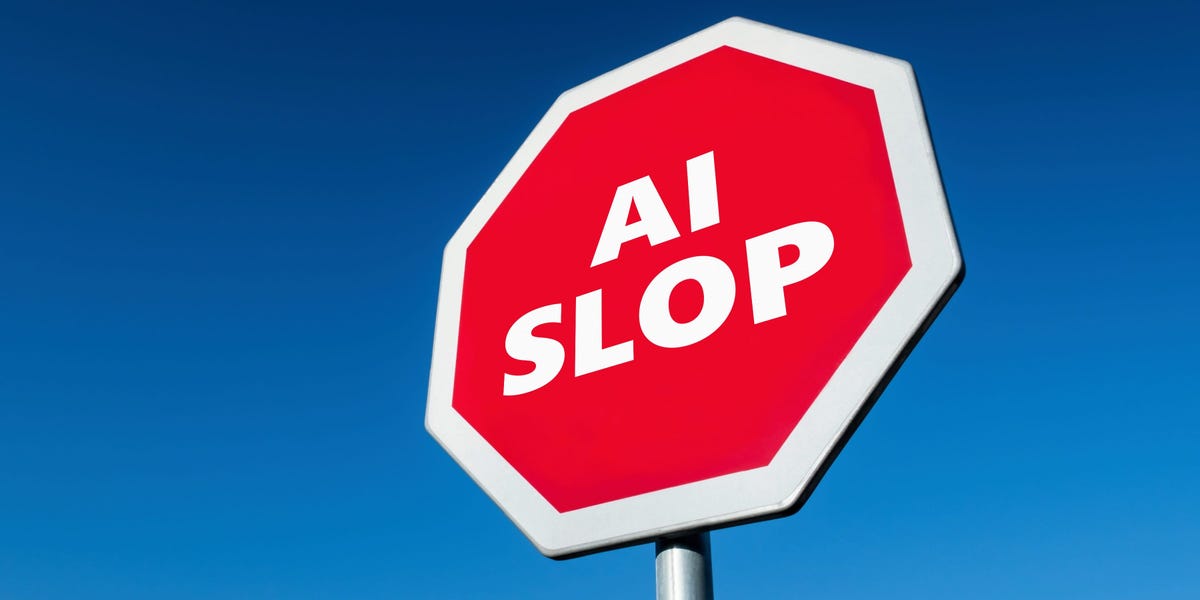
As tech companies race to weave AI into every inch of their products, they’re discovering there’s a fine line between embracing new technology and flooding users with low-quality, machine-generated content
The shifting guidelines reflect a broader tension across the creator economy. Not long ago, social platforms competed aggressively for influencers with creator funds, exclusive programs, and monetization tools. Many of those same companies are now investing billions in AI products and infrastructure, leaving some creators worried they’re becoming less central to the platforms they helped grow
Here’s how major social platforms that rely on creators, including YouTube and Substack, are dealing with the proliferation of AI content
YouTube
Illustration by Avishek Das/SOPA Images/LightRocket via Getty Images
YouTube is sharpening its stance on AI-generated content
In an update from the company’s trust and safety team, on July 20, YouTube said it wants to reward creators who use AI to enhance original storytelling, as opposed to those who mass-produce generic content or AI personas designed to game the platform
A YouTube spokesperson told Business Insider that the policy isn’t new but an important clarification of YouTube’s long-standing “inauthentic content” policy, intended to reduce ambiguity for content creators who have been demonetized for repetitive, low-effort, or emotionally manipulative videos
YouTube has spent years pitching itself to advertisers as the future of television, and a surge of AI-generated spam threatens to undermine that message. In January, the platform removed more than a dozen popular channels that had amassed millions of views by pumping out AI-generated videos featuring characters like cats and Jesus. Video editing platform Kapwing published a report estimating that 21% of YouTube’s feed was AI-generated videos
TikTok
Illustration by Thomas Fuller/SOPA Images/LightRocket via Getty Images
TikTok isn’t shying away from generative AI. The company and its owner, ByteDance, offer an array of AI tools for content creators on its marqueeapp and video editor CapCut. Creators who post on its e-commerce platform, TikTok Shop, have been ramping up the use of AI to sell products this year. Much of the company’s tech is built around ByteDance’s AI video model, Seedance 2.0
Still, TikTok is taking a variety of steps to keep generative AI under control across its ecosystem. The company requires creators to label AI-generated content and appends an invisible watermark to the metadata of some videos to indicate they are artificially generated. In November, the company introduced the ability for users to toggle the amount of AI content that appears in their feeds. In July, the company said it’s beginning to test “improved detection systems to target accounts dedicated to posting AI-generated spam that crowds out original creators.”
Substack
Bloomberg/Getty Images
The newsletter platform announced on July 21 that it would help readers identify AI-generated content
Substack will now let readers scan content to estimate how much AI may have been used in its writing. Substack is partnering with Pangram, an AI detector tool, to power its AI identification tools
Creators on Substack can also add a disclosure to their content explaining how they made it, such as noting that they used Claude for copyediting, or if they don’t use AI at all
However, users can fairly easily disable this tool for their Substack content by turning off AI analysis in their publication settings. Creators can opt out of Pangram’s automated scanning, meaning readers will no longer see an AI-use estimate on those posts
Smith Collection/Gado/Getty Images
Pinterest is no stranger to AI slop
In 2025, the platform began adding AI labels to content. Pinterest lets creators label content as AI-modified or -generated, and has its own detection systems to flag content that may have been AI-generated
Pinterest also added a tool that lets users limit the amount of AI-generated content appearing in their feeds
In June, Pinterest’s CEO Bill Ready told Business Insider’s editor in chief, Jamie Heller, at Cannes Lions that while there are “so many great uses of AI,” there is also a “bit of a counter movement to that with consumers.”
“We provide users with controls to decide whether they want to see more or less GenAI content in their feed,” a Pinterest spokesperson told Business Insider. “Additionally, our Community Guidelines apply to GenAI content, and our recommendation system prioritizes high-quality content, regardless of if it’s human-created or GenAI.”
Jonathan Raa/NurPhoto via Getty Images
Meta wants users to create and engage with content made with its own AI tools, so, for the most part, it has let content like the famed Shrimp Jesus run free
However, the company has been labeling content as AI-generated since 2024. Across Facebook, Instagram, and Threads, Meta adds an “AI info” label to content it detects as AI-generated. It doesn’t automatically do the same for content that was modified with AI, though. Meta “may require” its AI labels on content with “photorealistic video or realistic-sounding audio that was digitally created, modified or altered, including with AI,” per the company’s help page explaining its AI policies. People can also voluntarily add the label to their content.
In June, Meta started putting its “AI info” label on advertisements that use AI, whether they’re created byMeta’s own tools or third-party editing services
