

Fishing closures are becoming routine as record heat warms rivers in the US West
1 of 6 |
Trout need cool water to survive, but record heat this summer has driven water temperatures to levels that can be lethal to the fish. Wildlife officials are responding by banning fishing during certain hours on rivers and streams across the U.S. West, following an exceptionally dry winter and amid widespread drought. AP video by Matt Brown Production by Ty O’Neil
2 of 6 |
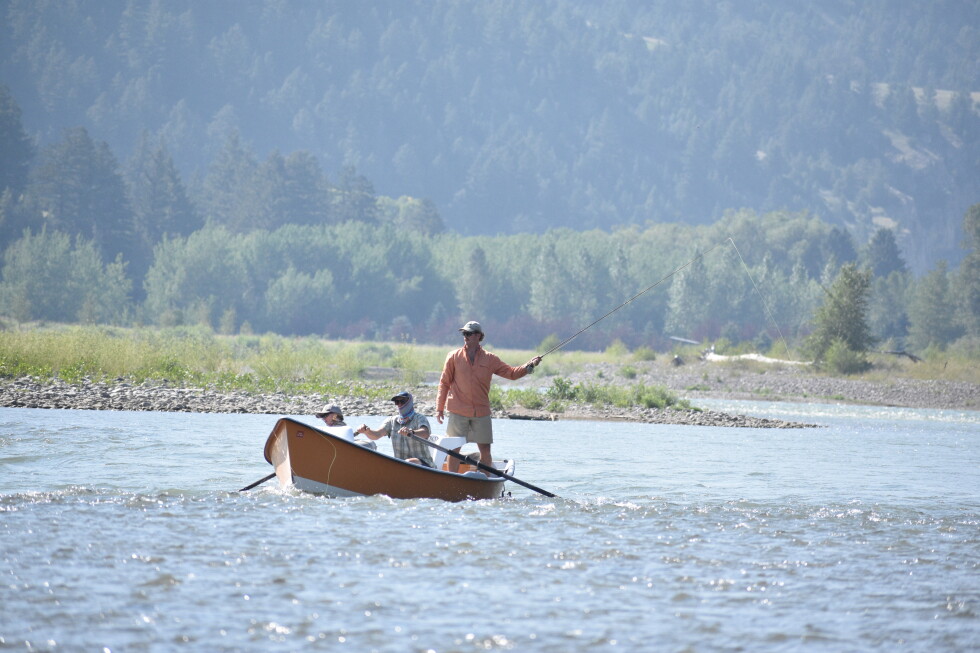
A drift boat with people fly fishing floats down the Yellowstone River, Friday, July 31, 2026, near Livingston, Montana. /Matthew Brown)
3 of 6 |
Mike Wever is seen fishing on the Yellowstone River, Friday, July 31, 2026, near Livingston, Montana. /Matthew Brown)
4 of 6 |
A fly fishing rod is seen on the back of a truck near the Yellowstone River, July 31, 2026, near Livingston, Montana. /Matthew Brown)
5 of 6 |
Marek Senn fishes for trout while Jase Joslin rows their boat down the Yellowstone River, Friday, July 31, 2026, near Livingston, Montana./Matthew Brown)
6 of 6 |
Rich Ridgeway is seen tying a lure at Sweetwater Fly Shop, July 31, 2026, in Livingston, Montana. /Matthew Brown)
1 of 6
Trout need cool water to survive, but record heat this summer has driven water temperatures to levels that can be lethal to the fish. Wildlife officials are responding by banning fishing during certain hours on rivers and streams across the U.S. West, following an exceptionally dry winter and amid widespread drought. AP video by Matt Brown Production by Ty O’Neil
2 of 6 |
A drift boat with people fly fishing floats down the Yellowstone River, Friday, July 31, 2026, near Livingston, Montana. /Matthew Brown)
2 of 6
A drift boat with people fly fishing floats down the Yellowstone River, Friday, July 31, 2026, near Livingston, Montana. /Matthew Brown)
3 of 6 |
Mike Wever is seen fishing on the Yellowstone River, Friday, July 31, 2026, near Livingston, Montana. /Matthew Brown)
3 of 6
Mike Wever is seen fishing on the Yellowstone River, Friday, July 31, 2026, near Livingston, Montana. /Matthew Brown)
4 of 6 |
A fly fishing rod is seen on the back of a truck near the Yellowstone River, July 31, 2026, near Livingston, Montana. /Matthew Brown)
4 of 6
A fly fishing rod is seen on the back of a truck near the Yellowstone River, July 31, 2026, near Livingston, Montana. /Matthew Brown)
5 of 6 |
Marek Senn fishes for trout while Jase Joslin rows their boat down the Yellowstone River, Friday, July 31, 2026, near Livingston, Montana./Matthew Brown)
5 of 6
Marek Senn fishes for trout while Jase Joslin rows their boat down the Yellowstone River, Friday, July 31, 2026, near Livingston, Montana./Matthew Brown)
6 of 6 |
Rich Ridgeway is seen tying a lure at Sweetwater Fly Shop, July 31, 2026, in Livingston, Montana. /Matthew Brown)
6 of 6
Rich Ridgeway is seen tying a lure at Sweetwater Fly Shop, July 31, 2026, in Livingston, Montana. /Matthew Brown)
By
MATTHEW BROWN and DORANY PINEDA
Updated [hour]:[minute] [AMPM] [timezone], [monthFull] [day], [year]
LIVINGSTON, Mont. (AP) — Trout need cool water to survive, but record heat this summer has driven water temperatures to lethal levels for fish
Wildlife officials are banning fishing during certain hours on rivers and streams across the U.S. West, following an exceptionally dry winter and amid widespread drought. Lower water levels mean rivers can heat more rapidly
The restrictions aim to reduce stress on species including highly-prized trout. Anglers travel from around the world to find the fish in Yellowstone National Park or Western Montana’s Blackfoot River, featured in the movie “A River Runs Through It.”
More record temperatures are forecast this weekend as a heat wave in the Southwest expands north into the Rocky Mountains and east across the High Plains
On the Yellowstone River near Livingston, Montana, California resident Mike Wever waded into the swiftly-moving water Friday with a fly fishing rod in one hand. He dipped his free hand into the water
“Not very cold,” said Wever, 62
He lacked the customary waders that keep fly fishers warm. Instead, he wore shorts. Stepping carefully across a rocky side channel, Wever said he was OK with the decision to close stretches of the Yellowstone to fishing after 2 p.m. daily
“It’s great for us to have this re
Wind-driven wildfire prompts evacuations in eastern Washington
1 MIN READ

Trump says Mideast allies have reached outlines of deal to end Iran war, says US to stop new strikes
4 MIN READ
<img src="https://todaytrendnews7.com/wp-content/uploads/2026/08/90-76.jpg" alt="This still image captured from video by a witness shows the scene of a shooting that started at an In-N-Out Burger restaurant, Saturday, Aug. 1, 2026 in Twin Falls, Idaho. (Kevin Bell Jr. via AP)”>
Multiple people dead after shooting at fast food restaurant in southern Idaho
3 MIN READ
Many trout anglers let their catch swim free after netting it. But temperature-stressed rainbow or cutthroat trout can die if they’re out of water even briefly for a commemorative photo, experts say
Colorado has imposed restrictions this summer on 19 rivers totaling 635.5 miles (1023 kilometers), a situation state officials say is unprecedented
Yellowstone on Wednesday expanded afternoon fishing restrictions to the whole park
Also Wednesday, wildlife officials in neighboring Montana broadened afternoon fishing restrictions to now cover 1,200 miles (1,931 kilometers) of rivers
Closures “have become very common over the last decade plus, some might even say very routine from late June through early September,” said biologist Adam Strainer, administrator of the fisheries division at Montana Fish Wildlife and Parks
That trend coincides with rising temperatures as human-caused climate change warms the planet and droughts become more frequent and severe. Yellowstone, for example, has restricted fishing due to high water temperatures during five of the past six years. That’s much more often than in the past, according to park officials
The consequences aren’t just ecological; trout fishing is closely entwined with the economy in many Rocky Mountain communities
Dan Gigone, who runs Sweetwater Fly Shop along the Yellowstone River in Montana, says many visitors are pushing trips to the fall to avoid low and warm summer water flows
“People are realizing August is a crapshoot here in terms of whether you’re going to be able to fish and how good the fishing will be,” Gigone said. “I’ve been here 22 years and this is the warmest stretch I remember.”
Warm water contains less oxygen, making it harder for fish to breathe. It also slows their growth
Full reservoirs usually help buoy water levels during dry summers and low-water years, said Kirk Deeter with the conservation group Trout Unlimited. But many of those reservoirs are at near-record lows
In Steamboat Springs where Deeter lives, drought and warm waters in the mid 70s (23 C) killed a massive number of fish on the Yampa River. “That’s a bad harbinger for the trout,” he said
In 2016, wildlife officials closed 183 miles (295 kilometers) of the Yellowstone River to fishing, rafting and other activities to prevent a parasite suspected of killing tens of thousands of fish from spreading further in the low and warm water
A study last year found “river heat waves” are increasingly happening in snow-dominated areas such as the northern U.S. and the Rockies, said Li Li, a professor in civil and environmental engineering at Pennsylvania State University and co-author of the study
Climate change, she said, is changing the size and timing of the mountain snowpack, and that’s contributing to river heat waves. The researchers also found more days when rivers were warm enough to stress cold-water species like bull trout
Todd Tanner’s School of Trout in Bigfork, Montana, typically organizes fly-fishing classes from May to October in the northwest. But “the window for those trips seems to be growing narrower” as conditions get hotter, drier and more wildfire-prone, said Tanner, 65
The school has shifted classes to avoid adverse conditions
“I’ve been in Montana full time for the last 34 years,” he said. “This wasn’t something that we even thought about 30 years ago or 25 years ago.”
Pineda reported from Los Angeles
___
The Associated Press receives support from the Walton Family Foundation for coverage of water and environmental policy. The AP is solely responsible for all content. For all of AP’s environmental coverage, visit https://apnews.com/hub/climate-and-environment
MATTHEW BROWN
DORANY PINEDA
