

- Related
- Associated Press
- AP Business
- AP Technology
- AP U.S. news
- AP Climate and environment
By MARC LEVY — Associated Press
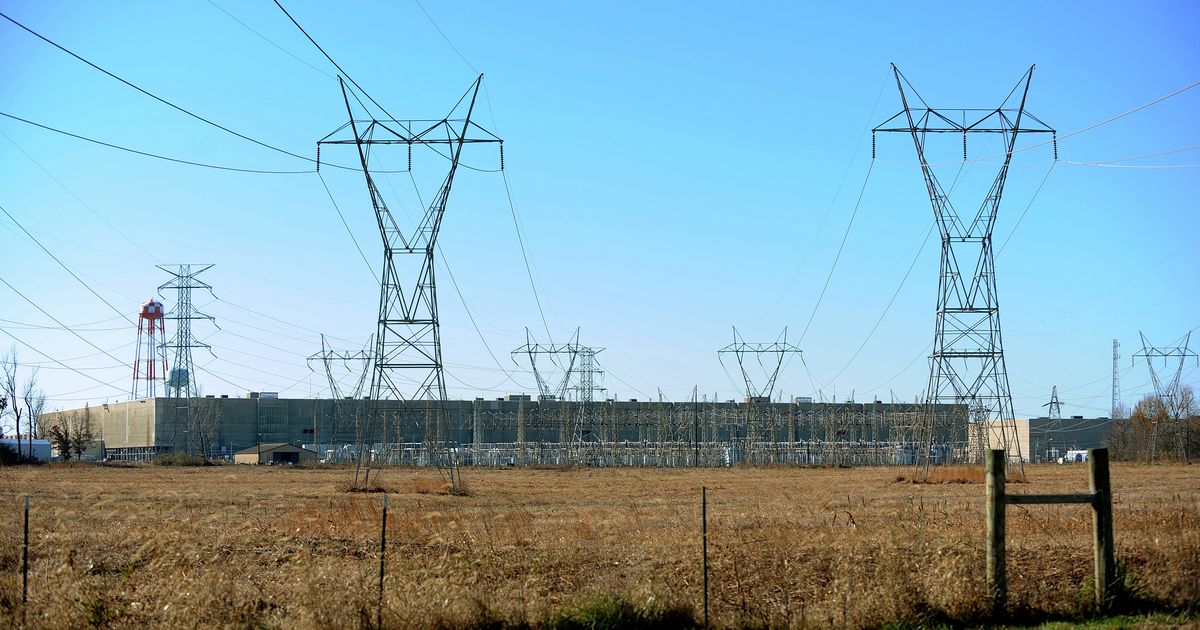
The U.S. Department of Energy is harnessing the artificial intelligence boom in its bid to convert another Cold War-era uranium enrichment site, tapping private equity to fund a $100 billion data center complex that will include its own new natural gas and battery storage power plant in Kentucky
The department selected investment firm Brookfield Asset Management to develop and operate the data center at the government-owned Paducah Gaseous Diffusion Plant. In March, the department announced a similar project at its Portsmouth Gaseous Diffusion Plant in Ohio
Both are undergoing extensive cleanup, decontamination and decommissioning after decades of fueling the nation’s nuclear weapons and power plants. The project is in line with the Trump administration’s efforts to make artificial intelligence superiority over China a top national security and economic priority
The federal government is transforming former DOE sites into “engines of innovation and economic growth” to “ensure the United States wins the A.I. race,” Energy Secretary Chris Wright said in a statement Wednesday
“There will be a lot of new natural gas power plants, a large data center, thousands of jobs and tens of billions of dollars of investment in rural western Kentucky,” Wright said on the Fox News show “Fox & Friends.”
Earlier in July, the Department of Energy said it had picked engineering contractor Amentum to negotiate a lease to develop an AI data center and on-site power plant at South Carolina’s Savannah River Site, a massive complex where the federal government once produced materials used in nuclear weapons, primarily tritium and plutonium-239
Real estate, energy and data center services are cornerstones in the investment portfolio of New York-headquartered Brookfield, which reports that it has more than $1 trillion in assets under management
A Brookfield spokesperson estimated that 30% of the $100 billion in spending would go toward construction of the data center and power components, with the rest of the money being spent on the equipment in the data centers, including servers, routers and semiconductor chips
Discussions were ongoing with commercial partners to use the data center space, Brookfield spokesperson Simon Maine said
Other partners in the Paducah project are power generation and transmission giant NextEra Energy and local utilities
Florida-based NextEra Energy will build and own the power generation components, which are to include 2 gigawatts of natural gas-fired generation, upgrades to transmission networks and 2.6 gigawatts of battery energy storage to support a new 1.8 gigawatt AI data center campus, the department said
The plant would be the largest gas-fired power plant in Kentucky. A single gigawatt, according to a general industry standard for utilities, can power about 750,000 homes
A power service agreement must be approved by state utility regulators, and excess electricity would be delivered to the regional grid. Construction was expected to be complete in 2031, the department said
Cleanup is continuing at the roughly 3,550-acre Paducah plant site, which was on a list of 16 federal sites released last year as locations where the department could invite technology companies to build data management and storage capacity
It shut down in 2013 and the gaseous diffusion process to enrich uranium is considered obsolete
The department has projected that cleanup at the Paducah site would be completed in 2065 at a cost of about $17 billion, including demolishing buildings, disassembling uranium converters, removing refrigerant and treating a large plume of groundwater contamination
In the meantime, the department is working on plans to provide some of the uranium waste being stored for decades at the Paducah site to a pair of companies seeking to use newer technologies to re-enrich it for use in power plants
Group raises questions about projects
A newly formed group called Protect McCracken County has raised questions about the uranium enrichment and data center projects, saying that the work is being carried out beside a river that 5 million people downstream drink from without an independent study of the impact
Byron Gary, a senior attorney for the environmental and public health advocacy group Kentucky Reh site or to withdraw water from the water table underneath it must be carefully executed
He said the construction of a such a large gas-fired power plant — which emits planet-warming greenhouse gases — would have implications for climate change and that his organization would want to be certain that regular ratepayers are not forced to subsidize the power plants and transmission upgrades there
Gary also said his organization will want to make sure that the Department of Energy does not circumvent permitting processes as a way to get around environmental protection laws
“There shouldn’t be a justification to get around that and end up potentially dumping a lot more burden on a rural community that can’t afford it,” Gary said
___
Follow Marc Levy at http://twitter.com/timelywriter
