

Fact Check Team: What has RFK Jr.’s ‘Make America Healthy Again’ movement actually changed
byMORGAN STEPHENS| Fact Check Team
Mon, August 3, 2026 at 2:27 PM

 6VIEW ALL PHOTOS

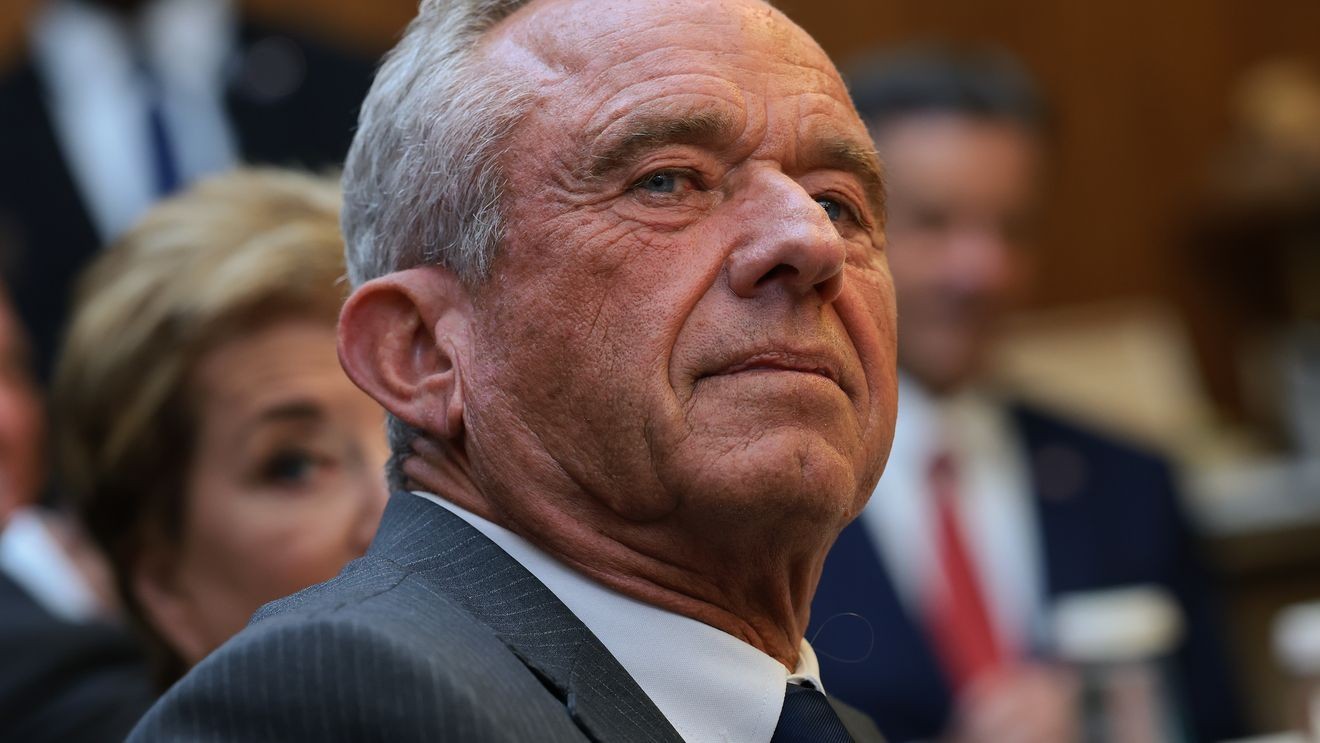
CAMP DAVID, MARYLAND – JULY 31: Secretary of Health and Human Services Robert F. Kennedy Jr. attends a Cabinet Meeting at Camp Davaid, the presidential retreat, on July 31, 2026 in Camp David, Maryland. U.S. President Donald Trump convened members of his Cabinet at the presidential retreat as the war with Iran continues. (Photo by Anna Moneymaker/Getty Images)
WASHINGTON (TNND) —Health and Human Services Secretary Robert F. Kennedy Jr.’s “Make America Healthy Again” movement, known as MAHA, has quickly become one of the most influential—and controversial—public health initiatives in the country
Following Kennedy’s recent contentious interviewwith CNN’s Dana Bash, debate over the movement has intensified, raising questions about its impact on federal policy, the nation’s health priorities, and public trust in science
Here’s what the evidence shows
MAHA has already changed federal health policy
Since taking office, Kennedy has made reducing chronic disease a central priority at the Department of Health and Human Services
His department, led by the White House under President Donald Trump, has promoted efforts to reduce the use of certain synthetic food dyes, encouraged food manufacturers to reformulate products, launched the MAHA Commission to examine the causes of chronic illness, and pushed for greater scrutiny of ultra-processed foods, environmental chemicals, and pesticides
Some of those initiatives have received bipartisan support
Public health experts have long studied the health effects of ultra-processed foods, while several states had already begun restricting certain artificial food dyes before Kennedy entered office. Pediatricians have also called for additional research into ingredients that may contribute to behavioral problems in some children
Kennedy has also repeatedly criticized the influence of pharmaceutical companies and argued the federal government should place greater emphasis on disease prevention rather than treatment
Why MAHA has resonated
The movement’s rapid growth reflects more than Kennedy’s policy agenda
The COVID-19 pandemic significantly altered Americans’ trustin public health institutions, while confidence in government, the news media, and other major institutions has declined in recent years
At the same time, social media platforms, podcasts, and influential conservative and wellness personalities have helped spread MAHA’s message to millions of Americans outside traditional media
Combined with growing concerns about obesity, chronic disease, food quality, and the cost of health care, those factors created fertile ground for the movement to gain national attention
According to theCenters for Disease Control and Prevention, roughly six in 10 American adults have at least one chronic disease, and obesity affects more than 40% of U.S. adults
Where the science agrees—and where it doesn’t
While some MAHA priorities align with mainstream public health concerns, many scientists say it’s important to distinguish between evidence-based reforms and claims that have been repeatedly tested
Researchers broadly agree that improving nutrition, reducing chronic disease, encouraging physical activity, and studying the health effects of ultra-processed foods are worthwhile public health goals
However, many of Kennedy’s most controversial claimsremain at odds with the current scientific consensus
Multiple large-scale studies conducted over more than two decades havefound “no evidence that routine childhood vaccines cause autism”. Organizations including the Centers for Disease Control and Prevention, the American Academy of Pediatrics, the World Health Organization, and the National Academies continue to conclude that vaccines do not cause autism
Kennedy has also criticized GLP-1 weight-loss medications, including Ozempic, Wegovy, Mounjaro, and Zepbound. While physicians acknowledge these medications are not appropriate for everyone and carry potential side effects, medical organizations say they are safe and effective for many patients with obesity or Type 2 diabetes when prescribed appropriately
