

Canadian robotics companies are warning they’re being swept up in a U.S. crackdown on foreign-made robots, as new restrictions threaten to shut them out of their largest market

“It’s a very complicated, far-reaching and disruptive situation,” Ryan Gariepy of the Canadian Robotics Council said. “It’s not good.”
The U.S. Federal Communications Commission (FCC) banned advanced robotics from foreign countries last month, citing national security concerns. The move is widely seen as the Trump administration’s latest attempt to curb China’s influence on strategic industries
But the rules could also affect Canadian businesses, and slow growth in an industry evolving alongside artificial intelligence
The restrictions apply to the importation of advanced robots from countries outside the U.S. That includes robotic vacuum cleaners, forklifts and humanoid robots designed to perform human-like tasks, like stocking warehouse shelves
“[It covers] anything that can move around the environment, and that has a degree of ability to sense and think and act and react to that environment,” Gariepy said.
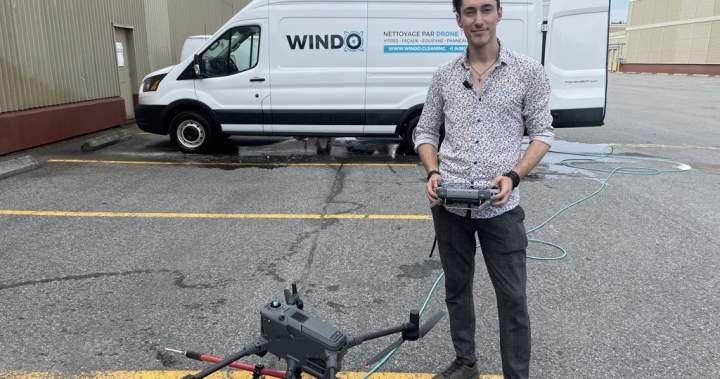
Sébastien Méthot, CEO of Montreal-based Windo Smart, says he is worried what the new FCC regulations mean for his business

Get breaking National news
Get breaking Canada news delivered to your inbox as it happens so you won’t miss a trending story.
By providing your email address, you have read and agree to Global News’ Terms and Conditions and Privacy Policy.
Windo Smart, launched in 2023, uses drones and robotic technology to clean high-rise buildings. Méthot has clients across Canada and has expanded south of the border
“It’s a big problem for us because right now the U.S. is the biggest market that we would sell to and we just can’t anymore,” he told Global News
While Canada’s robotics industry is making gains, China dominates the field, building 85 per cent of the world’s humanoid robots. The U.S. has warned Beijing could flood the market with low-cost advanced robotics that pose threats to national security
But the FCC’s restrictions apply regardless of country of origin, meaning countries like Canada could also face barriers
An FCC spokesperson told Global News that the regulations are “country neutral” and come on the advice of a White House task force, which found foreign-made products “pose unacceptable risks to the national security of the United States.”
Canadian companies seeking to sell to American customers may need to provide justification as to why their products are not manufactured in the U.S., says Gariepy
“This really means … that we need to continue to rethink how we use robots in Canada,” he added
Méthot says he’s now left with two options: focusing mainly on the Canadian or European markets, or relocating entirely
“We are actually thinking about moving to the U.S.,” he said. “Sadly, we love Quebec and we want to stay, but we need the government to make the right choices to keep us.”
The engineer and entrepreneur worries the ban will contribute to a brain drain of Canadian talent
“Robotics is the second biggest innovation in the market so far in the 21st century… I want Canada to invest in robotics so we become a superpower,” he said
“We need sovereign technology.”
—with files from Reggie Cecchini, Global News
1:59
Robotic device helps Quebec children walk
