

Bonds Face a Bigger Threat Than the Fed as Global Rates Climb
Ruth Carson, Masaki Kondo and Cameron Fozi
Sun, August 16, 2026 at 5:30 PM GMT+5:30
4 min read
- JPM
-0.07% - 8301.T
-3.51% - CL=F
+1.42%
(Bloomberg) — As investors debate whether and when the Federal Reserve will raise interest rates, market expectations for further tightening are building around the world — and spelling trouble for bonds
Anthropic Revenue Surges to Over $11.5 Billion in Second Quarter
Bond Traders Are Agonizing Over $70 Billion of Shadow Credit Backstops For AI Companies
<a href="https://www.bloomberg.com/news/articles/2026-08-13/selena-gomez-accused-of-fraud-by-mental-health-startup-investors?utm_campaign=bn&utm_medium=distro&utm_source=yahooUS” rel=”nofollow noopener” target=”_blank”>Selena Gomez Accused of Fraud by Mental-Health Startup Investors
Traders see borrowing costs rising faster in Japan, Canada, the UK and the euro zone than in the US over the next year. Of the 32 swap markets tracked by Bloomberg, two-thirds are priced for rate hikes, with South Korea leading the pack at more than 100 basis points
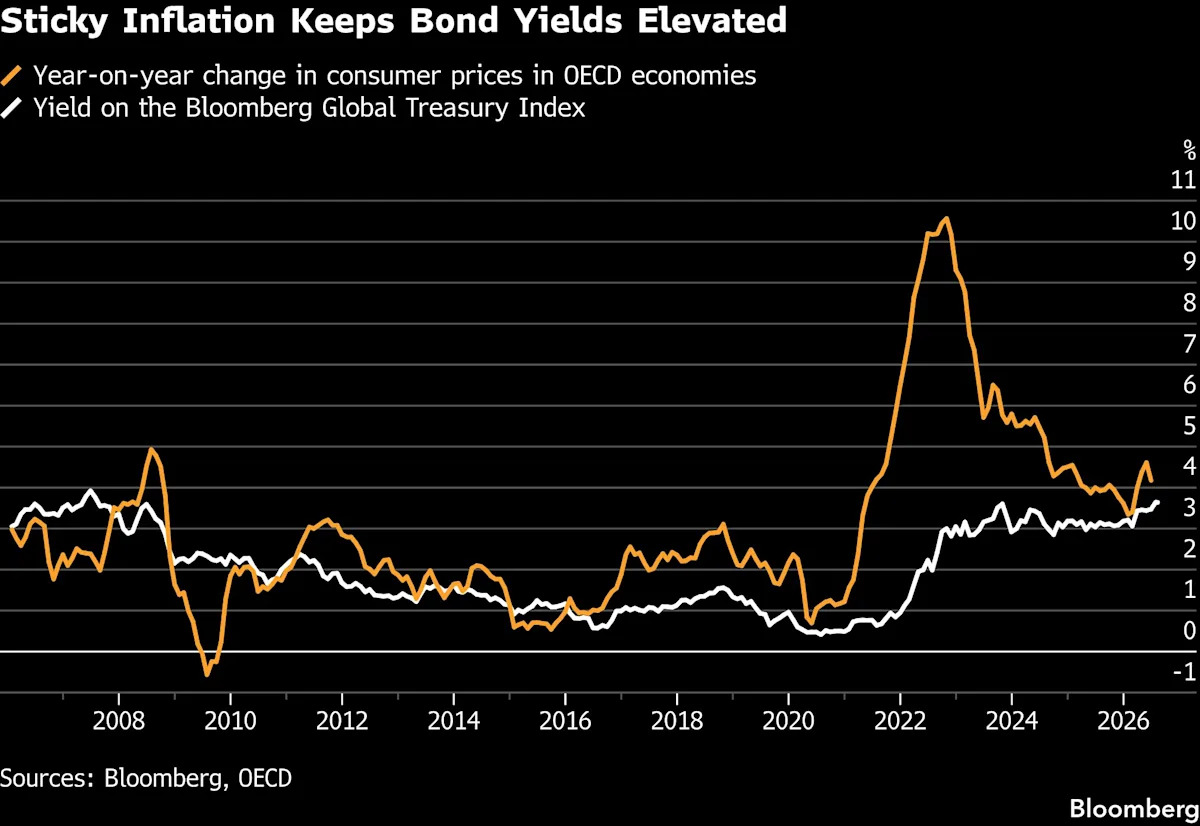
It marks a shift from the Fed-dominated rate cycle of recent years. This time, central banks are facing overlapping pressures from higher oil prices from the Iran war, heavy government spending and an AI investment boom that’s supercharging growth. Inflation across countries in the Organisation for Economic Co-operation and Development recently hit a two-year high
That leaves investors with an uncomfortable prospect: bonds are supposed to cushion portfolios when things go wrong — for example, if the AI-driven stock rally reverses or another trade war hits growth. If central banks outside the US are forced to tighten more aggressively, those bonds could instead add to losses, undermining one of the foundations of traditional diversification
“From a diversification perspective, it doesn’t do the job,” said George Efstathopoulos, portfolio manager at Fidelity International, which oversees over $1.1 trillion in assets. He has very little exposure to government debt, holding only some Treasury inflation-protected securities and Brazil paper
“In a world of just more geopolitics developments, more energy dependence, sticky inflation, big fiscal stimulus — you’re probably going to see more inflation resistance,” he added
Traders are pricing in about 400 basis points of rate hikes across seven major markets over the next year, data compiled by Bloomberg show. If they’re right, the implications may ripple beyond bonds, weighing on richly-valued stocks by reducing the present value of future earnings, tightening financial conditions and disrupting currency trades
Higher rates also raise the return investors can earn simply by holding cash, giving them more alternatives for their money, according to Ed Al-Hussainy, portfolio manager at Columbia Threadneedle. That means governments and companies have to offer higher yields to compete for capital, he said
