

Billions of dollars of discarded marigold flowers could become a new
Researchers found marigold proteins can withstand heat, bind oil and water, and support more sustainable food production
Edited By: Joshua Shavit/
UGA Writer: Savannah Peat
Published Aug 2, 2026 1:07 PM PDT
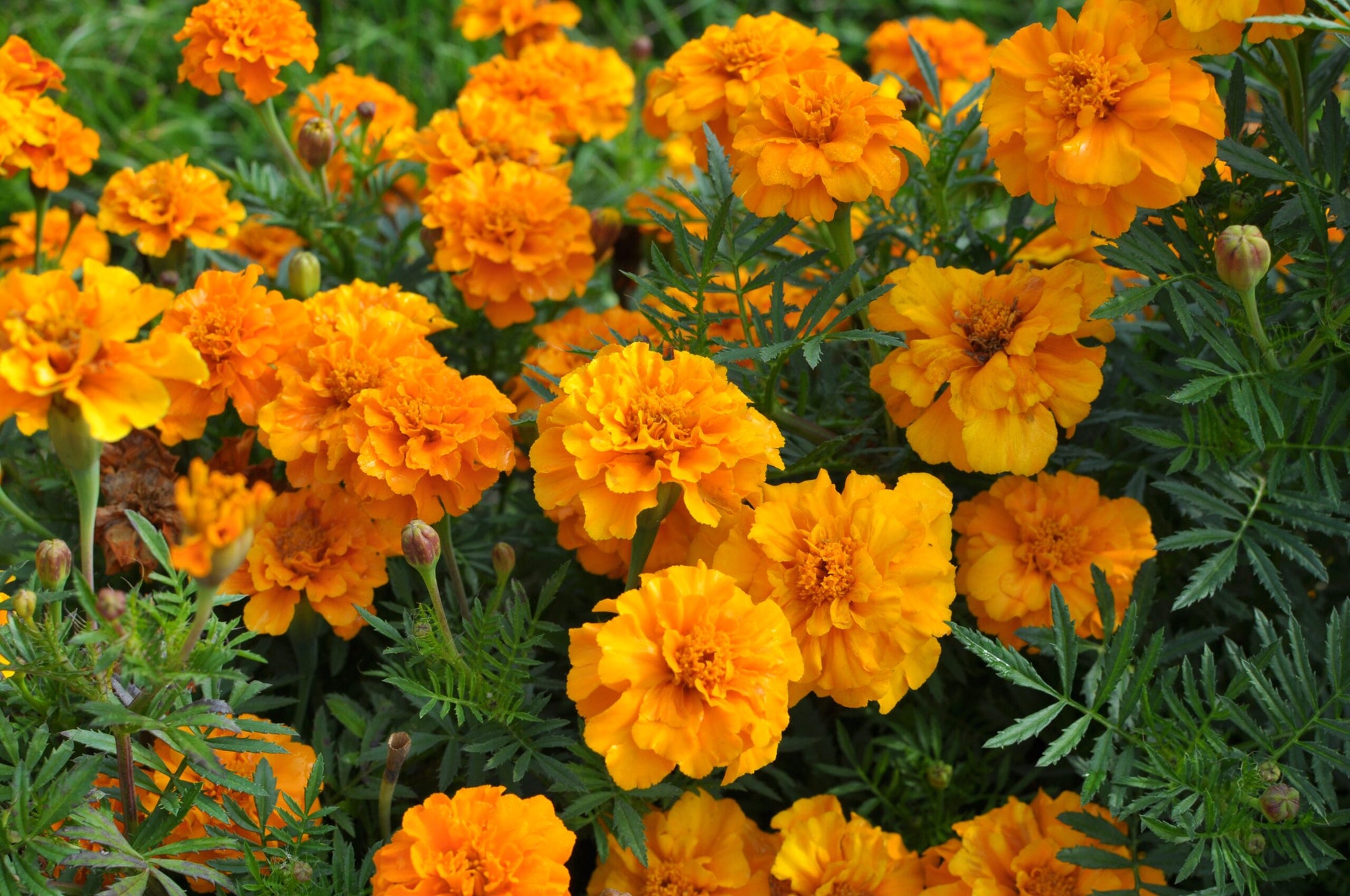
Researchers found marigold proteins can withstand heat, bind oil and water, and support more sustainable food production. (CREDIT:
- University of Georgia researchers found that pot marigold flowers contain useful proteins with levels comparable to quinoa and strong heat stability.
- Marigold proteins can hold water and oil, form emulsions, and provide antioxidant and savory properties, making them promising for baked goods, sauces, soups, and dressings.
- Using discarded flowers as a food ingredient could reduce billions of dollars in floral waste, though more safety testing and large-scale manufacturing research are needed.
Billions of dollars’ worth of flowers are discarded each year. Some may contain useful proteins
A University of Georgia study found that common marigold flowers carry protein levels comparable toheat, held water and oil, and helped form emulsions
Those traits could make marigold protein useful in baked goods, sauces, salad dressings, soups, and other foods
The research examined Calendula officinalis, commonly called pot marigold
“Billions of dollars of flowers are thrown away each year,” said Anand Mohan, the study’s corresponding author
“Can you imagine if we were able to take those flowers and use them for food instead?”
Mohan is an associate professor in UGA’s College of Agricultural and Environmental Sciences
A Flower with More than Decorative Value
Marigolds usually enter homes, gardens, ceremonies, and holiday displays as decoration
Their petals have also appeared in food for centuries across several cultures. The stems and leaves taste bitter, so people generally eat only the petals
Dried marigold can flavor tea and soup. Fresh petals add a tangy, citrus-like taste with a note similar to tarragon. The flowers also contain fiber, calcium, potassium, iron, and antioxidant compounds
Still, researchers wanted to know whether their proteins could perform useful jobs during food processing. Plant proteins must do more than add nutrition
Food manufacturers often need them to trap moisture, bind oil, create foam, or keep ingredients from separating. Heat resistance matters in baking and other high-temperature processes
The study found that marigold proteins could handle several of those tasks
The dried flowers contained 9.71% crude protein, alongside carbohydrates, fiber, minerals, and fat. Their protein level resembled that of other edible flowers and plant materials under consideration as food ingredients
Researchers recovered 92.17% of the available protein during extraction. That high recovery rate suggested that much of the flower’s protein could be separated for further use
Four Proteins, Four Different Behaviors
The team divided the extracted protein into four groups: albumin, globulin, glutelin, and prolamin
Albumin made up the largest share at 65.47%. Globulin accounted for 22.46%, while glutelin represented 10.94%
Prolamin formed only 1.12% of the recovered protein. The fractions behaved differently when researchers tested their food-related properties
Albumin performed especially well. It held 2.37 grams of water per gram of protein. Its oil-holding capacity reached 2.49 grams per gram
Those abilities could help foods retain moisture and manage fats during storage and preparation
Albumin also produced the strongest emulsifying result, reaching 65.22 milliliters per gram. An emulsion combines ingredients that normally separate, such as oil and water. Salad dressings provide a familiar example
Glutelin also performed well in water retention, oil binding, and emulsification
Prolamin gave the weakest results. Its compact structure limited its ability to interact with water and oil. The differences were not minor details
They helped identify which parts of the flower protein might work best in particular foods
Heat Brings out an Unexpected Strength
Marigold protein also tolerated temperatures that can damage other plant proteins
Albumin reached a peak denaturation temperature of 105.28 degrees Celsius. Prolamin reached 97.6 degrees, while glutelin reached 91.8 degrees
Globulin had the lowest value at 88.4 degrees. These temperatures exceeded those reported for several other plant proteins. That resistance could prove useful in baking or extrusion, where food ingredients face intense heat
Pea and chickpea proteins can lose useful properties during high-temperature processing. The marigold fractions, especially albumin, remained more stable
The protein structure helped explain why
Albumin had a porous and irregular surface. That shape gave it more space to interact with water and oil
Glutelin formed tighter, sheet-like structures linked to heat resistance. Prolamin appeared densely packed and crystalline. Its closed structure reduced hydration and weakened its performance
Researchers also examined alpha-helices and beta-sheets, two patterns found within proteins
Fractions containing more beta-sheets generally resisted heat and supported emulsification better. Those dominated by alpha-helices tended to perform less effectively
Savory Notes Inside a Flower
The amino acid profile added another possible food application. Researchers detected 13 amino acids across the four protein fractions
Proline, cysteine, and glutamic acid appeared among the most abundant. Albumin and glutelin contained especially notable amounts
Glutamic acid and aspartic acid can contribute to savory flavor. That raises the possibility that marigold protein could add an umami quality to certain products
Its flavor contribution would depend on the final food and processing method. The study did not test finished commercial recipes
Still, taste could become a useful feature rather than a problem to hide
Some plant proteins need extensive flavor masking. A naturally savory ingredient might fit more easily into soups, sauces, or meat alternatives
Cysteine and other sulfur-containing amino acids may also contribute antioxidant activity. Albumin and glutelin produced the strongest antioxidant results
That property could help slow oxidation in foods where fats or other ingredients lose quality over time
Hundreds of Proteins in One Flower
The team identified about 622 proteins in marigold flowers. Among them were 33 short proteins containing fewer than 120 amino acids
These included proteins involved in stress response, transport, energy metabolism, and oxidation control
Some may help explain the flower’s oil-binding, emulsifying, and antioxidant properties. The researchers also found many low-molecular-weight proteins ranging from 10 to 37 kilodaltons
Their small size may help them move quickly toward the boundary between oil and water
Once there, they can help form smaller droplets and steadier emulsions. The flower’s useful behavior therefore did not come from one protein alone
It arose from a mixture of structures with different strengths
“What excites me most about this research is that it challenges how we think about flowers,” said first author Fidele Benimana
Benimana is a doctoral student in UGA’s Department of Food Science and Technology
“Most people see marigolds as ornamental plants, but they also contain proteins with unique functional properties that could be useful in food formulation.”
Not Every Marigold Belongs on a Plate
The researchers included an important warning. Not every plant called a marigold should be eaten
The study used Calendula officinalis. Edible options also include true marigolds from the Tagetes genus
Other varieties may taste unpleasant or cause stomach problems. Any food ingredient would also require careful processing and safety testing
The study examined extracted proteins rather than asking people to eat large quantities of flowers. Industrial food use remains a future possibility, not a product already available
Researchers still need to test how marigold proteins behave during large-scale manufacturing
Commercial development would also require work on flavor, texture, storage, safety, and consistency between harvests
The team did not claim that marigolds will replace established crops. Instead, the findings identify a discarded material that may deserve more attention
Study co-authors included Nancy Alila, Kentaro Kawata, Christopher Kucha, and Anupam Roy of the Indian Institute of Technology-Delhi
Practical Implications of the Research
Marigold protein could offer two benefits at once. It may provide a functional plant ingredient while reducing flower waste
Manufacturers could potentially recover protein from flowers that would otherwise be discarded after harvest, ceremonies, or decorative use
Albumin and glutelin appear especially promising for foods that need moisture retention, foaming, heat stability, or emulsification. Possible uses include baked products, dressings, soups, sauces, dairy alternatives, and meat substitutes
The flower’s minerals, fiber, and antioxidant properties may add further value, though commercial products would require more testing
Waste reduction could become equally important. Rather than growing a new crop only for protein, producers might use part of an existing flower supply
“I don’t know if the marigold is a super flower,” Mohan said
“But to me, I feel like maybe all these beautiful flowers are super flowers.”
The next major plant protein may not come from a field of beans. It may begin as a flower that someone planned to throw away
Research findings are available online in the journal ACS Food Science & Technology
The original story “Billions of dollars of discarded marigold flowers could become a newws
- Why shiny flowers are rare: bee vision reveals a hidden visual trade-off
- Scientists create nutritious vegan-meat alternative from sunflowers
- Scientists discover the ancient link between bees and the evolution of colors in flowers
Like these kind of feel good stories? Get The Brighter Side of News’ newsletter
FlowersGlobal Good NewsGreen Good NewsHealth NewsmarigoldsMedical Good NewsNew DiscoveriesResearchScienceSuperfood
Joshua ShavitScience & Technology Writer and Editor
Joshua ShavitWriter and Editor
Joshua Shavit is a NorCal-based science and technology writer with a passion for exploring the breakthroughs shaping the future. As a co-founder of The Brighter Side of News, he focuses on positive and transformative advancements in technology, physics, engineering, robotics, and astronomy. Having published articles on AOL.com, MSN, Yahoo News, and Ground News, Joshua’s work highlights the innovators behind the ideas, bringing readers closer to the people driving progress
Latest Stories
 SpaceJWST captures stunning images of one of the lightest known exoplanetsJoseph Shavit
HealthClinical trial combines CRISPR gene editing with stem cell transplants to treat aggressive blood cancersJoshua Shavit
 SpaceA beam of light can cross the entire universe in no time at allJoseph Shavit
