

As SpaceX stock dips near IPO price, bulls like BofA’s Epstein say buy on ‘launch leadership’
Pras Subramanian· Senior Reporter
Mon, July 13, 2026 at 8:32 PM GMT+5:30
3 min read
- SPCX
-3.80% - BAC
-0.84%
Another Wall Street analyst is getting on board the SpaceX trade, just as the stock hits a weak moment
Shares shed another 4% on Monday, hitting another all-time low and dipping below $140. The stock debuted at $150 in mid-June, and SpaceX’s $135 IPO price is now perilously close
(SPCX)
Go deeper with AlphaSpace
139.78-5.52(-3.80%)
As of 12:09:35 PM EDT. Market Open.
BofA securities senior analyst Ron Epstein is the latest bull on SpaceX, with the bank initiating coverage last week with a Buy rating and a $235 price target. That target sits well above Monday’s sub-$140 print and is derived from a long-term discounted cash flow model blending base, bull and bear cases out to 2045.
While SpaceX’s “launch leadership” frames the SpaceX bull case, Epstein also leaned into one of the more speculative pieces of that thesis: space-based data centers.
Orbital data centers are not “some massive thing floating around out there with thousands and thousands of GPUs in it,” he said in an interview with Yahoo Finance, calling the concept a misnomer.
“It’s distributed orbital compute,” Epstein said. “I haven’t really come across anybody that I trust in the engineering world that would say, ‘Hey, this is impossible. It’s an engineering challenge that needs to be solved.’ ”
A trained aerospace engineer himself, Epstein pointed to Starlink as precedent, noting that over 10,000 interconnected satellites now form “an effective laser internet in space” that skeptics once deemed unworkable. Cooling and power, he said, “are just engineering problems. This is a very good engineering company.”
But the entire case, he acknowledged, flows from launch economics. Epstein notes launch costs of roughly $10,000 to $20,000 per kilogram before Falcon 9, down to about $2,000 with Falcon 9, roughly $1,000 with Falcon Heavy, and potentially $50 to $100 per kilogram if Starship reaches full reusability.
Reduced launch costs are “the superhighway to the stars,” a new railroad opening markets “that people aren’t even thinking of already.” Ten years out, he predicted, SpaceX will be “in a very different place,” most likely a better one
The revolutionary step is reusability of the second stage — the piece the Space Shuttle never truly cracked because it “needed so much repair and overhaul after each flight.”
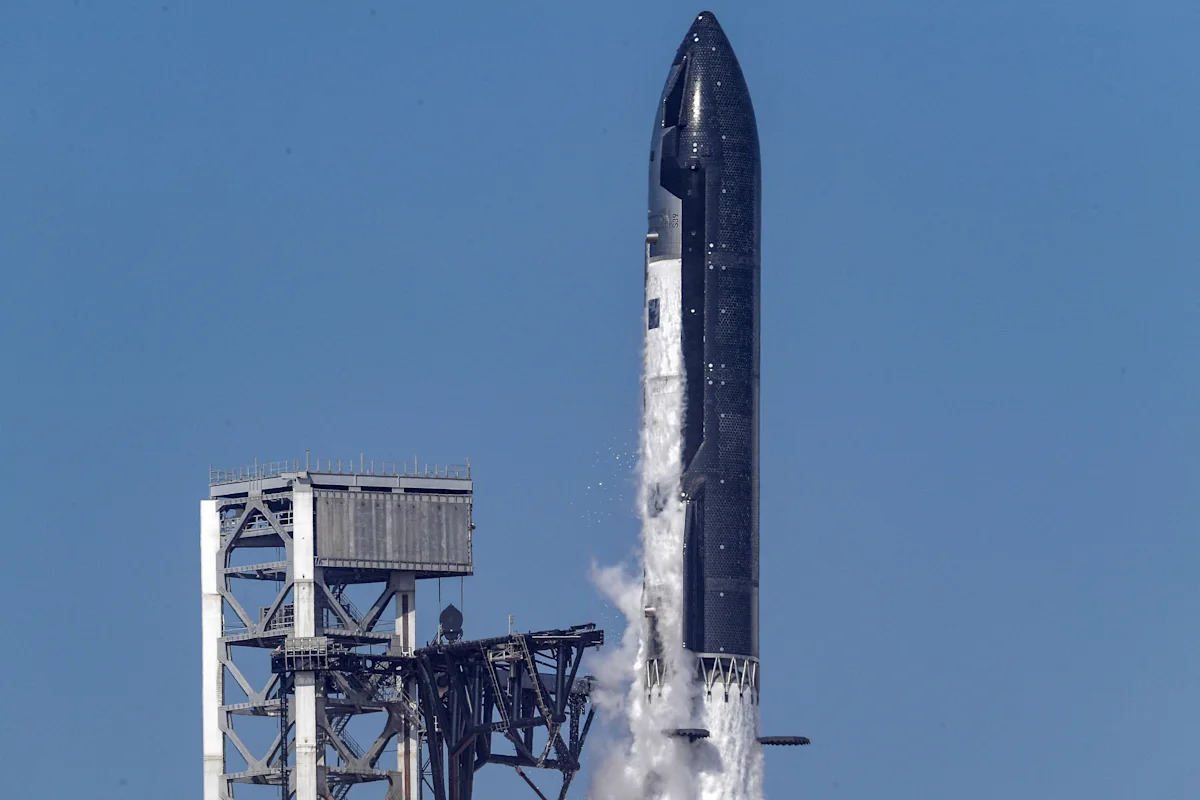
He does not expect the milestone to happen with Starship’s 13th flight test, slated for the 16th, but wants to see the program “going in the right direction.”
Other bullish data points are terrestrial compute already sold to Google and Anthropic “at prices that I don’t think people were expecting,” a Starlink franchise that “continues to be profitable” and add subscribers, and clarity on its push from broadband into mobile connectivity
