

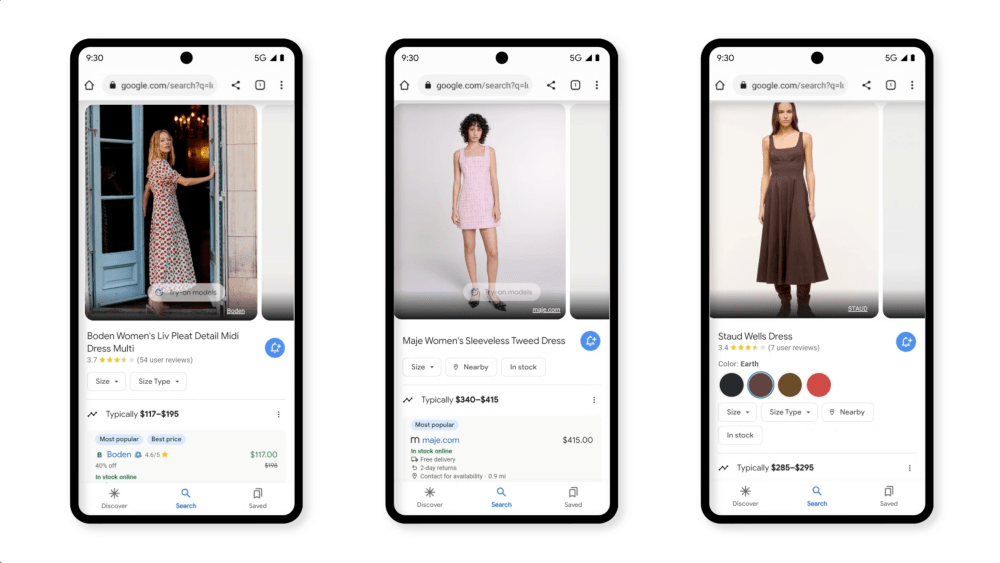
Courtesy image
From algorithmic recommendations and augmented reality (AR) virtual try-ons to gamified virtual storefronts, apparel brands are moving past transactional e-commerce models into creating immersive, data-driven consumer experiences. As a result, the industry is entering into an era of emotional fashion marketing that is driven by technology
And more often than not, mobile devices serve as the interface between a brand and the consumer
Here’s a typical scenario: A consumer browses a mobile app, virtually “trying on” a denim jacketd by computer vision, and then they hit the “buy” button. All done in under 30 seconds. Not only is it efficient, but analysts also say AI recommendation engines are driving conversion rate increases of between 20 and 35 percent
Hyper-personalization and styling are also being powered by generative AI in other ways. New machine learning models are synthesizing browsing history, local weather and past fit data to serve customized outfit recommendations. There’s also tech that goes beyond basic retargeting to predictive styling feeds
Meanwhile, generic email campaigns are being replaced by dynamic email content and SMS segmentation, which offer retailers and brands significantly higher ROI than cold ad campaigns. There’s also a priority for retailers and brands to deploy mobile-first digital strategies that use Customer Data Platforms (CDPs)
Both Nike and Revolve are leading in this area as they rely heavily on CDPs in their strategies. While Nike uses a unified CDP to connect a multi-app athletic ecosystem and physical retail, Revolve utilizes its CDP infrastructure to drive high-velocity fashion trends, personalized influencer edits and real-time behavioral merchandising
Under the hood, Nike operates a unified CDP paired with proprietary AI and machine learning predictive models such as Celect, which the company acquired in 2019. The tech powers Nike’s suite of mobile applications (Nike App, Snkrs, Nike Run Club and Nike Training Club). The CDP unifies online browsing, past purchases, physical retail POS interactions and workout activity into a single “golden record” for each consumer
The even features behavioral activity triggers. For example, if a user logs a 50-mile running goal in Nike Run Club, the CDP tags the user’s profile. The Nike main app then automatically surfaces shoe recommendations tailored for higher-mileage runners
Revolve’s CDP strategy is engineered around real-time event streaming and curated fashion discovery. Because Revolve updates its product catalog continuously, its mobile app uses real-time clickstream data to deliver hyper-relevant product feeds. The CDP captures micro-interactions such as viewing specific dresses, favoriting a brand, and filtering by size or event category, and then instantly updates the homepage feed and product listing pages during the active app session
Revolve also maps user preferences to specific style personas and influencer collections. Users receive personalized push notifications and in-app feed updates when new edits or restocks align with their favorited categories or influencers. The CDP also monitors journey stages—distinguishing casual browsers from high-intent shoppers. If a user repeatedly views items in a specific category (such as vacation wear or bridal) without purchasing, the app triggers personalized promotional banners or cart-abandonment nudges tailored to that event.
Other notable tech that is transforming fashion apparel and retail includes virtual try-on and AR. Both are helping to address fashion’s multi-billion-dollar pain point: online return rates driven by poor fit. AR fitting rooms can increase purchase confidence by up to 45 percent while lowering returns
Also changing the game is spatial computing and gamification. This includes virtual pop-ups, Roblox activations and spatial commerce such as Apple Vision Pro storefronts. These serve as top-of-funnel brand awareness channels for Generation Z and Generation Alpha. Notable brands leading the way include Gucci with Roblox and virtual worlds, Zero10 (AR try-on mirrors) and Shopify AR integrations
Smart fitting rooms and RFID also play an important role in how consumers shop for apparel. The tech includes interactive mirrors that allow shoppers to request different sizes, switch room lighting or view matching accessories without even leaving the fitting room
Retailers and brands are also unifying online browsing profiles with in-store clienteling apps so sales associates can offer more personalized in-person service. An easier in-store shopping experience is also a focus for many retailers and brands such as Uniqlo, which has self-checkout RFID bins and interactive kiosks, and Polo Ralph Lauren, which sports connected fitting rooms
Lastly, for trend discovery, short-form video and TikTok Commerce are key for “outfit of the day” (#OOTD) content. There is also integration with User-Generated Content (UGC)
featuring real customer photos on product pages to boost trust and conversion rates by up to 25 to 30 percent. Gymshark and Alo Yoga are some of the brands leveraging creator-led digital ecosystems
It’s important to point out some downsides of tech-driven marketing and engagement. There are privacy and data fatigue concerns as well as consumers who are becoming wary of aggressive tracking and biometric data collection (such as body scanning). There’s also the “Hype vs. ROI” trap. It pits over-investing in flashy metaverse experiments that fail to generate recurring revenue against practical tech such as fit prediction tools
The bottom line is that fashion apparel brands and retailers should be investing in the right tech to drive conversions. But they must maintain their brand’s soul. This means balancing algorithmic efficiency with human creativity and storytelling, which is essential to emotional fashion marketing
