


The Medical Minute: What is 7-OH? The dangerous addiction risk sold at convenience stores
Addiction to 7-OH kratom can take hold within two to three weeks of regular use, says Dr. Sarah Kawasaki, director of the Advancement in Recovery Program at Penn State Health Psychiatry and Behavioral Health.
Michael Krause was picking up vape supplies when a shop employee offered him a free sample of a pill he said would boost his energy and help him lose weight
August 19, 2026Penn State Health News
“I’m over 50,” says the West Hanover Township resident, “so I thought, a magic pill? All right, wow.” He didn’t know it yet, but he’d just taken his first dose of 7-hydroxymitragynine, or 7-OH for short
“I took the recommended dose,” he says, “and I knew right then and there that I was screwed.”
He knew because he’d been there before. In 2008, after a kidney removal, Krause was prescribed OxyContin and became addicted. He got clean in 2010 and stayed opiate-free for well over a decade
That free sample undid all his hard work in one dose. “I felt a high that was the exact same thing as an 80-milligram oxycodone,” he says
That was in January 2025. By March, Krause says, “I knew there was no turning back.” He’d gone from a free sample to a $100-a-day habit in just three months. By August, he was back in medical treatment for addiction
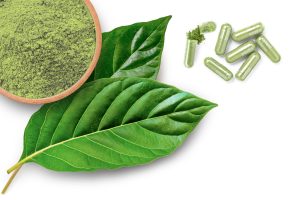
7-OH is a natural compound found in small amounts in kratom, a tree that grows in Southeast Asia. Because it affects the same brain receptors as opioids, 7-OH can be addictive, especially in concentrated products
What is 7-OH kratom?
7-OH, or 7-OH-mitragynine, is a compound found naturally in trace amounts in the kratom plant, an evergreen tree native to Southeast Asia. But the 7-OH products sold in vape shops, convenience stores and gas stations today are much more powerful than traditional kratom
“It’s the primary psychoactive compound found naturally in kratom, but it’s been synthetically isolated and manufactured,” explains Dr. Sarah Kawasaki, director of the Advancement in Recovery Program at Penn State Health Psychiatry and Behavioral Health
People take kratom for its stimulant effects, or, at higher doses, for pain relief and sedation. Concentrated 7-OH is different. It acts like a powerful opioid because it is one. Clinically, it behaves similarly to morphine or heroin, which lines up with what Krause felt after taking that single free sample
7-OH products show up as gummies, tablets, drink mixes and small liquid shots, often packaged with bright, energy-drink-style branding right at the counter. Krause remembers a liquid version called “Feel Free” sitting in plain view next to the register at his local gas station
Despite “We ID” signs posted nearby, “I never once saw them actually ID a kid,” he says
Find a Penn State Health addiction medicine physician near you
7-OH side effects
Because 7-OH acts on the same brain-stem receptors that control breathing, an overdose looks identical to a prescription opioid overdose: slowed or stopped breathing, sedation, even potential death
Physical dependence can set in within two to three weeks of regular use, Kawasaki says. Strong cravings can start sooner, sometimes within days. Kratom withdrawal – and withdrawal from concentrated 7-OH especially – is severe. “It’s the flu times a thousand,” Krause says
The law is trying to catch up
Right now, 7-OH is largely unregulated in Pennsylvania. That’s starting to change
In Harrisburg, lawmakers have introduced two bills that would update Pennsylvania’s kratom sales law to classify synthetic 7-OH as a Schedule I substance and ban sales of both 7-OH and kratom products to minors. Schedule I substances, which include heroin, are defined as having a high potential for abuse and no currently accepted medical use. The bills are still moving through the legislature. Pennsylvania’s Department of Health has already flagged a sharp rise in poison-control calls tied to kratom and 7-OH.
At the federal level, the U.S. Drug Enforcement Administration announced on July 1 that it’s moving to temporarily classify concentrated, synthetic 7-OH – and several related compounds – as Schedule I. That order is expected to take effect in August
Some manufacturers have already reportedly begun swapping in other compounds in an effort to sidestep the new rules. Regulation is racing to catch up with the market
Participate in an addiction medicine research study at Penn State College of Medicine
Treatment and a way back
The good news, Kawasaki says, is that 7-OH and kratom use disorder responds well to the same medications used for other opioid use disorders, particularly buprenorphine. “It works like a charm and completely extinguishes their physical cravings,” she says. Unlike fentanyl, which can complicate buprenorphine treatment, 7-OH allows for a more straightforward transition to treatment. “It’s an eminently treatable problem.”
Krause is proof. Nearly a year into treatment, he’s regained much of the weight he lost during his struggle with 7-OH and has his family’s full support
His advice to anyone already trapped in a 7-OH addiction, thinking they can taper off on their own: “You need professional medical help. Trying to do it alone is the literal definition of insanity.”
And to anyone who thinks a free sample is harmless, Krause has this warning: “I took one free sample, and it dragged me straight to rock bottom.” Just a few months, he says, was all it took to nearly destroy his life
“It is a one-way ticket to hell.”
Learn how Penn State College of Medicine is working to prevent and treat substance use disorders
- The Medical Minute: Stay positive when talking with people with substance use disorders
- Saving lives through Drug Take-Back and substance use education
- Q&A: Can weight loss drugs help in addiction treatment?
The Medical Minute is a weekly health news feature produced by Penn State Health. Articles feature the expertise of faculty, physicians and staff, and are designed to offer timely, relevant health information of interest to a broad audience
If you’re having trouble accessing this content, or would like it in another format, please email Penn State Health Marketing & Communications
