


- A list of all the Canadian products Trump wants to hit with 50% tariffs

Trade experts say if new U.S. tariffs of up to 50 per cent are enacted on Wednesday, consumers in Canada will likely feel the impact as cost increases for goods crossing the border ripple through the economy
“If you’re an American manufacturer, you don’t want to be paying 50 per cent on any sort of machine parts or anything like that that you’re bringing in,” says Joy Nott, partner of trade and customs at KPMG Canada
“It’s consumers who are at the store shelf with their wallet in hand making the decision as to whether or not they’re going to buy that product. So for manufacturers, they have to find that sweet spot between recovering their costs and remaining profitable, but at the same time, not losing customers. So it’s a give and take.”
Tariffs are essentially taxes paid on imported products, meaning U.S. tariffs on Canadian imports are ultimately first covered by American businesses and consumers
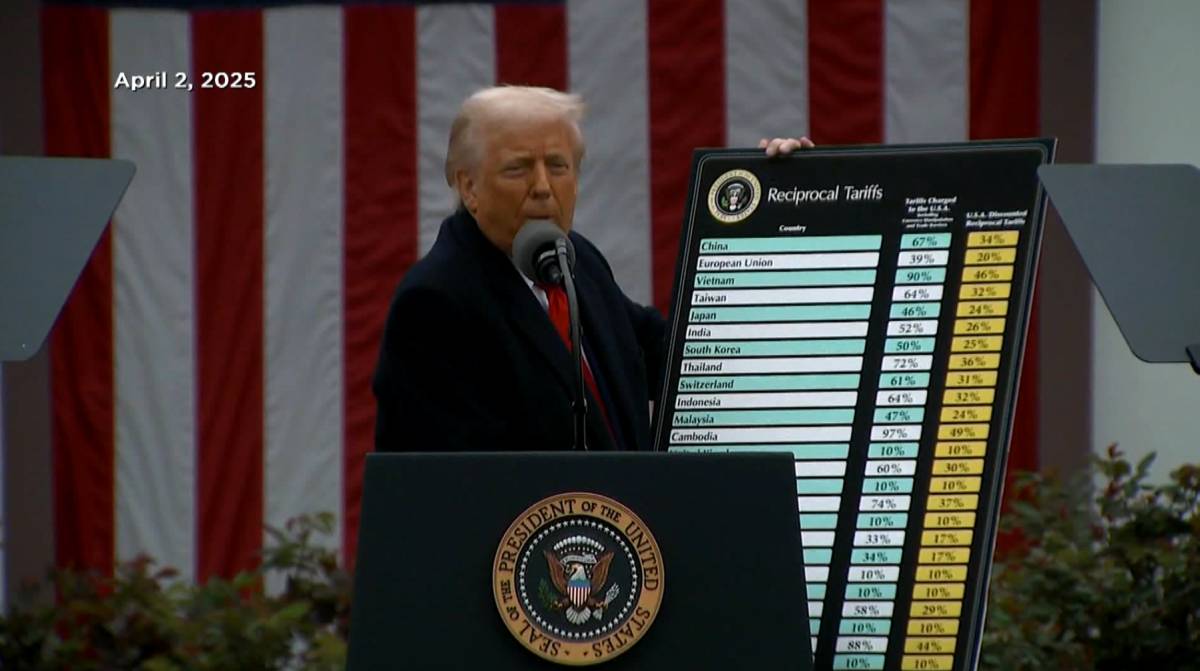
U.S. President Donald Trump launched a trade war in March 2025 with sweeping tariffs on imports from virtually all countries, including Canada, with specific Canadian sectors targeted, including steel and aluminum, forestry and lumber products and the auto industry
Trump’s latest round of tariffs targets Canadian dairy products, alcoholic beverages and further automotive and parts tariffs due to what the administration called Canada’s “discriminatory” trade practices within each sector
Trump signed three executive orders last month outlining the new tariffs to be imposed on Aug. 19, with each order including a separate index of hundreds of additional products that would face these new tariffs ranging from Canadian wine and beer to hockey sticks and other sporting goods, milk and cream, honey, furniture and cement
Related Videos

24:12
Global News at 6 Toronto: June 30, 2026
- Global News at 6 Toronto: June 30, 2026

U.S. tariffs shut down long-time North Van jewelry store
B.C. reaction to U.S. Supreme Court tariff ruling
B.C. gov’t invites feds to west coast to talk softwood lumber
Breaking down how Doug Ford’s tariffs commercial may have collapsed trade talks



U.S. tariffs are paid first by Americans, but if those products cross the Canada-U.S. border after those tariffs are charged, like with many manufactured goods, they could be hit by those tariffs multiple times before winding up on store shelves here and in the U.S

Get breaking National news
Get breaking Canada news delivered to your inbox as it happens so you won’t miss a trending story.
By providing your email address, you have read and agree to Global News’ Terms and Conditions and Privacy Policy.
This means consumers on both sides of the border could wind up paying higher prices for goods if businesses pass along these extra costs to maintain their profit margins
“In the majority of cases, we’re talking about components, ingredients and other items that are being used by U.S. manufacturers in the production of something in the United States that possibly could come back to Canada,” says John Boscariol, co-leader and partner in the international trade and investment law group at McCarthy-Tétrault
“The U.S. manufacturer has to somehow, if they’re going to continue toainly try and at least get some of it back in terms of a higher price to its consumers.”
“It may be exporting either a finished product or another component or sub-component or ingredient to Canada. And so, in that way, Canadians get hit indirectly with these tariffs.”
Among the exhaustive list of goods that could wind up being hit with the new 50 per cent tariffs, Boscariol says he expects finished automotive products, including parts and vehicles, would potentially be more expensive for consumers here and in the U.S. because they cross the border multiple times during the manufacturing process
He also says this could be a similar situation for finished wood products like furniture and components, food ingredients that use Canadian dairy and honey, as well as sporting goods manufactured using Canadian components
Nott also highlights how plastics and related products, including resins, are a focus of these new tariffs
“So just imagine for a second, an empty shampoo bottle. The shampoo bottle was made here in Canada and the empty shampoo bottle goes into the States. It’s filled with shampoo and then comes back to Canada to be sold,” she says
“Business means selling to a customer. And if that customer is not going to be willing to take a large price hike for any reason, whether that be for tariffs, the price of oil, it doesn’t matter.”
4:28
Some companies are holding off making major plans for possible new round of U.S. tariffs
Nott also says that vehicles and parts could be subject to many different tariffs under these that could compound costs quickly as they cross the Canada-U.S. border repeatedly. That’s because they are subject to automotive-specific tariffs on top of added costs for a wide range of plastic products used in automotive manufacturing
“At the very beginning of an automotive product or a part … you might have, for example, plastic resin that’s moving between the two countries. That is now caught. So is it a car part per se? No, but are there manufacturing inputs that are going to eventually end up in a car part? Yes. So that’s what’s caught this time,” says Nott
“If you stop to think about it, how many things are made of plastic? And when you start to think about that, the list really grows.”
Nott adds that many other sectors, such as electronics, machinery and machinery parts, could also face higher costs from these plastic tariffs because it is so widely used in manufacturing and finished products
Jesse Goldman, partner of international trade at Osler, Hoskin & Harcourt LLP, says consumers could be hit indirectly by these new tariffs in the form of higher prices for some products, but the broader impact to the Canadian economy will be far more substantial and costly to consumers
“The effect of the [Section] 338 tariffs is really effects on certain Canadian businesses and [the] health of those businesses as their export markets are further constrained and narrowed and their economic commercial opportunities in the U.S. diminish as a result of tariffs. Their ability to be competitive and productive businesses also serving Canadian consumers diminishes over time,” he says.
“That has effects in terms of their employment, their productivity, their ability to invest, their access to capital. For the U.S. tariffs, if we look at the effects on Canadian consumers, it’s really the diminishment of the Canadian economy overall that I think people will notice over a period of time.”
