

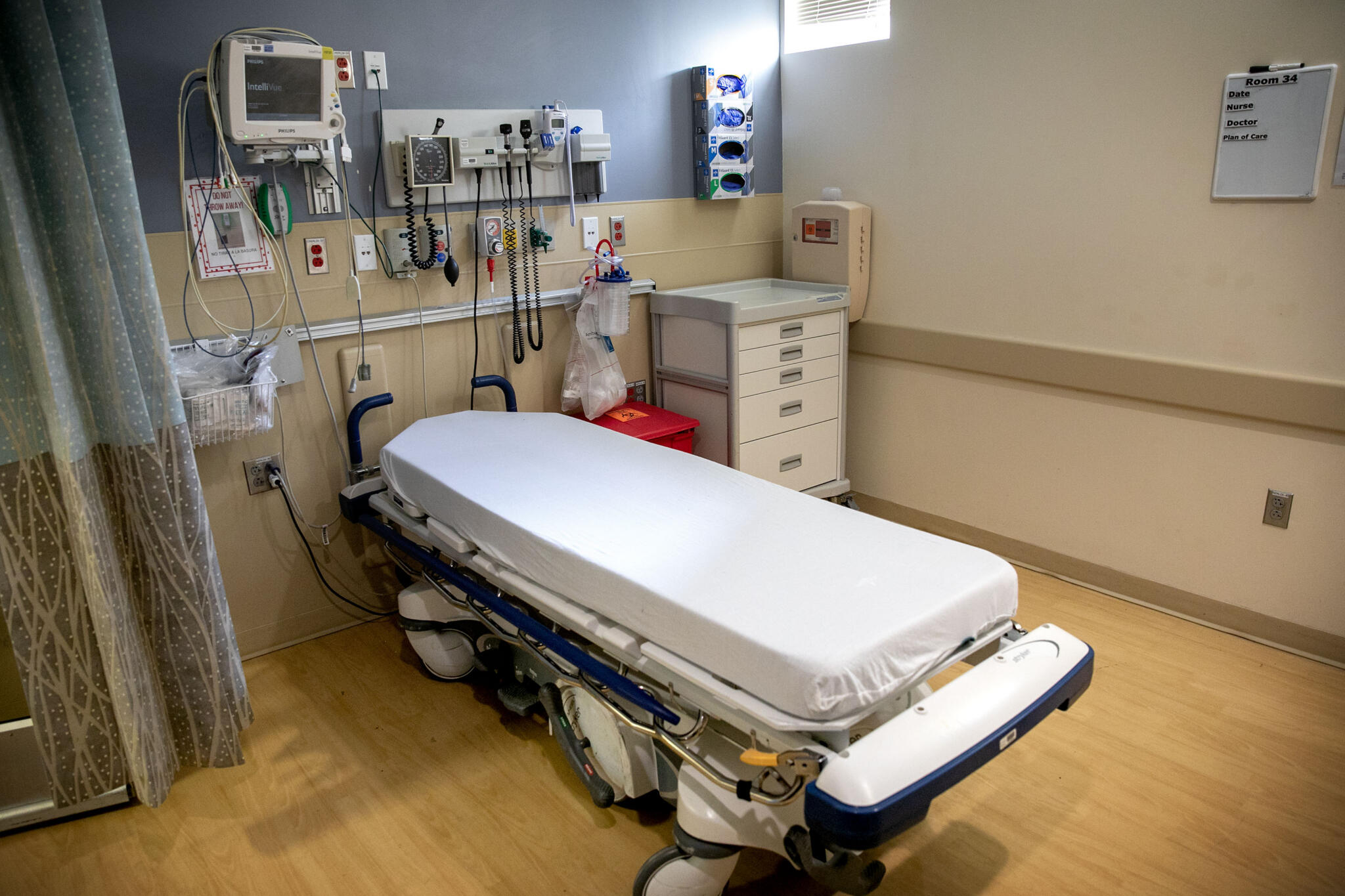
Gov. Maura Healey wants to alleefty healthcare spending, but a recent report found Massachusetts has a shortage of guardians who are empowered to make medical decisions on behalf of incapacitated patients
Patients may be medically stable enough to leave an acute care hospital and transition to other settings, such as a skilled nursing facility, but that process can face significant roadblocks if they’re unable to make medical decisions for themselves and also lack a surrogate decision maker, guardian or advance directive
These “unrepresented individuals” are at “high risk for inappropriate medical care, including overtreatment, undertreatment, and delayed discharges from hospital facilities,” according to the report from the Department of Public Health and Eastern Research Group, Inc. This vulnerable cohort typically involves people who are experiencing homelessness or serious mental illness, lack a “willing or appropriate” healthcare surrogate, and have outlived their loved ones and friends
Without a decision maker assigned, unrepresented patients cannot be discharged until a court appoints a guardian — creating a complicated, lengthy logjam that can prevent other sick Bay Staters from accessing hospital beds. People interviewed for the study, including those representing patients, hospitals and the legal system, said they believe that “Massachusetts relies on a limited and shrinking pool of professional or pro bono Guardians, usually attorneys or retired attorneys, to fill this gap.”
“As a result of the study, DPH finds there is a significant need for qualified professional guardians to give informed medical consent for persons who are unable to afford these services otherwise and that increasing payment to Qualified Professional Guardians, coupled with other recommended legislative changes, could substantially reduce delays in hospital discharges and expedite access to long-term and preventative care,” the report said
The core factor driving the guardianship shortage for indigent patients is that compensation is “inadequate or nonexistent.” The cases are also “often complex and require a considerable investment of time on the Guardian’s behalf to be executed appropriately and ethically, a fact that further discourages Guardians from taking on these cases,” the report said
Attorneys searching for pro bono guardians on behalf of acute care hospitals can end up contacting four to 13 guardians before finding someone willing to take on the case, according to the report. State agencies including the Department of Developmental Services, Department of Mental Health, and the Executive Office of Aging and Independence help their clients find guardianship services. AGE pays the largest public amount — about $893 monthly per client— for adult protective services, the report said.
Many guardians are family members, but they can also be social workers, therapists, psychiatrists, medical professionals, attorneys and retired judges, said Wynn Gerhard, elder justice fellow at the Massachusetts Guardianship Policy Institute
Backed by private funding, the institute has a pilot project for public guardians in Suffolk, Norfolk and Plymouth counties. The pilot’s four social workers can take up to 20 cases, and they regularly visit their clients and accompany them to doctor’s appointments, Gerhard said
“The cases that we get are very complex,” Gerhard said. “People have multiple medical and psychological and mental health issues, and they have nobody else in their life. You don’t know them when you get the nomination or the appointment, and you have to figure out who they are, where they came from.”
She added, “Our goal is to keep people in the least restrictive setting — not a nursing home as the first instance, but community placements, group homes. And we have been very successful.”
Guardians of MassHealth members in nursing facilities can earn $50 an hour, with their annual payments capped at $1,200. The report said the payments were established in 1999 and would need to be increased to $94 per hour and $2,256 annually to keep up with inflation. Gerhard said the payments are a “bureaucratic nightmare” to secure and are therefore “pretty useless.”
Mandated under a 2024 long-term care oversight law, the report was supposed to be due by July 31, 2025. But the report was filed with the Legislature a year late, meaning its recommendations to boost pay for guardians, ensure training and monitoring of guardians, and enact a default surrogate statute will likely need to wait until next session for potential action
Meanwhile, the governor’s Health Care Affordability Work Group released initial recommendations this month that put new scrutiny on “transitions of care.” Solutions would ease the more than 2,000 patients on any given day who are stuck in acute care hospitals
The Healey administration said it will “explore action to modernize surrogate decision-making and health care proxy laws.” Healthcare proxies are legal documents that allow individuals to specifically designate people to make medical decisions on their behalf once a physician decides they’re unable to make or communicate their own choices
Spokespeople for Healey and the Executive Office of Health and Human Services did not answer State House News Service questions about potential actions and changes that are under consideration
At Cape Cod Hospital last Monday, Healey said the goal is to get patients out of the hospital as “quickly as possible” once they’ve received care. The governor also mentioned implementing a standardized discharge form and eliminating “needless paperwork.”
The report said Massachusetts is one of four states without a default surrogate statute, which enable close family members and friends to make healthcare decisions for an incapacitated patient without needing to seek a court-appointed guardian. Adopting the statute here could reduce demand for guardianships and free up court time for cases involving unrepresented individuals
Bills (H 1692 / S 1047) from Rep. Carole Fiola and Sen. Cindy Creem to allow surrogates to make certain medical determinations — such as patient transfers to nursing homes — are stalled in the House and Senate Ways and Means committees. In a summary, Creem’s office said the existing legal process to appoint a guardian and then seek judicial approval for patient transfers can translate into weeks of delayed care that “generate unnecessary health care costs and necessitate an inefficient allocation of hospital resources.”
The Massachusetts Medical Society supports the bills, saying the “need for reform has become even clearer in recent years.” Lawmakers wrapped scheduled formal sessions on July 31, making it unlikely the legislation would advance for floor action
“During the COVID-19 pandemic, many younger patients presented to the hospital unexpectedly and without a health care proxy,” the society said in written testimony last year. “In the worst cases, those patients quickly became incapacitated. In urgent scenarios, the lack of surrogate consent delays care decisions and strains already overburdened hospital re
The DPH report estimates there’s roughly 3,100 to 4,950 unrepresented individuals who could require public guardianship services every year. Services can cost on average $10,000 to $11,000 per client annually, which the report extrapolates would have a potential fiscal impact of between $31 million and $54.5 million on MassHealth
“Spending this money would save the state money because it would keep people out of expensive long-term care and also be much better for patients to get out of hospitals quicker, and would save money as well and free up the bed,” Gerhard said
The report does not specify a funding dominates the state budget, and health officials are looking to trim spending on certain long-term care services that are not required by the federal government ahead of major funding losses
Gerhard called for a state agency to monitor and run a public guardian program, plus the creation of a trust fund seeded with payments from hospitals and other state funding streams. Beyond expanding the guardianship pool, she emphasized the importance of tracking quality-of-life outcomes, such as whether patients were ultimately connected to housing and other services and avoided multiple return trips to the emergency department
While the report says no federal revenue would be available to cover MassHealth fee-for-service guardians, Gerhard said she thinks that conclusion is wrong
“I mean, other states do have much more robust Medicaid payment for guardians, despite what the report says,” Gerhard said. “I think Washington state does and New Mexico — they do get much more robust funding for guardians directly.”
