

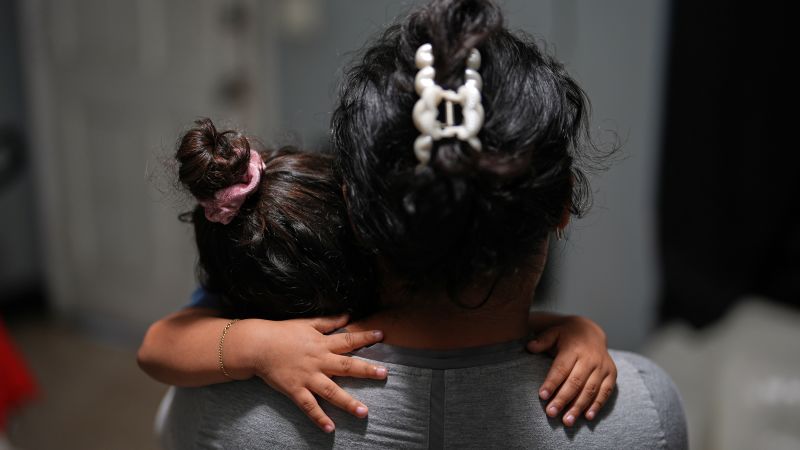
Pregnant asylum-seeker Yaoska, 32, comforts her two-year-old son who was not feeling well, inside the Miami-area motel room where she and her children are living after her husband was deported to Nicaragua, on Thursday, Nov. 13, 2025.
A quiet upheaval is unfolding in homes, schools, churches and workplaces across the United States, as families try to prepare for –– or avoid –– an encounter with immigration authorities
Some have left the United States after decades of building lives here. Others have considered giving up their unborn child for adoption, so the baby could have a better future
Parents are naming guardians for their children in case they are detained or deported, while others have stopped working, shopping or even leaving home, relying instead on neighbors and churches
The choices are deeply personal. Some are irreversible
Emma Confesor was pregnant with her fourth child when a question she had never imagined began keeping her awake: Would her baby have a better future raised by someone else?
Confesor, 39, emigrated from Puebla, Mexico, more than two decades ago. But uncertainty surrounding President Donald Trump’s effort to end birthright citizenship led her to consider placing her unborn child up for adoption
“It didn’t seem fair to me that the baby wouldn’t have citizenship,” Confesor said through tears. “I had considered adoption so the baby could have a better future.”
For weeks, the possibility consumed her. She said she struggled to sleep, afraid her child could be denied the future she believed every baby born in the United States should have
Confesor was not alone
In an ACLU lawsuit challenging Trump’s executive order, another pregnant woman said she became so desperate to ensure her son would be born a US citizen that she asked her doctor whether labor could be induced early so he would arrive before the policy could take effect. Her doctor advised against it
Then came the decision that changed everything
On June 30, the Supreme Court ruled that the 14th Amendment guarantees birthright citizenship, rejecting the administration’s effort to end automatic citizenship for children born on U.S. soil to many noncitizen parents
For Confesor, the fear that had dominated her pregnancy began to lift
“I feel relieved,” she said. “I kept thinking, ‘It’s not fair.’ I wasn’t sleeping well because I was worried this could affect me. Not just me, but so many mothers who are going to have babies here.”
While Confesor feared for her baby’s future, other parents were preparing for the possibility that they would not be there to raise their children who were born US citizens
In Maryland, a Salvadoran mother signed legal papers naming Father Vidal Rivas, the priest at her local church, as temporary guardian of her 7-year-old son if she and her husband were deported
“It’s not easy to sign a document where it feels like you’re handing your child over to someone else,” she told CNN affiliate Univision through tears
The uncertainty, she said, had taken a toll
“I keep thinking and thinking… I feel like my health has suffered because you just don’t know,” she said. “Honestly, I’ve stayed in my house, just praying that God’s will be done.”
She is part of a growing number of immigrant parents making contingency plans in case they are detained or deported
<img src="https://todaytrendnews7.com/wp-content/uploads/2026/08/gettyimages-2245203050.jpg" alt="Undocumented immigrant Andrea, 28, cries while standing with her children inside the Ecuadorian Consulate after learning the emergency passport application for her daughter Jazlyn, 6, would be delayed pending further documentation in Queens, New York on October 8, 2025.”>
Undocumented immigrant Andrea, 28, cries while standing with her children inside the Ecuadorian Consulate after learning the emergency passport application for her daughter Jazlyn, 6, would be delayed pending further documentation in Queens, New York on October 8, 2025.
Many families have already been forced into separation. A CNN investigation published last September found more than 100 US citizen children, from newborns to teenagers, had been left without their parents after immigration enforcement actions. Some were taken in by relatives, neighbors or family friends. Others entered foster care
At St. Matthew’s Episcopal Church in Hyattsville, Maryland, Rivas has been appointed standby legal guardian for at least 31 children whose parents fear they could be detained or deported
“Many of these parents have no other relatives in the country,” Rivas said. “Some want their children to stay here. I would become legally responsible for them so they can continue going to school and have what they need. Other parents hope their children can finish high school before they are sent to reunite with them.”
Rivas said he will serve as a guardian for as long as families need him. “It’s truly as if they were your own children,” he said
For others, departure has become the only choice that still feels like their own
Abdiel and Adilene Domínguez had built nearly their entire lives in Minnesota. Abdiel arrived from Mexico at six, Adilene as an infant, and both were protected under Deferred Action for Childhood Arrivals, or DACA, which grants certain immigrants brought to the US as children temporary protection from deportation and authorization to work, but no permanent legal status
They married, raised four children, bought a home and opened a church in Minneapolis
But as immigration enforcement increased, they told CNN they became afraid to go to stores or send their children to school. Abdiel also said he was told his commercial driver’s license would be canceled
Instead of waiting to see what might happen, they sold their home, vehicles and belongings and left for Mexico
Seven months later, they were living with Abdiel’s mother in Morelos, where the children were struggling with Spanish and enrolling in school, and their parents were trying to adjust to a country that no longer felt familiar
“I don’t know anything about Mexico,” Adilene told CNN. “Everything I know is Minnesota. I’m in shock.”
The Dominguezes left on their own, without using a federal program. But the pressure they described mirrors a broader Trump administration strategy encouraging immigrants to depart voluntarily
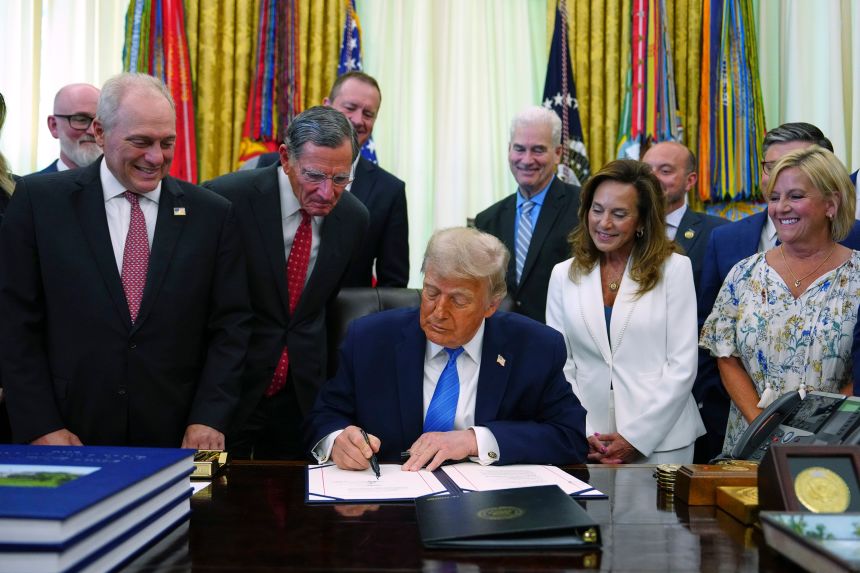
President Donald Trump signs a bill funding immigration enforcement in the Oval Office of the White House, Wednesday, June 10.
Project Homecoming, a $915 million initiative, offers free flights and stipends of up to $2,600 to immigrants who leave through the CBP Home app. An internal DHS document reviewed by CNN in March showed nearly 72,000 people had departed through the program; more than half were already in ICE detention when they enrolled
More than 72,000 immigration court cases also ended in voluntary departure so far in this fiscal year, compared with more than 35,000 the previous year
The consequences are also reshaping the lives of US citizens in mixed-status families
In Pittsburgh, CNN followed Julio Mendoza, an undocumented Mexican immigrant who had lived in the United States since he was 11, as he prepared to leave with his American wife, Sasha, and their three US-born children
Sasha said they feared Julio could be detained one day and simply not come home. Rather than risk that outcome, the entire family chose to move to Mexico together
“Everything we do, we do together,” Julio told CNN
For families who stay, the disruption often unfolds quietly, in the routines they begin to abandon
Across the country, immigrants have stayed home from work, kept children out of school and avoided stores, churches and other places that once anchored daily life
Jacobita Cortes, a United Methodist pastor in Chicago, said that fear has changed the rhythms of her community. “They’re afraid to go to the store, to the supermarket,” Cortes told CNN. “Where do our people go? To the supermarkets where you buy your tortillas, your meat; to the church where you go to thank God.”
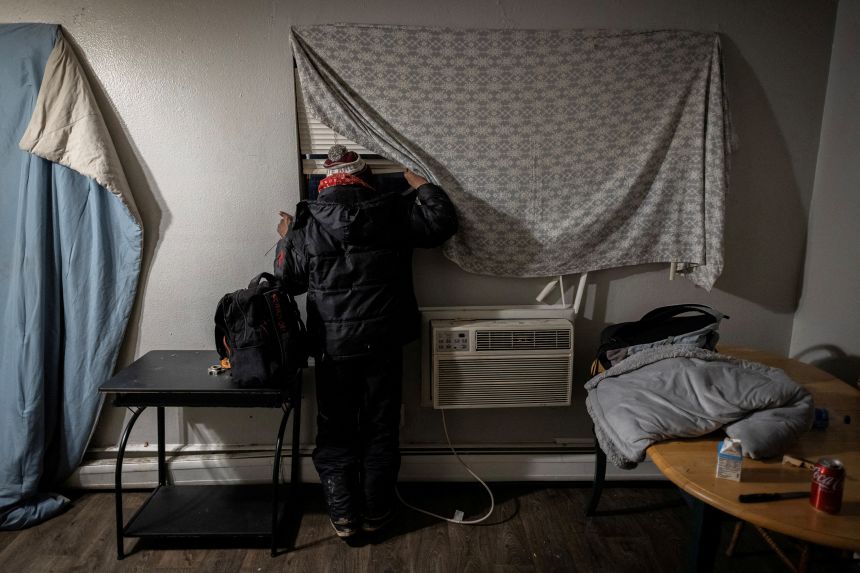
With his bag packed, a Venezuelan man peeks out the window of his apartment looking for any signs of federal agents after hearing reports that U.S. Immigration and Customs Enforcement will be coming to detain immigrants for deportation in Aurora, Colorado, January 30, 2025.
Some churches, she said, have moved services online, while congregations are helping families who are too afraid to leave home order groceries or arrange school pickups through neighbors and volunteers
“If someone needs somebody to go do their shopping, they only have to pick up the phone and call,” Cortes said. For parents who are afraid, she added, “find someone who can help, a neighbor or someone who can pick up the children from school.”
The same pattern has surfaced elsewhere. In Minneapolis and New Orleans, CNN found once-bustling shops and restaurants growing quiet during federal immigration operations as some immigrants avoided work and parents kept children home from school
In Brooklyn’s Little Haiti, normally busy streets and businesses have grown quiet after the Trump administration ended Temporary Protected Status for Haitians
Community leaders also warned of ripple effects in hospitals, nursing homes and home health care, where many Haitian immigrants work
For some immigrants, the fear is no longer confined to the possibility of deportation. It is reshaping what it means to live a life in the United States
CNN’s Carolina Peguero, Priscilla Alvarez, Zoe Sottile, Blake Ellis , Melanie Hicken, Anna-Maja Rappard and Kyung Lah contributed to this report
See all topics
