

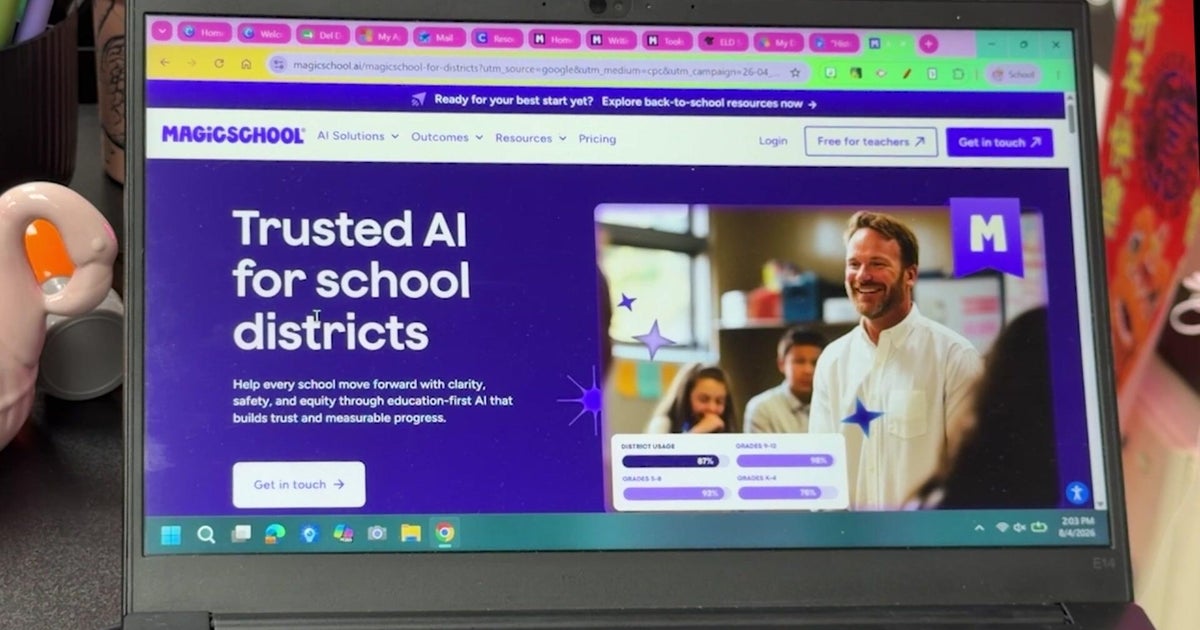
Artificial intelligence is becoming part of the classroom at San Juan Unified, where teachers and students are learning how to use the technology.
At Del Dayo Elementary, teacher Kathleen Record is heading into another school year with AI in her classroom.
“I’m at that point where I’m like, okay, what can I all do here, you know, and how can I use this with my group of students?” Record said
Record helped pilot MagicSchool AI during the 2024-2025 school year
Now, as the San Juan Unified School District enters its second year making the platform available to students in second grade and above, Record is preparing for her third year using the technology in her classroom
But for Record, using AI isn’t about finding a way for technology to do the work for students
“It’s our role as educators to make sure our students know how to use AI,” she said
Record builds the lesson herself, adding the prompt, rubric and expectations
From there, AI can review student work against those standards
MagicSchool CEO Adeel Khan says the platform is designed to act as a coach rather than a shortcut
“If you asked our platform to help you write an essay on ‘The Odyssey,’ it wouldn’t write the essay for you,” Khan said. “Instead, it would help you brainstorm. It would ask questions about the topic and your teacher’s requirements.”
The idea is to keep students doing the thinking while using AI as another tool to help them through the learning process
As AI becomes more common in classrooms, researchers say the conversation is shifting from simply teaching students how to use the technology to helping them understand it
Researchers at UC Davis say students are curious about what AI means for their lives, but they’re also concerned about it
“Our work with students shows that they’re super interested in what these technologies are doing in their lives, and they’re also worried,” said Jennifer Higgs, a UC Davis professor
Higgs says that doesn’t necessarily mean students are simply looking for a way to avoid doing their homework
Instead, they’re trying to understand a technology that is increasingly becoming part of their everyday lives. That means AI literacy is about more than knowing how to write a good prompt
It’s also about understanding the human decisions, assumptions and values built into the technology and knowing when to question what AI produces
For Record, that’s the lesson she hopes her students remember
“AI is not very intelligent after all,” she said. “They’re only as intelligent as the information that’s put into it throughout time.”
Record says understanding that limitation is crucial, especially as students encounter AI in more parts of their lives
Her philosophy is simple: AI can be part of the learning process, but it shouldn’t replace the human thinking behind it
“Every AI interaction needs to start with a human interaction and end with a human interaction,” Record said
