

If you buy something through a link in this article, we may earn commission
Steffi Cao
Thu, August 13, 2026 at 12:00 PM UTC
Zoey, 20, wakes up at 5 a.m. every morning. Breakfast is satiating and healthy — eggs, potatoes, fruit — followed by Bible study, stretching, a gym session, some classwork and a commute to campus. She’s a rising junior at DePaul University studying film, and by the time she reaches Chicago’s Loop for class at 1 p.m., she’s well prepared for the hours-long filming or editing sessions required for her major
“I always stop at Starbucks,” she tells me. “I don’t like coffee and I don’t like matcha, so I get a pink drink. You have to do light ice with two pumps of vanilla, three if you’re really feeling sugary. But you have to add the vanilla, so it’s not just, like, regular, or the strawberry acai. But you don’t do lemonade.”
American college life has historically been defined by debauchery. It’s the first step into adulthood before anyone knows what they’re really doing, so that used to mean regularly staying up late, drinking heavily and somehow surviving four years with minimal to no vegetable intake. Club, bus, another club, no sleep. “I didn’t drink water the entire time,” comedian John Mulaney famously joked about his collegiate, pre-Instagram experience.
But now, with the ubiquity of short-form video and the vast creator economy, a new archetype of college student is on the rise. One who doesn’t go out all night, sleep in all day or make bad decisions for the love of the game. They’re that girl, locked in and eternally glowing up — they want to be what’s been beamed to them through their feeds since they were teenagers. Wellness is newfound currency for the young adult, and alongside it comes an ironclad starter pack of practices and products.
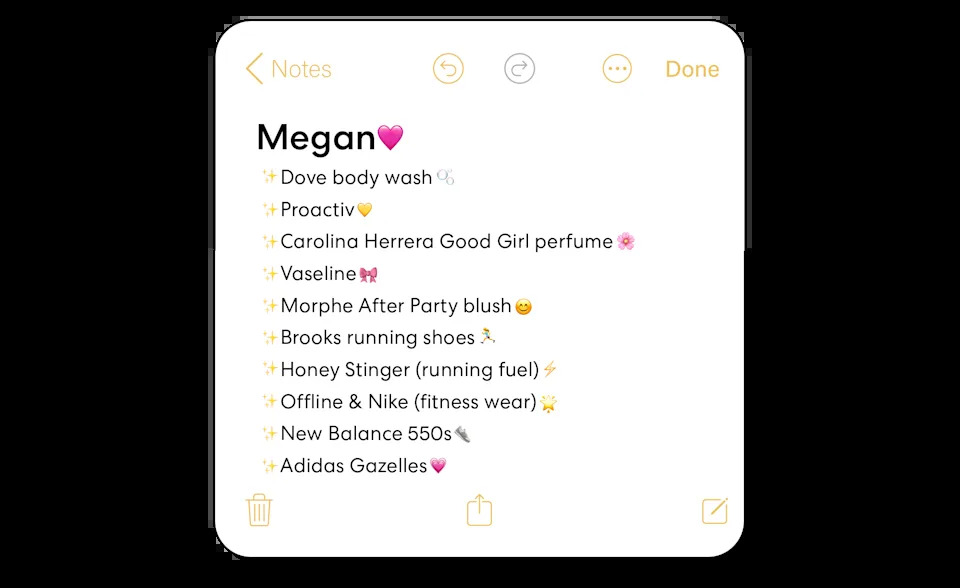
Cami, 22, is a senior studying graphic design and communications at Northeastern University. She says she prefers a slow morning routine to ease into the day. Her student apartment is modestly but tastefully decorated, with bamboo Roman blinds and small poufs and a small pink CD player hung on the wall
She always makes sure to brew a cup of black pour-over coffee in the morning first, do her skin care routine and watch some YouTube or put on a podcast as she gets dressed and prepares breakfast — either avocado or tomato toast, oatmeal or a yogurt bowl dressed with fruit and granola. Breakfast must be healthy, and it must be filling.
“I like to get ready for class, and this past semester I tried not to wear sweats at all and look put together just because it made me feel like I could get my day started right,” she explains. “I probably do my makeup three to five times a week.”
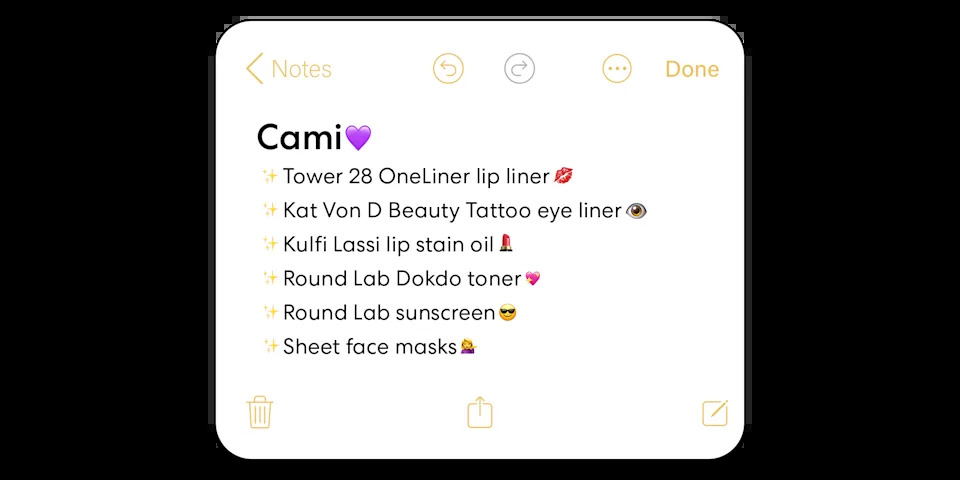
Megan, 20, is studying information analysis at the University of Michigan. She too tries to put together some kind of outfit for class, no matter what. She religiously takes care of her skin and spritzes on a bit of perfume before leaving the house. “I try to look pretty nice all the time because you never know who you’ll run across or meet,” Megan admits. “I rarely wear sweats to class or hoodies. I try to wear at least jeans and a nice top.”
The curated, meticulous way these college kids are moving through the world is inextricably linked to the fact that they’ve been watching content of real, employed adults since they’ve been in grade school. They’re also accustomed to filming, being filmed and in general, constantly being watched on social media. “I’ve thought about being perceived probably since I was in middle school,” Megan says. “Just the general feeling that other people can see me, all the time. It’s been a thing for a while, but I try to work on it like, it’s always in my mind.”

College students are wellness girlies now, eating protein for breakfast and prioritizing their fitness. Brooks running shoes are on 20-year-old Megan’s wish list
The decline of tween-specific media means that children increasingly join social platforms and consume the same content being marketed to people in their thirties. The glorified, grimy “college experience” was never really a part of that online ecosystem and therefore didn’t become this generation’s de facto understanding of college life. In a new survey from ClassPass, the fitness booking platform shared with Yahoo that workout reservations on Fridays and Saturdays between 7 and 11 p.m. have more than doubled in 2025 compared to 2023, primarily driven by behavior from its younger users ages 18 to 34. The same data also showed that 53% of young people chose booking a workout over drinks or nightlife in the past year, compared with 42% of users 35 and older.
Zoey started going to the gym regularly in high school, inspired by the influencers in their late twenties that she saw on her feed. “Wellness started for me in high school, so it kind of carried over [into college],” Zoey says. “At the time, all the content creators I watched were very fitness-heavy, but they were not in my age range. So I think that’s also why I wasn’t led to do the partying thing, because [the creators] were all like 26, 27 or 28 — like they were parents or married. So that’s why my life is very much: wake up early, go to sleep early, work out, focus on that type of stuff. I think that definitely affected it.”
Wellness and discipline have even infiltrated the way some college students socialize. On nights out, “a lot of people drink vodka cran, or vodka soda or tequila soda,” Cami says. “I feel like for going out specifically, it’s a lot of whatever can get you drunk fastest and low-calorie.” And getting into drunk shenanigans on a Friday night isn’t necessarily a given. Megan and her friends organize weekly movie nights, while Cami prefers hosting small, themed at-home gatherings. Megan, Cami and Zoey all feel as though they’re largely in the minority of campus culture, where nightlife reigns supreme, but they don’t necessarily feel out of place for their wellness-focused lifestyles.
Even if it’s not something that they can afford now, the women I spoke to all had dreams of what their lives would look like when they started making big-girl money. Zoey says she’s excited to buy expensive Pilates memberships or workout classes. “I just love the, like, wake up early, drive to your class, you’re in your cute workout set, and it’s some crazy class that’s like $70, and it probably doesn’t really make a difference, but it’s just like the vibe of it,” she says. “Workout classes and a car. Playing your music, with your drink, in your outfit after a workout class, that just gives grown-up.”
The platforms that helped shape these adult lifestyle aspirations remain deeply embedded in their lives. Megan was on Musical.ly before it merged with TikTok and joined Instagram on her 14th birthday. Her daily screen time typically ranges between seven to nine hours. “I tried to change this habit, but I always go on TikTok and scroll for a little bit before bed,” she admits
Workout classes and a car. Playing your music, with your drink, in your outfit after a workout class, that just gives grown-up
Many college students seem aware, nevertheless, of the ways they’re being shaped by their algorithms — and they don’t always like what they see. “A big help has definitely been deleting Instagram from my phone and only scrolling occasionally on my laptop or iPad,” Cami says. “I think a big portion of my friends are doing the same, and I think there is finally a movement among young people that we are wasting so much time on social media curating some distorted image of ourselves and less of that ‘haha I’m addicted to my phone, oh well’ mentality. When you are actually living in real life, you realize none of that matters and those ‘perceptions’ from others are only your own perceptions.”
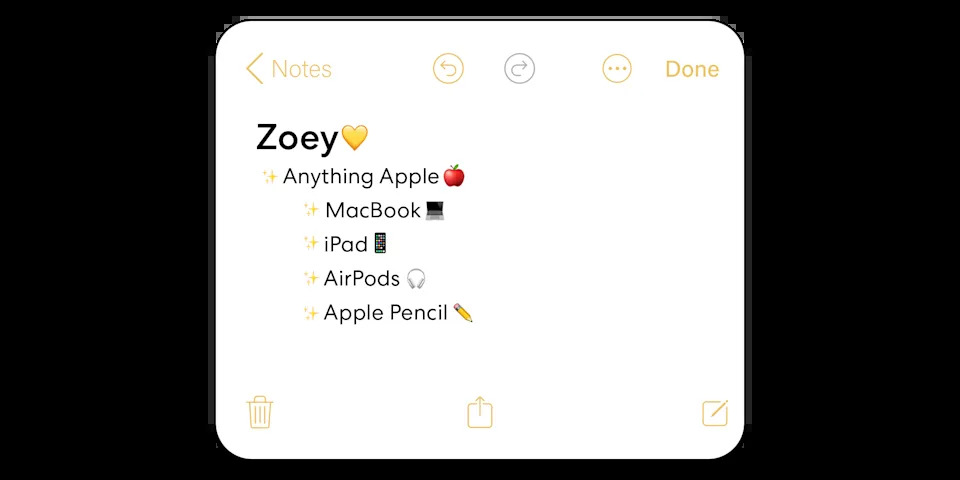
In a sea of infinite scroll content and rapidly cycling trends, the rarest form of currency is singularity. Maybe that’s why customization and personalization are currently so en vogue, whether through the doctored Starbucks drink that Zoey buys or the specialty bag charms that hang off backpacks and purses. There’s also the surging popularity of analog accessories and activities, with young people, ironically, showing off their phone-free hobbies and projects on social media.
“I like to think that the new ‘trend’ is to ignore trends,” Cami says. “I feel like many people are becoming more interested in finding their personal style, though maybe this is just who I hang out with and the media I consume.”
Still, even with this desire for individuality blossoming into their worldview, the college student starter pack is still all about what they think adulthood is supposedto look like. They still want the matching set, the expensive workout classes, the productive workday that starts early and ends with some kind of self-care. Cami covets a Dyson Airwrap and SoulCycle classes (an unlimited membership, not just the ClassPass credits she and her friend use). She hopes to get her hair dyed properly in a salon — not out of a box. “Even though the ‘clean girl’ thing seems kind of old now, people still just want to be Kendall Jenner,” Cami says.
Zoey isn’t really sure what might happen in the future with her career. She just knows she wants the adult lifestyle she’s seen everywhere and all that it signifies for her. “You want to feel like that girl,” she says. “You want to feel like yes, I did school, I’m educated, now I can like wake up early and try all the things I’ve been wanting to try.“
What else are college students obsessed with as they head back to school? Check out the list below — and find out what preschoolers, elementary schoolers, tweens and high schoolstudents are after too
