

The emerging paradox of Northern Ireland’s AI story
11 minutes ago

Getty
In a converted aircraft hangar on the shores of Lough Foyle, local workers are helping to power the Artificial Intelligence (AI) revolution
They are engineers for TES – a firm which has recently been bought by Legrand, one of France’s largest industrial businesses
Legrand has acquired TES’s expertise in designing and producing the electrical systems needed by AI data centres
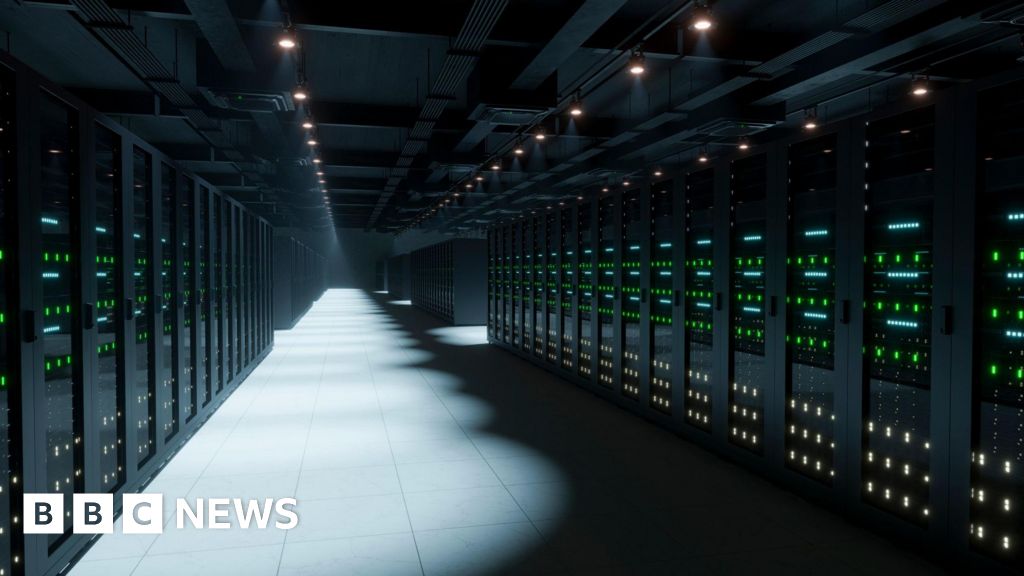
These data centres are effectively warehouses full of computer servers which are central to the operations of AI businesses
When you use ChatGPT, Gemini or Copilot the data centres are where the computing action really happens
These facilities require massive, uninterrupted power supply, not only to run the servers, but to fuel the sophisticated systems that keep them cool
Companies like Microsoft, Google and OpenAI have been investing billions of pounds in centres like these as they compete to create the fastest and most useful AI services
That means TES is facing huge demand for its products
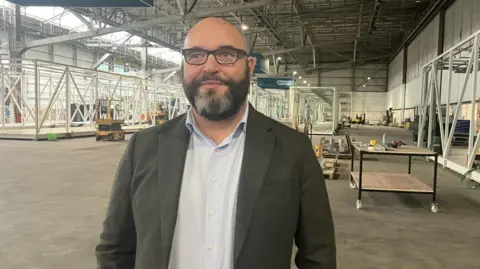
“Astronomical,” is how the managing mirector Michael Beagan describes the growth in the sector and the factory he runs in Ballykelly
“When we started on this site four years ago there was basically a team of two. We’re now at about 175 employees and growing.”
The company is developing an apprenticeship scheme with the North West Regional College in nearby Limavady to create a pipeline of skilled workers
There is demand for those skills in other local businesses which also supply data centres
AI jobs across the island of Ireland
Vertiv this week announced it is creating 300 jobs at its facility across the border in Letterkenny, County Donegal
It is a US company which set up in Ireland five years ago when it bought E&I Engineering from the Londonderry businessman Philip O’Doherty, making him one of the wealthiest people in Ireland
Seagate, another US-owned manufacturing business in the north west, is also reaping the benefits of AI investment
It makes hard disc drives which AI companies need to store the massive amounts of data which underpin their services
Its products are effectively sold out up until 2028 bringing some security to its 1,500-strong Derry workforce which went through a round of redundancies in 2024
Jobs under threat
So while the local operations producing the physical infrastructure of the AI boom are doing a roaring trade, other important parts of the NI economy look vulnerable
The case of the law firm Baker McKenzie helps illustrate the challenge
It is a big US company which, in 2014, chose Belfast as a service centre, providing business and professional support to its fee-earning lawyers around the globe
The centre has about 500 staff and is typical of the sort of back-office operation which has driven jobs and growth in the NI economy over the last decade
In February, the company announced it was embarking on a major AI-focused review that could result in the loss of up to 1,000 support jobs across it global operations
It said: “This review was aimed at rethinking the ways in which we work, including through our use of AI, introducing efficiencies, and investing in those roles that best serve our clients’ needs.”
In Belfast that puts about 50 jobs under threat
There is potentially a similar story at the US cybersecurity firm Rapid7 which has more than 500 people in its Belfast engineering centre
This week it said it is cutting about 12% of jobs across its global operations so it can redirect re
It is not clear how many jobs are under threat locally but 12% would equate to about 60 roles
In the context of record NI private sector employment of 620,000 these are small numbers, but it suggests a direction of travel for these sorts of “knowledge processing” jobs
The economist, Dr Lisa Wilson, who specialises in labour markets, has been estimating the impacts of automation in a series of studies since 2019
Her work covers not just AI but other technologies like robotics
Her initial study suggested that that about 7% or 60,000 jobs in NI were at high risk of being lost to automation technologies
A further 58% were estimated as being at risk of substantial change to the tasks involved in their job over the medium term
She is due to update that research soon and has emphasised the need for a nuanced discussion about “what jobs are going to stay, what jobs are going to be created and how are they going to compare in terms of quality to the jobs that are lost”
Helping local businesses navigate that transition is the focus of the Artificial Intelligence Collaboration Centre (AICC), a joint initiative by Ulster University and Queen’s University Belfast designed to equip businesses and workers with practical AI skills
Its director David Crozier says they have worked with “every type of company you could imagine”, not just technology focused software start-ups
These have included manufacturers trying to make better use of sensor data and a graphic design firm trying to speed up its workflow

Entrepreneurs Oonagh O’Reilly and Marie-Claire McGreevy have also worked with the AICC as they develop their business
They have created Mel, an AI-powered business development platform designed to help accountants and lawyers get better at selling their services and developing new clients
Oonagh says that AI creates a whole new range of opportunities to start and scale businesses in Northern Ireland
For McGreevy, collaborating with the AICC helped them understand the nuances of deploying AI safely and sustainably
“We had our eyes opened to the world of ‘tokenomics’—understanding how much it’s going to cost in the long term to deploy AI within our system, and how to use it strategically.”
The emerging paradox of Northern Ireland’s AI story is becoming clear
The hardware builders are riding a record-breaking high, but the broader professional services workforce must adapt as AI evolves from a distant technology into an everyday workplace reality
A spokesperson for the Department for the Economy said AI “presents significant opportunities” for the economy
“We are working with partners across education, industry and government to support AI capability through a range of initiatives including the £16.3 million Artificial Intelligence Collaboration Centre, Assured Skills Academies and ensuring wider skills programmes remain responsive to technological change,” they added
“An AI advisory panel has been established by the economy minister and the department is “working closely with the Office of AI and Digital in The Executive Office on the development of the public sector AI Strategy, which is currently out for consultation”
Donegal engineering firm to be sold for £1.4bn
IT firm Kainos to create almost 350 jobs
Gallery defends decision to use AI images in exhibition
NI economy
Artificial intelligence
Northern Ireland
Belfast
Londonderry-Derry
County Donegal
Technology of Business
