

If you grew up on Scooby-Doo, Inspector Gadget or watched Atreyu desperately try to save Artax from the Swamp of Sadness in The NeverEnding Story, adulthood seemed destined to require one very specific survival skill: escaping ground that was trying to swallow you whole
The good news is Hollywood oversold quicksand. Scientists say it cannot suck a person completely beneath the surface. The bad news is that quicksand is real, and once you are trapped, weather and water can turn an inconvenient patch of sand into a genuine emergency
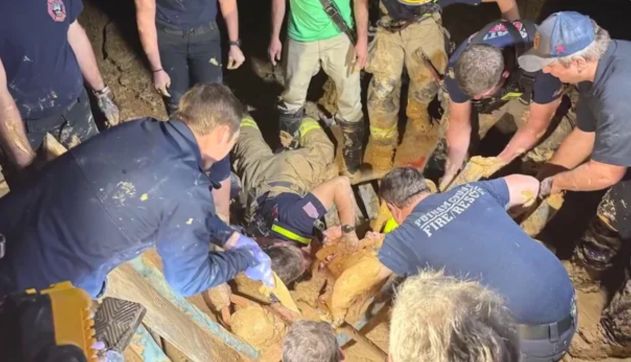
That became painfully real for an experienced hiker at Arches National Park in December 2025. Austin Dirks stepped into what looked like shallow water and sank first to his ankle, then to his knee, where his leg became locked in place. Temperatures dropped into the 20s as he waited hours for rescuers.”It felt like I had stepped into concrete, and then it hardened around my leg,” Dirks told CNN about the rescue
Advertisement
He shared his close call in a Reddit post to warn others about the hazards that can form in desert environments
“If nothing else, let this stand as a reminder to others. Quicksand is real,” he wrote. “It does not care how experienced you are. It only cares that you stepped in the wrong place at the wrong time.”
What is quicksand?
Quicksand isn’t a special kind of sand. It forms when loose sand, silt or clay becomes saturated with enough water that the grains can no longer support weight normally
When disturbed, the structure can collapse and temporarily behave more like a liquid. Researchers found that quicksand first liquefies under stress and then becomes densely packed around whatever is trapped inside it
Advertisement
Fine sand, silt and clay can become unstable following storms or rapid water-level changes, according to the National Park Service. Water moving through sediment can leave ground that looks solid until someone steps onto it
At Canyonlands National Park in Utah, officials warn that some washes can develop mud and quicksand after heavy rain. In other words, a trail or wash that was firm before a storm may behave very differently afterward
Can quicksand actually swallow you?
No. This is where Hollywood owes several generations an apology. Laboratory experiments found that humans are too buoyant to disappear completely into ordinary water-based quicksand. A person can sink deeply enough to become trapped, but eventually buoyancy wins
Advertisement
The problem is getting back out
Once disturbed, quicksand settles; sediment can pack tightly around a trapped leg. Simply yanking upward can require enormous force, which is why quicksand is much better at holding you than swallowing you
And once you cannot move, whatever the weather or water is doing around you suddenly matters a lot more
The real danger may be the weather
A person trapped near a coastline or tidal flat can face rising water. In a desert canyon, thunderstorms can bring flash flooding. Someone stuck for hours can also become vulnerable to dangerous heat or cold. That combination is especially important in the Southwest, where thunderstorms can produce heavy rain and sudden flooding, sometimes from storms miles away
Advertisement
The Arches rescue showed the opposite temperature problem. Dirks was not disappearing beneath the sand, but he was stuck in freezing water as temperatures fell into the 20s
So quicksand itself may not kill you the way it does in movies. Being unable to move while the environment changes around you is the real threat
How do you escape quicksand?
First: Do not reenact the cartoon
The National Park Service recommends staying calm and moving slowly. Lean back to spread your weight across a larger area instead of concentrating it beneath your feet
Slowly work one leg upward at a time. Gentle movement can allow water back into the sediment around your legs and loosen its grip
Advertisement
Once your legs begin to come free, remain leaned back and slowly work toward firmer ground rather than trying to stand immediately. A trekking pole or sturdy branch can provide leverage, and anyone unable to free themselves should call for help
Thrashing is exactly what not to do. Sudden movements can disturb the sediment further, waste energy and make escape more difficult
So no, quicksand probably was never going to become the routine adult hazard Saturday morning TV led us to expect
But it is real. And if you hike through washes, canyons, riverbanks or shorelines, the lesson turns out to be less cinematic: Always check the weather, pay attention to recent rain and changing water levels, and be suspicious of ground that suddenly feels much softer than it looks
How to make a quicksand-like mixture at home
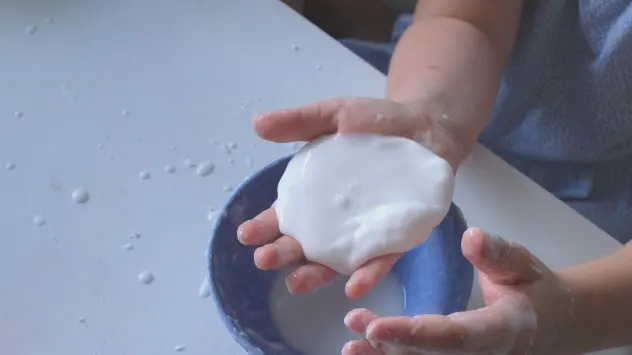
You can get a feel for some of the strange physics behind quicksand with two ingredients: cornstarch and water
Advertisement
Mix about two parts cornstarch with one part water to make oobleck, a non-Newtonian fluid that changes how it behaves depending on how much force you apply. Press or hit it quickly, and it can feel almost solid. Move your fingers through it slowly, and it flows more like a liquid
It is not actual quicksand, and the physics are different. Real quicksand can liquefy when disturbed before collapsing around an object, while cornstarch and water becomes more resistant under sudden force. But both are wonderfully weird reminders that some mixtures refuse to behave like an ordinary solid or liquid
