

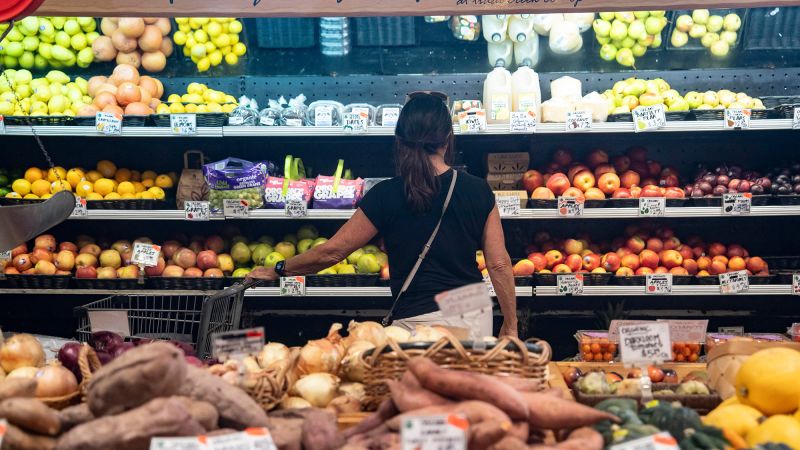
Economists expect that US annual inflation eased to 3.4% in July.
See all topics
Annual inflation slowed for the second month in a row, cooling to 3.4% in July as prices at the pump delivered less of a bite, according to new data released Wednesday by the Bureau of Labor Statistics
The latest Consumer Price Index showed that prices rose 0.1% on a monthly basis, in line with economists’ expectations
The Iran war and its resulting energy shock and high uncertainty sent inflation to a three-year high earlier this year. But energy prices and inflation have eased as peace talks progressed in recent weeks – although negotiations remain bumpy
And whileUS inflation is moving in a welcome direction, some cost-of-living concerns persist: The latest jobs report showed that Americans’ pay gains, at 3.2%, aren’t keeping up with the pace of price hikes
“The economy isn’t out of the woods from the threat that inflation poses for everyday Americans, but price pressures aren’t hot to the touch either,” Christopher Rupkey, chief economist at FwdBonds, wrote in a note on Wednesday
The slowdown in price increases could also ease pressure on the Federal Reserve to hike interest rates. Chairman Kevin Warsh has said the bank is committed to bringing down inflation, which has run above the 2% target for years
Gas prices fell 2.9% in July from the month before, helping to keep a lid on inflation
One of the biggest reasons for the more temperate July CPI readings was the continued slowing of price hikes in housing (captured in the weighty and broad “shelter” category). The shelter index, which accounts for about one-third of the overall CPI basket, rose just 0.1% in July as prices fell at hotels, motels and other away-from-home accommodations
Food inflation slowed as well: Grocery prices fell by 0.1% in July and are running below overall annual inflation at 2.7%
Energy prices (and gas prices with them) have been especially volatile since the Middle East war disrupted the critical shipping passageway of the Strait of Hormuz, so “core” gauges become an even more important window into the trajectory of inflation
Core CPI, which strips out food and energy costs, rose 0.2%, bringing the annual rate of inflation to 2.5%. That matches a rate last seen in January and February of this year (which at the time marked a nearly five-year low)
The slowdown in price increases could also ease pressure on the Federal Reserve to hike interest rates. Chairman Kevin Warsh has said the bank is committed to bringing down inflation, which has run above the 2% target for years
This story is developing and will be updated
See all topics
