

Home and Garden
Dakota Gardener: Unwelcome garden visitors
Early scouting, persistence key to winning beetle battle
By Carrie KnutsonAugust 12, 2026
3 min read
Submitted Photo
Submitted Photo
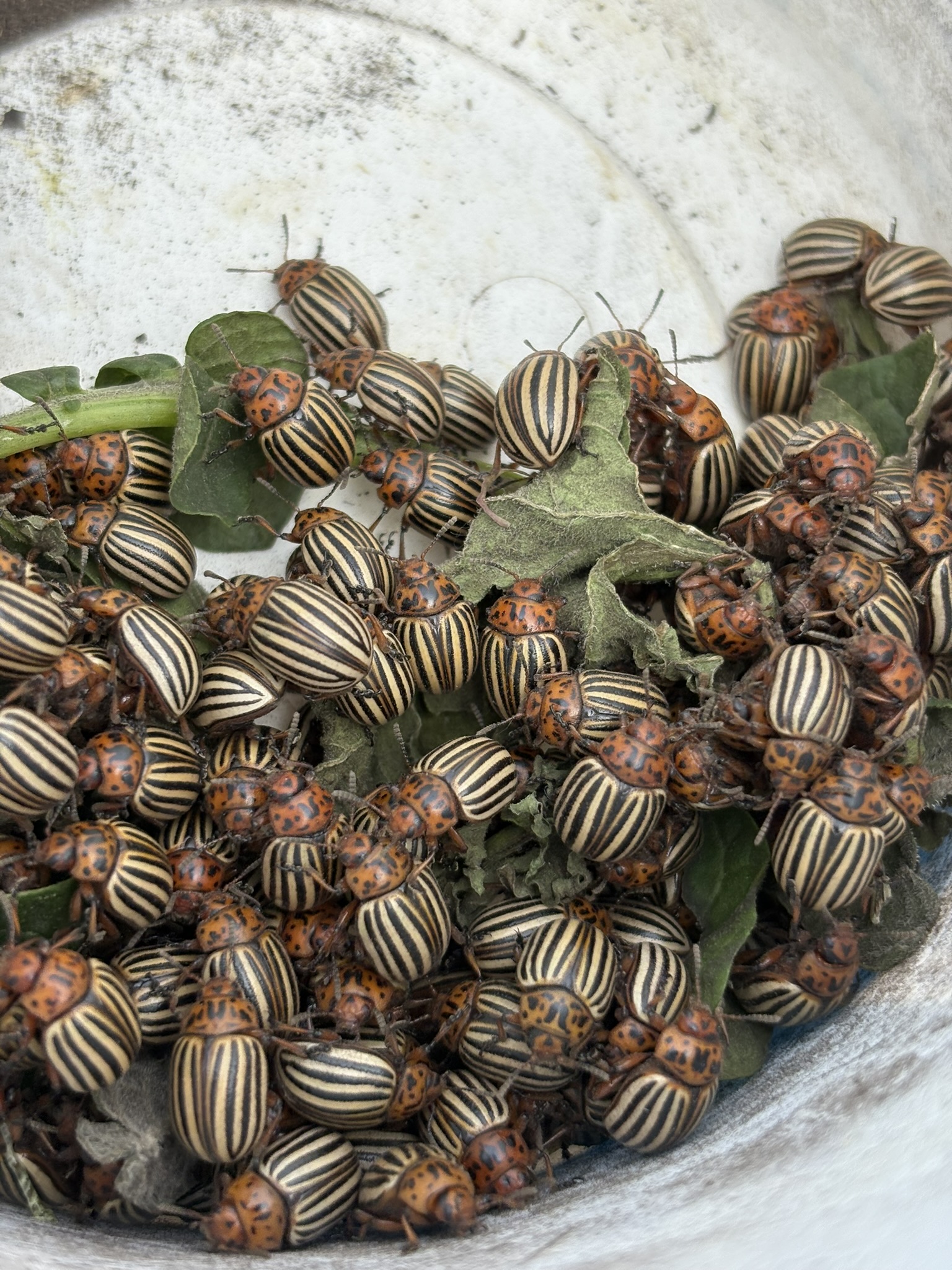
Colorado potato beetles are notorious for developing resistance to many insecticides. (NDSU photo)
Trending
My potatoes probably won’t grow heart-shaped tubers for me this year. In fact, if they could talk, I am sure they would be yelling at me. The reason: a Colorado potato beetle invasion
Starting on June 22, I picked off adult beetles every other day and crushed egg masses until there were hardly any adults left on the plants
I thought I had the upper hand. I was too confident and was soon humbled. Early in July, the larvae population exploded. They had a great time eating my potato plants. Unlike the adults, the larvae feed almost constantly and can strip a potato plant of its leaves surprisingly quickly. As a result, some of my plants were defoliated in a day or two
We used insecticides, and the results were mixed. We ended up hand-picking many of the larger larvae. “We” means my husband and me. This turned into a family battle. We have been checking and picking off the insects every day or every other day for a couple of weeks
Let’s discuss a few key points of the Colorado potato beetle and some management strategies so that you don’t struggle next year
Potato beetles overwinter underground in gardens, shelterbelts, fields and field edges. Adults feed and mate shortly after they emerge. Females lay clusters of bright orange eggs on the underside of the leaves. Females can lay around 350 eggs during their life
Eggs will hatch within two weeks, depending on the temperatures. Larvae will move throughout the plants, eating a potato leaf buffet as they grow. Larvae go through four stages of development. Young larvae are red, while older, mature larvae are pale pink. Mature larvae drop to the ground, burrow into the soil, pupate and emerge as adult beetles
Monitor potatoes for beetles before they flower. I should have started at least a week or two earlier. Potato plants can tolerate up to 30% defoliation before flowering. After flowering, when the tubers are bulking, plants can tolerate only about 10% defoliation
Colorado potato beetles are notorious for developing resistance to many insecticides, making scouting and hand-picking especially important. You can remove or crush the insects or drop them in a container of soapy water
Typically, insecticides work best on young larvae and do not control eggs or pupae. Planting short-season varieties and using row covers before beetles emerge are other options
Keep after the insects so there are fewer that overwinter around your garden. In the fall, clean up potato plants and other host plant residues (eggplant, peppers and tomatoes) and keep weeds (nightshades) under control to make it harder for the beetles to overwinter
The lesson of this story? Start scouting earlier, stay persistent and keep crushing those beetles. Here’s to fresh fried potatoes. Happy gardening!
(Carrie Knutson is a horticulture agent at North Dakota State University Extension in Grand Forks County.)
