

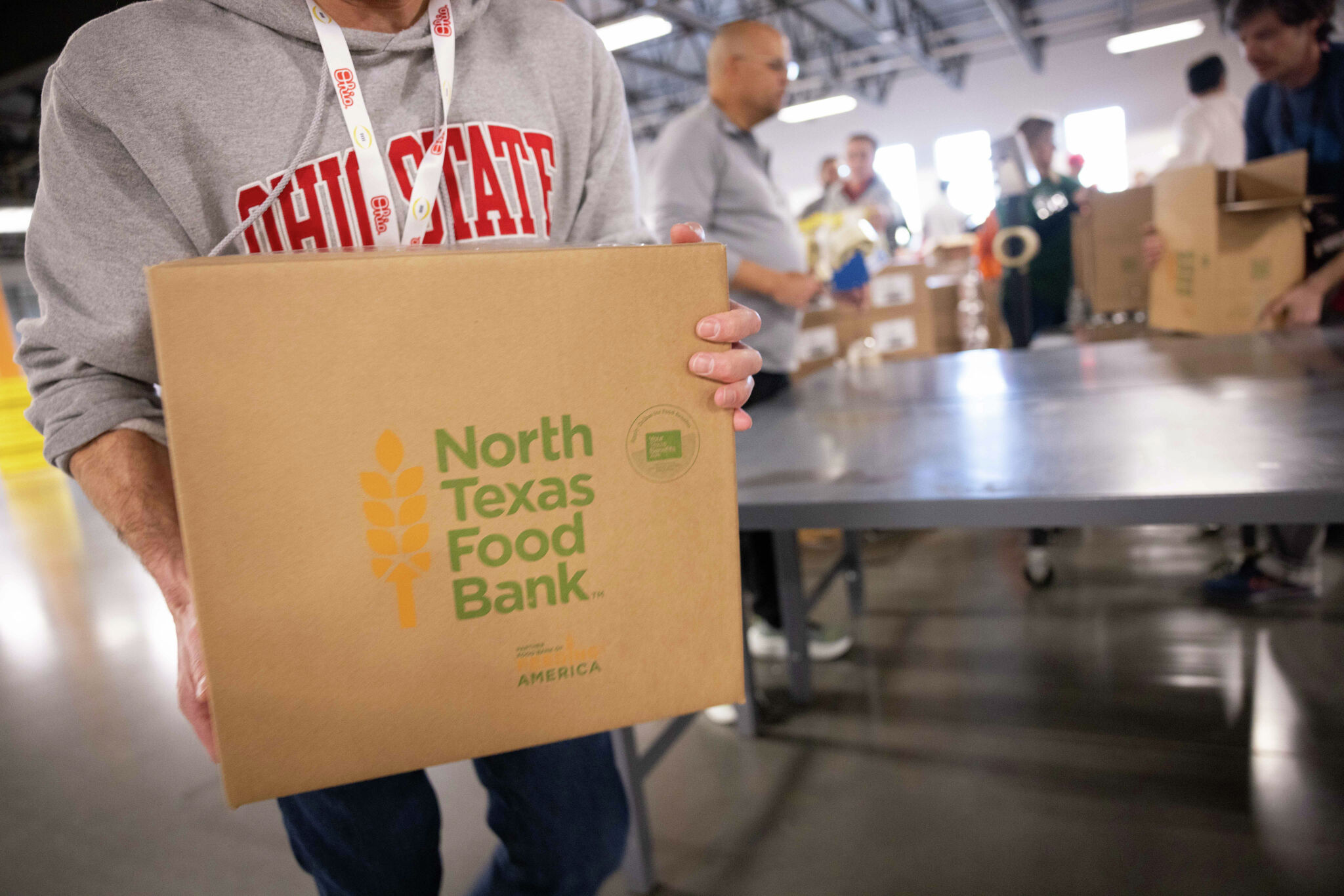
More than 6 millionTexans experienced hunger in 2024, the most of any state in the nation, according to the latest Feeding America report that tracks food insecurity – and it’s Texas’ third year topping the list.The latest Map the Meal Gap report revealsTexas trails every other state in food security, a trend that local experts say is worsening with each year. Across the 25 counties served by the North Texas Food Bank and Tarrant Area Food Bank, nearly 1.4 million people face food insecurity, including more than 500,000 children. While North Texas continues to grow rapidly, food bank leaders say population growth alone does not explain the increase.
North Texas Food Bank President and CEO Trisha Cunningham said the latest report reflects what food banks have been seeing for months.Produced annually by Feeding America, the Map the Meal Gap report estimates food insecurity nationwide and helps food banks identify where needs are greatest, plan services and distribute food more effectively
Article continues below this ad
“There are no surprises in this report for us because we’ve been feeding these needs,” Cunningham said. “But what surprised me was the size of the increase. It went up by about 500,000 people from last year.”Over the past two years, food insecurity has risen by more than 35% in the Tarrant Area Food Bank’s service area, compared with roughly 10% population growth President and CEO of Tarrant Area Food Bank.
Butner said the differences suggest rising costs, not population growth alone, are driving the increase.
Working families are increasingly seeking help
Food bank leaders say they have long served working families, but the need is growing as rising living costs push more employed households to seek assistance.“The majority of the neighbors that we support are employed,” Butner said. “They’re working in jobs that don’t provide a living wage.”According to the report, about 54% of people facing hunger in the Dallas-Fort Worth area earn too much to qualify for SNAP. As the cost of housing, groceries and other essentials continues to rise faster than wages, food banks say they are serving more working families than before.
Related:
‘Everyone is worried’: Dallas SNAP recipients navigate uncertainty, dwindling funds“It means you’re not getting three meals a day, seven days a week,” Butner said. “Some people are getting one meal a day. Others are getting two meals a day. But they’re not getting three meals every day.”Cunningham said many families are working multiple jobs, but wages have failed to keep pace with housing, groceries, utilities and transportation costs.“The cost of living has gone up higher than their paychecks,” she said. “Families are having to decide whether to pay rent, medical bills or buy food.”
Article continues below this ad
Children remain among the hardest hit
Children account for 36% of everyone facing hunger in the North Texas region, according to the report.Cunningham said summer is especially challenging because many children lose access to free school breakfasts and lunches while classes are out.“This is one of the hungriest times of the year,” she said. “Families suddenly have to provide those additional meals.”She said teachers often see the effects first, as hunger can affect children’s ability to concentrate and learn. In response, the North Texas Food Bank has expanded school pantry programs that provide groceries for entire families, not just students.
Related:
Can you still buy soda or candy with SNAP in Texas? New rules start April 1Butner added that the food bank’s most typical client is a single mother trying to support her children on one income.“They are working, doing the very best they can,” Butner said. “But they don’t have another income in the household.”
Food banks seek federal support
Cunningham said Feeding America is urging Congress to delay new SNAP cost-sharing requirements that couldincrease financial pressure on states while also protecting The Emergency Food Assistance Program, which supplies food banks with food from American farmers.“We’re looking at a time when food needs are higher than we’ve seen, while some of these programs could provide fewer resources,” Cunningham said.She said supporting nutrition programs, protecting the Farm Bill and volunteering or donating locally are all ways the public can help address rising hunger.
Article continues below this ad
Related:Amid SNAP policy changes, nonprofit leaders fear worsening food assistance landscape“If people get involved and understand it,” Butner said, “hopefully together we can all do something to improve it.”
The comments come as food banks nationwide continue to monitor recent changes to SNAP, warning that if fewer families qualify for benefits or states reduce assistance, demand for emergency food programs could continue to rise
Food banks are also urging Congress to protect federal nutrition programs, including SNAP and The Emergency Food Assistance Program, saying they are critical as demand for food assistance continues to grow
