

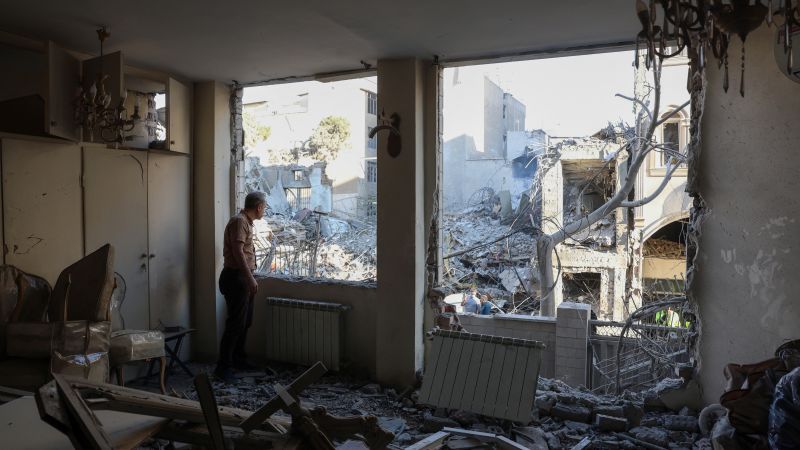
• War talks:The status of negotiations between the US and Iran is in dispute. US President Donald Trump said talks were continuing, but Iran’s Foreign Ministry said no negotiations were underway. Iran’s foreign minister, meanwhile, held phone calls with his Saudi and Omani counterparts
• Oil prices drop: Oil prices continued to fall early Tuesday. Brent, the global benchmark, fell 2.9% after closing down 11.3% on Monday
• White House meetings:Trump will meet separately with Ukrainian President Volodymyr Zelensky and Israeli Prime Minister Benjamin Netanyahu today for talks expected to focus on the conflicts in Ukraine and the Middle East, a White House official said
9 Posts
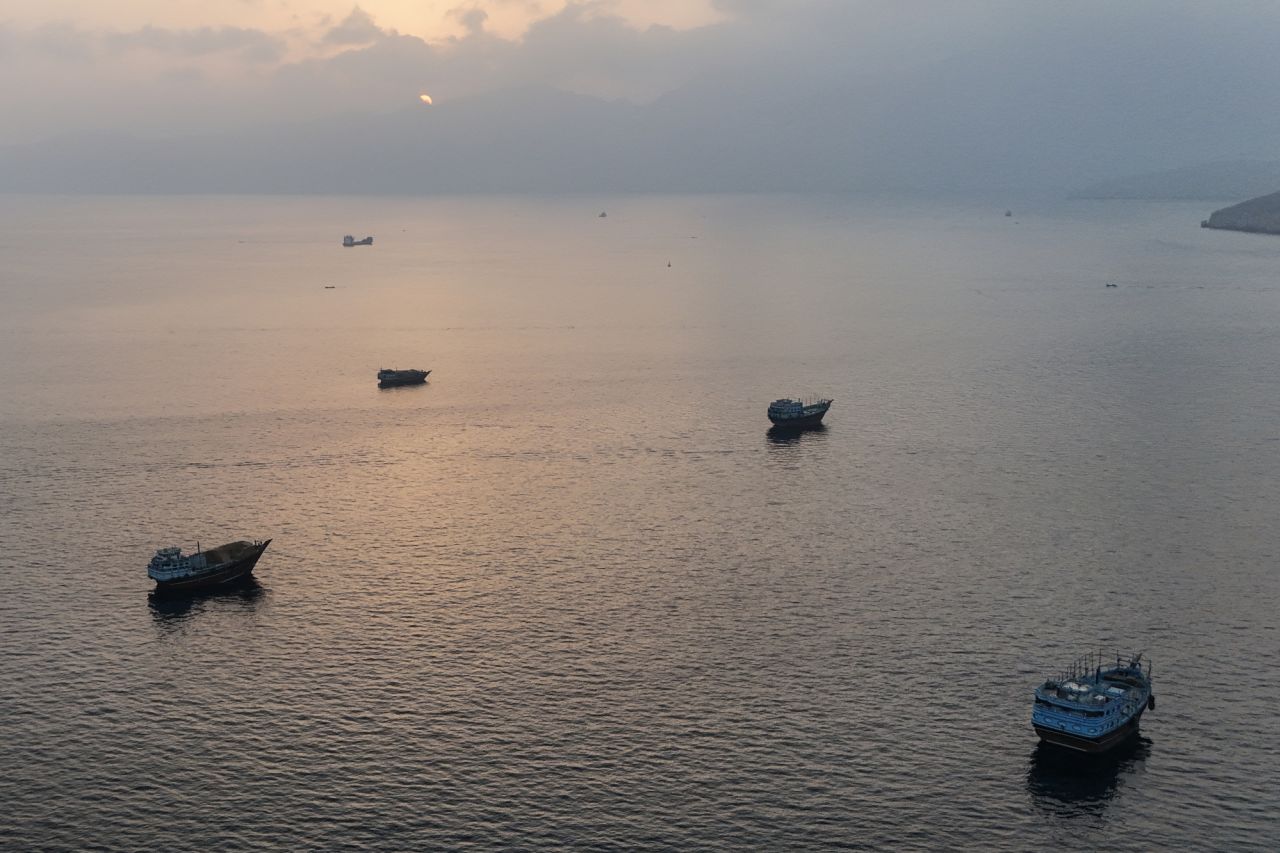
Boats are anchored off Oman’s northern Musandam Peninsula near the Strait of Hormuz on June 27.
A proposal to charge vessels for services in the Strait of Hormuz, which previously drew little interest from Iran, may yet offer a way to break the deadlock and revive peace negotiations
Despite an impasse in negotiations between Iran and the United States, Iran’s Foreign Ministry spokesperson, Esmaeil Baghaei, said Iran is engaged in “constructive” talks with Oman on the strait that are unrelated to the US
How would it work, and who would be charged?
Since the war, Iran has sought to charge ships for safe passage through the critical waterway, arguing that the strait lies within Iranian and Omani territorial waters. Before the war, about 20% of global oil and liquefied natural gas were passed through it
Oman has resisted the imposition of transit fees, upholding the position that international law already protects the right to safe transit passage through straits used for international navigation, rendering any form of toll arbitrary
However, Oman has for weeks been touting a compromise that may offer a way to address Iran’s position while remaining consistent with international maritime law
A proposal, if made, is likely to be modeled on the funding mechanism actioned on the Strait of Malacca – the waterway connecting the Indian Ocean with the Pacific Ocean and bordered by Malaysia, Indonesia and Singapore
The vital transit passage exercises a non-mandatory, voluntary-contribution system whereby financial donations support with navigation costs, environmental protection and search-and-rescue operations, remaining in line with international maritime law
If Iran and Oman agree to pursue a voluntary framework, shipping companies and governments will be among those expected to make payments to help cover the cost of a well-maintained, functioning shipping lane that facilitates safe passage for all
The US previously expressed concern about a fee-based system emerging in the strait, as transit through international waterways is protected by United Nations conventions
CNN’s Hanna Ziady, Zachary Cohen, Aileen Graef and Nic Robertson contributed reporting
Iranian officials publicly executed two men accused of participating in sweeping anti-regime demonstrations earlier this year, human rights officials say, as Tehran tightened its noose on dissidents
Abolfazl Sepahi Badjani and Amirhossein Safari Hosseinabadi were “executed at dawn” in Ali Khani Square, US-based Human Rights Activists News Agency (HRANA) reported Tuesday
Both men were arrested after allegedly protesting in the northern city of Isfahan, as part of nationwide rallies against the ruling theocratic government between late December and January this year. The two men were among 14 who were sentenced to death in the same case linked to the demonstrations earlier this year
Authorities in Iran accused the protesters of using “deadly violence against security forces,” wielding “firearms, bladed weapons and incendiary devices,” having “damaged public property” and “setting fire to the bodies of those killed,” HRANA said
The NGO has not independently verified the allegations and warned defense lawyers had “limited access to case files” while families were “not provided with full details of verdicts.”
“The case should be viewed in the context of longstanding allegations by international human rights groups that Iranian authorities have relied on coerced confessions, torture and other forms of ill-treatment in national security prosecutions,” HRANA said. “Iranian authorities have consistently rejected such allegations.”
Some background:Tehran ramped up executions of political dissidents after the US-Israeli assault in late February. Before launching lethal strikes, the Trump administration had repeatedly declared solidarity with those killed. However, the Memorandum of Understanding between the US and Iran – which laid out a long-term pathway to peace – made no mention of protesters, persecuted dissidents or human rights
An Iranian cargo vessel carrying vital supplies needed for medical treatment has been released after being seized by the US and held for 95 days, according to Iran’s semi-official Tasnim news agency
The vessel, the M/V Touska, which was detained on April 20, is said to be carrying eight containers containing materials that can aid up to 44,000 patients facing dialysis – a medical treatment that filters waste from the body when the kidneys fails
This comes after the Iranian Red Crescent Society collaborated with 17 international and humanitarian organizations to secure the cargo’s return, according to the report
Part of the cargo was delivered yesterday and the remainder today to a company affiliated with the Iranian Red Crescent, according to Iran’s semi-official Mehr news agency
“This vessel, which on April 20 this year was carrying supplies and equipment needed for dialysis patients, was seized by American pirates,” an Iranian Red Crescent spokesperson told Mehr
“With the arrival of this shipment, the treatment needs of approximately 44,000 dialysis patients across the country for essential dialysis equipment will be met,” the spokesperson added
Some background:The Iranian-flagged ship was seized by US Marines after defying Washington’s blockade on Iran’s ports. US Central Command said it warned the Touska repeatedly over a six-hour period, during which time the container ship was steaming in the Arabian Sea toward Bandar Abbas, Iran
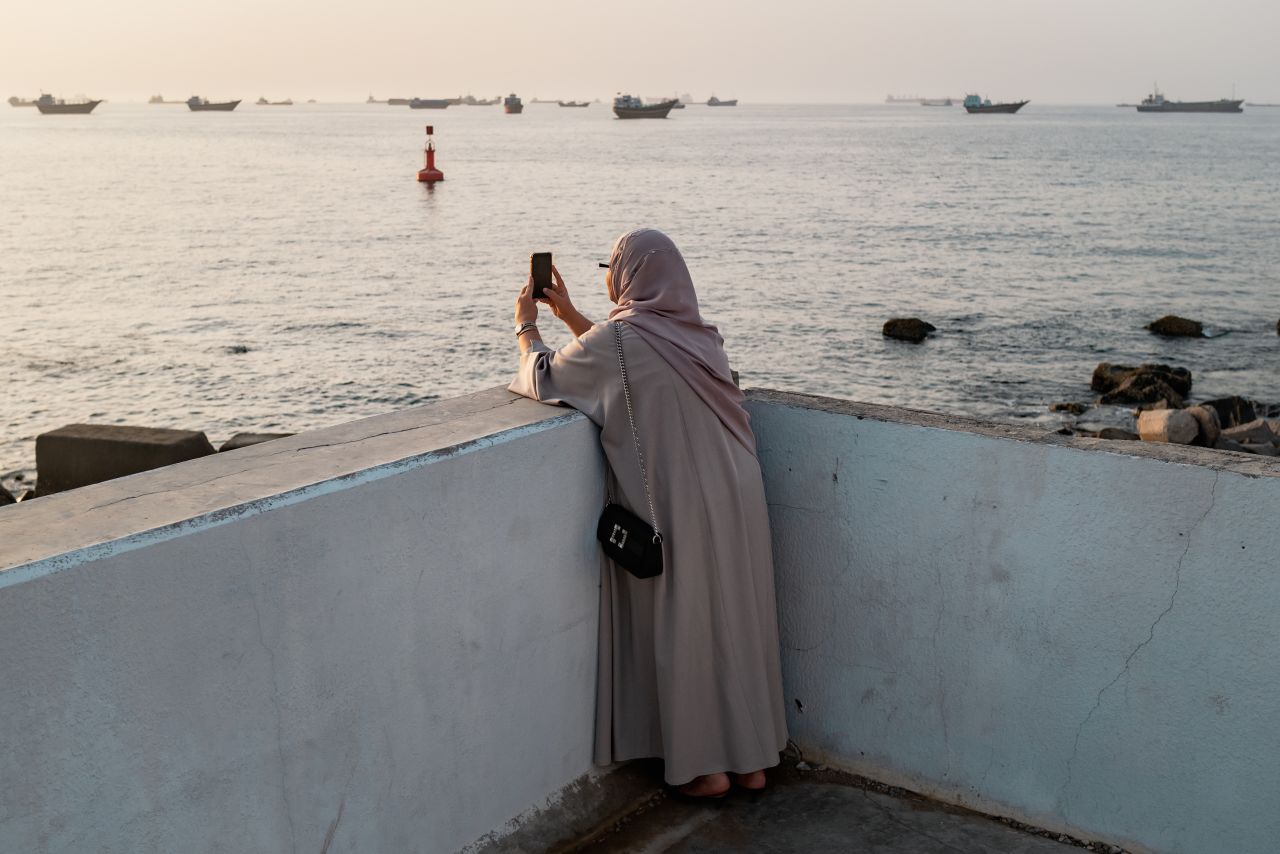
A woman photographs Qaboos Port where oil tankers, carriers, vessels and Omani fisherboats sit anchored in Muscat, Oman, on June 19.
Oil prices continued to drop on Tuesday on signals that the United States and Iran are preparing to restart peace talks following a pause in fighting
Brent, the global benchmark, fell 2.9% to trade at almost $86 a barrel by 5.32 a.m. ET while WTI, the US benchmark, was down 2.6% to $80 a barrel by the same time
Both contracts tumbled on Monday, posting their largest declines in several weeks, after an apparent pause in strikes between the US and Iran
Despite a slowing of traffic through the Strait of Hormuz in recent days and the threat of attacks by Iran-backed Houthi rebels against tankers in the Red Sea, oil traders appear relieved at the prospect of a ceasefire
On Monday evening local time, Iran’s Foreign Minister Abbas Araghchi held separate phone calls with his counterparts in Oman and Saudi Arabia on regional peace and the Strait of Hormuz, according to a statement on his Telegram channel
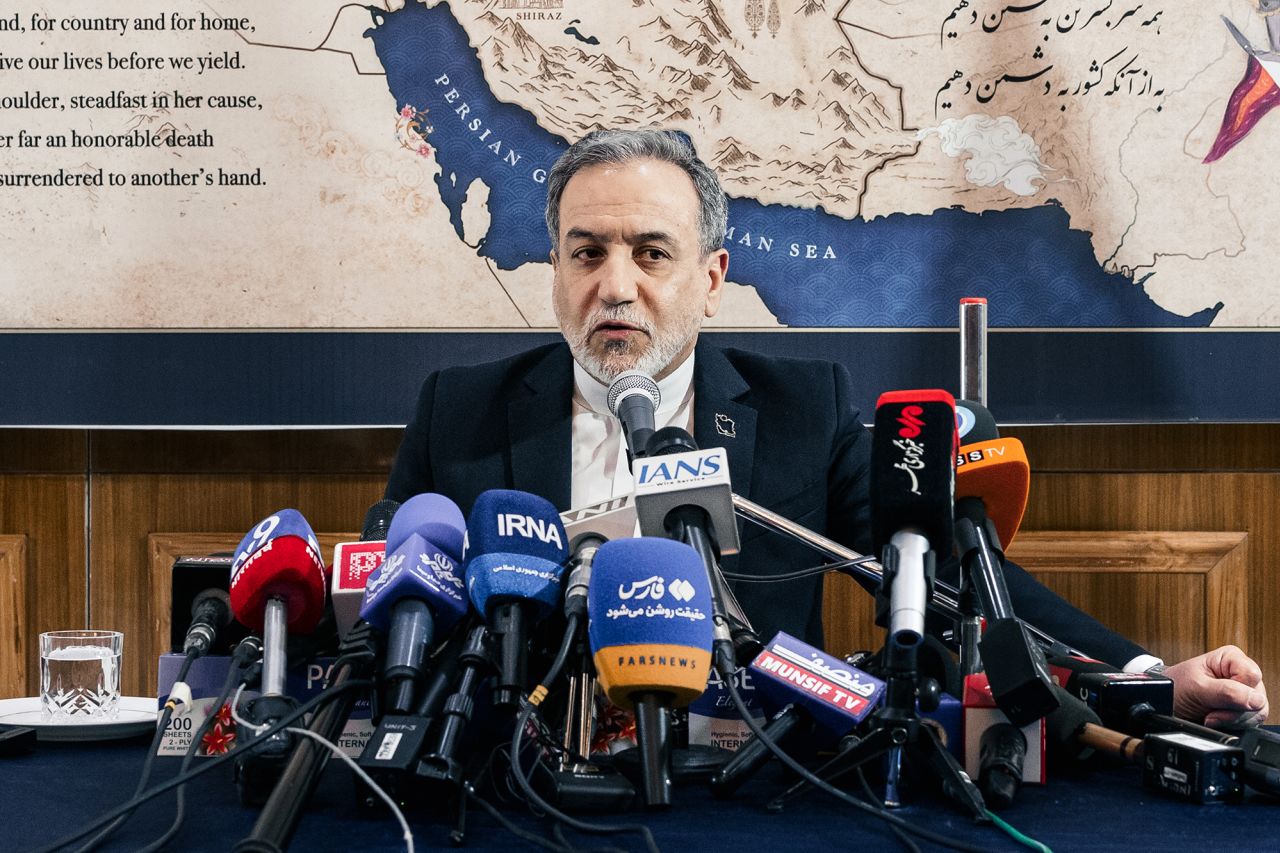
Iran’s Foreign Minister Abbas Araghchi attends a press conference at the Iranian embassy in New Delhi, India, on May 15.
Iran’s Foreign Minister Abbas Araghchi’s has held separate phone calls with his counterparts in Oman and Saudi Arabia on regional peace and the Strait of Hormuz, according to a statement on his Telegram channel
The leaders “emphasized the necessity of strengthening cooperation,” it said, adding the call took place on Monday evening, local time
They also disccused “advancing joint diplomatic efforts to establish stability in the region and to remove the imposed insecurity in the Strait of Hormuz resulting from the aggressive actions of the United States,” the statement added
There was no immediate readout from the Saudi or Omani side
The timing of the calls is however significant
The come came days after an Omani delegation visited Tehran for a discussion on Strait of Hormuz and as Saudi Arabia faces increasing attacks from Iran-backed proxies in both Yemen and Iraq
The Jordanian Armed Forces shot down a drone on Tuesday local time, a statement from the military said
The drone breached the country’s airspace at dawn and was shot down in the eastern desert, the statement said
At the center of the latest key developments in the war with Iran are attacks on US ally Saudi Arabia by Tehran-supported groups
As a reminder, the Saudi Defense Ministry said Monday that it intercepted several drones launched from Iraq that targeted petroleum facilities in the kingdom’s oil-rich Eastern Province and the Riyadh region
Here are the latest developments on that front and other critical issues we’re monitoring:
• While the drones launched at Saudi Arabia were not the first to come from Iraq, multiple countries have condemned the attacks, including Kuwait, Qatar, Oman and Lebanon
• Oman launched a regional diplomatic push Monday aimed at finding a political solution to the military conflict between the US and Iran. Omani Foreign Minister Badr Albusaidi held calls with counterparts from Iran, Saudi Arabia, Qatar, Kuwait and Egypt to discuss de-escalation efforts, according to Oman’s Foreign Ministry
• Iran is not currently engaging in peace talks with the US. Tehran “will never allow the United States to determine the timing of war and peace,” Esmaeil Baghaei, the Iranian Foreign Ministry spokesperson, said in a televised press conference. While the US has said it is pausing strikes on Iran to allow talks to develop, Baghaei said there are “no negotiations with the United States at present.”
• The US would like to have more sophisticated munitions as the war in Iran draws down stockpiles, President Donald Trump said, but he insisted that the military has what it needs to wage the conflict. The president acknowledged that Russia may be helping Iran by passing along intelligence on US bases, but he brushed it off, saying it “hasn’t had much impact because we’re knocking the hell out of them.”
• Meanwhile, Israeli Prime Minister Benjamin Netanyahu is en route to the US, where he said Iran would be a key issue “on the agenda” during his meeting with Trump on Tuesday. The US president separately shut down questions about Netanyahu’s objection to F-35 fighter jet sales to Turkey, saying that “nobody” dictates the sales but him
• And next week, Israeli and Lebanese officials will again meet in Rome to continue to work on implementing a US-brokered agreement ultimately aimed at a comprehensive peace between the two countries. The US-led talks will take place on August 4-6, a US State Department official said
• Almost all of the 78 vessels that crossed the Strait of Hormuz since Saturday used the route designated by Iran, and none recorded using the southern route near Oman’s coast promoted by the US, according to shipping intelligence group Marisks
CNN’s Aida Karimi, Sana Noor Haq, Abbas Al Lawati, Dana Karni, Tim Lister, Eleni Giokos, Kevin Liptak, Jennifer Hansler, Aileen Graef, Eyad Kourdi, Aqeel Najim and Mohammed Tawfeeq contributed to this report
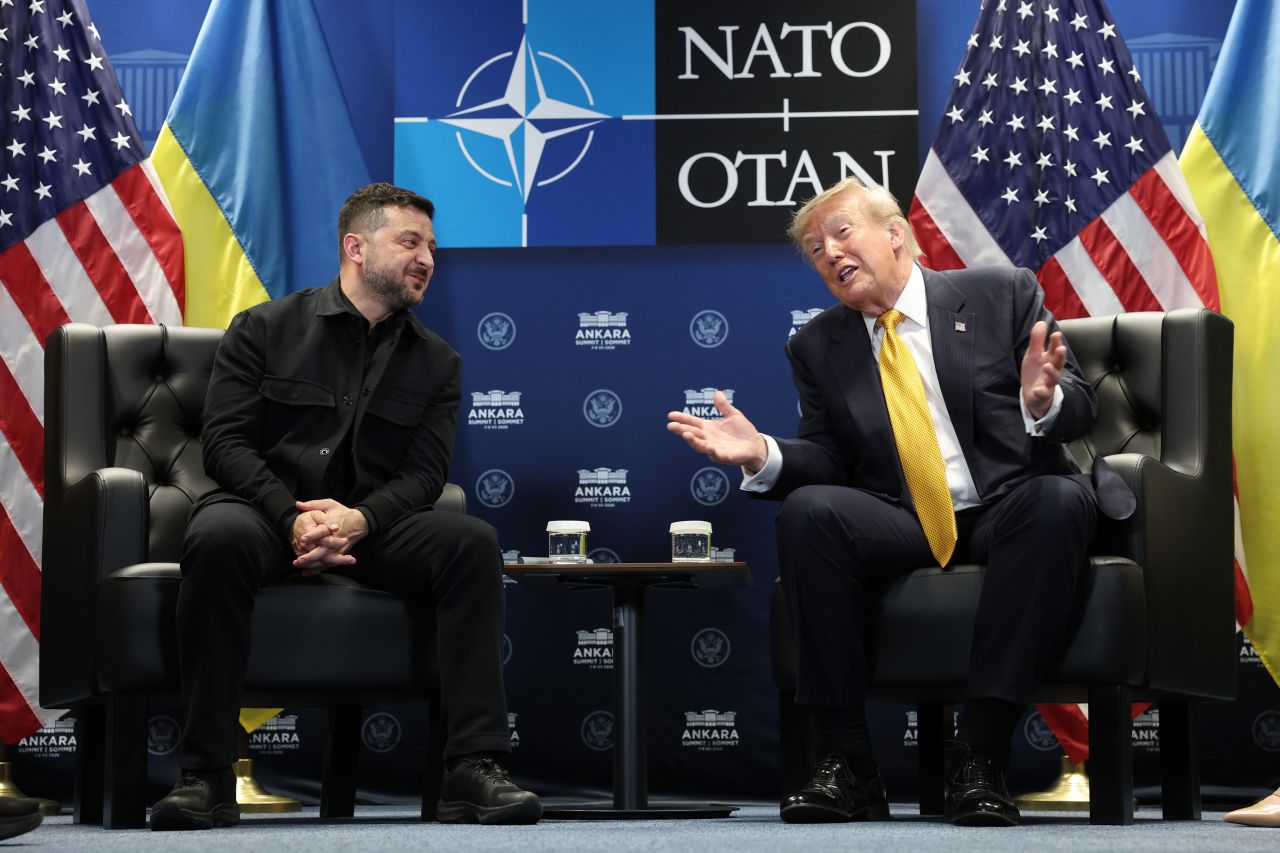
President Donald Trump meets with Volodymyr Zelenskyy, President of Ukraine for bilateral talks at Beştepe Presidential Compound during the NATO Summit in Ankara, Turkey, on July 8.
President Donald Trump is set to welcome both Ukrainian President Volodymyr Zelensky and Israeli Prime Minister Benjamin Netanyahu to the White House on Tuesday for separate meetings expected to focus on the conflicts in Ukraine and the Middle East, a White House official told CNN
Trump will meet with Netanyahu to discuss the war in Iran, progress on negotiations with Lebanon and efforts to expand the Abraham Accords, the White House official said
During Trump’s meeting with Zelensky, the leaders will discuss the ongoing peace process between Russia and Ukraine, according to the official. “Now is the time to end the war,” the official added
Earlier on Monday, Trump downplayed Zelensky’s allegation that Russia is providing Iran with intelligence on US military bases, saying: “I don’t think they’ve been doing it, certainly not at a high level.”
Both Netanyahu and Zelensky plan to attend the late Sen. Lindsey Graham’s funeral in Washington on Tuesday
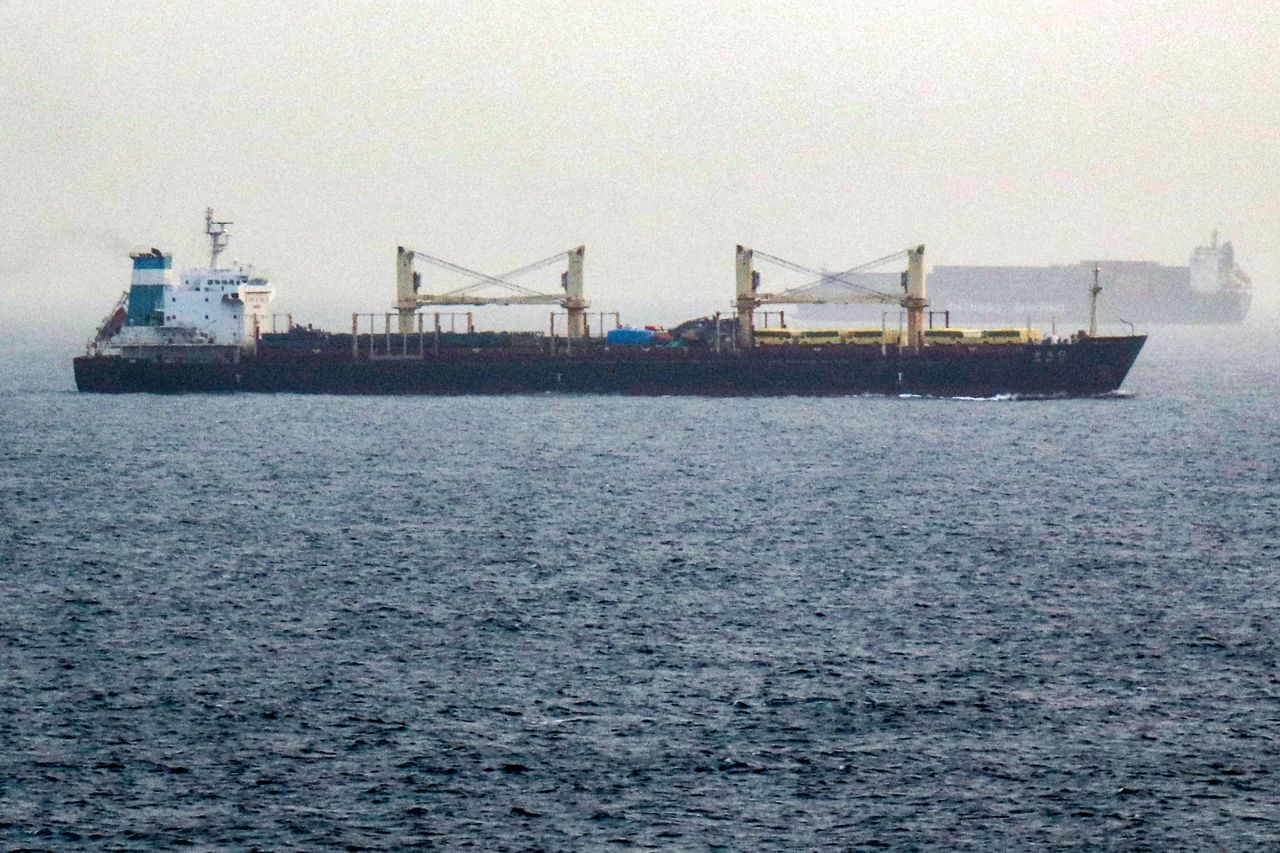
Vessels transit the Bab el-Mandeb Strait off the coast of southern Yemen on July 25.
Global oil prices fell sharply Monday after a pause in fighting between the United States and Iran, posting their biggest decline since April 8
Brent futures, the global benchmark, closed at $85.87 per barrel, down 11.3%. US crude dropped about 7% to $82.61 a barrel
President Donald Trump said the US halted strikes on Iran at the request of the Iranian regime and warned the US would resume attacks if a new ceasefire deal weren’t reached
Ship traffic through the Strait of Hormuz also remains well below prewar levels. Fewer than 10 commodity ships passed through the waterway as of Monday morning, according to shipping data tracked by CNN. Around 100 commercial vessels traversed the strait on a typical day before the war
Oil traders are doubly wary given the threat of attacks on Saudi tankers by Iran-backed Houthi rebels in the Bab al-Mandeb Strait at the base of the Red Sea
In a note on Monday, Deutsche Bank analysts said Houthi attacks raise “the prospect of simultaneous disruption to both Gulf and Red Sea export routes.”
“So (there’s a) welcome pause from the main actors but a fragile one, especially with side battles going on,” the analysts wrote
Meanwhile, the Dow Jones on Monday gained 0.51%, the S&P 500 rose 0.02% and the tech-heavy Nasdaq fell 0.18%
