

25 Posts
Israeli and Lebanese officials will meet again in Rome next week to continue work on implementing a US-brokered agreement ultimately aimed at a comprehensive peace between the two countries
A US State Department official said the US-led talks will take place in Rome on August 4-6. The latest round follows the launch of the initial “pilot zones” in southern Lebanon, where the Israeli military said it handed over control to the Lebanese Armed Forces last week. It also comes after US President Donald Trump met with Lebanese President Joseph Aoun last week
“That includes expanding the pilot zone process, resolving all outstanding border issues, and working on a comprehensive peace and security agreement,” they said
The official called that framework “the only path to lasting peace.”
They said the “experience of the initial zones will help us perfect pilot-zone implementation so it can expand in a phased manner.”
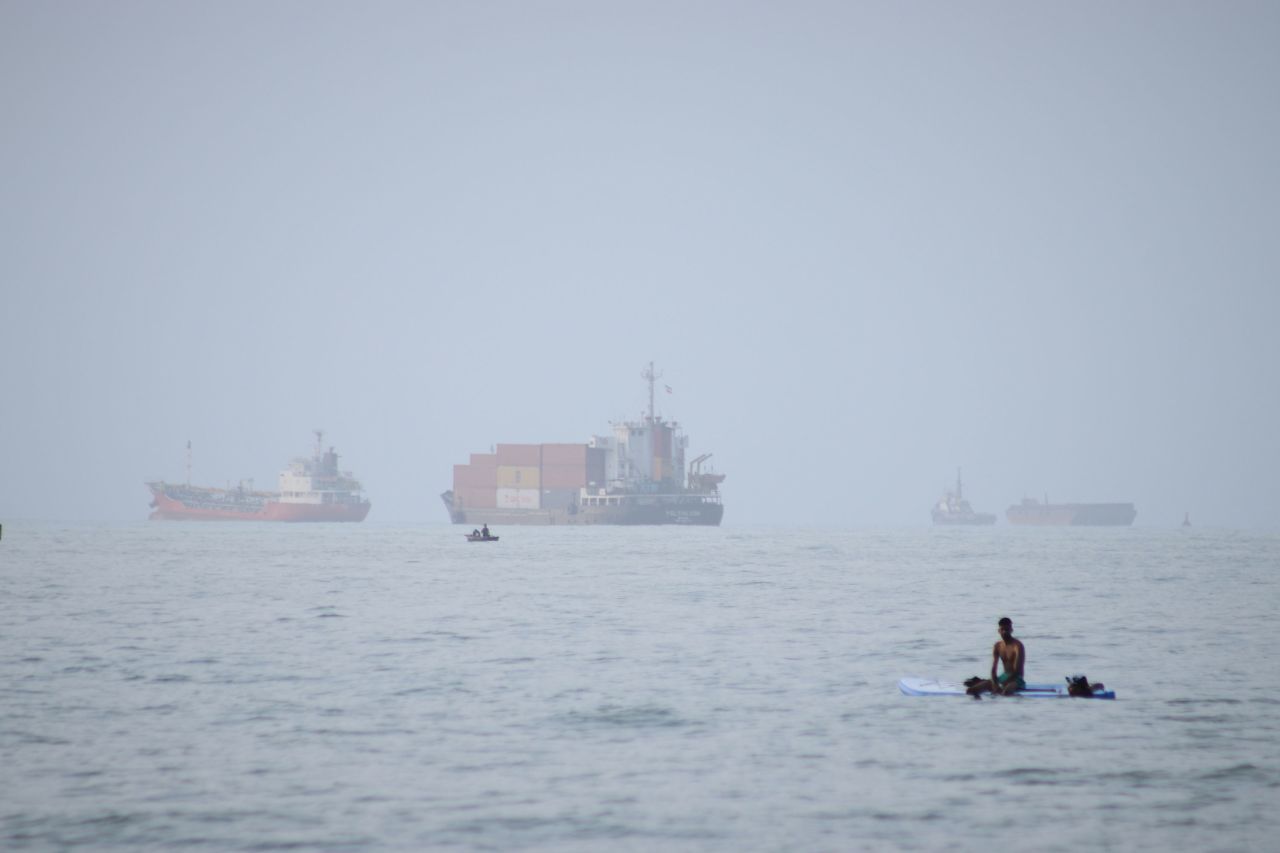
A man sits on a surfboard as a container ship and other commercial vessels appear anchored in the Strait of Hormuz off Bandar Abbas, Iran, Monday, July 27.
Global oil prices fell sharply Monday after a pause in fighting between the United States and Iran, posting their biggest decline since April 8
Brent futures, the global benchmark, closed at $85.87 per barrel, down 11.3%. US crude dropped about 7% to $82.61 a barrel
President Donald Trump said the US halted strikes on Iran at the request of the Iranian regime and warned the US would resume attacks if a new ceasefire deal weren’t reached
Ship traffic through the Strait of Hormuz also remains well below prewar levels. Fewer than 10 commodity ships passed through the waterway as of Monday morning, according to shipping data tracked by CNN. Around 100 commercial vessels traversed the strait on a typical day before the war
Oil traders are doubly wary given the threat of attacks on Saudi tankers by Iran-backed Houthi rebels in the Bab al-Mandeb Strait at the base of the Red Sea
“So (there’s a) welcome pause from the main actors but a fragile one, especially with side battles going on,” the analysts wrote
Meanwhile, the Dow Jones on Monday gained 0.51%, the S&P 500 rose 0.02% and the tech-heavy Nasdaq fell 0.18%
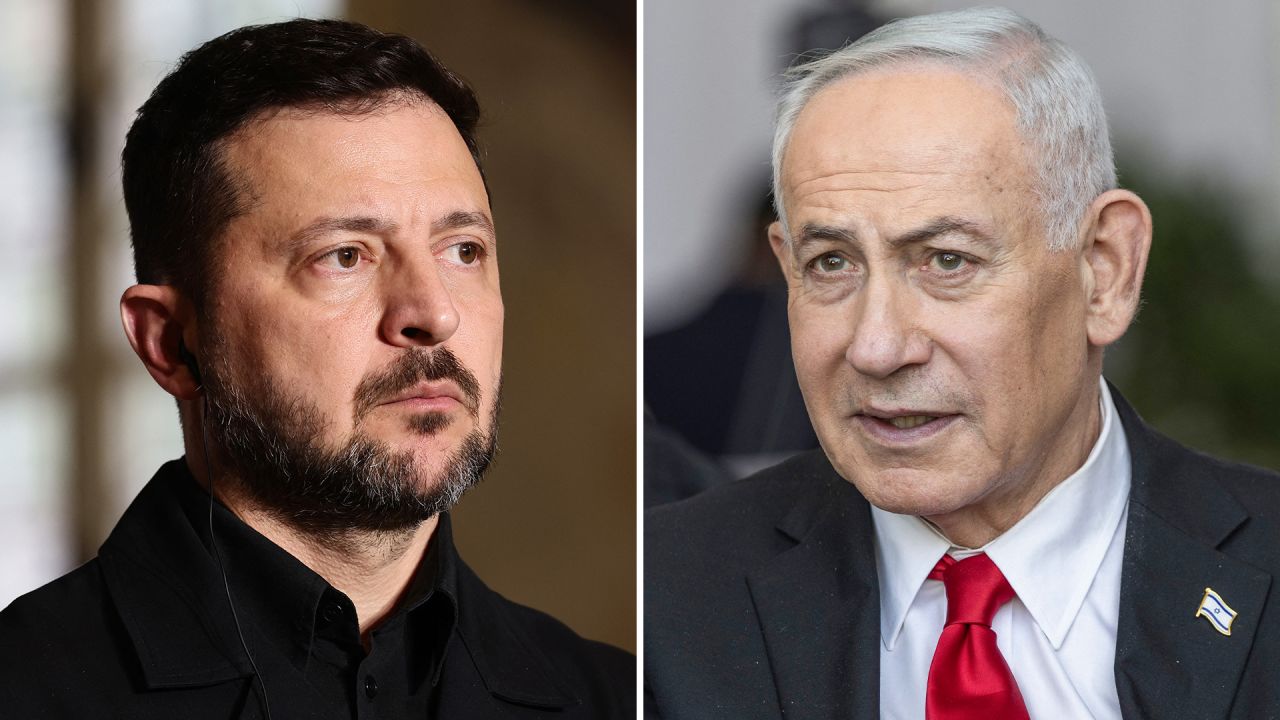
Ukraine’s President Volodymyr Zelensky, left, and Israel’s Prime Minister Benjamin Netanyahu.
President Donald Trump is set to welcome both Ukrainian President Volodymyr Zelensky and Israeli Prime Minister Benjamin Netanyahu to the White House on Tuesday for separate meetings expected to focus on the conflicts in Ukraine and the Middle East, a White House official told CNN
Trump will meet with Netanyahu to discuss the war in Iran, progress on negotiations with Lebanon and efforts to expand the Abraham Accords, the White House official said
Trump acknowledged he and Netanyahu are not in full and complete agreement on Iran but said the two leaders remain closely aligned. “We have a little difference, but pretty close,” Trump told reporters Monday
During Trump’s meeting with Zelensky, the leaders will discuss the ongoing peace process between Russia and Ukraine, according to the official. “Now is the time to end the war,” the official added
Earlier on Monday, Trump downplayed Zelensky’s allegation that Russia is providing Iran with intelligence on US military bases, saying: “I don’t think they’ve been doing it, certainly not at a high level.”
Both Netanyahu and Zelensky plan to attend the late Sen. Lindsey Graham’s funeral in Washington on Tuesday

A man paddles a stand-up paddleboard, as cargo ships and other commercial vessels appear anchored in the Strait of Hormuz off Bandar Abbas, Iran, on Monday.
At the center of today’s key developments in the war with Iran are Tehran-backed attacks on US ally Saudi Arabia
As a reminder, the Saudi Defense Ministry said Monday that it intercepted several drones launched from Iraq that targeted petroleum facilities in the kingdom’s oil-rich Eastern Province and the Riyadh region
Here are the latest developments on that front and other critical issues we’re monitoring:
• While the drones launched at Saudi Arabia were not the first to come from Iraq, multiple countries have condemned the attacks, including Kuwait, Qatar, Oman and Lebanon
• Oman launched a regional diplomatic push Monday aimed at finding a political solution to the military conflict between the US and Iran. Omani Foreign Minister Badr Albusaidi held calls with counterparts from Iran, Saudi Arabia, Qatar, Kuwait and Egypt to discuss de-escalation efforts, according to Oman’s Foreign Ministry
• Iran is not currently engaging in peace talks with the US. Tehran “will never allow the United States to determine the timing of war and peace,” Esmaeil Baghaei, the Iranian Foreign Ministry spokesperson, said in a televised press conference. While the US has said it is pausing strikes on Iran to allow talks to develop, Baghaei said there are “no negotiations with the United States at present.”
• The US would like to have more sophisticated munitions as the war in Iran draws down stockpiles, President Donald Trump said, but he insisted that the military has what it needs to wage the conflict. The president acknowledged that Russia may be helping Iran by passing along intelligence on US bases, but he brushed it off, saying it “hasn’t had much impact because we’re knocking the hell out of them.”
• Meanwhile, Israeli Prime Minister Benjamin Netanyahu is en route to the US, where he said Iran would be a key issue “on the agenda” during his meeting with Trump on Tuesday. The US president separately shut down questions about Netanyahu’s objection to F-35 jet sales to Turkey, saying that “nobody” dictates the sales but him
• Almost all of the 78 vessels that crossed the Strait of Hormuz since Saturday used the route designated by Iran, and none recorded using the southern route near Oman’s coast promoted by the US, according to shipping intelligence group Marisks
CNN’s Aida Karimi, Sana Noor Haq, Abbas Al Lawati, Dana Karni, Tim Lister, Eleni Giokos, Kevin Liptak, Aileen Graef, Eyad Kourdi, Aqeel Najim and Mohammed Tawfeeq contributed to this report
Oman launched a regional diplomatic push Monday aimed at finding a political solution to the military conflict between the US and Iran
The effort came as Saudi Arabia said it hadintercepted drones launched from Iraqi territory and blamed Iranian-backed militias in Iraq, raising concerns about further regional escalation
Omani Foreign Minister Badr Albusaidi held calls with counterparts from Iran, Saudi Arabia, Qatar, Kuwait and Egypt to discuss de-escalation efforts, according to Oman’s Foreign Ministry
The discussions focused on pursuing “practical, fair and sustainable understandings” through political and diplomatic channels, ensuring safe navigation through the Strait of Hormuz and restoring the uninterrupted flow of trade and global supply chains, the ministry said
The diplomatic outreach followed a statement from Saudi Arabia’s Defense Ministry saying it had intercepted several drones launched from Iraq that were targeting petroleum facilities in the kingdom’s Eastern Province and Riyadh region
Several Arab countries in the Persian Gulf — including Qatar, Kuwait and Oman — condemned the attacks and expressed full solidarity with Saudi Arabia
Iraq said Monday it would investigate Saudi Arabia’s claim. The investigation will examine evidence and information provided by Saudi Arabia, according to a statement from the Iraqi army. It did not identify any suspected group or say how long the investigation would take
The Islamic Resistance in Iraq, an umbrella group for Iranian-backed militias, denied Saudi Arabia’s accusations, calling the claims “fabrications” aimed at escalating tensions
The militias in Iraq have previously launched drone and rocket attacks against US military bases and other regional targets, including in Saudi Arabia
Iraqi Prime Minister Ali al-Zaidi said during a face-to-face meeting with US President Donald Trump earlier in July that his country would confront Iranian-backed militias in Iraq. Al-Zaidi did not provide a detailed public strategy for achieving the goal, which has eluded previous Iraqi governments
US President Donald Trump acknowledged that Russia may be helping Iran by passing along intelligence on US bases but brushed it off saying it “hasn’t had much impact because we’re knocking the hell out of them.”
“So they may be giving, but if they are, it hasn’t worked out,” Trump told reporters on Air Force One on Monday
Trump said despite Ukrainian President Volodymyr Zelensky’s allegation that Russia was doing this, he doesn’t “think they’ve been doing it. Certainly not at a high level.”
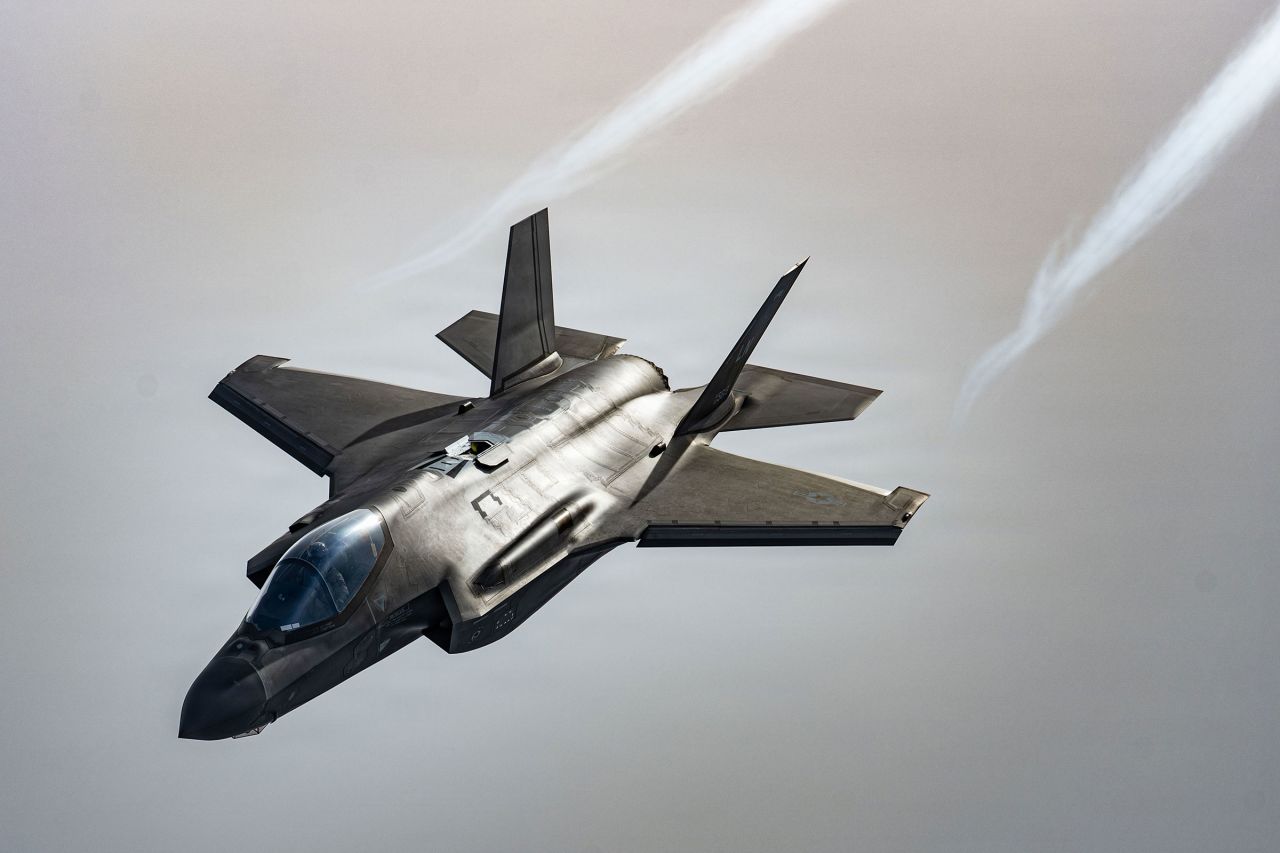
A US Air Force F-35 Lightning II flies over the North Sea during an exercise on January 29.
US President Donald Trump shut down questions about Israeli Prime Minister Benjamin Netanyahu’s protest of F-35 jet sales to Turkey, saying on Monday that “nobody” dictates the sales but him
Trump earlier this month indicated that he was considering allowing sales of the fighter jets to Turkey, something that’s currently against US law due to Turkey’s possession of Russia-made air defenses
“He’s a friend of mine, and nobody tells me what we should be selling him,” Trump said of Turkey’s President Recep Tayyip Erdoğan, adding that Turkey has been a “tremendous ally.”
Trump acknowledged “Turkey’s not a big fan of Israel.”
Trump, who is expected to meet with Netanyahu in Washington this week, said while the two are “pretty close” to on the same page in regards to Iran, there is “a little difference.”
“We have a little difference, but pretty close,” Trump said
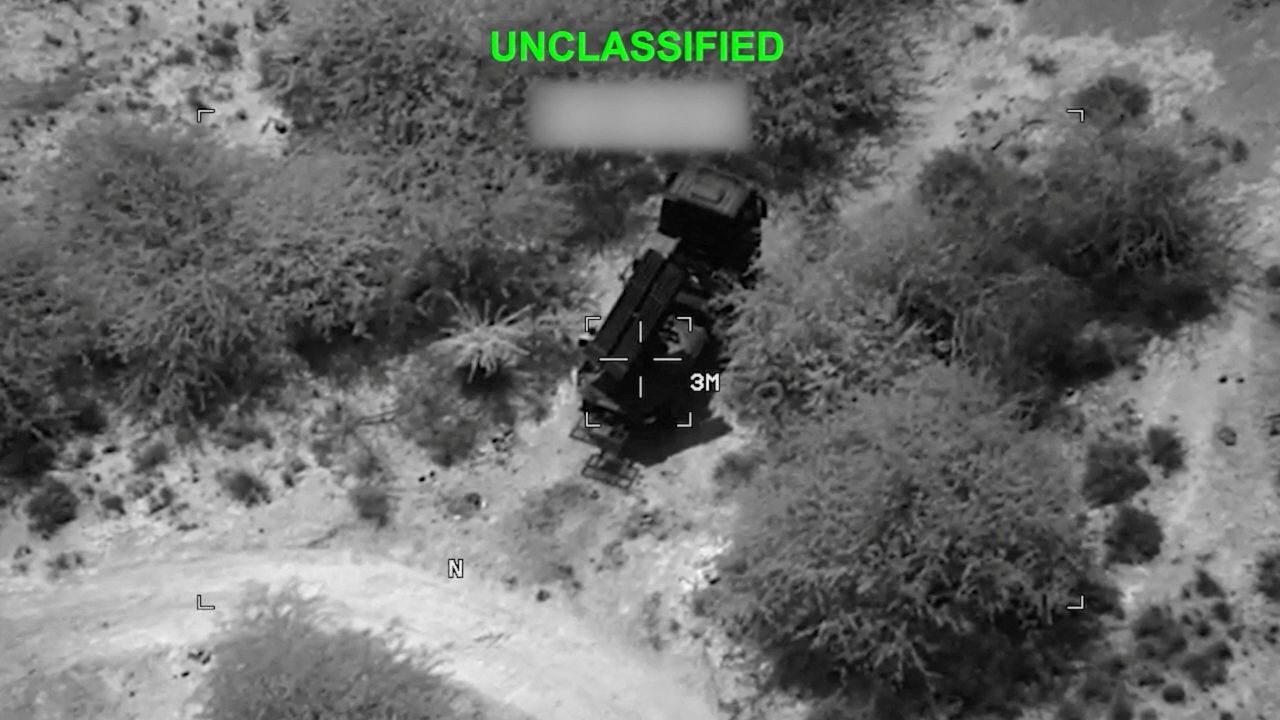
Military equipment is targeted at an unknown location, during what the US Central Command said were strikes on Iranian military targets, in this screengrab taken from a handout video released on July 23.
US President Donald Trump acknowledged the United States could use more sophisticated munitions as the war in Iran draws down stockpiles, but he insisted the military has what it needs to wage the conflict
He said the US has “a lot of ammunition” of different types, but he blamed the previous administration for sending more advanced weapons to Ukraine
“We have a lot of the mid-level stuff,” he said. “I’d like to have more, to be honest.”
He added that American defense contractors are rapidly speeding up production, including of Patriot interceptors
CNN reported over the weekend that Trump advisers raised concerns about the US munitions stockpiles and other potential negative implications as the president weighed escalating the war in Iran during a meeting last week
Trump insisted Monday he has “plenty of time” to resolve the conflict and said his administration is in discussions with Iran
“We’re talking right now,” he said. “They wanted to talk.”
He also said he held off on powerful new strikes because mediators claimed progress was being made in the negotiations
President Donald Trump boards Air Force One for a trip to Michigan on Monday.
President Donald Trump said Monday that the US halted strikes on Iran at the request of the nation’s regime, warning that it would resume its attacks if the two sides failed to strike a new ceasefire deal
“They asked us very nicely, ‘Please stop, let’s meet,’” Trump told reporters aboard Air Force One. “And that’s where we are right now, see what happens. If we don’t make a deal, we go back to the same thing.”
The pause follows nearly two weeks of strikes on Iran, as Trump and his aides assess their remaining military options
CNN previously reported that Vice President JD Vance and Joint Chiefs of Staff Chairman Gen. Dan Caine expressed concerns about escalating the campaign in part over worries about the US munitions stockpile and other potentially negative implications
Drone attacks reported by Saudi authorities Monday are not the first time the kingdom has been targeted by Iranian-aligned groups in Iraq
The last drone attack against Saudi Arabia from Iraqi territory was in mid-May, according to previous statements from the Saudi Defense Ministry
Three drones entered Saudi Arabia’s airspace from the direction of Iraq on May 18, the ministry said. The Iraqi government said it did not detect any drones being launched from its territory toward Saudi Arabia
Saudi Arabia has blamed pro-Iranian militia groups in Iraq for the attacks. In April, hundreds of drones were fired toward Saudi Arabia — many of them apparently coming from southern Iraq, according to analysts
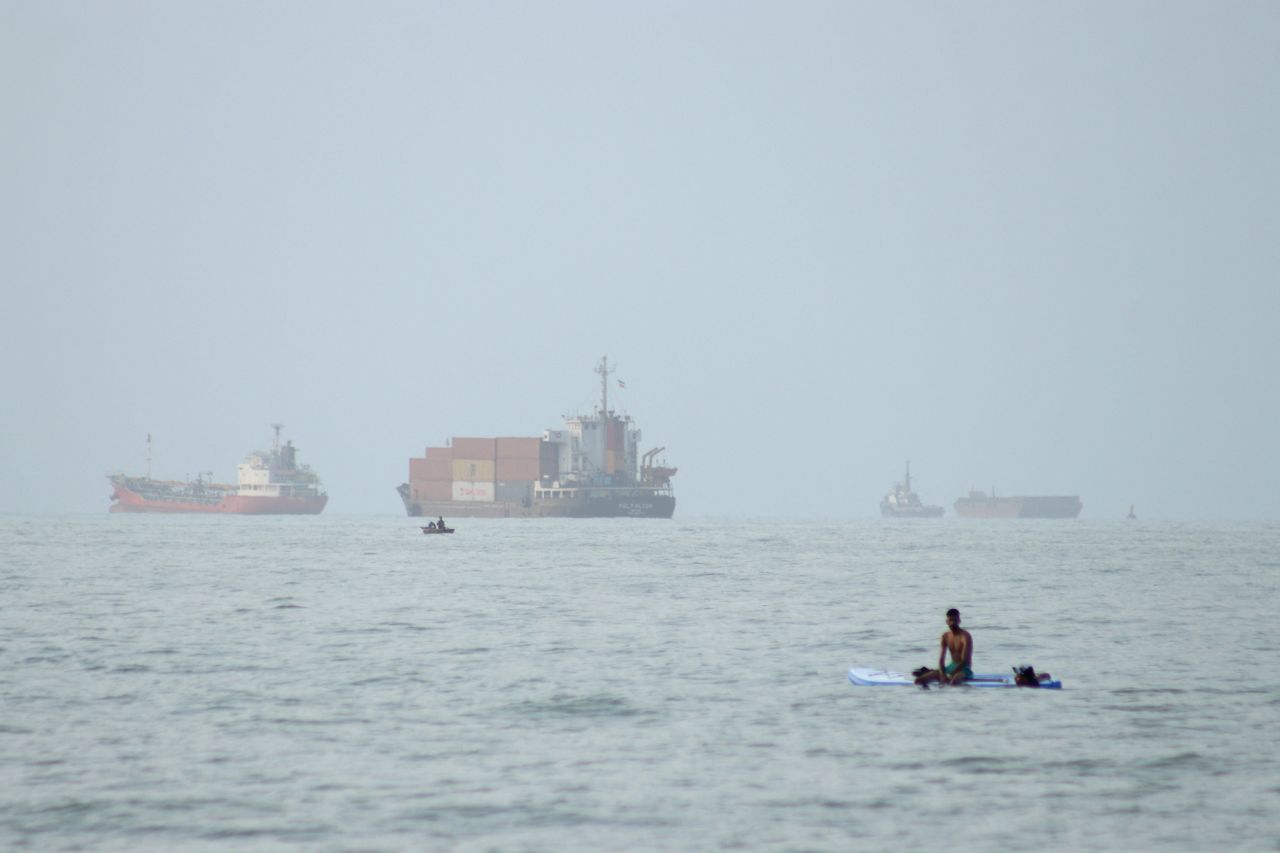
Vessels in the Strait of Hormuz near the beach of Bandar Abbas, Iran, on Monday.
Almost all vessels crossing the Strait of Hormuz over the past three days have used the route designated by Iran, with none recorded using the southern route near Oman’s coast promoted by the US, according to shipping intelligence group Marisks
Seventy-eight vessels have been observed transiting the Strait of Hormuz since Saturday, Marisks said. Of these, 20 were Iranian-flagged
All 58 non-Iranian ships transiting used the Iranian-designated route, while no ships were recorded using the southern route, which has been promoted by the United States military as an alternative to other sealanes
The latest AIS data, which shows the position of ships, indicate that “all detected non-Iranian merchant traffic continued to favour the Iranian-controlled northern route, despite the political and sanctions implications,” Marisks said
“The only movements near the southern side are local UAE craft and offshore support vessels rather than international merchant transits.”
Another maritime intelligence group, Windward, said Monday it had recorded just seven transits through Hormuz on Sunday, all of them
The Islamic Revolutionary Guard Corps has frequently warned it will target ships seeking to transit the strait without Iranian consent
Iran has redirected vessels attempting to use what it described as an “illegal and unsafe route” through the southern Strait of Hormuz, state broadcaster IRIB reported Monday, citing an unidentified “informed
They “attempted to pass through an illegal and unsafe route south of the Strait of Hormuz,” IRIB said
Amid the US blockade on Iranian ports, there were 24 tankers waiting at Iran’s main loading port at Kharg Island on Sunday — up from 21 the previous day
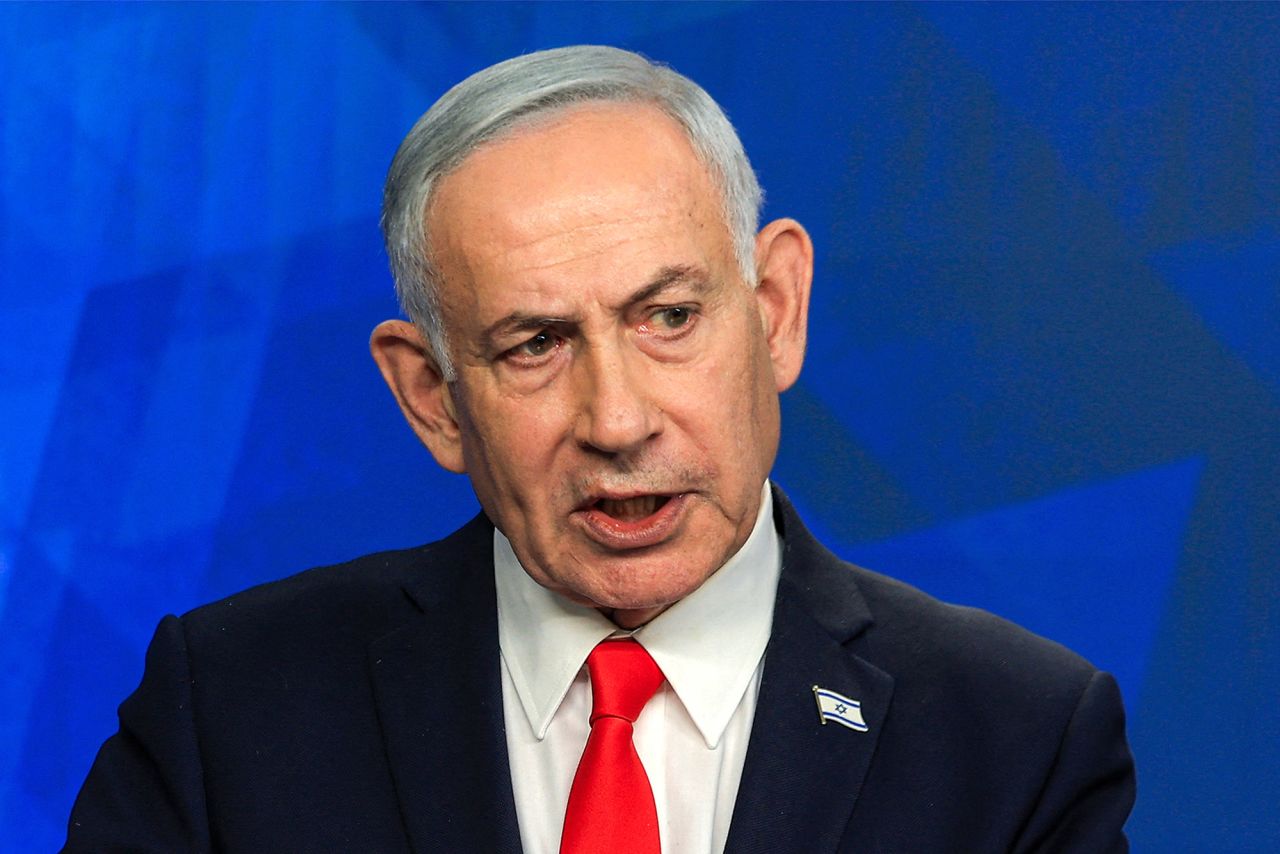
Israel’s Prime Minister Benjamin Netanyahu attends a news conference in Jerusalem on June 15.
Israeli Prime Minister Benjamin Netanyahu declared Iran would be a key issue “on the agenda” with US President Donald Trump as he boarded a plane to Washington, DC
Speaking from Nevatim air base in Be’er Sheva, southern Israel, Netanyahu described the discussions tomorrow as “a great privilege” and “a great responsibility.”
Netanyahu’s seventh meeting with Trump in Washington since the start of the US president’s second term comes on the heels of lethal US strikes on Iran, and retaliatory Iranian attacks on allied Arab and Gulf nations. Netanyahu has been a staunch advocate of a renewed offensive on Tehran, expressing skepticism over Iranian officials’ intentions behind nuclear-related negotiations
During his visit to the US, Netanyahu will also attend the funeral of the late Sen. Lindsey Graham, whom Netanyahu has called “one of [Israel’s] greatest friends.”
The Saudi Defense Ministry said Monday that it intercepted several drones launched from Iraq and targeting petroleum facilities in the kingdom’s oil-rich Eastern Province and the Riyadh region
Major General Turki Al-Maliki, the ministry’s spokesperson, said the attacks were carried out by Iran-backed militias and that the kingdom reserved the right “to respond at the appropriate time and place,” according to a ministry statement on X
Iranian Foreign Ministry spokesman Esmaeil Baghaei speaks at a weekly press conference in Tehran, Iran, on June 23.
Iran on Monday said it is not currently engaging in peace talks with the United States and will “defend ourselves for as long as our interests” require, after President Donald Trump paused the US’ bombing campaignfollowingnearly two weeks of strikes
Esmaeil Baghaei, the Iranian foreign ministry spokesperson, said in a televised press conference that Tehran “will never allow the United States to determine the timing of war and peace.”
Trump over the weekend haltedlethal strikes,which had steadily intensified over 13 days. US ambassador to the United Nations Mike Waltzsaid Sundaythe pause in strikes was to allow talks with Iran to develop
However, Baghaei said Monday, “We have no negotiations with the United States at present.”
The recent dip in attacks came as Iranian and Omani deputy foreign ministers haveconvened in Tehran to discuss shipping through the Strait of Hormuz. Baghaei said thoseongoing bilateral discussions,are “useful negotiations regarding the management of shipping traffic” in the crucial waterway and “are unrelated to the United States.”
The foreign ministry spokesperson also condemned US-allied European countries, including France and the UK, for “complicity with the aggressor.”
“We expected the new British government to act more wisely than the previous government,” said Baghaei
This post has been updated
A war of words between Iran and Ukraine has erupted after Ukrainian President Volodymyr Zelensky said over the weekend that drones had targeted several ships in the Caspian Sea carrying military cargo from Iran to Russia
Let’s recap what happened over the weekend:
- Zelensky said in a post on X on Saturday that Ukraine had “achieved very good results from long-range strikes in the Caspian Sea.” The Caspian is more than 1,000 kilometers (about 621 miles) from Ukrainian-controlled territory. “Specifically, these include ships that were involved in transporting military cargo from Iran, as well as a warship,” Zelensky said.
- A day later, Iranian officials claimed one crew member was killed and three injured in a drone strike aboard a vessel carrying iron from the Russian port of Astrakhan to Anzali in Iran.
- Iran’s Ministry of Foreign Affairs subsequently summoned Ukraine’s chargé d’affaires in Tehran following the incident.
- On Monday, Iranian Foreign Ministry spokesperson Esmail Baghaei warned that “Ukraine’s dangerous adventurism will certainly not go unanswered by us.”
Some context:Ukraine has carried out strikes against Russian ships in the Caspian, first doing so last December. With the US blockade of Iranian ports in the Persian Gulf and Gulf of Oman, the inland sea has become a more important trade route for Iran
Iran and Russia have a broad strategic agreement covering economic and military collaboration. Russia has developed Iranian Shahed attack drones in plants on Russian soil
On Sunday, Zelensky also asserted that Russia has provided Iran with targeting data for attacks on US military facilities in the Middle East
“There is a clear correlation between Russian surveillance of facilities and strikes by Iranian forces – both before the strikes and after Iranian attacks to assess the damage inflicted,” he added
Zelensky claimed that on July 19 and 20, “four airbases fell within the scope of Russian satellites: two in Bahrain and one each in Jordan and Kuwait.”
CNN reported in March that Russia was providing Iran with intelligence about the locations and movements of American troops, ships and aircraft in the Middle East
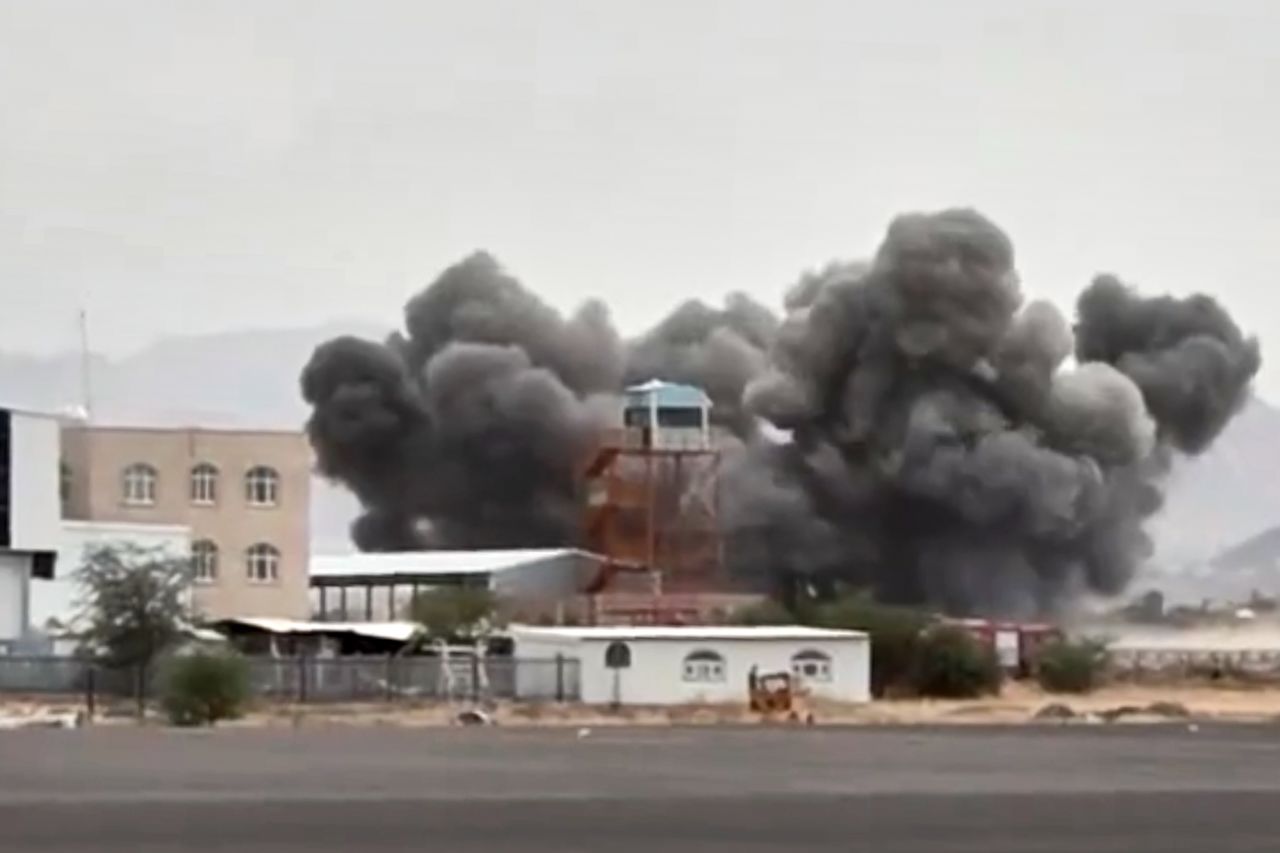
This image taken from video broadcast by Al-Masirah TV, a Houthi-controlled news channel, shows an explosion at the Sanaa International Airport compound during what the Iranian-backed Houthi rebels in Yemen said were several Saudi airstrikes in Sanaa on July 13.
Renewed fighting between Yemen’s Tehran-backed Houthi rebels and Saudi Arabia risks opening a new front in the US-Iran war, with potentially grave implications for the global economy
Here’s how we got here: Earlier this month, the Houthis accused Saudi Arabia of striking the airport in Yemen’s Houthi-held capital, Sanaa, to prevent a plane carrying a high-profile Houthi delegation from landing as it returned from Ayatollah Ali Khamenei’s funeral in Iran. Yemen’s Saudi-backed government said its own forces carried out the strike
The flight was an attempt by the Houthis to break a years-long restriction on Sanaa’s air links by resuming direct flights with Tehran for the first time since the Saudi-led coalition entered the war in 2015
The development marked a dangerous escalation, as the Houthis had largely observed an informal truce with Saudi Arabia in recent years. Following the strike, the Houthis declared the détente over and announced a “blockade” of Saudi-linked shipping through the Bab al-Mandab Strait, a route that had become increasingly important for the kingdom’s oil exports after Iran effectively shut the Strait of Hormuz
They subsequently claimed to have hit two Saudi tankers. Saudi Arabia acknowledged at least one vessel was struck and retaliated with airstrikes against Houthi targets in Hodeidah, home to the main port under Houthi control
On Monday, satellite imagery provided by NASA appeared to show a plume of black smoke rising from the vicinity of the Jazan refinery on Saudi Arabia’s Red Sea coast and extending for around 200 kilometers, a day after the Houthis claimed to have attacked the facility
The conflict threatens shipping through Bab al-Mandeb, a vital artery for global trade and energy supplies, potentially driving up oil prices, freight costs and inflation worldwide
Iran has redirected vessels attempting to use what it described as an “illegal and unsafe route” through the southern Strait of Hormuz, state broadcaster IRIB reported Monday, citing an unidentified “informed
“Six vessels allegedly violated regulations by switching off their navigation and positioning systems,” IRIB reported, citing thettempted to pass through an illegal and unsafe route south of the Strait of Hormuz.”
One of the vessels suffered “an incident,” thesibility, adding that the other ships were directed by Iran back into the Persian Gulf
The incident, if traced back to Iran, would suggest that Tehran may still be targeting vessels in the strait despite the lull in fighting with the United States
On Sunday, IRIB reported that at least six ships were “forced to drop anchor and accept maritime order” following repeated warnings from Iranian forces
A customer refuels his van at a Freedom Fuel Network gas station in Boothwyn, Pennsylvania on July 17.
Global oil prices fell sharply on Monday after a pause in fighting between the United States and Iran, though traders remain wary
Brent, the global benchmark, had declined 6.7% to trade at $90 a barrel by 3.37 a.m. ET. Meanwhile, WTI, the US benchmark, had dropped 6.1% to $84 a barrel around the same time
Strikes between the US and Iran appear to have paused following nearly two weeks of fighting that brought an agreed 60-day ceasefire to an effective collapse
Despite the halt in hostilities, ship traffic through the Strait of Hormuz over the weekend was minimal. Fewer than 10 commodity ships passed through the waterway, according to shipping data tracked by CNN. Around 100 commercial vessels traversed the strait on a typical day before the war
Oil traders are doubly wary given the threat of attacks on Saudi tankers by Iran-backed Houthi rebels in the Bab al-Mandeb Strait at the base of the Red Sea
In a note on Monday, Deutsche Bank analysts said Houthi attacks raise “the prospect of simultaneous disruption to both Gulf and Red Sea export routes.”
“So (there’s a) welcome pause from the main actors but a fragile one, especially with side battles going on,” they wrote
Stock markets rose on Monday. In Asia, Japan’s Nikkei 225 index closed up 0.5% while South Korea’s Kospi and Hong Kong’s Hang Seng both finished 1% higher. Europe’s benchmark Stoxx 600 index was up 0.5% by 4.41 a.m. ET
US futures were pointing higher, with the Dow and S&P 500 both up 0.9% and the tech-heavy Nasdaq up 1.6%
Iranian officials have ramped up their threats towards Kyiv afterthis weekend’s attack by Ukraine on an Iranian vessel in the Caspian Sea, the route for much of the country’s trade with Russia
Three crew members were injured and one seafarer killed aboard the ship, Iran’s regional governor Hadi Hagh-Shenas said on Sunday
The vessel had been carrying a cargo of iron and was sailing from Astrakhan to Anzali, “a safe and reliable corridor for commercial exchanges between the two ports,” Hagh-Shenas said
Iran’s foreign minister, Seyed Abbas Araghchi, also lashed out at Ukraine’s leader, Volodymyr Zelensky
“Zelenskyy has attacked an Iranian commercial vessel, killing a sailor. A blatant UN Charter violation done at Israel’s behest to drag Europe into its war,” wrote on X Sunday. “What the freeloader in Kyiv did CANNOT GO UNANSWERED.”
Some background:Ukraine on Saturday said it had struck ships in the waterway that were transporting military goods from Iran to Russia
Ukraine had “achieved very good results from long-range strikes in the Caspian Sea,” Zelensky said in a post on X
“Specifically, these include ships that were involved in transporting military cargo from Iran, as well as a warship,” Zelensky said
Iranian officials have said that the United States has also recently attacked facilities on the Caspian Sea. The Gilan governorate announced an airstrike on an Islamic Revolutionary Guard Corps navy
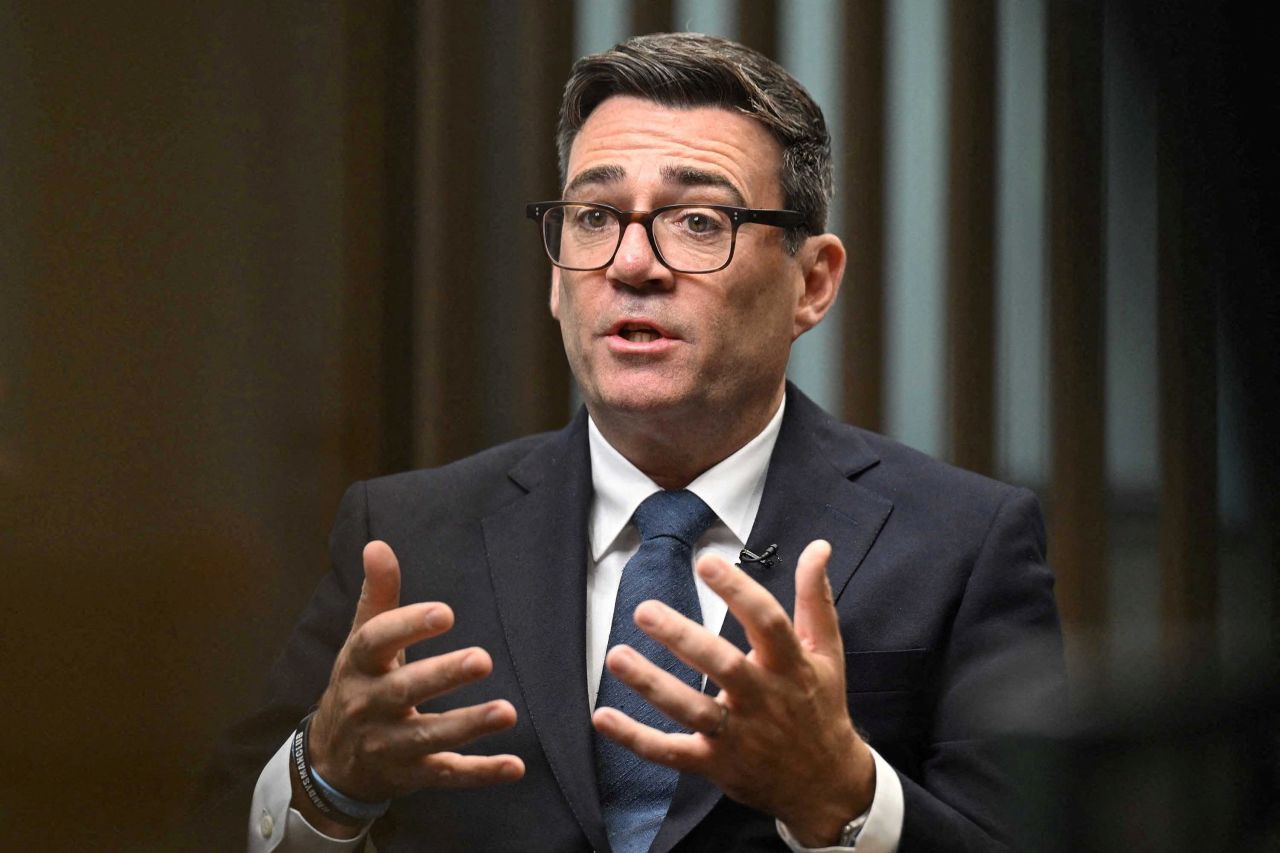
Britain’s Prime Minister Andy Burnham speaks during an interview in Manchester, on July 24.
Britain’s new Prime Minister Andy Burnham spent the past 24 hours speaking with leaders across the Gulf –– using his first round of calls with regional partners to push for closer defense and trade ties and discuss diplomatic efforts to de-escalate conflicts across the Middle East
The prime minister, who has been in office for just over a week, spoke with the leaders of Saudi Arabia, the United Arab Emirates, Qatar and Kuwait, Downing Street said
In separate calls, he condemned recent Iranian attacks on Saudi Arabia and Kuwait, thanked the UAE for helping protect British nationals living in the country, and welcomed Emirati efforts to support negotiations between the United States and Iran, according to readouts
Beyond security, Burnham also told Gulf leaders he wanted to strengthen trade and investment with the region to help drive growth and create jobs across the UK, and he discussed closer defense partnerships with Saudi Arabia and Kuwait
