

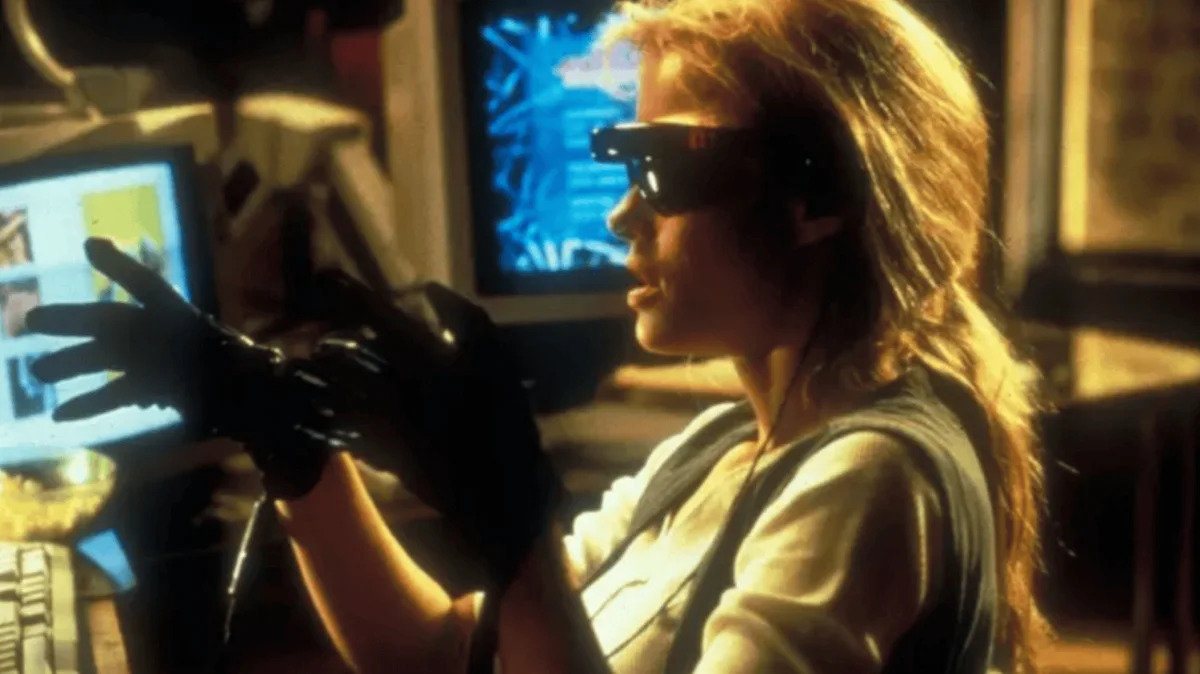
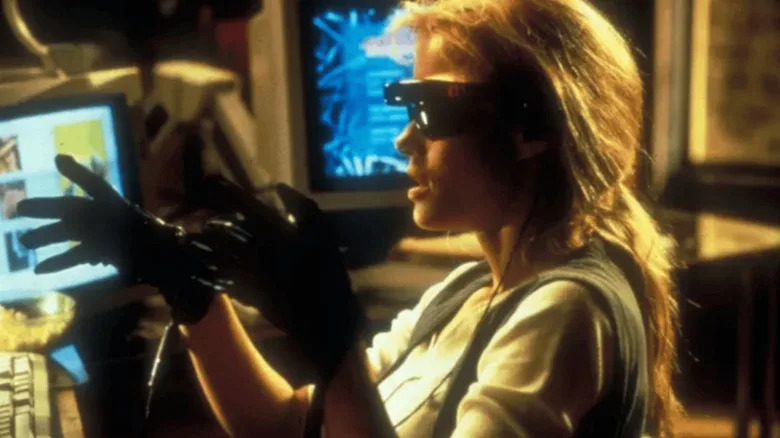
In the 1990s, Virtual Reality was considered both terrifying and full of possibility. On one hand, one might lose themselves into a false reality, losing their ability to distinguish what was real and what was digitally simulated. On the other, V.R. could be peeling back new layers of actual reality, revealing a whole new electric dimension. Would it be possible to project our consciousness into cyber-space? The possibilities were tantalizing.
These ideas were certainly reflected in our media, and there was a huge influx of V.R.-based movies and TV shows that explored the novel technology. Brett Leonard‘s “The Lawnmower Man” (which Stephen King disowned) explored the horrors of V.R., while shows like “V.R. Troopers” made it look cool. “Johnny Mnemonic” had V.R. scenes, and, of course, who could forget Albert Pyun’s “Arcade” (penned by David S. Goyer)? I loved David Cronenberg’s “eXistenZ,” and some are fond of “The Thirteenth Floor.” Naturally, “The Matrix” blew most of its contemporaries out of the water.
Lost in the shuffle was Jeannine Renshaw’s 1995 sci-fi TV series “VR.5,” a bizarre techno-noir about a computer expert who could use V.R. technology to enter people’s subconsciousnesses. It was like “Inception: The TV Series,” only made 15 years prior. The series filmed 13 episodes, but was canceled after only 10, running from March to May.
Advertisement
“VR.5” starred Lori Singer as Sydney Bloom, a linewoman for the county and computer enthusiast who, in the show’s pilot, finds that she can somehow access a rare V.R. technology that allows her to enter the subconscious minds of others. After interacting with her landlord (Penn Jillette) in the virtual world, for instance, he awakens with a new personality. Thereafter, Sydney is inducted into a shadowy cabal called the Committee, which assigns her V.R.-related consciousness missions.
It’s pretty trippy
Does anyone remember VR.5?
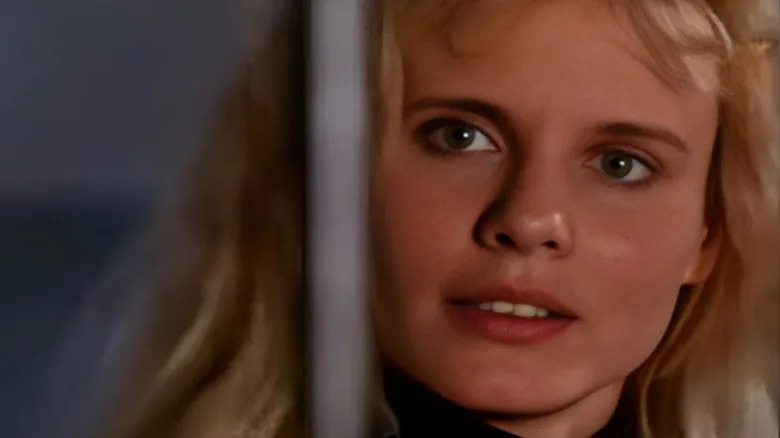
Naturally, Sydney Bloom also has some backstory to explain her tech-related pyschic abilities. Her late father (David McCallum in flashbacks) was once an engineer who pioneered early Virtual Reality systems, with her mother, Nora (Louise Fletcher), a neurochemist, assisting. Something about Sydney’s brain chemistry puts her notably in tune with Virtual Reality tech, allowing her to reach into people’s brains
Advertisement
Throughout the series, Sydney dons V.R. equipment and calls a targeted subject on the telephone. When the subject answers, she can jump into their brains and walk around inside their subconscious mind via V.R. In the pilot episode, she uses the tech to peer into the brain of a man she planned on going on a blind date with, and discovered that he was a creep. She also consulted with a V.R. technician played by Robert Picardo, but he only knows how to play light games. Between Picardo and Fletcher, that’s two “Star Trek” cameos.
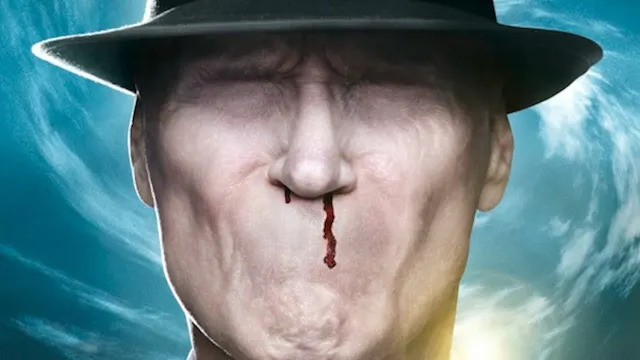
Once part of the Committee, Sydney receives orders from a spook named Frank Morgan (Will Patton), who was presumably named after the actor from “The Wizard of Oz.” “VR.5” then plays out as a case-of-the-week procedural, with Sydney entering a different person’s mind in every episode. Sometimes, Sydney finds some deeply hidden thrills in the minds of her marks. In one episode, she enters the mind of a cashier who steals from the till at work, and finds that the cashier sees herself as a wild, awesome, rule-breaking criminal mastermind. Sydney gets swept up in her fantasies, and even has something approaching a queer romance. Sydney’s sexuality is never explicitly stated, however.
Also, “VR.5” featured several “arc” episodes, wherein Sydney investigated her father’s past, and the fate of her dead sister.
VR.5 was intended to be an X-Files knockoff
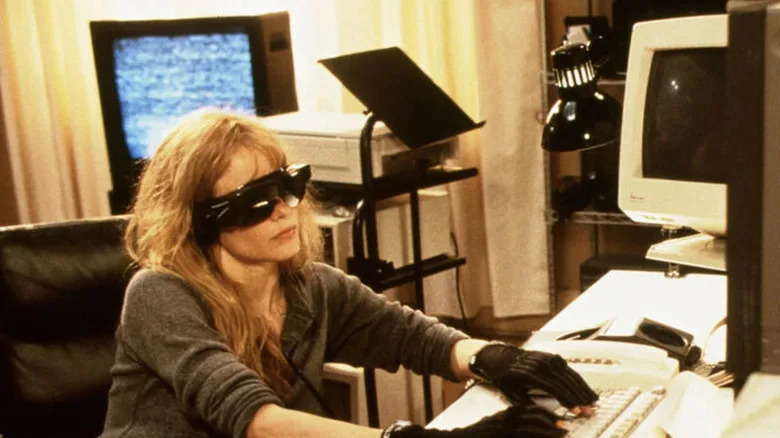
There is definitely a conspiratorial “X-Files” vibe to “VR.5,” and that’s not a coincidence. “The X-Files” was becoming huge in the popular consciousness at the time, and many shows aimed to emulate its success. In a 1995 issue of Electronics Gaming Monthly, the show’s executive producer, Thania St. John, stated outright that her show would copy the same horror tone as Chris Carter’s series. “VR.5” isn’t quite as funereal as “The X-Files,” but it does have a lot of subplots about conspiracies and secrets.
Advertisement
It was also incredibly stylized. The V.R. sequences were surreal, color-coded universes that played out like dreams. Said sequences were presented with (what we called in 1995) “MTV editing,” that is: a lot of quick cuts and strange camera angles. “VR.5” might look dated to some eyes, but the ideas are sound. The fact that it was dealing with a wild fantasy technology to begin with kind of made the series future-proof. Here in the ’20s, people can buy V.R. headsets at Best Buy, of course, but “VR.5” had brain-scanning tech that we still don’t have access to. The only dated aspect is that “VR.5” speaks of V.R. in vaunted, mythic terms, when really it just turned out to be another way to play video games. The Metaverse was laughed out of the marketplace.
The Will Patton character on “VR.5” only lasted through the show’s first four episodes, and was replaced by a new character played by the late Anthony Stewart Head (only a few years away from his star turn on “Buffy the Vampire Slayer”). “VR.5” is not available on any streaming services, but reess, including the unaired episodes
If you’re looking for the easiest way to keep up with all the major movie and TV news, why not sign up to our free newsletter? You can also add us as a preferred search
Read the original article on SlashFilm
