

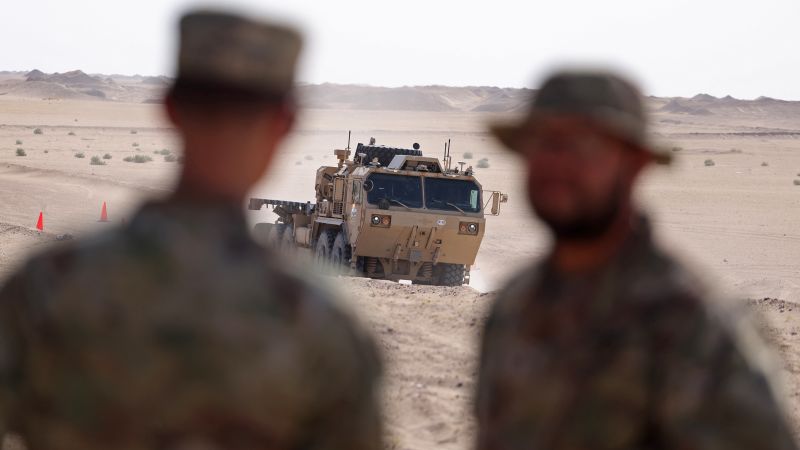
• US injuries:Nearly 100 US service members have suffered some level of injury, mostly minor, since July 7, the Pentagon said. CNN reported the military has been slow to disclose injuries during the conflict
• Abandoned ship: The crew aboard a vessel that was reportedly struck in the Strait of Hormuz on Monday has abandoned the ship and are currently in a lifeboat, according to the UK maritime authority
• 10th night of strikes:The US completed more strikes against Iran, the US military said late Monday, hours after President Donald Trump warned that Tehran would pay for the deaths of three service members over the past few days. Iranian state media reported explosions in several locations
• Next steps:The US is increasing the number of fighter jets in the Middle East as Trump considers how to proceed, an official said. Dozens of US fuelers have arrived in Israel in recent days and are still incoming, an Israeli
7 Posts
Throughout its war with the US, Iran’s counteroffensive has largelybeen directed atthe oil-rich Arab countries that border the Persian Gulf
Iran has repeatedly targeted US assets and energy infrastructure in all six states that make up the Gulf Cooperation Council: Bahrain, Kuwait, Qatar, Oman, Saudi Arabia and the United Arab Emirates
It’s come at great cost: the price tag for the oil refineries, power plants and other energy facilities damaged in the war could hit $58 billion, according to an April estimate from Rystad Energy, which doesn’t take into account the latest bout of fighting. This week, a key power and desalination plant in Kuwait was struck twice in two days
More broadly, Iran’s attacks have also punctured confidence and security in the Gulf, disrupting tourism and air travel in a key global transport node, and prompting some expats to flee
But while Gulf leaders have strongly condemned Iran’s attacks on their territory, they’ve stopped short of a military response
That’s because, despite the mounting costs of the war, “further escalation with Iran would impose costs that these governments are unwilling to bear,” Hesham Sallam, senior research scholar at Stanford University’s Center on Democracy, Development and the Rule of Law told CNN
The Gulf states know that if they intervene, they will only prolong the war, said Ian Parmeter, Middle East expert and former Australian ambassador to Lebanon
Unlike the US, which is thousands of miles away from Iran, the Gulf states “are very much aware that whatever happens in their future, they’re going to have Iran as a neighbor,” Parmeter told CNN
“They’re going to have to live with Iran.”
ASEAN foreign ministers on stage during a photo op in Manila on 21 July 2026.
Southeast Asian countries have expressed “serious concerns” about the renewed hostilities between the US and Iran, as the closure of the Strait of Hormuz again risks the region’s energy security
Countries in Asia have been the hardest hit by Iran’s effective closure of the strait, a critical route for about 60% of the region’s energy supply
Earlier this year, the energy-starved nations resorted to extreme measures to keep their economies afloat, withthe Philippines even declaring a national emergency
Iran’s choking of the waterway has led to shortages across Southeast Asia of petroleum products used to make fertilizers and plastic items, chemical products and the liquefied gas that many households use for cooking, the International Energy Agency said last month. Fuel prices also spiked across the region
The renewed fighting between the US and Iran will have “further implications” for the region’s trade, energy, and food security, the ASEAN foreign ministers said on Tuesday. Of particular concern is the stability of agricultural supply chains and fertilizers, according to the statement
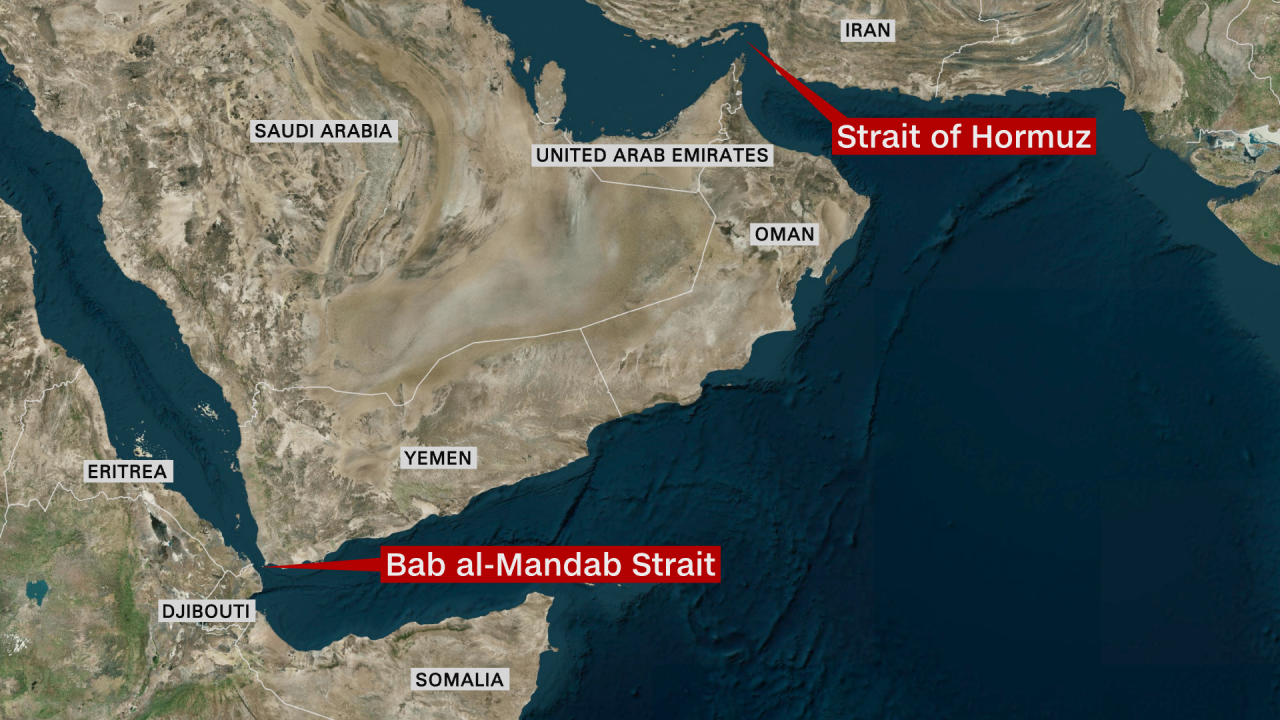
Bab al-Mandeb is located at the southern end of the Red Sea and is a critical gateway to the Suez Canal.
The Iran-backed Houthi group in Yemen has declared its own maritime blockade on Saudi shipping, an escalation that could reignite yet another dormant regional conflict and threaten global oil supplies
Video from Reuters shows Houthi supporters in Yemen gathering in the capital Sanaa on Monday night praising the naval blockade
The Houthis, one of Iran’s principal allies in the region, have long warned they could take action to block the Bab al Mandab Strait, a chokepoint at the southern end of the Red Sea
The closure of the strategic waterway could significantly disrupt global trade and further roil oil markets
People in Yemen’s Sanaa rally on 20 July 2026 after the Iran-backed Houthis announced a Saudi naval blockade.
Bab al-Mandab, which translates as the Gate of Tears, is located at the southern end of the Red Sea and is a critical gateway to the Suez Canal, linking Europe and Asia through one of the world’s busiest shipping routes. Just 29 kilometers (18 miles) across at its narrowest point, it is where ships have previously come under attack by Houthi rebels
Nearly 15% of global maritime trade passes Bab al-Mandab. The previous disruptions to shipping between 2023 and 2025 probably cost some $20 billion a year, according to industry estimates
The strait is a critical export route for Saudi Arabia, the world’s biggest crude exporter, and has remained largely navigable throughout the war
CNN’s Mostafa Salem contributed reporting
Nearly 100 US service members have suffered some level of injury since July 7, the Pentagon said, as the United States and Iran exchanged another night of strikes
If you’re just joining us, here’s what else to know:
- US casualties:APentagon spokesperson said most of the almost 100 injuries suffered by American troops were “minor concussions,” but CNN reported on Monday that the US military has been slow to disclose injuries to troops, saying the delay was intended to protect service members.
- Return of killed troops: A dignified transfer for US service members killed in the war — originally expected for Tuesday — will take place Wednesday, according to a Trump administration official. US President Donald Trump was originally expected to attend. Trump had earlier warned that Tehran would pay for the deaths of three service members over the past few days.
- 10th night of strikes:The US completed more strikes against Iran Monday night into Tuesday, targeting Iranian command centers and maritime capabilities, the military said. Iranian state media reported explosions in several locations, including Bandar Abbas, Qeshm and the Bemani district in Iran’s southern Hormozgan Province.
- Hormuz attacks:The British maritime authority said the crew aboard a vessel reportedly struck in the Strait of Hormuz on Monday abandoned ship and were in a lifeboat. Daily shipping traffic in the waterway has consistently dropped, with just nine vessels passing through on Monday, according to MarineTrafficdata. The US military, however, said it has “helped facilitate the transit of approximately 900 commercial vessels” since early May.
- Regional impacts:The escalating conflict has impacted the wider Middle East region. Kuwait said it intercepted “hostile” missiles and drones overnight, and Jordan said it intercepted and downed three missiles launched from Iranian territory. Meanwhile, the US is increasing aircraft numbers in the Middle East, with dozens of US fuelers arriving in Israel in recent days.
- Ceasefire proposal:Mediators have floated a 10-day ceasefire between the US and Iran, but Washington has downplayed the prospect of Trump accepting it.
- Israel-Lebanon conflict:The Israeli military said it has begun a “pilot program” for partial withdrawal from Lebanon by transferring control of three villages in southern Lebanon to the Lebanese military. This stems from a 14-point framework signed by Israel and Lebanon after US-mediated talks.
CNN’s Lex Harvey, Clay Voytek, Piper Hudspeth Blackburn, Mohammed Tawfeeq, Dana Karni, Max Saltman, Eyad Kourdi, Lisa Wong, Kevin Liptak and Alejandra Jaramillo contributed reporting to the post
The crew aboard the vessel that was reportedly struck in the Strait of Hormuz Monday has abandoned the ship and are currently in a lifeboat, the UK Maritime Trade Operations (UKMTO) center said in an update early Tuesday local time
No environmental impact has been reported, the UKMTO added. Earlier, in a statement reported by state media IRNA, Iran’s revolutionary guards claimed that they struck two “non-compliant” tankers attempting to transit the Strait of Hormuz
The UKMTO previously said it had received a report a vessel had been hit by an “unknown projectile” eight nautical miles northeast of Limah, Oman, on Monday afternoon
The report came after two vessels were struck Sunday by projectiles off the coasts of Oman and the United Arab Emirates
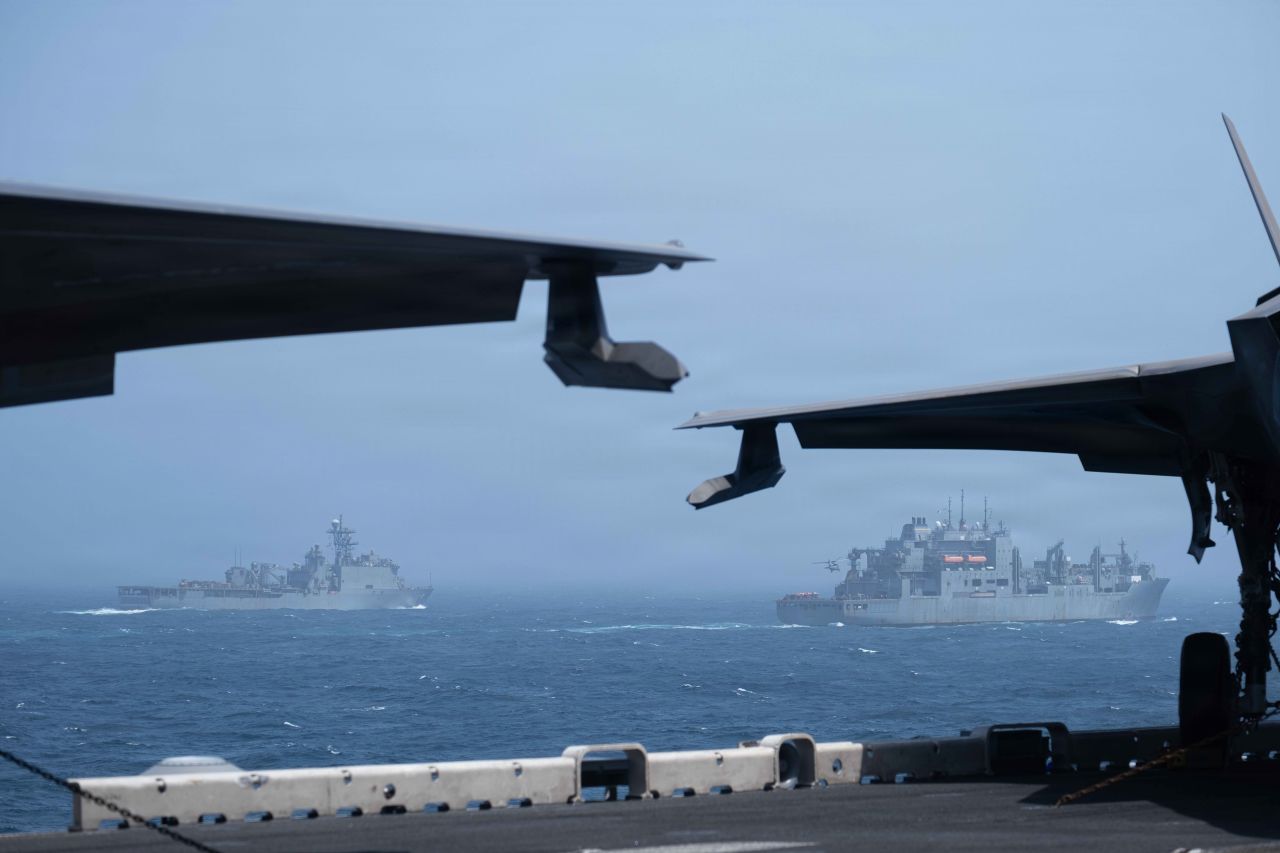
Wasp-class amphibious assault ship USS Boxer sails alongside Whidbey Island-class dock landing ship USS Comstock and Lewis and Clark-class dry cargo ship USNS Cesar Chavez, during a vertical replenishment, July 7.
Nearly 100 US service members have suffered some level of injury since July 7, Pentagon spokesperson Sean Parnell wrote on X
He wrote this to push back against a New York Times report claiming that the Pentagon withheld dozens of US military injuries occurring in the war with Iran
CNN reported Monday afternoon that the US military was slow to disclose injuries to troops, saying the delay was intended to protect service members
A dignified transfer of US service members killed in the war with Iran will take place on Wednesday, according to a Trump administration official
The official told CNN that four service members will be transferred to Dover Air Force Base
The Pentagon previously said three US service members were killed over the weekend, including two at a military base in Jordan and one in northern Iraq, and that the US located unidentified remains in Jordan after a service member had been listed as missing in action
White House press secretary Karoline Leavitt said Monday that President Donald Trump was expected to attend a dignified transfer on Tuesday, but she later announced it would be delayed
