

London firms warn of widening AI skills gap
2 hours ago

Getty
London’s biggest employers have warned that firms across the capital are struggling to find the skills they need as artificial intelligence reshapes the job market
The plan, drawn up by an AI steering committee convened by the business group BusinessLDN and Deloitte, calls on the mayor of London, the government and businesses to do more to prepare Londoners for AI-driven change
AI can increasingly carry out routine, administrative and text-heavy tasks, changing what jobs involve and the skills employers want
Research for City Hall estimates that 46% of London’s workers, about 2.4million people, are in roles where AI could automate part of their job, above the 38% UK average
It is pushing up demand for staff with AI and digital skills, as well as “human” skills, such as communication and critical thinking, that are harder to automate
A BusinessLDN survey of more than 2,000 business leaders found that half their existing workforce had the skills their business needed, down from 63% a year earlier. More than three-quarters expected a significant need for AI and advanced digital skills over the next five years, up from 66% in 2025
The committee wants City Hall to create a pan-London careers and skills service, set up a real-time dashboard tracking AI’s impact on jobs, and allow employers to help design training. It also urges the government to reform the growth and skills levy and expand adult-learning funding
Muniya Barua, deputy chief executive of BusinessLDN, said London was “at the sharp end of the AI revolution”, creating “a huge opportunity, but also a responsibility to ensure Londoners are equipped with the skills they need”
The committee includes firms such as Microsoft, Lloyds Bank, NatWest, Sky and Linklaters
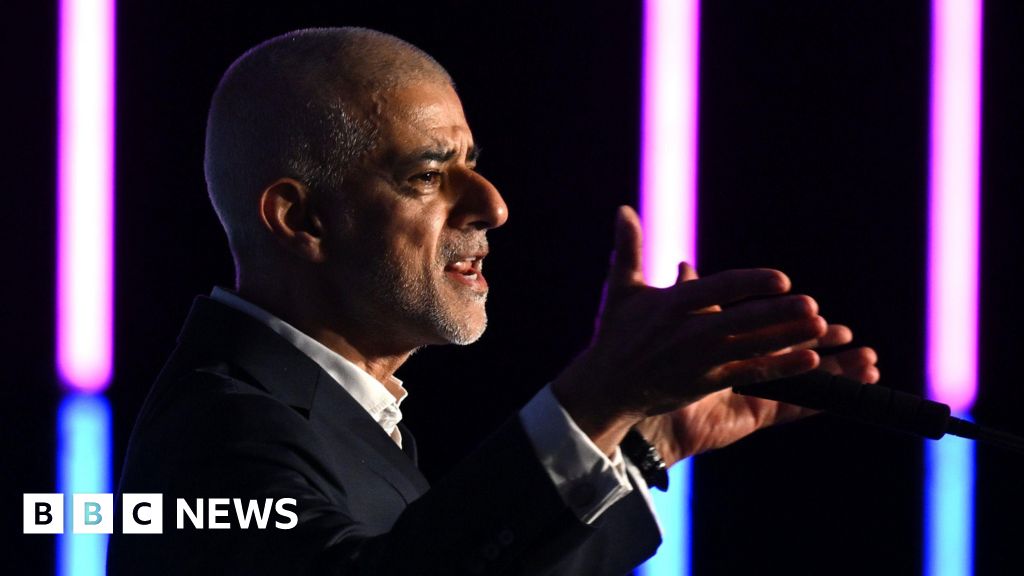
The plan was submitted to the mayor’s AI and Jobs Taskforce, whose recommendations Sir Sadiq Khan has now accepted
The taskforce, chaired by Baroness Martha Lane-Fox, concluded that an AI “jobs apocalypse” was not inevitable, but said London should be the first city to actively shape the transition rather than wait for disruption
Khan agreed to take forward three measures: an early-warning system to spot AI-driven job changes before they become a crisis, a partnership bringing employers, workers and educators together to redesign jobs rather than simply automate them, and a scheme pairing young Londoners with employers to shape future careers
He also announced £18m to help young Londoners into work, training or education, including £10.5m to extend a programme for about 6,000 people not currently in education, employment or training
The taskforce also urged him to open talks with the government on devolving more control over skills policy to the capital
Khan said the debate about AI had “become too polarised”, adding that “some claim it will solve everything. Others predict mass unemployment
“Neither view helps Londoners prepare for the future.”
Lane-Fox said that for many Londoners AI “still feels like something happening to them, not with them”, warning of “a quieter drift” of “fewer entry-level roles, weaker career ladders and growing inequality” unless the city acted early
Adam Cantwell-Corn, of the Trades Union Congress and a member of the taskforce, said how AI affected working lives would “be shaped by choices and who gets to make them”, adding that “workers need to be part of making those decisions”
Listen to the best of BBC Radio London onSoundsand follow BBC London onFacebook,XandInstagram. Send your story ideas tohello.bbclondon@bbc.co.uk
Half of London firms report skills gap amid AI boom
AI puts one fifth of London jobs at risk – report
What does the future hold for AI in London?
Mayor of London
BusinessLDN
London
Artificial intelligence
Science & Environment
