

Cutting through the quantum computing noise – Metal Tech News
Cutting through the quantum computing noise
Metal Tech News – July 20, 2026
Share
Peter Hansen at stock.adobe.com
DOE national labs create high-purity silicon and germanium isotopes to reduce noise that can disrupt fragile quantum states
Data Mine North via ChatGPT
U.S. national labs produce high-purity silicon and germanium isotopes for next-gen quantum devices
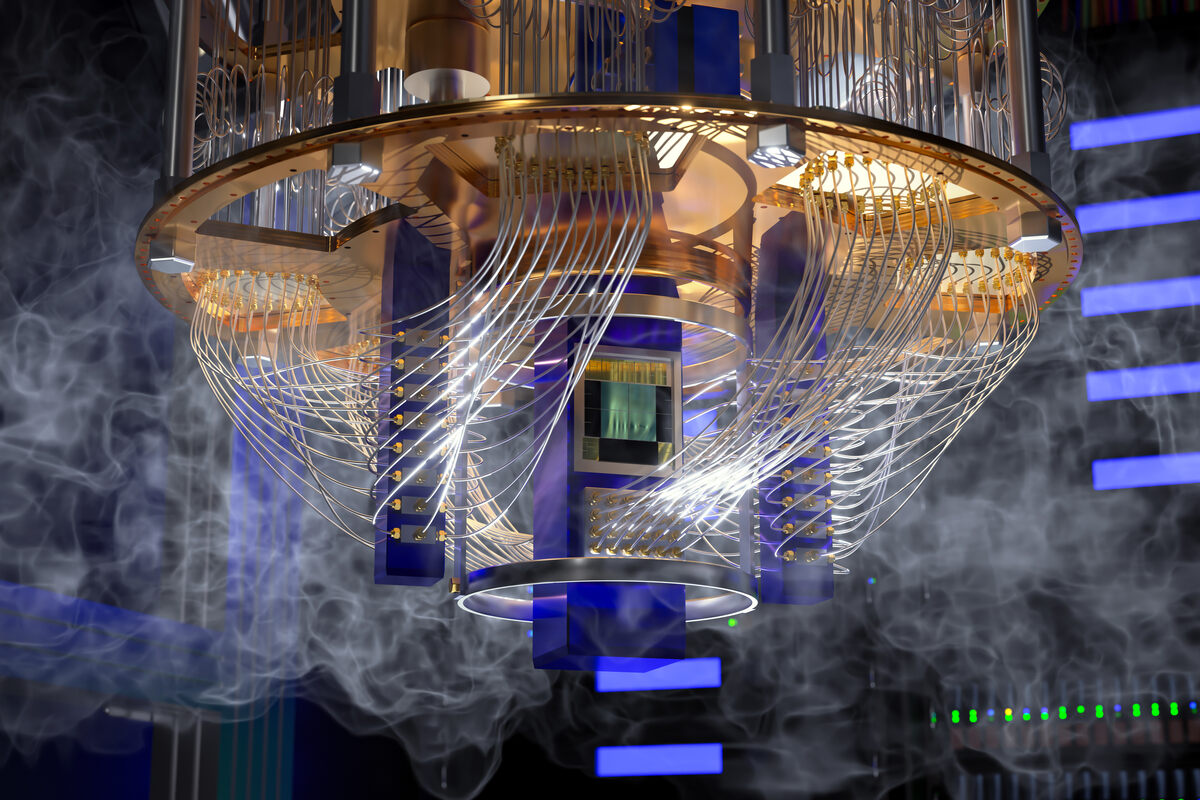
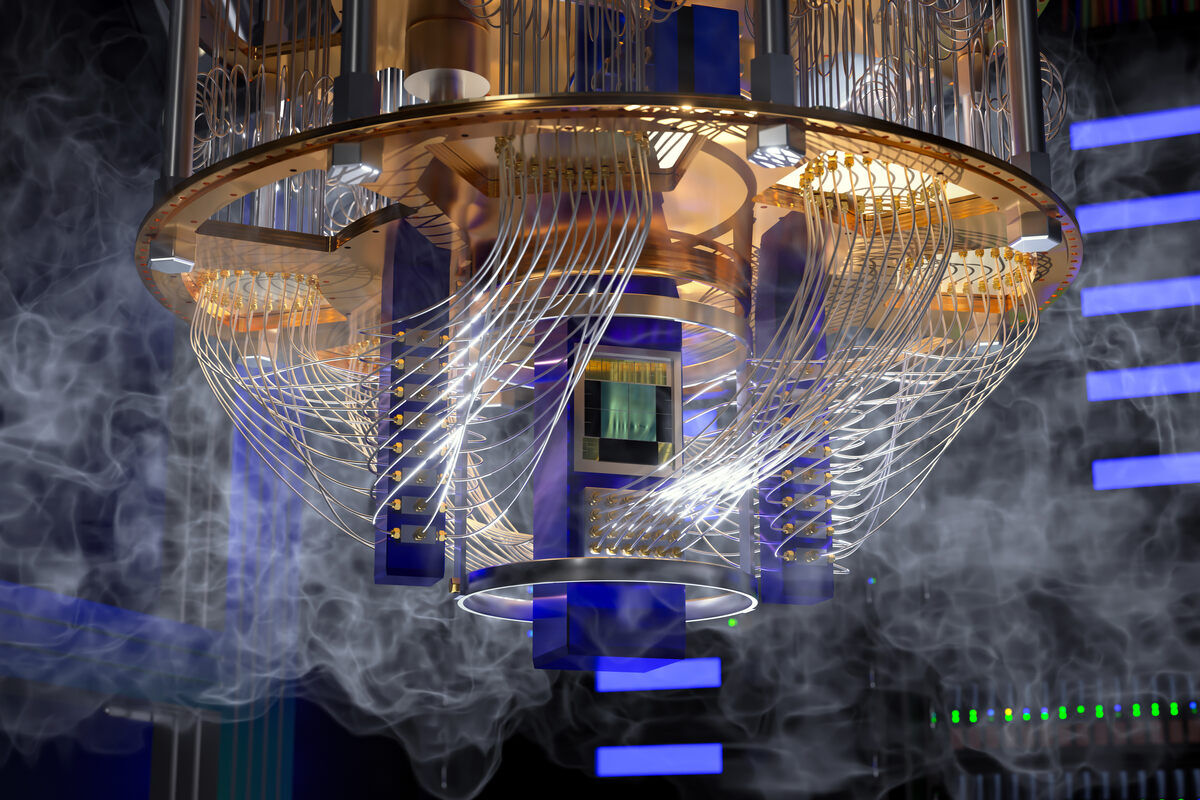
Quantum computers promise to solve problems that overwhelm even the most powerful conventional supercomputers, but their extraordinary potential rests on something exceptionally fragile – the ability of quantum bits, or qubits, to preserve information long enough to complete the calculations
Unlike the binary bits in conventional computers, qubits can exist in combinations of states and interact through uniquely quantum effects. These qubits, however, are incredibly sensitive to the noise of the macroscopic world we live in – even the nuclear spin of an isotope at the subatomic level can disrupt fragile quantum states and cause information to be lost through a process known as decoherence
The shorter the coherence time, the less opportunity a quantum computer has to perform useful calculations before errors overwhelm the result
Scientists at the U.S. Department of Energy’s Oak Ridge National Laboratory and Pacific Northwest National Laboratory have pioneered technologies to produce ultra-enriched silane and germane that are extremely depleted in noise-inducing contaminant isotopes
“This advancement has the potential to increase the operability of quantum computers and will help enable the U.S. to be the undisputed leader in the quantum technology race,” said DOE Under Secretary for Science Darío Gil
Quieter quantum materials
Silane and germane are the molecular analogs of methane – each has a core element atom surrounded by four hydrogen atoms. In the case of methane, the core atom is carbon – silicon and germanium are the core elements of silane and germane, respectively
Materials scientists use silane and germane to produce ultra-pure silicon and germanium for semiconductors, solar cells, and other electronic components. For quantum applications, the isotopic composition of the silicon or germanium deposited on a device can be as important as its chemical purity
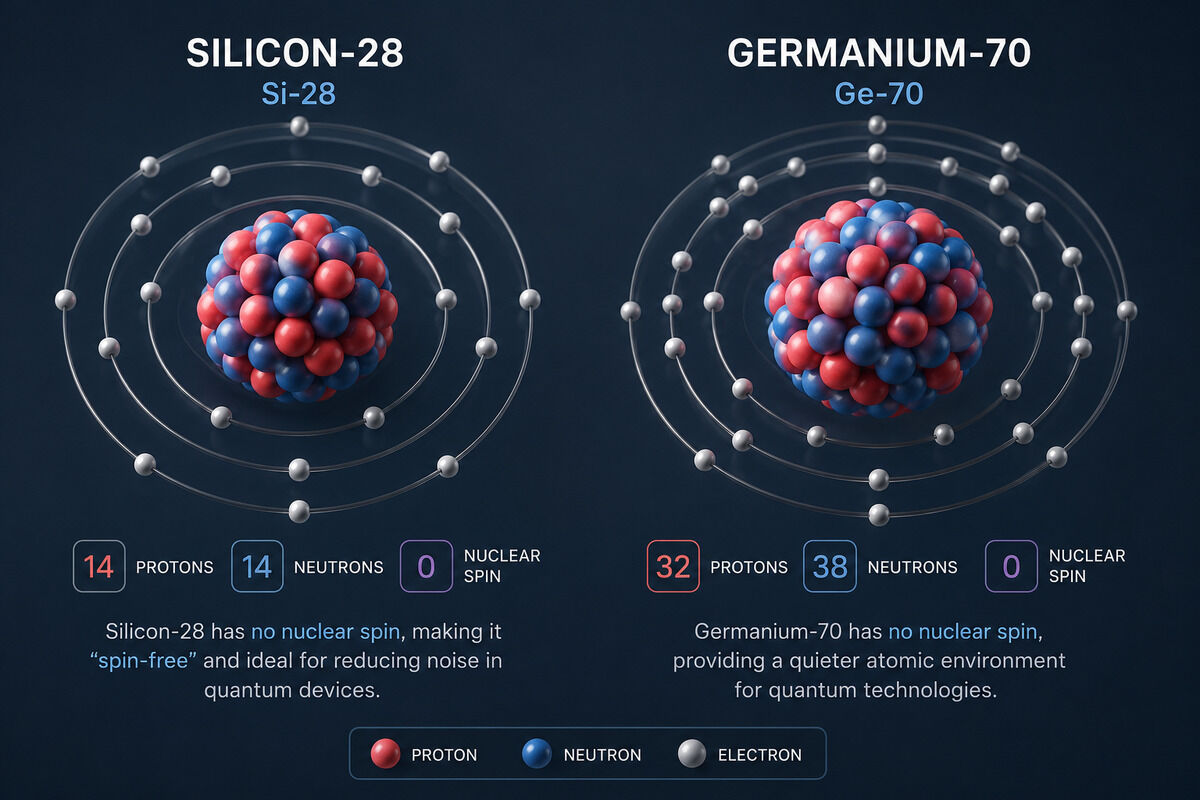
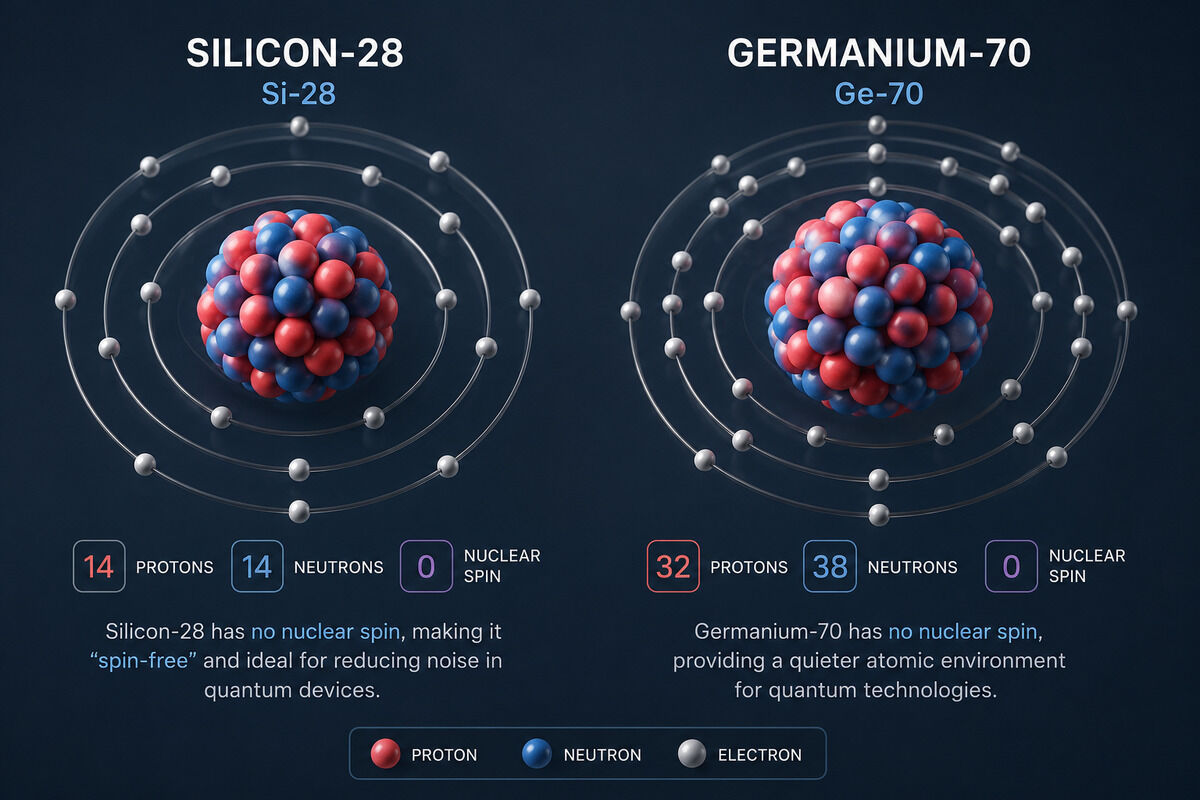
Natural silicon consists primarily of silicon-28, but it also contains silicon-29 and silicon-30. Creating ultra-high-purity silicon does not necessarily change isotope ratios
To produce silane dominated by the quieter silicon-28, the unwanted isotopes must also be removed
The same principle applies to germanium, which naturally occurs as a mixture of several isotopes
DOE says the Oak Ridge and Pacific Northwest collaboration has created new versions of silane and germane that are 100 times more depleted of isotopic noise than any commercially available material worldwide
They accomplished that isotopic purity by reducing the quantities of noisy silicon-29 and germanium-73 isotopes to below one part per million. They also announced silicon-28 purity levels of up to 99.9999% in silane
The national labs said this milestone is key to increasing the operability and coherence time of quantum computers
“For years, the promise of quantum supercomputing has been held back by the microscopic noise of the physical world,” said Christopher Landers, director of Isotope R&D and Production within DOE’s Office of Science. “Today, we have silenced that noise.”
Data Mine North via ChatGPT
Unmatched isotopic purities
The isotopic breakthroughs were made through a combination of Oak Ridge’s isotope-separation capabilities with Pacific Northwest’s expertise in chemical conversion and gas purification
At Oak Ridge, scientists are using electromagnetic isotope separation, or EMIS, systems to separate atoms according to mass
The technology ionizes feed material, giving its atoms an electrical charge. Magnetic and electric fields then guide the charged particles along slightly different paths according to their mass, allowing individual isotopes to be collected separately
Oak Ridge is using this capability to produce germanium-70 and germanium-76 while reducing germanium-73 concentrations to less than 1 ppm
The same systems are used to produce silicon-28 for spin-free semiconductor environments and next-gen technologies, as well as ytterbium-171 for quantum computing and memory applications
Pacific Northwest developed highly efficient systems for transforming compounds such as silicon tetrafluoride, germanium tetrafluoride, and germanium dioxide into silane and germane gases
The thermal diffusion employed at the lab takes advantage of small differences in how isotopes move through a temperature gradient. Directly enriching the gases can simplify processing and reduce the risk of diluting the isotopically pure material through additional handling and chemical-conversion steps
The resulting high-purity silane and germane can be fed into semiconductor-manufacturing equipment to deposit isotopically engineered layers of silicon or germanium onto advanced chips
“By achieving isotope purities never before seen on Earth, we are hand-delivering the foundation for the world’s most stable quantum computers right here in America,” said Landers
Genesis of quantum computing
The foundational isotopic breakthroughs are helping to achieve the quantum computing goals of the Genesis Mission, a DOE-led initiative to combine artificial intelligence, high-performance computing, quantum technology and national laboratory research infrastructure to accelerate scientific discovery
Quantum Genesis, a core component of the broader Mission, aims to deploy the world’s first scientifically relevant, fault-tolerant quantum computer by 2028
The quantum-grade silicon and germanium isotopes produced at Oak Ridge and Pacific Northwest national labs are considered a giant leap toward achieving this objective
“This is our generation’s space race, and with this breakthrough, we aren’t just competing – we are setting the pace,” said Gil
To keep that pace toward the ultimate Quantum Genesis objective, the labs are working to simplify production processes, minimize impurity risks, and secure exceptionally stable, ultra-pure precursor materials that can help silence one
Shane Lasley, Metal Tech News
With more than 18 years of covering mining, Shane is renowned for his insights and in-depth analysis of mining, mineral exploration, and technology metals
- Email: [email protected]
- Phone: 907-726-1095
- https://www.linkedin.com/in/shane-lasley-ab073b12/
You might be interested in:
Most Popular
Trail anchors Canada’s critical minerals push
Shane Lasley | Jul 8, 2026
USA Rare Earth produces magnet REE oxides
Shane Lasley | Jul 14, 2026
War Department commits $25M to ReElement
A.J. Roan | Jul 13, 2026
Missouri lands critical minerals funding
Shane Lasley | Jul 14, 2026
Rendered 07/20/2026 13:30
