

IEA report warns mineral risks deepen – Metal Tech News
IEA report warns mineral risks deepen
Metal Tech News – July 17, 2026
Share
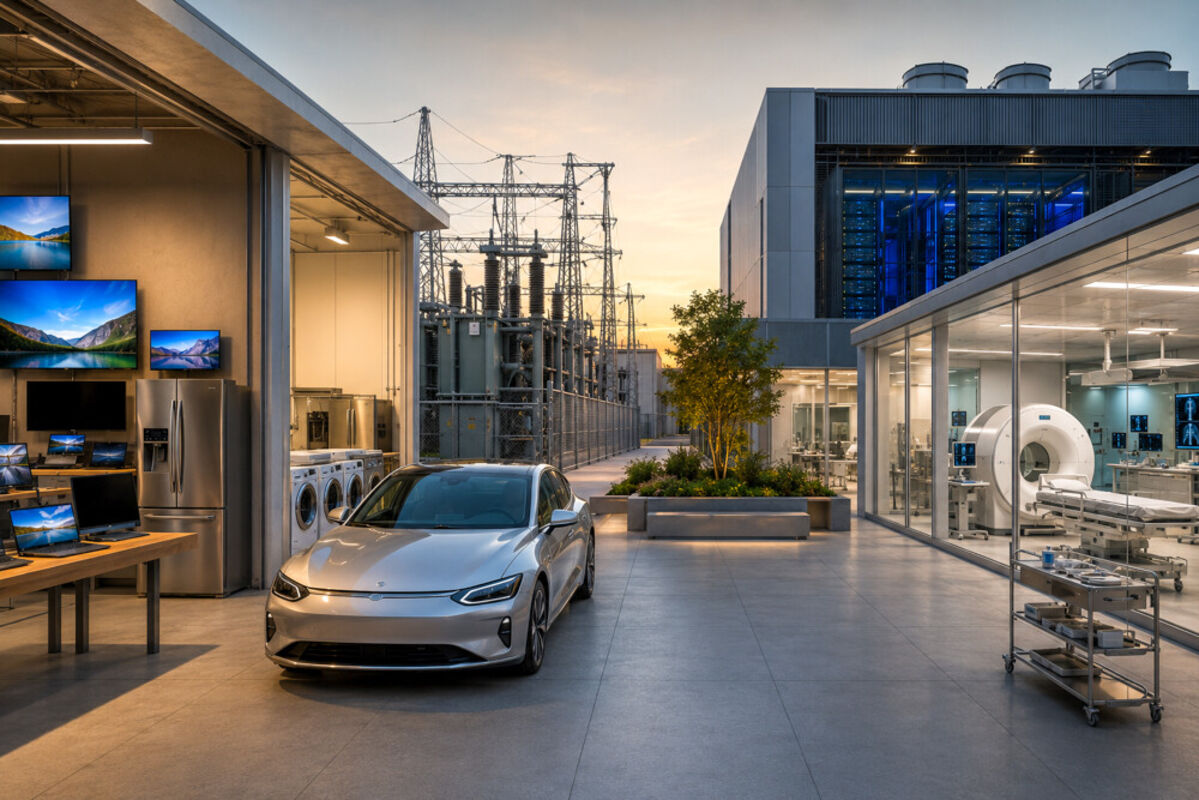
Data Mine North via ChatGPT
Critical minerals support consumer electronics, vehicles, medical equipment, power grids and data centers across the modern economy
International Energy Agency
The IEA’s 2026 outlook found that concentrated refining, export controls and weaker investment have turned mineral supply risk into an immediate economic threat
Export controls, weak investment threaten reliable industrial supply
Shifting the critical minerals dialogue from how much the world can produce to whether industries can reliably obtain them, the International Energy Agency released its annual Global Critical Minerals Outlook, warning that concentrated refining, expanding export controls, and weaker investment have turned supply risk into an immediate economic threat
From the televisions, smartphones, and computers used every day to cars, appliances, medical equipment, power grids, and the data centers supporting the digital economy, critical minerals are embedded throughout modern life and the systems that sustain it
Across many of those products, manufacturers depend on specialized materials with few practical substitutes and supply chains concentrated in a limited number of countries and processing hubs
A disruption at the mine, refinery, or export gate can therefore move quickly through manufacturers, turning an obscure mineral shortage into delayed production, higher costs, and missing components far beyond the mining sector
That reach has made critical mineral security an increasingly important concern for the International Energy Agency, a Paris-based organization that examines the full spectrum of global energy issues and advocates policies to make energy more reliable, affordable and sustainable across its 32 member countries, 14 association countries and beyond
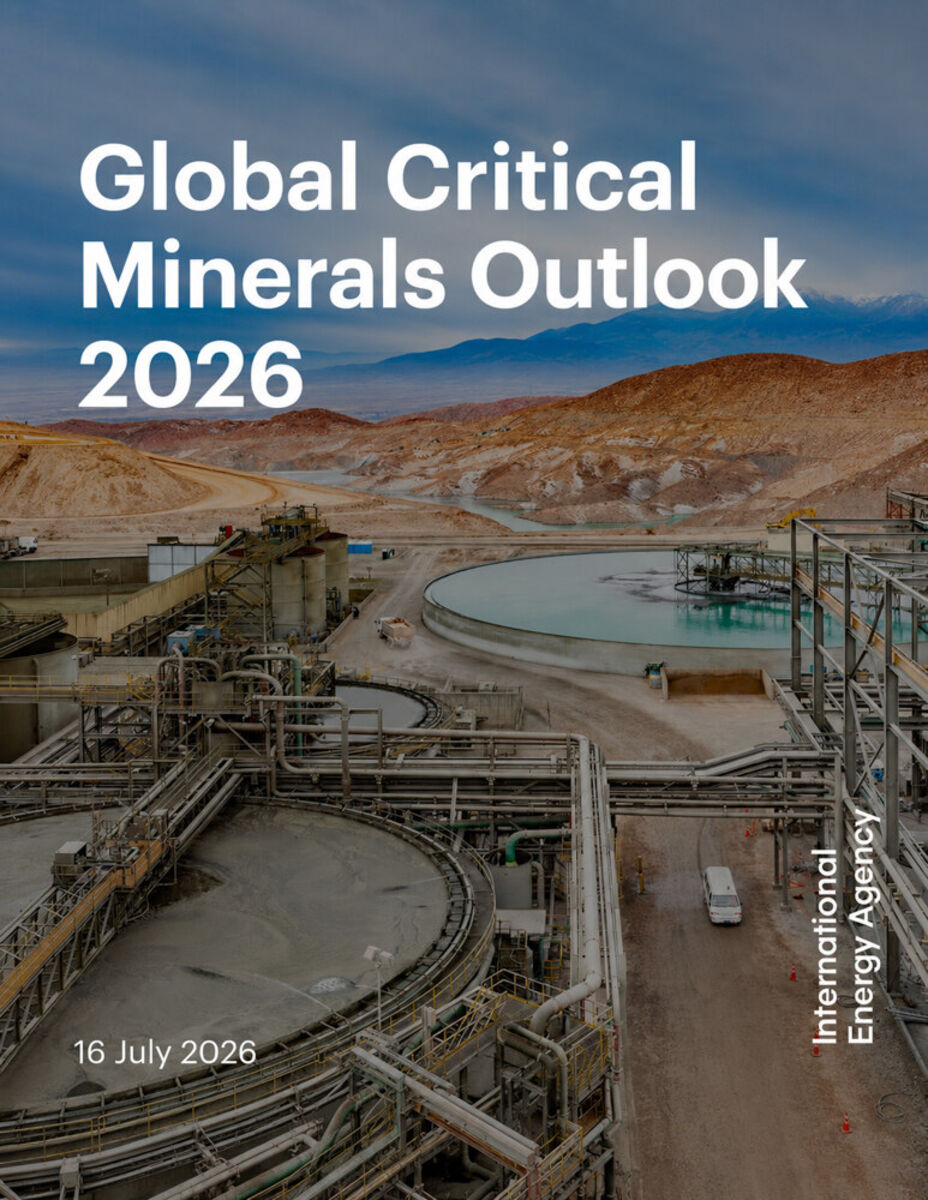
Issued each year, IEA’s Global Critical Minerals Outlook examines the market, investment, policy, and technology forces shaping mineral security
International Energy Agency
The IEA’s 2026 outlook found that concentrated refining, export controls and weaker investment have turned mineral supply risk into an immediate economic threat
Covering aluminum, copper, nickel, manganese, and uranium, alongside cobalt, graphite, lithium, rare earths, and a broader group of strategic minor minerals, the 2026 edition reviews conditions through 2025 and early 2026, then projects supply and demand through 2040 and assesses the risks that could affect future availability
Rather than pointing to a single shortage, the report found pressure building across the mineral chain as stronger demand collided with export controls, concentrated processing, uneven project development and a pullback in investment outside a handful of better-positioned commodities
The clearest evidence of this pressure appeared in prices, with aluminum, copper and tin rising by roughly one-third between January 2025 and April 2026, lithium more than doubling amid strong energy storage demand and constrained supply, cobalt climbing about 130% after the Democratic Republic of the Congo restricted exports, and tungsten surging sixfold as tighter availability and trade controls reshaped markets
Even so, robust production growth kept most key energy mineral markets in surplus during 2025, leaving the greater concern not an immediate shortage across every market but whether concentrated supplies could continue reaching the industries that depend on them
Within that broader rise, the sharpest regional price divide emerged between Chinese and European markets, where gallium and heavy rare earth prices in Europe reached roughly five times Chinese domestic levels and germanium nearly three times higher as export controls constrained trade
Behind those price disparities was an increasingly concentrated refining system, with Indonesia for nickel and China for most other key energy minerals accounting for more than three-quarters of global refined supply growth over the past two years, including virtually all gains in manganese, nickel and graphite
The IEA data shows that years of Western policy and investment have yet to reduce reliance on China and Indonesia for refined critical minerals, while their share of new global supply has continued to grow
However, rare earths offered the lone exception, with new U.S. projects and increased Malaysian production modestly reducing China’s share of refined output
Even with that modest progress, the report found that the economic risks of concentrated mineral supply chains are no longer theoretical, as export restrictions have already disrupted manufacturers and shown how relatively small material flows can affect entire industries
In 2025, Chinese controls on seven heavy rare earths forced some automakers to reduce output or temporarily halt operations, while the IEA estimates broader suspended measures could, if fully implemented, place $6.5 trillion in annual downstream production outside China at risk, and a complete disruption of battery-grade graphite trade could threaten more than $300 billion in annual downstream production outside China
Those vulnerabilities were not limited to trade policy, with conflict in the Middle East disrupting aluminum, sulfur, and helium supplies and pushing higher costs through mineral processing and other downstream industries
Beyond those immediate disruptions, demand for every key energy mineral is expected to rise through 2040, leaving projected supply deficits for copper and lithium through 2035 despite both gaps narrowing as new projects advance, while the Democratic Republic of the Congo’s export quota has created a new gap for cobalt
Bringing enough new supply online to narrow those deficits may prove more difficult after critical mineral investment fell 9% in 2025, ending several years of growth, while exploration spending declined more than 10% and battery metal companies cut capital spending by over 20%, including roughly 40% among lithium producers
According to the IEA, that retreat reflects growing caution among companies and investors as price volatility, geopolitical risk, policy uncertainty, and shifting battery chemistries complicated investment decisions, while oversupply and weaker prices weighed most heavily on lithium and nickel
As private capital pulled back, governments moved further into the gap, with public financing commitments across advanced economies reaching roughly $65 billion in 2025, more than four times the 2023 level, though the IEA cautioned that much of that support remains announced rather than deployed
Even where projects are advancing, the pipeline remains weighted toward mining rather than the refineries and manufacturing plants needed to convert that output into usable products, leaving planned rare earth magnet and battery cathode capacity at roughly one-third of the upstream supply expected by 2035
Correcting that mine-heavy imbalance, the IEA said, will require governments and industry to direct more support toward refining and manufacturing, along with the technology, equipment, and skilled workforce needed to turn newly mined material into usable products
Until that broader industrial capacity is built, the report identifies strategic stockpiles as a short-term buffer against disruption, estimating that reserves covering 11 high-risk materials would carry a net annual cost of less than $900 million for countries outside the dominant supplier
Over the longer term, recycled supply could nearly double its contribution to key mineral markets by 2040, though reaching that level would require continued investment in collection and recycling infrastructure
You might be interested in:
Most Popular
Trail anchors Canada’s critical minerals push
Shane Lasley | Jul 8, 2026
USA Rare Earth produces magnet REE oxides
Shane Lasley | Jul 14, 2026
War Department commits $25M to ReElement
A.J. Roan | Jul 13, 2026
Missouri lands critical minerals funding
Shane Lasley | Jul 14, 2026
Rendered 07/18/2026 04:23
