

Food safety concerns are becoming too-frequent headlines. Right now, it’s a cyclosporiasis outbreak possibly linked to tainted lettuce. But the nation has also dealt with E. coli, Salmonella, and Listeria – a long list of threats
Consumers already know to thoroughly wash fresh fruits and vegetables. But is it enough? And how would you know? Many have wondered what‘s next
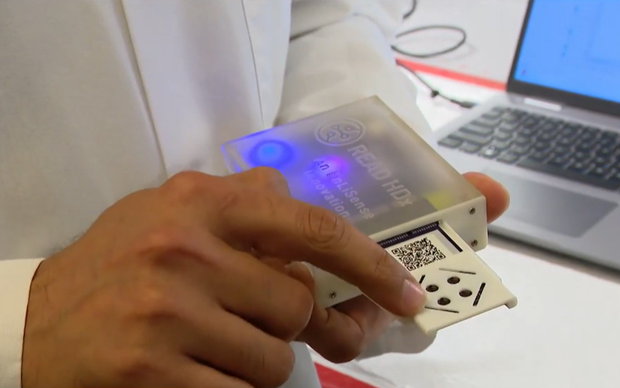
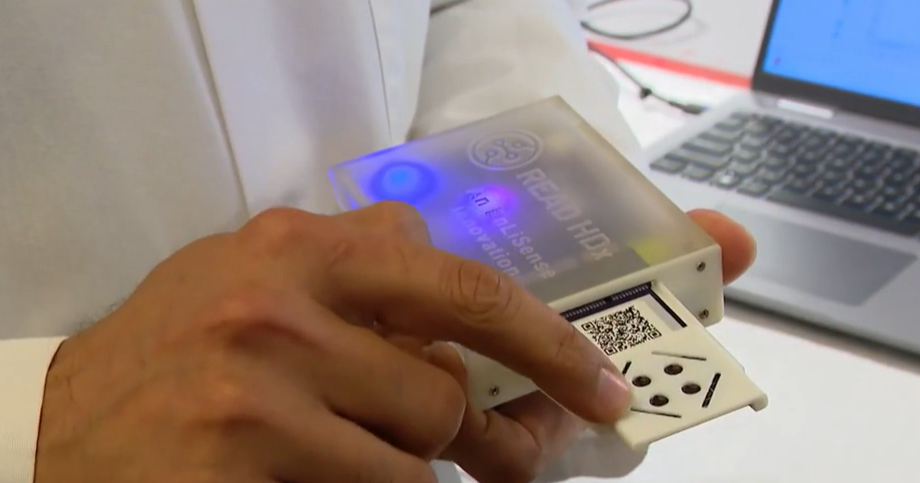
Researchers at the University of Texas at Dallas are exploring a quick, cost-effective way to test for food contaminants at home using technology most people already carry in their pockets: computer chips
“We have re-engineered those devices to be able to have what is called a ‘single capture measurement,'” said Shalini Prasad, PhD, department head of bioengineering and a Cecil H. and Ida Green Professor in Systems Biology Science in the Erik Jonsson School of Engineering and Computer Science at UTD
“Say, it’s a lettuce sample, or it’s a strawberry,” Prasad said. “And you take it, mush it with your hand, and drop it on the sensor
“The sensor is engineered so that it can measure any of these 16 things. So, a panel of antibiotics, a panel of pesticides, a panel of bacteria, a panel of parasites, and a panel of fungi. It can do all of this.”
The device, called READ – Rapid Electro Analytical Device – can detect contaminants in food and water in just a couple of minutes. Prasad said the research grew out of her curiosity as a mother trying to better protect her two sons
“As a mom, you’re a problem solver, right? And you don’t know what’s coming at you at any given point of the day. But what is important is how do I make people’s lives easier, better, healthier, and more accessible,” she said
The technology is nimble, allowing researchers to tweak and respond to outbreaks as they happen
“That is the idea,” Prasad said, “because we don’t know what’s the next epidemic, and we cannot wait to have it all built.”
The research team is preparing for pilot testing, with hopes of having the technology in consumer kitchens within the next year or so
“What worries us most is that which we cannot see,” Prasad said. “It is the invisible that I am making visible through this technology. That is the hope. And that is the dream.”
