

Iranian bridges severely damaged after sixth night of U.S. strikes
00:34
Get more newson
July 17, 2026, 5:39 AM EDT / Updated July 17, 2026, 5:42 AM EDT
By Mithil Aggarwal
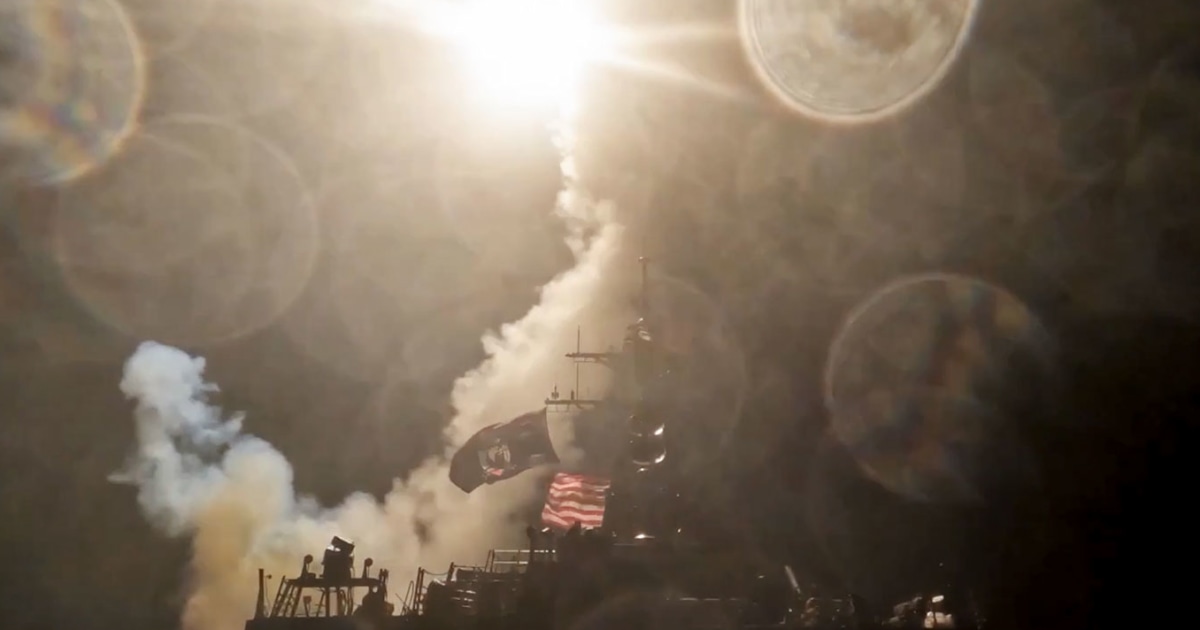
The United States attacked bridges and other key infrastructure in southern Iran overnight into Friday, capping nearly a week of strikes aimed at intensifying pressure on Tehran to give up control of the Strait of Hormuz
The latest expansion of this campaign appeared targeted at cutting off the main port city of Bandar Abbas from the heart of the Islamic Republic. Tehran hit back with new attacks on U.S. allies in the Middle East, including a first direct attack on Syria
The collapse of the ceasefire and interim agreement has led to days of strikes and counterstrikes across the region, with traffic in the crucial waterway once again largely halted as the two sides battle over the strait
Despite mounting fears for the global economy, President Donald Trump insisted the war was going well as he delivered a primetime address to the American public ahead of the Midterm elections
“We are likewise winning big in Iran, and you will see the fruits of that labor very, very shortly,” Trump said
The U.S. military targeted “military logistics infrastructure” and “maritime capabilities” in Iran during a sixth consecutive night of strikes, U.S. Central Command said late Thursday
Iranian officials and state media said the attacks hit civilian infrastructure
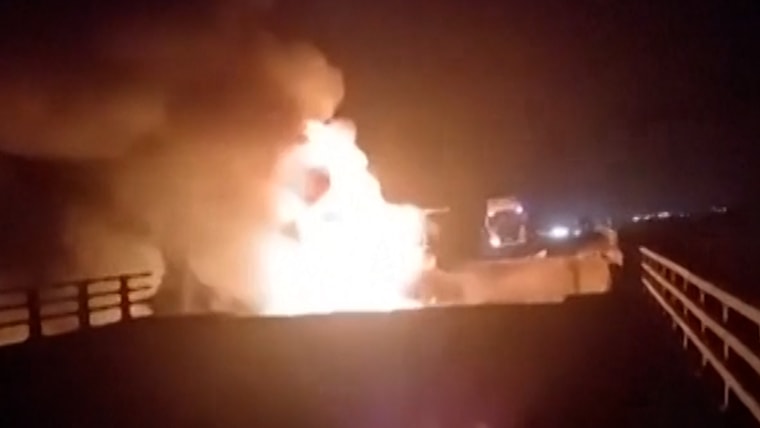
At least 8 people were killed and 20 others were injured in the strikes, Iranian state news agency IRNA reported. It said early Friday that at least six bridges were hit, including one that was still under construction
A railway junction station just west of Bandar Abbas was also hit, the state-owned IRIB news agency said
The highway and railway bridge strikes appeared aimed at cutting off Bandar Abbas, Iran’s main port, from roads leading toward Tehran, the capital
While other routes still are open, the U.S. strikes could expand further, potentially disrupting both the movement of military materiel and goods needed for Iran’s 90 million people
Iran also acknowledged “attacks on power infrastructure” during the U.S. airstrike campaign for the first time Friday, with the energy ministry asking people in southern provinces to use less electricity, according to the state news agency ISNA
The latest wave of U.S. strikes also damaged a maritime control tower in Chabahar on the Gulf of Oman, which lies outside the Strait of Hormuz yet is nonetheless a major port operated jointly with India
Defense Secretary Pete Hegseth posted a picture on X late Thursday showing the tower collapsing as plumes of smoke rose around it
Attacks on the tower — the third time in recent days — could impact port operations, Mehr news agency said
Trump had threatened to target Iranian infrastructure as tensions over the Strait of Hormuz erupted in the past week into the daily exchange of strikes and the reimposition of the U.S. naval blockade
Iran’s Revolutionary Guard said Friday it responded by launching missiles and drones toward several U.S. military bases in neighboring countries, including Jordan, Kuwait and Qatar, which has played a key mediating role in the conflict
A child was injured from falling shrapnel in Qatar during interception operations, the country’s interior ministry said on X. Air sirens were sounded in Bahrain, where authorities advised Friday morning citizens to head to safety
The Revolutionary Guard said it had targeted radar facilities and two HIMARS missile launch platforms in Kuwait, U.S. fighter jets and refueling aircraft in Jordan. It also targeted the Al-Tanf base in Syria, claiming to have targeted a U.S. Special Operations command center
NBC News could not verify the claims, and there was no immediate comment from the Pentagon. The U.S. military announced the handover of the base to Syrian forces in February
The escalation over the Strait of Hormuz has seen shipping traffic ground to a halt through the waterway, through which a fifth of the world’s oil flowed before the war
Daily traffic has dwindled to only a dozen or so ships this week after a surge during the ceasefire
Tehran, which wants ships to move along a route close to its shores and extract a transit fee, declared the entire waterway closed. The U.S., which was encouraging ships to move closer to Oman to ease Tehran’s grip on the key trade route, reimposed its naval blockade
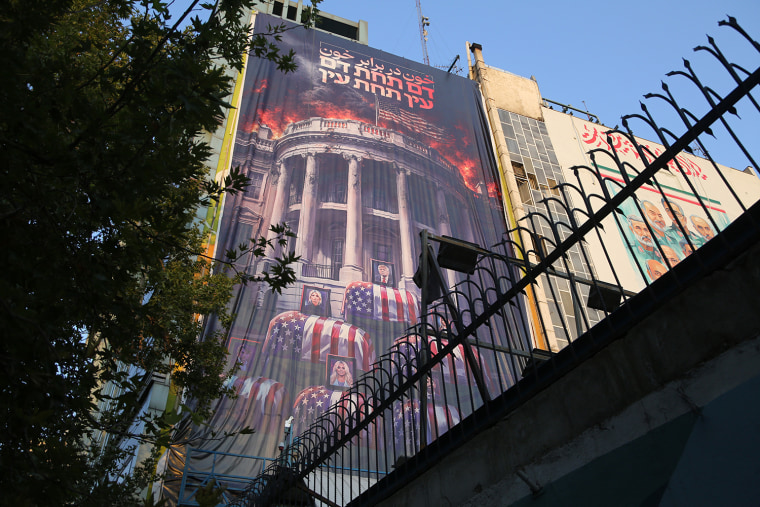
“As long as the American atrocities continue, not a single drop of oil and gas will be exported from this region,” the IRGC said
Despite the attacks, however, it appears communication channels between Washington and Tehran were still open
White House Press Secretary Karoline Leavitt told reporters Thursday that Iran wants to “make a deal with us” and that the U.S. strikes were in response to Iran firing on commercial vessels in the Strait of Hormuz
Trump has also hailed the “goodwill” gesture of Iran releasing an American citizen imprisoned since 2024. A White House official told NBC News on Thursday that the prisoner, Dena Karari, was safely outside Iran and will return home in the coming days
