

- News
- Technology News
- Tech News
- Meta’s AI reality check: Why consent is the next battleground
Trending
Apple OpenAI Lawsuit
Jeff Bezos
Sundar Pichai
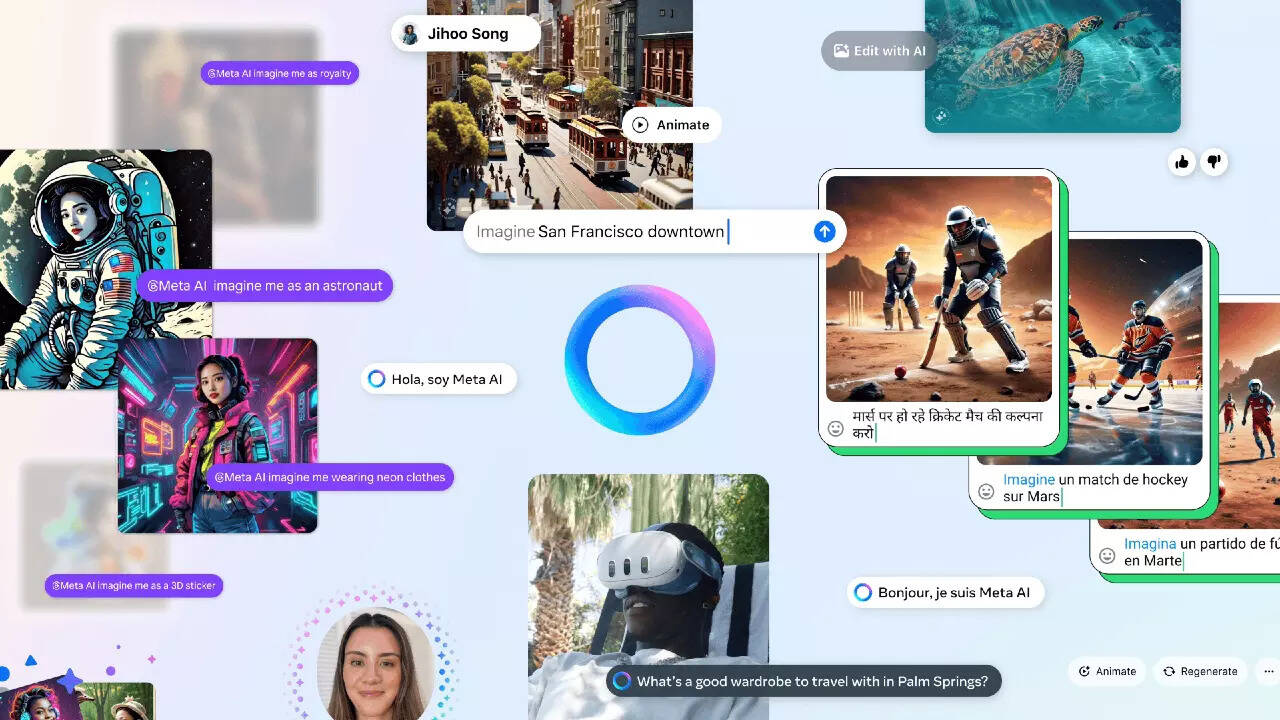
Meta AI Image Generator
Meta’s AI reality check: Why consent is the next battleground
Manisha Singh / TIMESOFINDIA.COM / Jul 12, 2026, 13:07 IST
Comments
AAText Size
- Small
- Medium
- Large

Representative Image
Silicon Valley has always worked on a simple assumption: If a technology is good enough, people will eventually accept it. This week, Meta found out that isn’t always true. Just days after unveiling Muse Image, its new AI image generator, the company pulled one of the product’s headline features. Users could create AI-generated images by simply @-mentioning public Instagram accounts, allowing the model to reference photographs from those profiles. Account owners wouldn’t necessarily know when their images had been used, and the feature was switched on by default unless they opted out.The reaction was immediate. Artists questioned whether their work had become free training material. Creators wondered why strangers could use years of carefully curated photographs as prompts for AI. Privacy advocates asked a more fundamental question: just because something is public, does that mean it is fair game for generative AI?By Friday, Meta had an answer. The company admitted the feature had “missed the mark” and removed it.The episode says something bigger about where artificial intelligence is headed. The race is no longer about who can build the smartest image generator. Companies have proved they can do that. The tougher challenge is persuading people that AI deserves access to their data.That may turn out to be a far harder problem to solve.To be fair to Meta, its argument wasn’t entirely unreasonable. The company wasn’t accessing private accounts or bypassing privacy settings. It said users retained control because the feature only worked with public accounts and people could opt out if they wanted.
Big Tech’s new problem
The problem is that AI changes how people think about public information.Someone looking at an Instagram photograph isn’t the same as software using that image to create something new. One is viewing content. The other is turning it into raw material. Legally, there may not be much difference. For many users, there clearly is.That gap between what platforms are allowed to do and what users are comfortable with is becoming one of AI’s biggest headaches.
Meta is hardly alone
Over the past few weeks, Google has expanded the ways Search history, voice recordings and uploaded files can help improve its AI systems. OpenAI uses consumer ChatGPT conversations to improve its models unless users change their settings. Anthropic, Microsoft and xAI also rely on user interactions to make their systems better.The direction of travel is obvious. AI companies need enormous amounts of human-generated data. Without it, their products stop improving.Users, however, are becoming far more selective about what they are willing to share.That makes Meta’s retreat particularly awkward because Muse Image wasn’t just another feature launch. It was supposed to showcase one of Meta’s biggest competitive strengths.Unlike most AI companies, Meta owns Instagram and Facebook, giving it access to billions of photographs and years of social interactions. For years, investors have assumed that this vast archive would become one of Meta’s biggest advantages in the AI race.
Terms and conditions apply
This week’s backlash suggests that advantage comes with conditions.People uploaded those photographs to share them with friends, family or followers. Many never imagined they could one day become ingredients for somebody else’s AI-generated image.That is why this debate feels different from earlier fights over targeted advertising.People eventually accepted — sometimes grudgingly — that platforms would analyse what they clicked, watched or searched to recommend content or serve better ads. Generative AI crosses into more personal territory because it repurposes the content itself. A holiday photograph, a wedding portrait or an artist’s illustration can suddenly become the starting point for something entirely different.For many people, that feels less like recommendation and more like appropriation.
The timing is also revealing
Only a few years ago, large technology companies could launch controversial products, ride out a few days of criticism and carry on. Meta has done exactly that more than once. This time, it backed down within days.That suggests companies are discovering that AI products face a different standard. Consumers are paying closer attention to how these systems are built than they did during the social media era.The companies leading the AI race have spent the past two years talking about larger models, faster chips and smarter reasoning. Those things still matter. But they are no longer enough.The next advantage may not come from a model that generates slightly better images or writes slightly better code. It may come from convincing users that their conversations, photographs and personal content won’t be used in ways they never expected.For years, Big Tech competed on capability. AI is forcing it to compete on trust. And if Meta’s week is any indication, trust may prove to be the scarcer resource.Get the latest technology news and updates. Download the TOI App.
End of Article
Latest Mobiles
View All

Moto G77 Power 5G
Lava Bold N2 Pro
Vivo X300 FE
₹86,999
Infinix Note 60 pro Pininfarina Limited Edition
Nothing Phone 4b
₹34,999
Follow Us On Social Media
Photostories
Hot Picks
Agniveer result 2026
Top Trending
UFC 329 Highlights
