

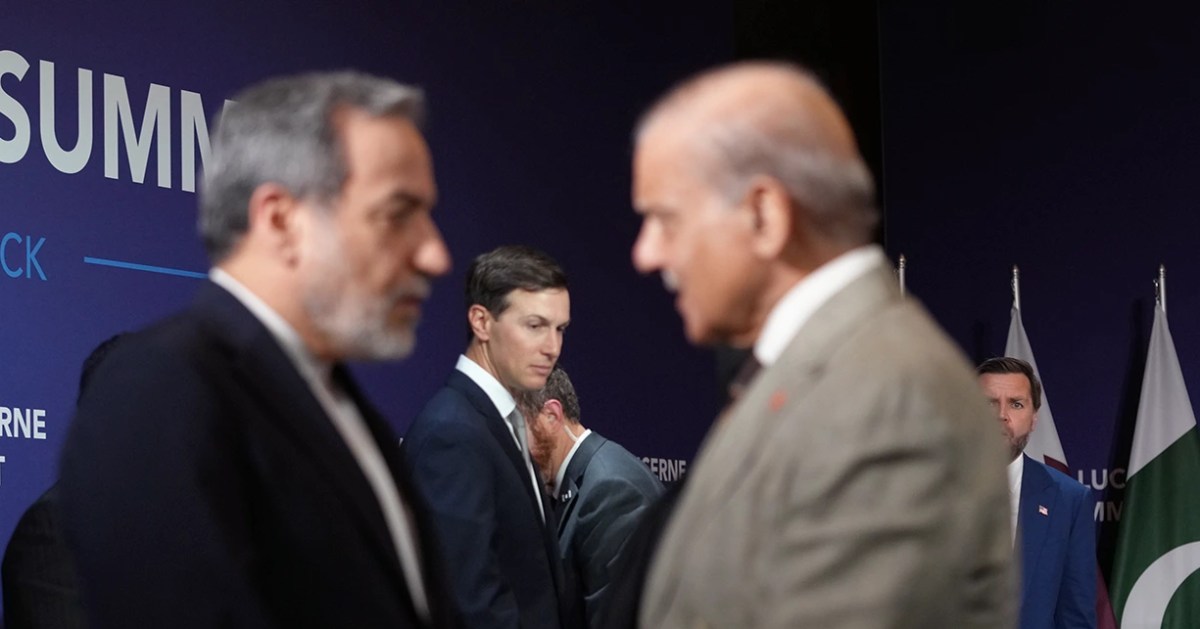
After another broken ceasefire, Iran on Saturday engaged with Mideast regional leaders seeking to resolve Iran’s standoff wth the U.S., its Gulf neighbors — and the rest of the world that relies on oil — over passage through the Strait of Hormuz
Following two days of conflict between the United States and Iran — and even as Iran’s supreme leader and President Donald Trump traded threats — a new round of diplomacy centered on reopening the strait took place in the Omani capital, Muscat, on Saturday. A delegation from Iran led by Foreign Minister Abbas Araghchi visited Muscat, the capital, for further talks, a day after Qatari-mediated discussions in Tehran
A senior Middle East diplomat with direct knowledge of the talks told MS NOW that France and Britain are studying proposals drafted by Oman that may allow the charging of navigational fees in the strait with the support of the United Nation’s International Maritime Organization, which oversees shipping routes
Qatari mediators also held what an Iranian official described as “positive” de-escalation talks in Tehran on Friday
Qatar and Pakistan are mounting a new diplomatic effort to bring the U.S. and Iran back to the negotiating table after renewed strikes this week threatened to plunge the region into another prolonged round of fighting, regional officials told MS NOW
Israel tells U.S. that Iran cooked up new plan to assassinate TrumpJuly 10, 2026 / 09:17
Two regional government officials familiar with the talks said a Qatari delegation traveled to Tehran as part of a coordinated effort with Pakistan aimed at de-escalating the conflict and facilitate a new round of U.S.-Iran talks in Doha or Islamabad in the coming days
The officials spoke to MS NOW on condition of anonymity because of the sensitivity of the discussions surrounding the warring nations
Separately, an Iranian government official told MS NOW that the Qatari mediators left Iran on Friday evening following discussions that focused on “de-escalation” and were considered “positive.” But the official disputed President Donald Trump’s claim that Iran had asked the U.S. to continue negotiations
“Iran has not agreed to continue talks with the U.S.,” the official said, adding that negotiations would only resume when Washington stopped what Tehran considers violations of the ceasefire
On Friday Trump said the U.S. had agreed to a request from Iran to renew negotiations, but that the tenuous ceasefire was “over.”
Saturday’s meeting focused on the Strait of Hormuz is seen as crucial because the latest escalation began after Iran allegedly attacked commercial vessels that Tehran said were failing to follow its designated routes along the key waterway. The U.S. responded with two nights of strikes against Iran, hitting maritime targets along the country’s southern and eastern coasts. Iran then fired missiles and drones at U.S. sites in Bahrain, Kuwait, Qatar and Jordan
The fighting has disrupted traffic through the vital chokepoint, through which roughly a fifth of the world’s total oil supply travels. The number of ships passing through the strait has fallen sharply, with a slight and brief uptick following the signing of the Memorandum of Understanding between the U.S. and Iran on June 18
Pakistani Prime Minister Shehbaz Sharif spent Friday working the phones, holding separate conversations with Iranian President Masoud Pzeshkian and Qatar’s emir, Sheikh Tamim bin Hamad Al Thani, Sharif said on social media
