

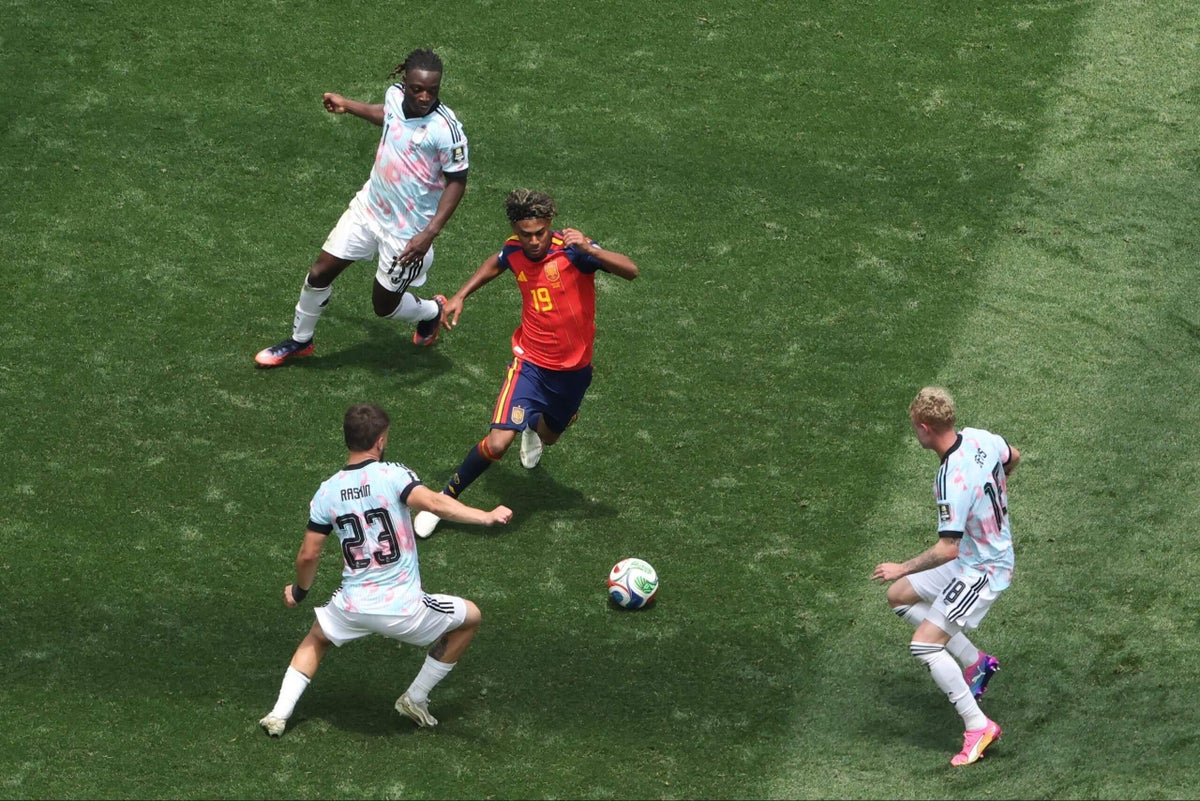
Day 30 of the World Cup saw Spain set up an appealing semi-final clash with France, a meeting of arguably the two outstanding teams of the tournament so far
Spain’s teenage winger Lamine Yamal feels he and his team can approach that game “without any fear” having beaten France in the past two meetings — and having overcome Portugal and Belgium in the past two rounds, with Mikel Merino coming off the bench to score the winner on both occasions
For a second successive game, extra time was looming when Spain coach Luis de la Fuente sent on Merino. Against Portugal, the Arsenal midfielder struck in stoppage time. This time he made it three minutes earlier, pouncing on a mistake by Belgium’s substitute goalkeeper Senne Lammens to secure a 2-1 win in Inglewood, Calif
What You Should Read Next
Spain pounce on Lammens error to make semi-final with France. Is it the real final? Was Courtois exit key?
Mikel Merino’s 88th-minute goal secured victory for Spain against Belgium. Luis de la Fuente’s side will now face France in Arlington
Elsewhere, the Colombian Football Federation strongly condemned death threats directed at their forward Jaminton Campaz after its defeat by Switzerland, while Portugal introduced its new coach Jorge Jesus, who has taken over from Roberto Martinez as coach of Cristiano Ronaldo and Co following their elimination at the quarter-final stage
And before today’s quarterfinals, England captain Harry Kane spoke about the ‘surreal’ experience of playing golf with U.S. President Donald Trump
Here’s what you need to know
Matchday 30 results
Spain 2-1 Belgium
Is Yamal right to have total confidence in beating France?
The phrase Lamine Yamal uttered was “sin ningun miedo” — without any fear. It applies to the way he plays, but in this case he was talking about how he and his Spain team regard the prospect of Tuesday’s World Cup semi-final against France
“I’m really looking forward to it,” the 18-year-old Barcelona winger told Spanish broadcaster RTVE. “Since the World Cup started, everyone has been waiting for this match. We’re about to watch two of the best national teams in the world — but without any fear. If anyone can confidently face France, it’s us.”
Strong words, backed up by Spanish victories in their past two meetings: 2-1 in the European Championship semi-final in 2024 and 5-4 in a wild UEFA Nations League semi-final in June last year
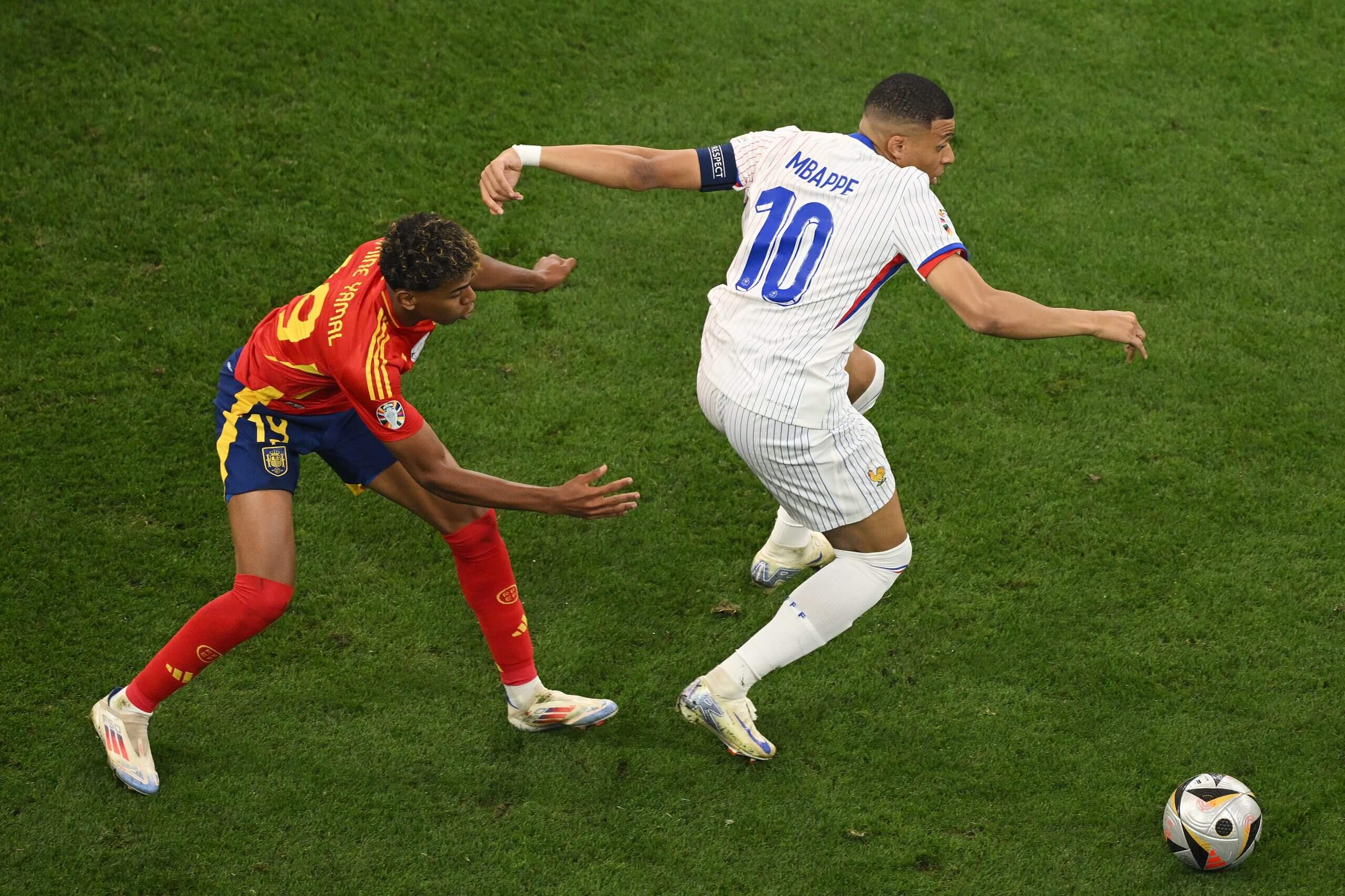
Lamine Yamal will face Kylian Mbappe on Tuesday in Arlington, Texas. (Matthias Hangst / Getty Images)
But that was a different France two years ago. France didn’t play well at Euro 2024. It scraped its way to the semi-finals, scoring just three goals (two own goals and a penalty) in five games, and was then beaten by a Spain team which had found a winning formula under De la Fuente
Spain’s 2-1 victory over Belgium yesterday took its unbeaten run to 36 matches since March 2024. Its performances over the past two years have been outstanding. But this will be perhaps the first time on that run when it faces a team with an alternative claim to be the best in the world
It promises to be a high-quality semi-final. Spain’s ability to control possession is second to none at this tournament. But so too, with Kylian Mbappe in outstanding form, is France’s firepower
Campaz threats a reminder criticism can go too far
Rudi Garcia didn’t mince his words. In flash interviews after Belgium’s defeat by Spain, he said that “against this team, you can’t give away gifts or make mistakes”. “Unfortunately,” the Belgium coach said, “we have been eliminated on that.”
Gifts? Mistakes? That pointed straight at a spillage from substitute goalkeeper Senne Lammens in the 88th minute, punished ruthlessly by Merino for the decisive goal. Lammens had only been on the field 17 minutes, having replaced the injured Thibaut Courtois. It was a brutal introduction to the World Cup for a 24-year-old goalkeeper making only his third appearance for the national team, having started last season at Royal Antwerp before joining Manchester United
What You Should Read Next
Thibaut Courtois, Senne Lammens and the big call that backfired on Belgium
Rudi Garcia’s decision to bring off his experienced goalkeeper after he suffered an injury proved decisive in his team’s World Cup exit
These things happen. Lammens is young and talented enough to recover from it and not to be defined by it. He also comes from a football culture where a sense of perspective prevails when it comes to expectations and setbacks
It was far more disturbing yesterday to read of death threats directed at Colombia forward Jaminton Campaz and his family after he missed a chance in the final minutes of the round-of-16 clash with Switzerland on Tuesday. Switzerland went on to win a penalty shootout
The Colombian Football Federation issued a statement condemning the threats and calling on the nation’s attorney general’s office to “prosecute and punish” those responsible as soon as possible
The story has particularly chilling undertones given that Colombia defender Andres Escobar was shot dead on his return home after scoring an own goal in a defeat by the United States at the 1994 World Cup, a tragedy explored in great depth last week by Felipe Cardenas in a poignant, powerful interview with Escobar’s brother Santiago
What You Should Read Next
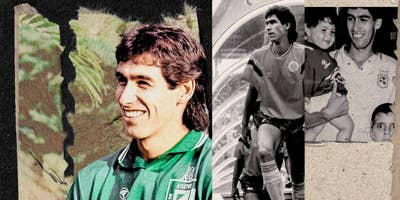
The tragic death of Andrés Escobar, as told by his brother: ‘After 32 years, I still cry for him’
Andrés Escobar was shot dead on July 2, 1994, after scoring an own goal for Colombia. His brother wants him to be remembered for more
The emotions football generates are what makes it the biggest sport in the world. They also need to be kept in perspective when it comes to a dangerous tendency to take out frustrations — sometimes what feels like the frustrations of an entire country — on an individual. For Campaz to be faced with death threats is appalling
The criticism directed at Christian Pulisic this week has been mild by comparison, but again it reflects a scapegoat tendency. The Pulisic pile-on in some quarters — led by former U.S. national team players who should know better — has been unedifying, questioning his commitment and casting him as the reason for a 4-1 defeat by Belgium
This was the way of it in England for years after World Cup exits, raging at referees, opponents or players like David Beckham and Wayne Rooney, who were public enemy No. 1 in 1998 and 2006 respectively after being sent off en route to agonising defeats in World Cup knockout games
In some ways, that is seen as the making of Beckham, the beginning of the journey that ended up with him as a national treasure. But the redemption story does not justify the hostility he faced in those lonely months after the 1998 World Cup
What You Should Read Next
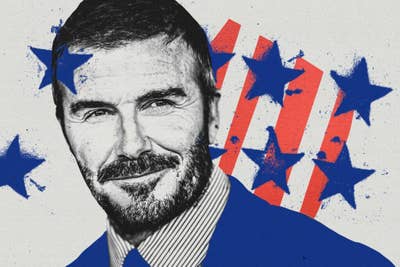
David Beckham, the very English face of America’s World Cup experience
David Beckham helped deliver Lionel Messi to America and now is present for a World Cup in which the stars of soccer are dominating
The nature of sport and the impassioned discourse around it is such that mistakes and disappointments will be scrutinised and highlighted by media and public alike. But beneath it all there must be a recognition that, whether it is Lammens spilling a shot, Campaz missing an opportunity, Pulisic failing to hit the heights expected while carrying an injury, or any of the various coaches lambasted for their team’s performance, these are people at or near the top of the game trying their damnedest to succeed.
However much any of us care, nobody feels failure and disappointment more acutely than those at the centre of it
Is this a sign Ronaldo will play on?
The most attention-grabbing line from Jorge Jesus’ first news conference as Portugal coach on Friday was his statement, in response to questions about Cristiano Ronaldo’s future, that “the past and the name don’t matter to me” — citing the way that he cut short Brazilian superstar Neymar’s time at Saudi Arabian club Al Hilal
But anyone imagining that this signifies the end of Ronaldo’s international career should read on. The coach said he had found the Portugal captain “incredibly easy to work with” last season at Al Nassr, where they won the Saudi Pro League, and that he intended to speak to him “to find out what he wants to do”. “If he is in a position to be called up,” Jesus said, “I will do so.”
It was a little surprising when Martinez backed Ronaldo upon taking the Portugal job after the forward’s struggles at the 2022 World Cup — and far more so when Martinez doubled down after Ronaldo’s hugely disappointing showing at Euro 2024. But for Jesus to suggest the situation is unchanged in 2026, given that Ronaldo will be 42 by the time of next summer’s UEFA Nations League finals and 43 by the time of Euro 2028, is certain to raise eyebrows
What You Should Read Next
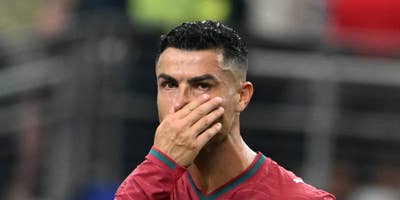
The World Cup was Cristiano Ronaldo’s kryptonite but it does not define his football legacy
Football’s greatest prize eluded him but Ronaldo’s impact on the sport cannot be disputed
A personal opinion: Ronaldo performed better at this World Cup than some of the more gleeful obituaries suggested. He scored three goals (two against Uzbekistan and one, a penalty, against Croatia) and there were moments — flashes — when he looked sharp, as well as other times when he looked blunt. It is not wild to suggest that Portugal’s hopes of reaching next summer’s Nations League finals might be best served by retaining Ronaldo for the six qualifying matches in the autumn
But sooner rather than later, Portugal have to move on Ronaldo. And the difficulty here is that, for all his many achievements and his status as one of the game’s all-time greats, and notwithstanding his strike rate through the past two European Championship and World Cup qualifying campaigns (and a more impressive contribution to last summer’s Nations League triumph), it is hard to escape the feeling that the ideal time was after the last tournament or indeed the one before that
Wouldn’t the ideal situation be to give Ronaldo one last game for Portugal on home soil — whether a Nations League qualifier in the autumn or perhaps a friendly match beyond that — and to move on? His status and his achievements merit reverence, but they don’t merit unconditional indulgence forever
What to know about Saturday’s games
There has been plenty of excited chatter about a potential England vs. Argentina semi-final, but Norway and Switzerland will have something to say about that
Both of Saturday’s quarterfinals see a previous winner (in Argentina’s case a multiple winner and the reigning champion) pitted against a team trying to reach the semi-finals for the first time
England vs. Norway is a fascinating matchup. There is a temptation to characterise it as Harry Kane vs. Erling Haaland. Norway coach Stale Solbakken was keen to spell out at yesterday’s pre-match news conference that this was a team game, rather than just a contest between two outstanding centre-forwards, but he added: “It’s no secret that Kane is the matchwinner No. 1 for England and Erling is the No. 1 matchwinner for Norway.”
What You Should Read Next

Why America has fallen for Erling Haaland, football’s most likeable superstar
Norway’s talisman has always been an exceptional player but it is his character which is making the U.S. fall for him
For England, there is the prospect of reaching a fourth semi-final in five major tournaments. But Norway’s victory over Brazil last time out, in which they dominated possession and won their physical battles, should serve as a warning to Kane and his team-mates
As for the later game in Kansas City, Switzerland’s players will know there are weaknesses in this Argentina team, having watched their unconvincing 3-2 victories over both Cape Verde and Egypt in the knockout stage. But there is also Lionel Messi. And if they are to defeat the holders and reach their first World Cup semi-final, they will need to find a way to stop him
Saturday July 11
Norway vs. England at Hard Rock Stadium (Miami) — 2pm PT, 5pm ET, 10pm BSTArgentina vs. Switzerland at Arrowhead Stadium (Kansas City) — 6pm PT, 9pm ET, 2am BST
