

Florida Aligns with North Carolina, South Carolina, Georgia, Virginia, and New Jersey as New Coastal Research Reveals Natural Dunes Outperform Seawalls in Protecting Beaches, Strengthening Hurricane Resilience and Sustainable Travel Across America – Travel And Tour World
Florida Aligns with North Carolina, South Carolina, Georgia, Virginia, and New Jersey as New Coastal Research Reveals Natural Dunes Outperform Seawalls in Protecting Beaches, Strengthening Hurricane Resilience and Sustainable Travel Across America
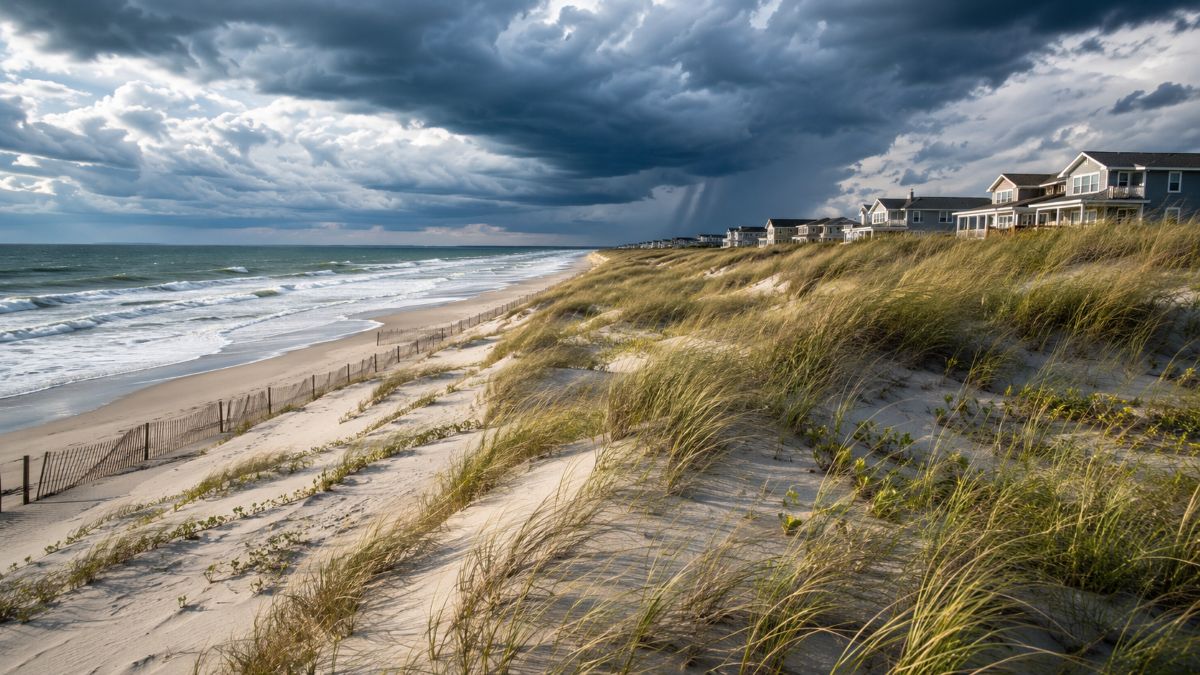
Image generated with Ai
Florida’s Atlantic coastline has long represented one of America’s most iconic travel destinations, attracting millions of visitors with its sandy beaches, oceanfront resorts, wildlife, and year-round sunshine. Yet, beneath the postcard-perfect scenery lies a growing environmental challenge. New scientific findings are reshaping how coastal communities, tourism authorities, and environmental planners view shoreline protection. Researchers have discovered that concrete seawalls, once considered a reliable defense against hurricanes and rising seas, may actually accelerate beach erosion instead of preventing it.
The findings are significant not only for Florida but also for Atlantic coastal destinations including North Carolina, South Carolina, Georgia, Virginia, and New Jersey, where similar coastal management decisions influence tourism, infrastructure, and environmental sustainability. As climate change increases the frequency of stronger storms and sea-level rise, travel destinations are increasingly recognizing that working alongside natural coastal systems may offer a more sustainable solution than relying solely on engineered barriers. The research provides valuable insights for governments, travelers, conservationists, and the tourism industry as they plan for the future of America’s treasured coastlines.
Advertisement
New Scientific Research Challenges Traditional Coastal Protection
A recently published scientific study examined Florida’s Atlantic shoreline using high-resolution elevation data collected between 2015 and 2023 to evaluate how different coastal protection strategies performed following repeated storm events
Coastal Protection Comparison
| Coastal Feature | Observed Performance |
|---|---|
| Concrete seawalls | Average beach elevation declined by more than 0.52 metres |
| Natural sand dunes | Average elevation increased by more than 0.25 metres after recovery |
| Coastal vegetation | Health declined near seawalls but improved around natural dunes |
| Storm recovery | Faster in dune systems than engineered shorelines |
The research concluded that beaches protected by rigid seawalls consistently experienced greater erosion than those backed by naturally functioning dune ecosystems
Advertisement
Why Concrete Seawalls Can Increase Beach Erosion
Rather than absorbing wave energy, concrete seawalls reflect incoming waves back toward the shoreline. This repeated wave reflection intensifies the removal of sand directly in front of the wall, gradually lowering beach elevation
Wave Energy Impact
| Natural Dunes | Concrete Seawalls |
|---|---|
| Absorb wave energy | Reflect wave energy |
| Trap sand naturally | Accelerate sand removal |
| Support vegetation growth | Reduce vegetation health |
| Recover after storms | Slow natural recovery |
As beaches become narrower and lower, coastal destinations may become increasingly vulnerable to storm surge while simultaneously reducing the recreational space that attracts visitors
Advertisement
Advertisement
Natural Dunes Demonstrate Strong Hurricane Recovery
The study highlighted the remarkable resilience of Florida’s natural dune systems following major hurricanes, including Ian, Nicole, and Milton
Unlike engineered structures, dunes function as living coastal defenses. Native grasses capture windblown sand, gradually rebuilding dune height after storms. Even when erosion occurs during hurricanes, these ecosystems naturally regenerate over time
Advertisement
Advertisement
This recovery process helps restore beach width, protects inland infrastructure, and preserves the scenic landscapes that support Florida’s tourism economy
What the Findings Mean for Coastal Tourism
Tourism remains one of Florida’s largest economic sectors, with beaches serving as its primary attraction. Healthy shorelines support hotels, restaurants, recreational businesses, wildlife viewing, water sports, and local communities
Tourism Implications
| Tourism Sector | Potential Impact |
|---|---|
| Beach recreation | Wider beaches improve visitor experiences |
| Wildlife tourism | Healthier habitats support biodiversity |
| Coastal resorts | Better long-term shoreline stability |
| Local businesses | Sustained visitor numbers |
| Outdoor recreation | Improved access to natural landscapes |
Protecting beaches through nature-based solutions could therefore strengthen both environmental conservation and tourism competitiveness
Atlantic States Face Similar Coastal Challenges
Florida is not alone in confronting shoreline erosion. Coastal states including North Carolina, South Carolina, Georgia, Virginia, and New Jersey continue investing in long-term adaptation strategies as stronger hurricanes and rising sea levels reshape Atlantic coastlines
Advertisement
Advertisement
Many communities are evaluating combinations of dune restoration, beach nourishment, marsh conservation, and living shorelines to complement or replace traditional hard infrastructure
As these destinations share similar coastal ecosystems, the Florida findings may help guide future planning across the eastern United States
Coastal Vegetation Plays a Critical Role
Researchers also monitored vegetation health throughout the study period using satellite observations
Healthy dune vegetation performs several essential functions
Benefits of Coastal Vegetation
| Function | Benefit |
|---|---|
| Sand capture | Builds and stabilizes dunes |
| Root systems | Reduce erosion |
| Habitat creation | Supports coastal wildlife |
| Storm protection | Improves shoreline resilience |
| Natural recovery | Encourages post-storm rebuilding |
Areas dominated by seawalls experienced declining vegetation, reducing the coastline’s natural ability to recover after severe weather
Communities Consider Nature-Based Solutions
While many residents recognize the environmental value of dune restoration, coastal planners acknowledge practical concerns regarding maintenance costs, available land, and protection during extreme storm events
Advertisement
Advertisement
Modern coastal management increasingly emphasizes balanced approaches that combine engineering expertise with ecological restoration
Such strategies include restoring dunes, protecting native vegetation, expanding living shorelines, improving beach nourishment practices, and preserving natural sediment movement
These approaches aim to reduce long-term maintenance costs while improving environmental resilience
Sustainable Shoreline Management Supports Future Travel
The latest research reflects a growing international shift toward sustainable coastal management
Rather than relying exclusively on concrete barriers, planners are increasingly recognizing that healthy beaches function as dynamic ecosystems capable of adapting to changing environmental conditions
For travelers, this means future destinations may feature wider beaches, healthier wildlife habitats, improved recreational opportunities, and stronger natural protection against hurricanes
Advertisement
Advertisement
As climate resilience becomes a central focus of tourism planning, preserving natural coastal landscapes may prove just as valuable as protecting the communities built beside them
Conclusion
Florida’s latest coastal research offers important lessons for shoreline management throughout the Atlantic region. The findings demonstrate that while seawalls can protect individual properties, they may unintentionally accelerate beach erosion and weaken the natural systems that sustain tourism and coastal resilience. In contrast, restored sand dunes and healthy coastal vegetation continue rebuilding after powerful hurricanes, providing a sustainable form of protection that benefits residents, visitors, wildlife, and local economies alike. As coastal destinations prepare for future climate challenges, nature-based solutions are emerging as an increasingly effective strategy for preserving America’s iconic beaches.
FAQs
1. What did the new Florida coastal study discover?The study found that beaches protected by concrete seawalls lost more than half a metre of elevation, while natural dune systems rebuilt themselves after major hurricanes
2. Why do seawalls contribute to beach erosion?Seawalls reflect wave energy back toward the beach, increasing sand loss instead of allowing waves to dissipate naturally
3. How do natural dunes protect coastlines?Natural dunes absorb storm energy, trap windblown sand, and gradually rebuild through native vegetation
4. Which hurricanes were included in the research?The research examined shoreline recovery following Hurricanes Ian, Nicole, and Milton
Advertisement
Advertisement
5. Why is this important for tourism?Healthy beaches attract visitors, support local businesses, and help maintain coastal recreation and wildlife experiences
6. Which other states could benefit from these findings?North Carolina, South Carolina, Georgia, Virginia, and New Jersey face similar coastal challenges and may apply comparable nature-based solutions
7. What are living shorelines?Living shorelines use natural features such as dunes, marshes, vegetation, and native habitats to reduce erosion while supporting ecosystems
8. How does coastal vegetation help beaches recover?Native grasses trap sand, stabilize dunes, reduce erosion, and promote natural rebuilding after storms
9. Can seawalls still provide protection?They can help shield individual properties from wave impacts but may also contribute to long-term beach degradation if used without complementary natural solutions
10. What does the research suggest for future coastal planning?The findings support integrating natural dune restoration, vegetation conservation, and sustainable shoreline management to improve long-term coastal resilience while protecting tourism assets
Advertisement
Tags: atlantic beaches, Atlantic coast, atlantic ocean, beach conservation, beach restoration
Advertisement
Advertisement
This content is protected under the Copyright Act. Unauthorized scraping, AI extraction, reproduction, or republication is strictly prohibited. Read ourCopyright Policy.
Follow Travel And Tour World in Google News
<img src="https://todaytrendnews7.com/wp-content/uploads/2026/07/leaderboard-app-design24-11.jpg” alt=””>

PARTNERS









REGIONAL NEWS
Europe
<img src="https://todaytrendnews7.com/wp-content/uploads/2026/07/NOW-Spain-France-Italy-Portugal-Unite-as-Alicante-Secures-CLIA-European-Summit-2027-Strengthening-Mediterranean-Cruise-Tourism-130×130-1.jpg” alt=”Europe”>
NOW Spain, France, Italy, Portugal Unite as Alicante Secures CLIA European Summi
Friday, July 10, 2026

Sweden Strengthens Overnight Rail Travel Reliability as Alstom Secures Extended
Friday, July 10, 2026
America
Florida Aligns with North Carolina, South Carolina, Georgia, Virginia, and New J
Friday, July 10, 2026

Kentucky Tourism Leaders Convene in Bowling Green, Strengthening Industry Partne
Friday, July 10, 2026
Middle East
United Arab Emirates Tourism Gains New International Spotlight: Dubai Basketball
Friday, July 10, 2026
Six Senses AMAALA Resort Opens on Saudi Arabia’s Spectacular Red Sea Coast
Friday, July 10, 2026
Asia

Asia Pacific Anes
Friday, July 10, 2026

South Korea Teams Up With Japan, Singapore, Thailand and Indonesia to Expand Dig
Friday, July 10, 2026
© 2026 Travel And Tour World. All Rights Reserved.
Copyright Policy
We use cookies on our website to give you the most relevant experience by remembering your preferences and repeat visits. By clicking “Accept”, you consent to the use of ALL the cookies.Do not sell my personal information.
Settings
Manage consent
X
