
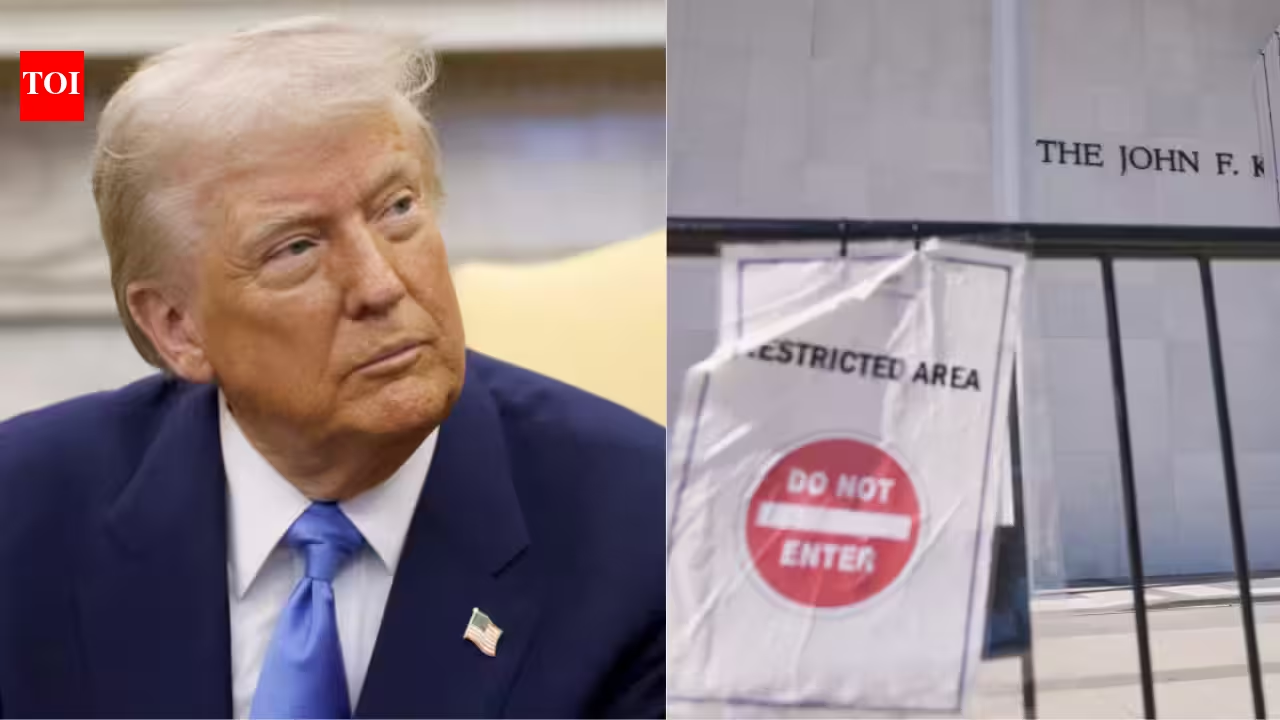
A US lawmaker has asked a federal judge to order President Donald Trump’s administration to release nearly 200 text messages and other records linked to the Kennedy Center in Washington, according to the Associated Press.Democratic lawmaker Joyce Beatty wants communications involving senior officials and the performing arts centre’s management examined as she challenges plans to close the building for renovations. The request comes months after the same judge ruled that Trump’s name had been illegally added to the Center and ordered its removal.Beatty, an Ohio Democrat who serves as an ex officio member of the Kennedy Center’s board, filed the latest request through her lawyers on Sunday. She argues that the messages could help establish how closely Trump was involved in decisions concerning the centre, including its planned closure.Meanwhile, the Trump administration has maintained that the communications should remain confidential under executive privilege. The legal protection allows presidents to withhold certain official discussions.
What court filings reveal about the messages
The latest filing identifies two sets of text messages involving Matt Floca, the Kennedy Center’s executive director and CEO. Both sets concern the institution’s affairs, but the people involved and the timing of some exchanges have drawn particular attention from Beatty’s lawyers.One set contains 19 messages between Floca and Natalie Harp, Trump’s executive assistant. Eleven of these were exchanged on September 15, when Kennedy Center’s board voted for a third time to close the facility.The other set, considerably larger, consists of approximately 180 texts involving Floca and Commerce Secretary Howard Lutnick.The contents of the messages have not been disclosed. However, the list of records has led Beatty’s legal team to argue that Trump may have been in frequent communication with Kennedy Center officials, directly or through others.The lawyers want the court to consider these communications while examining how the closure decisions were made. “These communications directly bear on the issues before the Court, and the claim of privilege cannot stand,” they wrote.
Trump says records should remain private
Earlier in October, the Justice Department explained its position on the withheld communications. As reported by ABC News’ Good Morning America, the administration argued that Trump has an official role in the Kennedy Center’s operations because of his authority to appoint members of its board. It also said that this responsibility allows him to assess how the institution is being managed.Federal law allows the president to appoint members of the centre’s board. The administration says that responsibility includes assessing whether those members are properly managing the institution.Deputy White House Counsel Josh Hoyt also addressed the confidentiality issue in a sworn declaration. His explanation extended the administration’s claim of executive privilege to discussions with advisers outside government, as well as government officials.Beatty’s lawyers have rejected the broad application of the privilege arguing that the administration has not established sufficient grounds to keep the requested material from the court proceedings.
Dispute over Trump’s name
The dispute began before the latest disagreement over confidential records. Trump became chairman of the Kennedy Center last year after board members aligned with him selected him for the position. His name was later added to the building. In May, Judge Cooper ruled that the name had been added unlawfully and directed that it be removed.The court also examined plans for a two-year renovation closure. Cooper also blocked the two-year closure approved by the board in March, finding that members had not properly considered its impact on the centre’s finances and programming.The Justice Department later asked the judge to lift that restriction so renovations could proceed. Trump has also argued that the building was in dangerous condition and required extensive work. He has even said it may need to be “ripped down.”
Board voted to close centre
The legal restrictions did not end the disagreement over the building’s future. On September 15, the Kennedy Center’s board voted again in favour of closing the facility. The following day, Floca ordered a temporary closure of the main building.Cooper responded by requiring the Kennedy Center to provide 30 days’ notice before carrying out major physical changes to the property. Several messages between Floca and Harp were exchanged on the day of the board’s vote.Beatty’s lawyers now want to examine the withheld communications as part of their challenge to the administration’s actions.